














The Science of Academic Burnout and Digital Eye Strain
Executive Summary: The crushing deadlines and long nights of academic life do more than just tax the mind; they place a significant physiological burden on the eyes. This article delves into the science connecting psychological burnout with physical eye strain, a condition often misunderstood as simply a consequence of screen time. We will deconstruct the role of blue light, revealing that its primary impact is on sleep cycles, not direct eye fatigue. The true culprits are often reduced blink rates, sustained focusing effort, and poor ergonomics. Drawing on clinical observations and scientific research, we will provide evidence-based strategies, from optimizing your study environment to understanding the real benefits of specialized eyewear, to help you maintain visual comfort and peak academic performance.
The Brain-Eye Connection: Why Academic Stress Causes Visual Fatigue
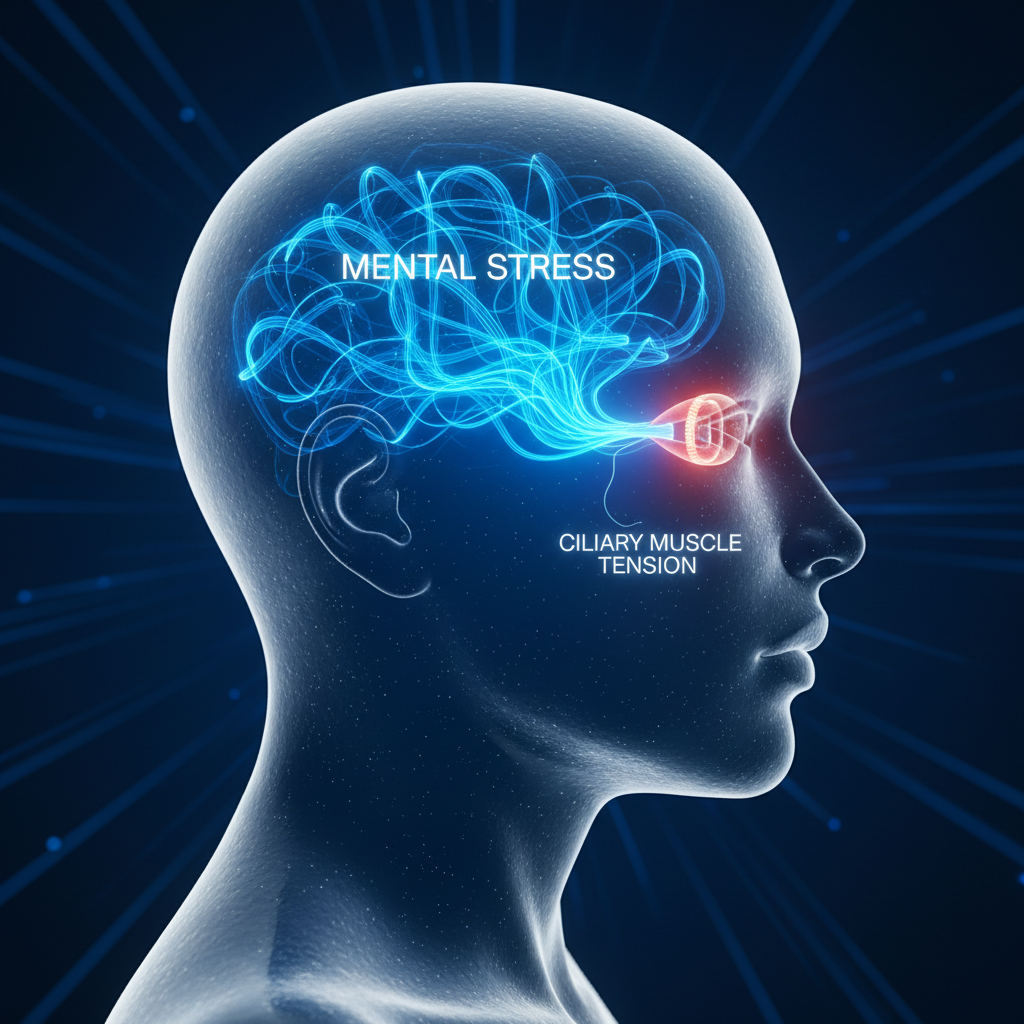
During intense periods of study, it’s common to experience headaches, blurry vision, and a profound sense of exhaustion that feels centered behind the eyes. This isn’t just a sign of needing sleep; it’s a direct manifestation of how your brain allocates resources under pressure. In clinical practice, a frequent observation is that students presenting with these complaints often have a mild, previously compensated insufficiency in how their eyes team together (vergence) or focus (accommodation).
Sustained mental effort, like preparing for an exam, appears to deplete the neurological resources required for these precise visual tasks. Your brain is so busy processing complex information that it has less capacity to manage the constant, subtle adjustments your eye muscles need to make. This leads to a state of fatigue where your visual system can no longer easily compensate.
The "Textbook Test": A Practical Heuristic As a Technical Content Strategist with a focus on visual wellness, I often share a simple diagnostic tool we call the "Textbook Test." If you find your vision getting blurry after hours of reading, take a break and look out a window at a distant object for 10-15 minutes. If your vision clears up and feels sharp again, the issue is very likely accommodative fatigue—tired focusing muscles—rather than a sign that you need a new prescription.
What Is Digital Eye Strain, Really?
This phenomenon is a component of a broader condition known as Computer Vision Syndrome (CVS) or Digital Eye Strain. With a staggering global prevalence of 69%, rising to 74% in the post-pandemic era, it has become a near-universal issue for academics. However, its causes are widely misunderstood.
Contrary to popular marketing, blue light from screens is not the primary cause of the immediate discomfort associated with eye strain. As ophthalmologist Dr. Nicole Bajic clarifies in a Cleveland Clinic article, the strain is overwhelmingly caused by physical and environmental factors, not by the toxicity of light itself. The two main culprits are:
- Reduced Blink Rate: When staring at a screen, our blink rate plummets from a normal 15 times per minute to as low as 5-7 times per minute, according to the American Academy of Ophthalmology (AAO). This leads to a less stable tear film and causes the dry, gritty, burning sensation many students feel.
- Accommodative Stress: Your eyes’ ciliary muscles are in a constant state of tension to keep near objects in focus. Hours of looking at textbooks and screens without a break is like holding a muscle in a flexed position, inevitably leading to fatigue.
Blue Light Lenses: Separating Scientific Fact from Marketing Hype
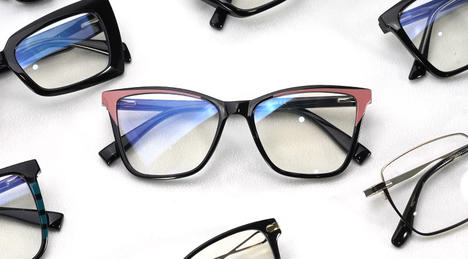
Given the prevalence of eye strain, blue light-filtering lenses have been marketed as a panacea. However, it is crucial to approach these claims with scientific scrutiny to understand their true function and limitations.
The Myth of the "Eye Strain Cure"
High-quality research has consistently shown that blue light-filtering lenses have little to no effect on reducing the symptoms of Digital Eye Strain itself. A landmark 2024 Cochrane Review, the gold standard in evidence-based medicine, found no clear short-term evidence that these lenses alleviate visual fatigue. This supports earlier randomized controlled trials, such as a study by Rosenfield et al. published in PubMed, which found no significant difference in eye strain symptoms between participants wearing blue-blocking lenses and those wearing placebo lenses.
The Real, Evidence-Based Benefit: Guarding Your Circadian Rhythm
The proven value of blue light lenses lies in their ability to mitigate the disruptive effect of artificial light on your sleep-wake cycle. Light in the 450–480 nm spectrum—prevalent in screens and modern lighting—is particularly effective at suppressing the production of melatonin, the hormone that signals your body it’s time to sleep.
Research from Harvard Health Publishing confirms that wearing lenses that filter this spectrum in the evening can help preserve melatonin production. Experimental data is even more precise: one study on melatonin suppression showed that after two hours of blue light exposure, melatonin levels were suppressed to just 7.5 pg/mL, compared to 26.0 pg/mL for those exposed to red light. By blocking this signal, the glasses help you fall asleep faster and can improve sleep quality, which is critical for memory consolidation and recovering from academic burnout.
The Unsung Heroes: AR Coating and Behavioral Cues
So why do some users feel better wearing blue light glasses during the day? The answer often lies in two factors that have nothing to do with the blue tint itself.
- High-Quality Anti-Reflective (AR) Coating: Reputable blue light lenses are almost always built on a premium lens that includes a high-grade AR coating. This coating is engineered to minimize glare and reflections from overhead lights and the screen itself. This reduction in visual "noise" prevents subconscious squinting and muscle tension, which is a significant, though often unnoticed, source of strain.
- The Behavioral Reminder: The subtle tint of the lenses can act as a powerful behavioral cue. It serves as a physical reminder that you are engaged in a visually demanding task, prompting you to be more mindful of taking breaks, blinking consciously, and being aware of your screen time.
In essence, think of blue light glasses not as a direct cure for strain, but as a specialized tool for sleep hygiene and a vehicle for superior anti-glare optics.
Build Your Ergonomic Fortress: An Anti-Burnout Study Station
Your physical environment is one of the most powerful and overlooked tools for combating visual fatigue. Creating an ergonomic fortress is not about expensive equipment; it’s about applying scientific principles to your existing setup.
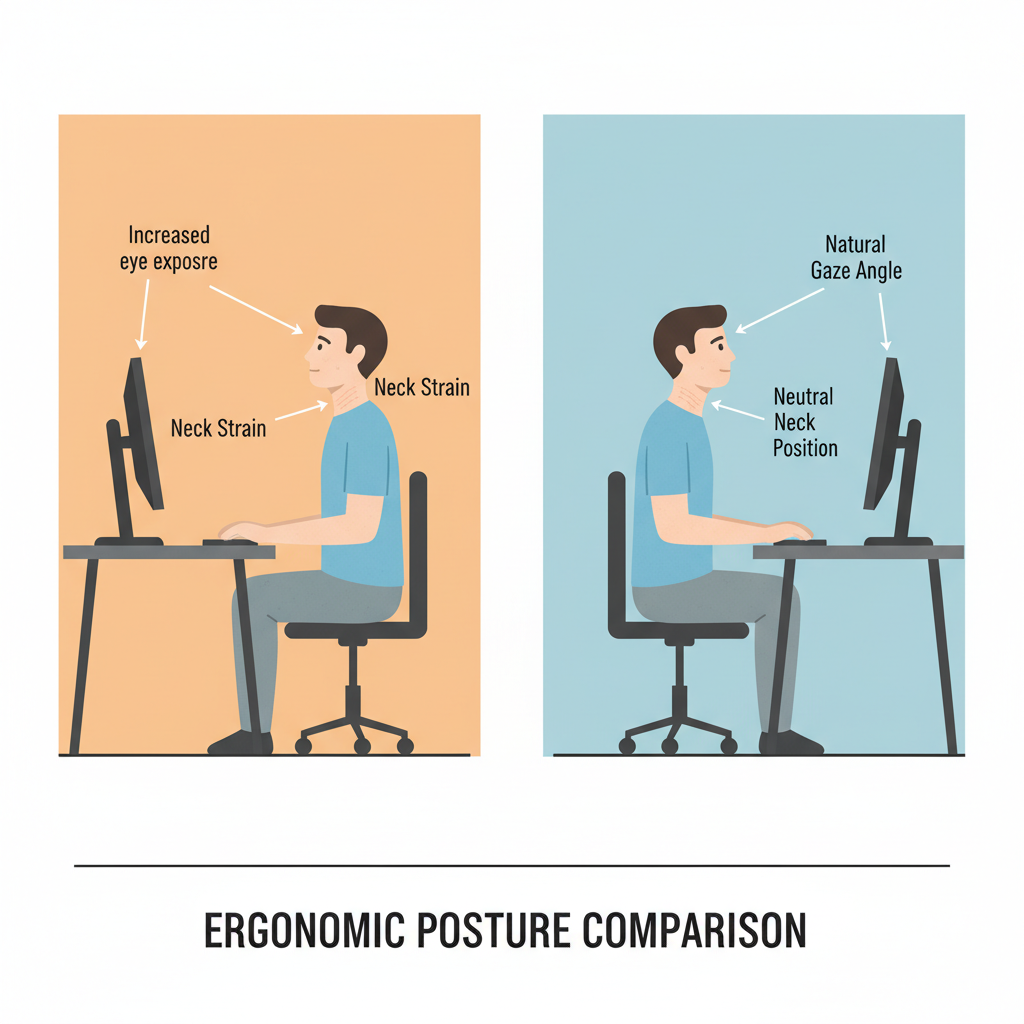
The Monitor Height Mistake
A common mistake observed in practice is placing the monitor too high, forcing an upward gaze. This seemingly minor error has a significant physiological cost. An upward gaze naturally widens the palpebral aperture—the opening between your eyelids. This increased surface area accelerates the evaporation of your tear film, directly contributing to dry eye.
The correct position, aligned with guidelines from ergonomic standards like ANSI/HFES 100-2007, is to have the top edge of your monitor at or slightly below your horizontal eye level. This encourages a slight downward gaze, which is a more natural resting position for the eyes and helps preserve tear film.
The 20-20-20 Rule and Beyond
The most cited advice for eye strain is the "20-20-20 rule," recommended by clinicians and organizations like the Cleveland Clinic. Every 20 minutes, look at something at least 20 feet away for 20 seconds. This simple action forces your ciliary muscle to relax, breaking the cycle of accommodative stress.
To enhance this, practice "active blinking." Consciously perform several slow, complete blinks to fully recoat the surface of your eyes with a fresh layer of tears. This directly counteracts the reduced blink rate associated with screen use.
Environmental Optimization
Fine-tune your study space to further reduce visual load:
- Laptop "Decoupling": The design of a laptop is inherently un-ergonomic because the screen and keyboard are fixed together. As advised by experts at institutions like Boston University, you must "decouple" them for long sessions. Place your laptop on a stand to raise the screen to eye level and use an external keyboard and mouse. This allows for proper posture for both your neck and wrists.
- Lighting Control: Your screen should be the brightest thing in your field of view, but not excessively so. According to OSHA guidance, lighting for screen-based tasks should often be lower than for paper-based tasks to avoid glare and screen washout. Position your desk so that windows are to the side, not directly in front or behind your screen.
- Humidity: The air in dorms and libraries is often dry, exacerbating eye strain. The EPA recommends maintaining indoor humidity between 30-60%. A small, inexpensive humidifier can significantly increase comfort during long study sessions by slowing tear evaporation.
A New Perspective on Visual Wellness
Navigating the pressures of academia requires both mental and physical stamina. The eye strain and fatigue you experience are not a personal failing but a physiological response to an environment of intense, sustained near-work. By understanding the true mechanisms at play—the neurological load, the physical act of blinking and focusing, and the ergonomics of your workspace—you can move beyond myths and implement strategies that create a sustainable foundation for learning.
Viewing specialized eyewear as a tool for sleep management and glare reduction, rather than a magical cure, allows you to invest smartly in your comfort. Ultimately, protecting your vision is an integral part of protecting your overall well-being and ensuring your capacity for the deep work that drives academic success.
Disclaimer: This article is for informational purposes only and does not constitute professional medical advice. The information contained herein is not intended to diagnose, treat, cure, or prevent any disease. Always seek the advice of a qualified health provider with any questions you may have regarding a medical condition. Never disregard professional medical advice or delay in seeking it because of something you have read in this article.
References:
- American Academy of Ophthalmology (AAO). "Computers, Digital Devices and Eye Strain." https://www.aao.org/eye-health/tips-prevention/computer-usage
- Boston University. "Is Your Laptop Hurting You?" https://www.bu.edu/articles/2008/is-your-laptop-hurting-you/
- Cleveland Clinic. "Do Blue Light-Blocking Glasses Actually Work?" https://health.clevelandclinic.org/do-blue-light-blocking-glasses-actually-work
- Harvard Health Publishing. "Can blue light-blocking glasses improve your sleep?" https://www.health.harvard.edu/blog/can-blue-light-blocking-glasses-improve-your-sleep-202110262625
- Lawrenson, J.G., et al. "Blue-light filtering spectacle lenses for visual performance, sleep, and macular health in adults." Cochrane Database of Systematic Reviews, 2024. https://pubmed.ncbi.nlm.nih.gov/37593770/
- Rosenfield, M., et al. "Effect of short-term blue-light-filtering spectacle lenses on visual performance, sleep quality and sleepiness." PubMed, 2020. https://pubmed.ncbi.nlm.nih.gov/32007978/
- U.S. Environmental Protection Agency (EPA). "Care for Your Air: A Guide to Indoor Air Quality." https://www.epa.gov/indoor-air-quality-iaq/care-your-air-guide-indoor-air-quality
- U.S. Occupational Safety and Health Administration (OSHA). "Computer Workstations: Workstation Environment." https://www.osha.gov/etools/computer-workstations/workstation-environment


