











Ignoring Astigmatism: The Flaw in Generic Readers
TL;DR: Why Generic Readers Fail for Astigmatism
Over-the-counter (OTC) reading glasses are a simple, one-size-fits-all solution for presbyopia—the age-related difficulty in focusing on near objects. However, they are fundamentally flawed for anyone with astigmatism. Generic readers only provide spherical magnification and cannot correct the directional blur caused by an irregularly shaped cornea or lens. Using them when you have astigmatism often leads to persistent blur, visual distortion, headaches, and significant eye strain. The only effective solution is a pair of custom-made prescription glasses that includes specific cylindrical and axis correction tailored to your unique visual needs.
The Simple Fix for Aging Eyes: What Are Reading Glasses For?
As many people enter their 40s, they start to notice a frustrating change: words in a book or on a phone screen become blurry. They might find themselves holding menus at arm's length to bring them into focus, a phenomenon often called the "trombone effect." This is presbyopia, a natural and unavoidable part of aging.
According to the Mayo Clinic, presbyopia occurs because the natural lens inside the eye gradually thickens and loses flexibility. This hardening process makes it harder for the eye to change shape and focus on close-up objects. OTC reading glasses offer a straightforward solution. They are essentially simple magnifiers, providing a uniform "plus" power (e.g., +1.25, +2.00) to help bend light and compensate for the eye’s diminished focusing ability. For individuals with no other vision issues, they can be a convenient, inexpensive tool for near tasks.
The problem is, many people don't just have presbyopia. They also have another common condition: astigmatism.
The Critical Difference: Understanding Astigmatism
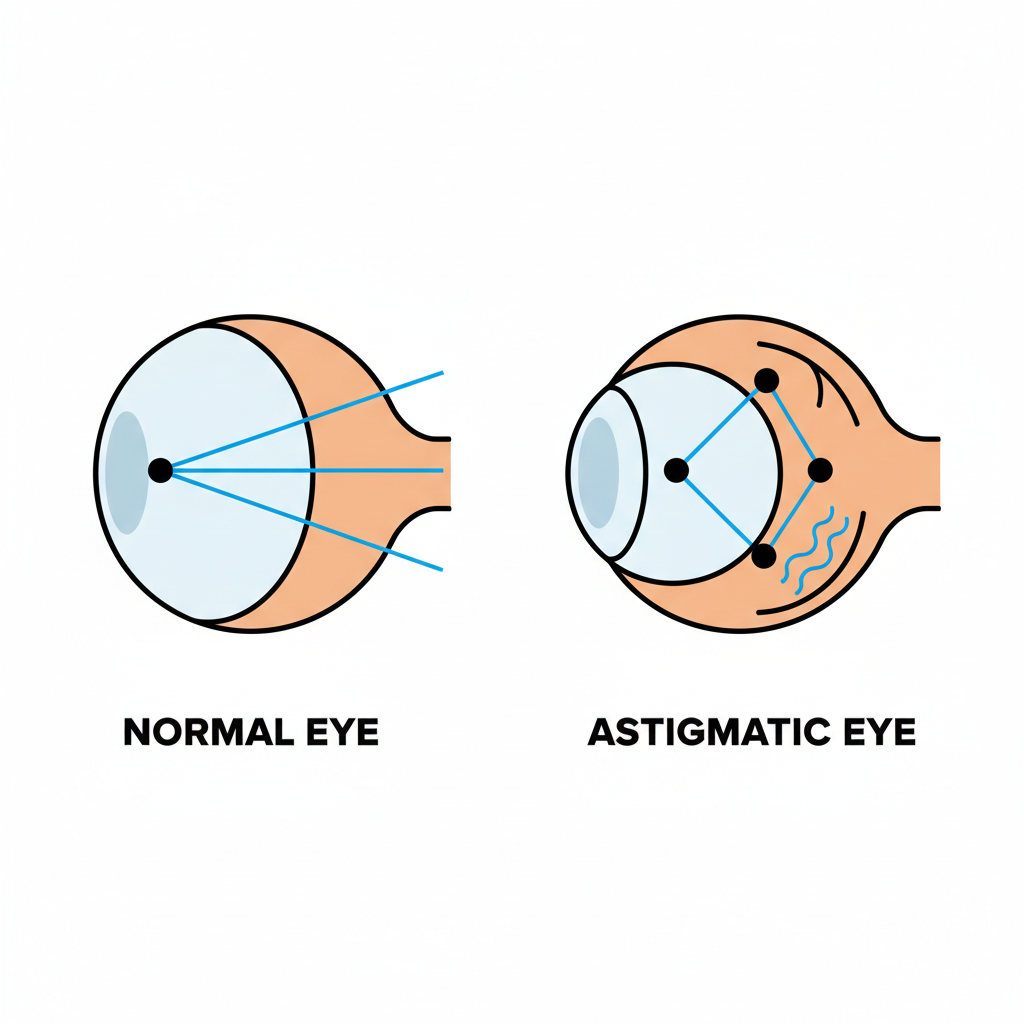
While presbyopia affects your eye's focusing muscle, astigmatism is about the shape of your eye. A perfectly spherical eye has a cornea (the clear front surface) shaped like a basketball. It refracts light evenly, focusing it onto a single point on the retina for clear vision.
In an eye with astigmatism, the cornea is shaped more like a football or the back of a spoon—it’s toric. This irregular curve causes light to bend unevenly, creating two focal points instead of one. As a result, vision becomes blurry or distorted at all distances, not just up close.
To correct this, an eye prescription includes three key values for each eye (OD for the right, OS for the left), as explained by the Cleveland Clinic:
- Sphere (SPH): Corrects for nearsightedness (-) or farsightedness (+). This is the only correction found in OTC reading glasses.
- Cylinder (CYL): Measures the degree of astigmatism. It represents the extra power needed to correct the football-like shape.
- Axis: Indicates the orientation of the astigmatism in degrees (from 1 to 180). It tells the lens maker precisely where to place the cylinder correction.
Without both the Cylinder and Axis correction, the visual distortion from astigmatism remains unaddressed.
The Blurry Truth: Using Generic Readers with Astigmatism
When you have astigmatism and use a pair of generic drugstore readers, you are applying a simple layer of magnification over an already distorted image. The readers may make things larger, but they won’t make them clear. The directional blur caused by your eye’s unique shape persists, forcing your brain and eyes to work overtime to try and make sense of the fuzzy input. This leads directly to a collection of symptoms known as asthenopia, or eye strain.
I often see patients who complain of debilitating headaches, dizziness, and a feeling of "pulling" in their eyes after trying to use cheap readers for work. They assume the power is wrong, but the real issue is the uncorrected astigmatism. For a deep dive into what can happen when a prescription doesn't feel right, see our guide on what to do if your new online prescription feels wrong.

Expert Warning: Is a "Little" Astigmatism Okay?
A common question is whether OTC readers are acceptable for very mild astigmatism. While every individual’s tolerance varies, clinicians generally find that uncorrected cylinder power above 0.75 diopters (D) almost always causes noticeable blur and discomfort. Even with a seemingly small cylinder of 0.50 D, the wrong axis can introduce directional blur that is highly disruptive for tasks requiring precision, like reading text or threading a needle. The bottom line is that relying on generic glasses is a gamble that rarely pays off.
Myth Debunking: "A Little Blur is Harmless"
The Myth: Many people believe that as long as they can "get by" with generic readers, the slight blurriness is just a minor inconvenience.
The Reality: Forcing your eyes to constantly fight against uncorrected astigmatism is not harmless. The continuous effort to focus a blurry image leads to chronic eye strain, which can manifest as persistent headaches, neck and shoulder pain from awkward posturing, and severe eye fatigue. This can reduce your productivity, shorten your reading endurance, and make near-tasks a source of dread rather than enjoyment. It’s not just about seeing clearly; it’s about seeing comfortably.
Comparison: OTC Readers vs. Custom Prescription Glasses
To make the distinction clear, here is a direct comparison of what each type of eyewear can and cannot do for someone with astigmatism.
| Feature | Over-the-Counter (OTC) Readers | Custom Prescription Reading Glasses |
|---|---|---|
| Primary Correction | Spherical Power (for presbyopia) | Spherical, Cylinder, and Axis Power |
| Astigmatism | No correction. Can worsen blur and strain. | Precise correction based on your prescription. |
| Optical Center | Fixed and identical for both eyes. | Customized to your unique Pupillary Distance (PD). |
| Lens Power | Same power in both lenses. | Can be made with different powers for each eye. |
| Lens Quality | Basic, often without protective coatings. | Higher quality materials, with options for anti-reflective and scratch-resistant coatings. |
| Visual Outcome | Potential for headaches, distortion, and eye fatigue. | Clear, comfortable, and strain-free near vision. |
Why Accurate Measurements and Custom Lenses Are Essential
Getting comfortable, effective vision correction for astigmatism is a matter of precision. This precision begins with a comprehensive eye exam.
First, you have a right to your prescription. The Federal Trade Commission's Eyeglass Rule mandates that your eye doctor must give you your prescription immediately after your exam, giving you the freedom to purchase glasses from any provider you choose. This is the first step toward getting glasses that are truly yours.
Second, a custom pair of glasses is built to your exact specifications. This includes not just the sphere, cylinder, and axis, but also your pupillary distance (PD)—the distance between the centers of your pupils. An incorrect PD can induce prismatic effects, making you feel dizzy or strained. The issue is even more pronounced in higher prescriptions, and as this guide on PD errors explains, even small mistakes matter.
Finally, the quality of the lens itself is paramount. As detailed by The Vision Council, prescription lenses are crafted through a precise process of surfacing, polishing, and coating. Furthermore, all prescription eyewear sold in the U.S. must meet the FDA's impact-resistance standards, a safety guarantee you may not get with unregulated online sellers. This commitment to quality and safety is a cornerstone of buying prescription glasses from a trustworthy source. For more details, you can review this checklist for safely buying glasses online.
Key Takeaways and Your Path to Clear Vision
Ignoring astigmatism when you have presbyopia is a recipe for discomfort and frustration. While the convenience of cheap, over-the-counter reading glasses is tempting, they are the wrong tool for the job.
Here’s what you need to remember:
- Astigmatism requires specific correction. It causes directional blur that simple magnification cannot fix.
- Generic readers lack cylinder and axis correction. This forces your eyes to work harder, leading to headaches and strain.
- Even "mild" astigmatism often requires correction for comfortable near vision.
- Custom-made glasses are the only solution. They are built to your exact prescription, including your pupillary distance, ensuring clear and comfortable vision.
Your first step is always a comprehensive eye exam. Once you have your prescription, you can confidently order glasses that are made just for you.
Frequently Asked Questions (FAQ)
Can I use reading glasses if I have very mild astigmatism? If your prescription shows a cylinder (CYL) value of 0.50 D or less, you might tolerate OTC readers for very short, non-critical tasks. However, for extended reading or computer work, you will likely still experience more comfort and clarity with custom prescription lenses.
What happens if I wear the wrong reading glasses? Wearing the wrong reading glasses—either the wrong power or, in this case, glasses that don't correct for astigmatism—can cause symptoms like headaches, dizziness, nausea, and significant eye strain. While it won’t permanently damage your eyes, it will make visual tasks uncomfortable and inefficient.
How do I know if I have astigmatism? The only way to know for sure is through a comprehensive eye exam with an optometrist or ophthalmologist. Common symptoms include blurry or distorted lines, difficulty seeing fine details, eye strain, and squinting to try and see clearly at all distances.
Disclaimer: This article is for informational purposes only and does not constitute professional medical advice. Consult with a qualified eye care professional for any health concerns or before making any decisions related to your eye health and vision.


