













Can You Have Astigmatism in One Eye? Understanding Asymmetry
Can You Have Astigmatism in One Eye? Understanding Asymmetry
It's a common question we hear: "My vision feels perfectly sharp in one eye, but the other is blurry. Is that normal?" The answer is a definitive yes. This condition, known as unilateral astigmatism or asymmetric astigmatism, is not unusual, but it does create a unique set of challenges for your brain and your eyewear.
When one eye sees a crisp, clear image and the other sees a slightly stretched or distorted one, your brain has to work overtime to merge these two different signals into a single, coherent picture. This constant effort can lead to a range of uncomfortable symptoms, from persistent headaches to a subtle but draining sense of visual unease.
This article will serve as your complete guide to understanding unilateral astigmatism. We'll explain what's happening inside your eye, how it affects your daily life, and most importantly, the critical details required to correct it properly. We will cover why the right pair of glasses involves more than just matching the numbers on your prescription—it's about the physics of the lenses and the precise fit of the frame.
TL;DR: The Essentials of Unilateral Astigmatism
- Yes, It's Possible: You can absolutely have astigmatism in only one eye, or have significantly different amounts of astigmatism between your two eyes.
- Brain Strain is Real: The core problem is visual imbalance. Your brain struggles to fuse a clear image from one eye with a blurry one from the other, often causing eye strain, headaches, fatigue, and difficulty with depth perception.
- Standard Correction Isn't Enough: For asymmetric prescriptions, the precision of your glasses is paramount. Small details that might go unnoticed in a balanced prescription can cause significant discomfort.
- Fit and Measurements are Critical: Factors like the distance of the lens from your eye (vertex distance) and the stability of the frame on your face are crucial. A poorly fitted frame that allows the lens to rotate even slightly can render the astigmatism correction ineffective and cause blur.
What is Astigmatism and How Does it Become Unilateral?
To understand the challenge, we first need to define the terms on your prescription. According to guidance from the Cleveland Clinic, your prescription has a few key numbers for each eye—OD for the right eye (oculus dexter) and OS for the left eye (oculus sinister).
- Sphere (SPH): This corrects for nearsightedness (-) or farsightedness (+).
- Cylinder (CYL): This measures the degree of astigmatism. It represents the extra power needed to correct the irregular shape of the cornea or lens. If this value is "0" or "SPH," you have no astigmatism in that eye.
- Axis: Measured in degrees from 1 to 180, this indicates the orientation of the astigmatism. It tells the lab exactly where to place the cylindrical power in the lens.
Unilateral astigmatism simply means the CYL and Axis values are present for one eye but not the other. For example:
| Eye | SPH | CYL | Axis |
|---|---|---|---|
| OD (Right) | -1.50 | -1.25 | 180 |
| OS (Left) | -1.50 | SPH | - |
In this prescription, the left eye only needs a spherical correction for nearsightedness, while the right eye needs correction for both nearsightedness and astigmatism. This asymmetry is the root of the problem. A large-scale study published in PubMed found that astigmatism is a primary type of refractive error, highlighting how common these irregularities are.

The Hidden Symptoms of Visual Imbalance
When your brain receives mismatched signals, it attempts to compensate. This neurological effort, while amazing, isn't free. It consumes mental energy and can manifest in several physical symptoms that you might not immediately connect to your vision.
- Persistent, Low-Grade Headaches: Often described as a dull ache behind the eyes or across the forehead, these headaches can occur after focusing on tasks like reading or driving.
- Eye Strain and Fatigue: Your eyes may feel tired, heavy, or sore, even after a full night's sleep. This is a direct result of the muscles in your astigmatic eye constantly working to achieve focus.
- Faulty Depth Perception: Judging distances can be difficult. You might find yourself being more cautious when parking a car, walking down stairs, or reaching for an object, as your brain isn't getting reliable 3D information.
- Squinting or Closing One Eye: You may unconsciously squint or cover your astigmatic eye to rely on the "good" eye. This is your brain's simplest way to eliminate the blurry signal, but it sacrifices binocular vision and depth perception.
- Dizziness or a Feeling of Being "Off-Balance": In some cases, the visual mismatch can interfere with your vestibular system, leading to a sense of unease or mild vertigo, especially when moving your head quickly.
These symptoms arise because your brain is fighting a battle between two different realities. This is why simply getting the prescription numbers right is only half the solution. The physical fit and properties of your glasses must be perfect to avoid making the imbalance worse.
Why Precision Fitting is Non-Negotiable for Asymmetric Prescriptions
For those with unilateral astigmatism, the margin for error in crafting and fitting eyeglasses is incredibly small. Two often-overlooked factors become critically important: lens rotation and vertex distance.
1. The Axis Rotation Problem
The "Axis" value on your prescription is the precise angle at which the cylinder power must be placed. If your glasses slide down your nose or sit crooked, the lens can rotate. Even a few degrees of rotation can misalign the axis, effectively re-introducing the blur and strain you were trying to eliminate.
This is a common cause of non-adaptation to new glasses. The prescription is correct, but the frame's instability negates the lens's power. For patients with asymmetric prescriptions, this effect is more jarring because it disrupts the vision in one eye, exaggerating the imbalance the brain has to contend with.
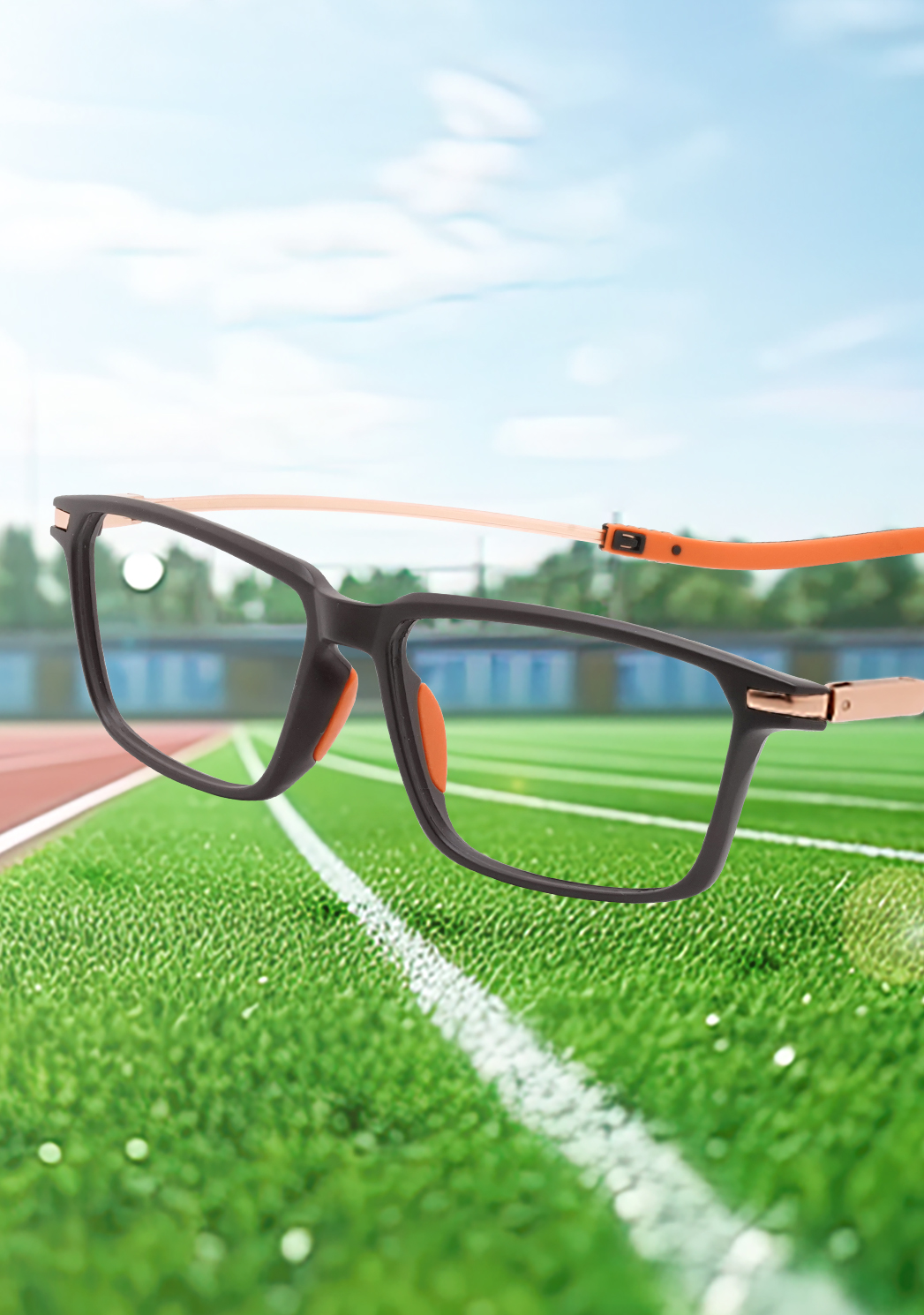
Expert Insight: A practical solution is to choose frames with features that ensure stability. Look for designs with adjustable nose pads that can be molded to your specific bridge shape and temple arms that provide a secure, comfortable grip behind your ears. This mechanical stability is the foundation of good astigmatic correction.
2. The Vertex Distance Effect
Vertex distance is the space between the back surface of your eyeglass lens and the front of your cornea. For most low-power prescriptions, minor variations in this distance don't make a noticeable difference. However, for prescriptions with a higher cylinder value, it's a game-changer.
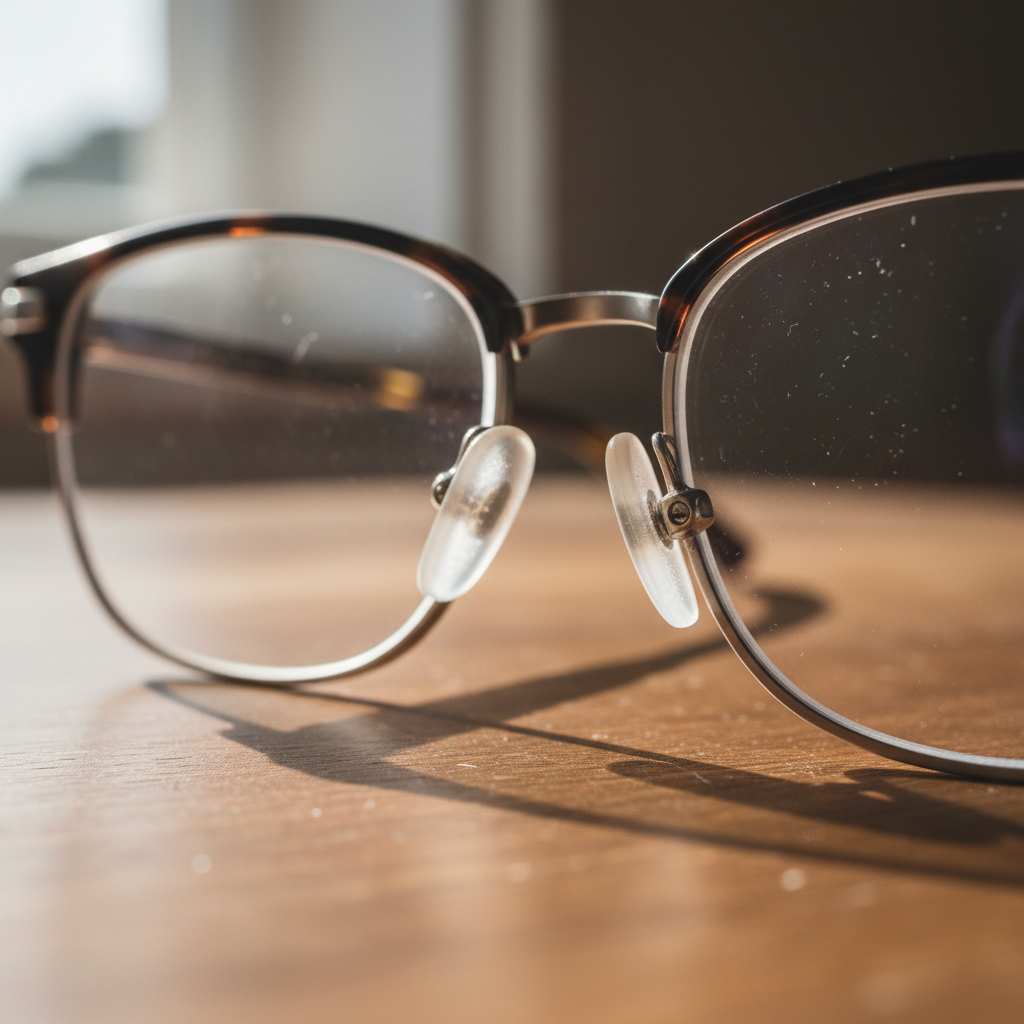
As the lens moves closer to or farther from your eye, its effective power changes. A common optician's rule of thumb states that for a cylinder power over 1.00D, even a millimeter or two of change in vertex distance can alter the power enough to cause dizziness or blur. When this happens in only one eye, it once again creates a power imbalance. You might feel that something is "off" with your vision but be unable to pinpoint why. It's often because the vertex distance for which the prescription was tested in the exam room is different from the distance in your final pair of glasses.
This is another reason why a well-fitted frame is essential. A frame that sits consistently at the correct distance from your eye will deliver the true power of your prescription every time you put it on.
A Practical Guide to Getting the Right Correction
Navigating the process of getting glasses for unilateral astigmatism requires diligence. Here is a step-by-step approach to ensure you get the visual comfort you need.
- Start with a Comprehensive Eye Exam: This is the essential first step. An optometrist or ophthalmologist will perform a refraction to determine your precise prescription. Be sure to mention any symptoms of headache, strain, or dizziness you're experiencing.
- Demand Your Prescription—It's Your Right: Under the FTC's Eyeglass Rule, your eye care provider is legally required to give you a copy of your prescription immediately after your exam, whether you ask for it or not. This empowers you to purchase your glasses from any vendor you choose.
- Prioritize Frame Selection for Fit, Not Just Style: While aesthetics are important, function is paramount for asymmetric prescriptions. Focus on frames with adjustable nose pads and secure temples. This will minimize lens rotation and help maintain a consistent vertex distance.
- Consider Lens Material: If your prescription is strong, high-index lenses can be a great choice. They are thinner and lighter, reducing the visual distortion that can sometimes be more apparent when only one lens has a high power. You can learn more about how lens shape impacts vision in our article on aspheric lenses and high prescriptions.
- Provide an Accurate Pupillary Distance (PD): Your PD is the distance between the centers of your pupils. This measurement is used to center the lenses in your frame so that the optical center of each lens aligns perfectly with your eye. Misalignment can induce prism and cause eye strain, which is especially noticeable in asymmetric cases.
Frequently Asked Questions & Troubleshooting
-
Q: I have astigmatism in one eye. Can I just use drugstore reading glasses?
- A: It is not recommended. As noted by the Cleveland Clinic, over-the-counter readers offer a simple, spherical magnification and do not correct for astigmatism (CYL and Axis). Using them would leave your astigmatism uncorrected, forcing your eye and brain to work harder and likely worsening your eye strain.
-
Q: My new glasses feel strange, even though the prescription is right. What's wrong?
- A: There is always an adaptation period for new glasses. However, if you experience persistent dizziness, headaches, or the feeling that the floor is tilted after a few days, the fit may be the issue. Check if the glasses are sitting straight. Visit an optician to have the frame adjusted, paying close attention to how it affects the distance of the lens from your eye.
-
Q: Can I wear contact lenses to correct unilateral astigmatism?
- A: Absolutely. Toric contact lenses are specifically designed to correct astigmatism. They are a great option because they sit directly on the eye, eliminating any concerns about vertex distance. However, a proper fitting with an eye doctor is crucial to ensure the lens is stable on your eye and does not rotate.
Achieving clear and comfortable vision with unilateral astigmatism is entirely possible. It requires a precise prescription combined with an understanding that the frame is not just a fashion accessory—it is a critical piece of medical equipment. By ensuring your glasses are stable, secure, and properly positioned, you provide your brain with the two clear, balanced images it needs to see the world effortlessly.
Disclaimer: This article is for informational purposes only and does not constitute professional medical advice. Always consult with a qualified eye care professional for any vision-related concerns or before making any decisions about your eye health and treatment.


