








Base Curve Mapping: Why Frame Curvature Dictates Lens Comfort
TL;DR: Understanding Base Curve
- What is Base Curve? It’s the measurement of the front-side curvature of your eyeglass lens. A lower number (like 2 or 4) means a flatter lens, while a higher number (like 6 or 8) means a more curved or "wrapped" lens.
- Why It's Critical: The base curve of your lens must be precisely matched to the curvature of your chosen frame.
- The Mismatch Problem: Forcing a flat lens into a curved frame (or vice versa) creates physical tension. This can cause the lenses to pop out unexpectedly, distort your peripheral vision (the "fishbowl effect"), and even strain or break the frame itself.
- The Takeaway: Highly curved, "wrap-around" frames look great but require specially selected lenses with a higher base curve. This becomes more complex with strong prescriptions, highlighting the importance of expert lab work to ensure a perfect, distortion-free fit.
Decoding Base Curve: The Unseen Foundation of Your Lenses
When you receive a new pair of glasses, you notice the clarity of the prescription, the style of the frame, and the lightness of the material. But one of the most critical elements for both comfort and optical performance is one you can't easily see: the base curve.
Think of it as the foundational curvature of the lens itself. It’s the specific, fixed curve on the front surface of the lens, which serves as the starting point for grinding the rest of your unique prescription on the back surface. This curvature is measured in diopters, but for simplicity, it's expressed as a number—for example, "4-base" or "8-base."
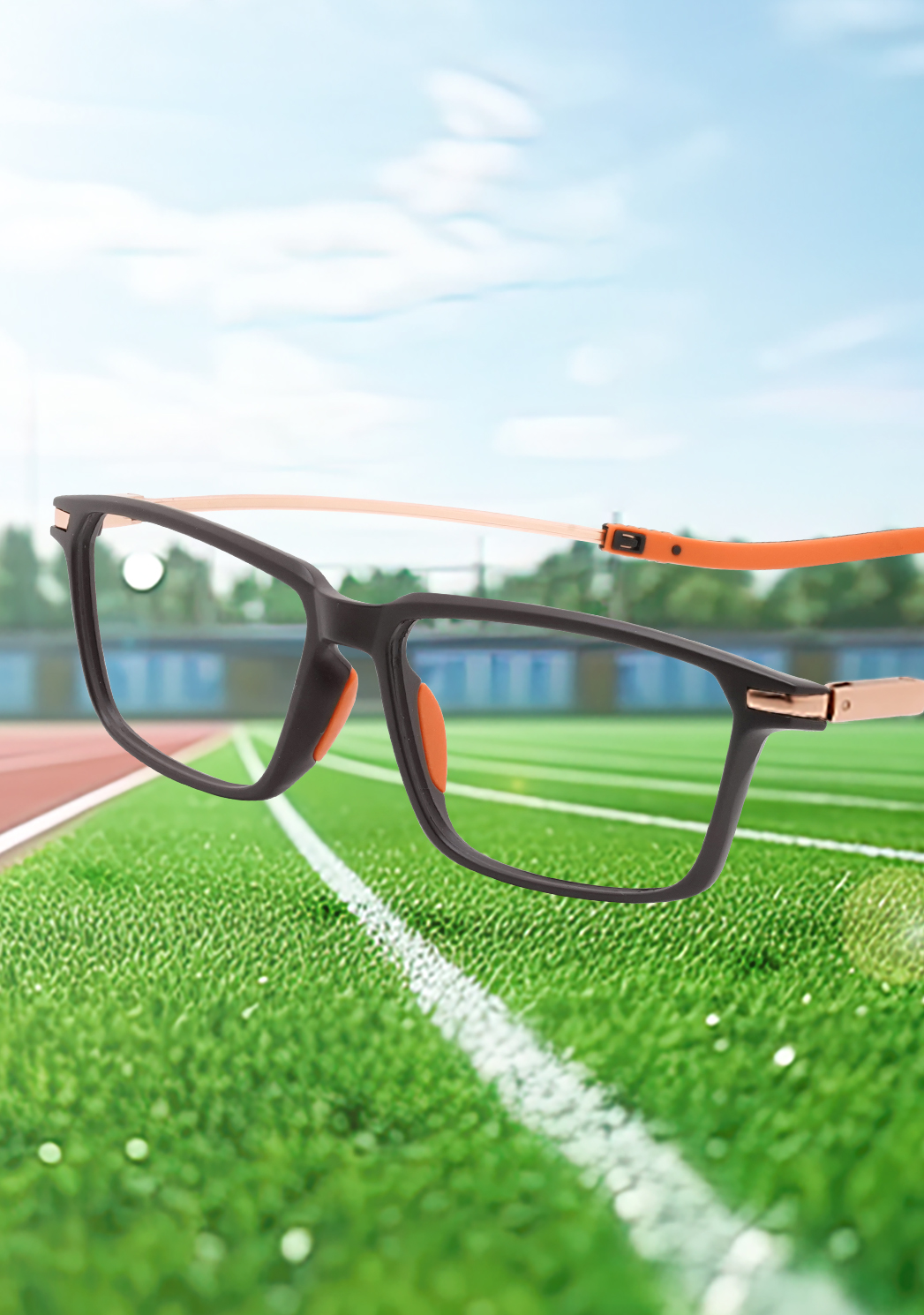
- Low Base Curve (e.g., 2, 4): These lenses are relatively flat. They are common in traditional, less-wrapped frame styles.
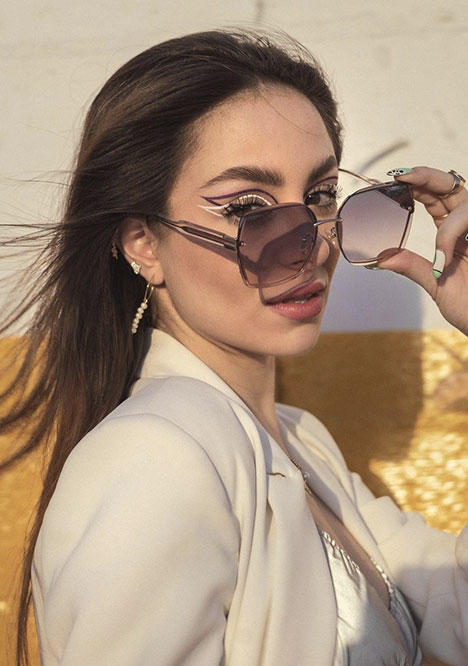
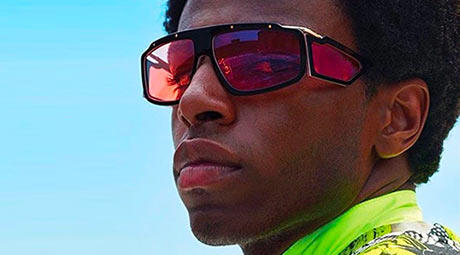
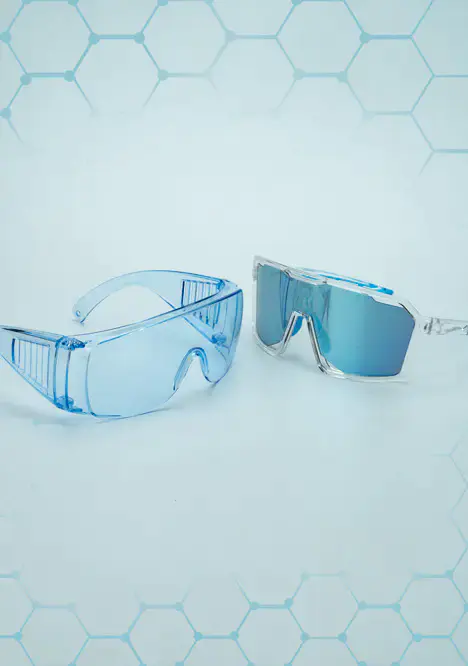
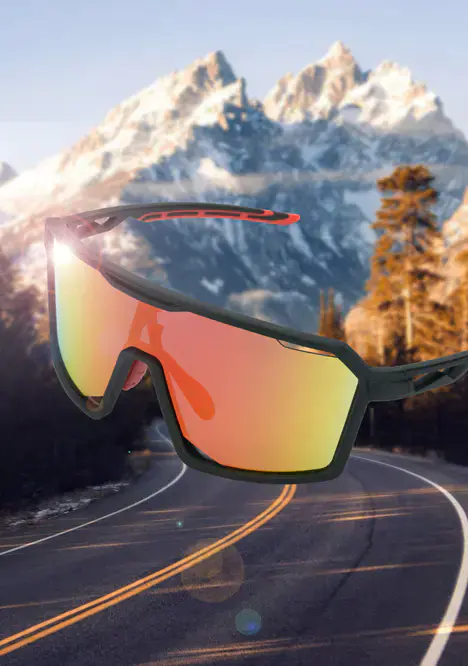
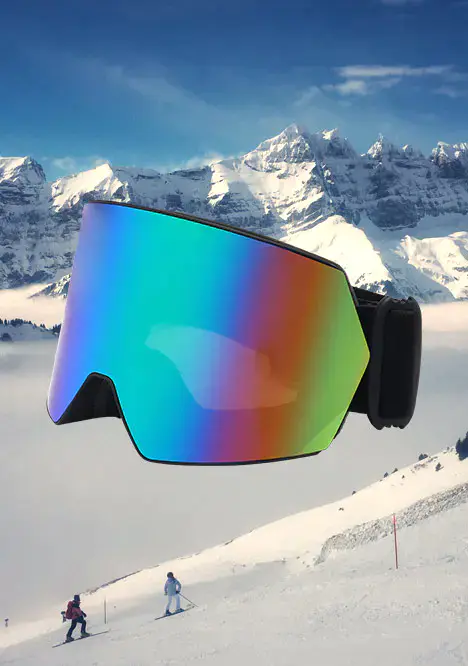
- High Base Curve (e.g., 6, 8): These lenses are noticeably curved or "wrapped." They are essential for sports sunglasses and many modern, large-format fashion frames that curve to follow the contour of the face.
Getting this fundamental curve right is the first step to creating a lens that not only provides clear vision but also fits securely and comfortably in its frame.

The Critical Marriage of Frame and Lens
A frame isn't just a holder for your lenses; it's an engineered component with its own specific curvature, often called "frame wrap." This is where the science of base curve mapping becomes non-negotiable. The curve of the lens must be meticulously matched to the curve of the frame’s lens groove.
The "Pop-Out" Problem: When Curves Clash
The most common and frustrating issue caused by a base curve mismatch is when a lens pops out of the frame. This happens when a lens with a low base curve (flatter) is forced into a frame designed for a high base curve (more curved).
The frame’s groove places immense pressure on the edges of the flatter lens, trying to bend it into a shape it wasn't designed for. The lens, under constant tension, will always try to return to its original flat state. A small change in temperature, a minor bump, or the simple act of cleaning your glasses can be enough to release that tension, causing the lens to pop out.
The "Edge Curl" Effect: Warped Vision from a Bad Fit
Even if the lens stays in, a mismatch can ruin your visual experience. According to insights from optical lab technicians, forcing a standard 4-base lens into an 8-base frame can cause severe 'edge curl' distortion. This creates a "fishbowl" or "swim" effect where your peripheral vision feels warped and unstable. Your central vision might be clear, but looking side-to-side induces a feeling of dizziness or disorientation.
This happens because the mismatch alters the way light passes through the edges of the lens, compromising the optical integrity. You end up with glasses that are technically your prescription, but feel functionally wrong. For more details on how lens shape can impact what you see, our guide on how lens curvature affects high prescription vision offers a deeper dive.

How Your Prescription Adds Another Layer of Complexity
A frame's wrap isn't the only factor. Your specific prescription and the lens material you choose add critical constraints to the base curve calculation.
High Prescriptions and Frame Limitations
Strong prescriptions, particularly for nearsightedness (a high minus number), inherently result in lenses that are much thicker at the edges. Trying to cut these thick-edged lenses to fit into a highly curved, 8-base frame is often physically impossible. The lens bevel won't seat properly in the frame's groove, leading to an insecure fit or an inability to mount the lens at all. This is one reason why your frame choices may become more limited as your prescription strength increases. As explained in our article on strong prescription lenses and eye distortion, managing these optical challenges is key.
The High-Index Lens Calculation
High-index lens materials (like 1.67 or 1.74) are fantastic for making strong prescriptions thinner and lighter. However, their unique properties require special consideration. Due to how these materials refract light and behave during the manufacturing process, optical labs often recommend a base curve that is slightly flatter (by about 0.50 to 0.75 diopters) than the frame’s actual curve. This compensates for the material's characteristics, preventing internal stress and ensuring optical clarity.
This is a perfect example of the expert calculations that happen behind the scenes. It’s not as simple as matching numbers; it’s about a holistic understanding of materials, frames, and prescriptions.
Expert Heuristic: Optical professionals often use a rule of thumb for matching curves: for every 2 diopters of a frame's wrap, the lens base curve should increase by approximately 1 diopter. This is not a strict law but a starting point for ensuring good peripheral optics.
Beyond Base Curve: Other Factors in a Perfect Fit
Achieving flawless vision in a new pair of glasses involves more than just the base curve. Several other geometric factors must be perfectly aligned.
Pantoscopic Tilt: The Angle on Your Face
Pantoscopic tilt is the angle at which your glasses sit on your face when viewed from the side. Most frames have a slight tilt, with the bottom of the frame sitting closer to your cheeks than the top. An ideal tilt is around 8-12 degrees.
If this tilt is too extreme (over 10 degrees), it effectively alters the optical pathway, requiring a change in the base curve and even the prescription itself to maintain clarity. This is a key reason why professional fitting is so valuable; an optician ensures this angle is correct for your face, something that is accounted for by expert labs when processing online orders based on frame specifications.
Pupillary Distance and the Optical Center
The optical center of the lens must be perfectly aligned with the center of your pupil. A mismatched base curve in a wrapped frame can shift this optical center, inducing unwanted prism and causing eye strain, headaches, and a feeling that your eyes are being "pulled." This is especially critical in prescription sunglasses, where minimizing distortion is key to comfort in bright environments. For more on this, see our tips on minimizing distortion in prescription sunglasses.
A Practical Guide for Online Eyewear Shoppers
Understanding base curve empowers you to make smarter choices, even online.
- Assess the Frame Style: Before falling in love with a frame, look at its curvature. Is it a flat, classic design, or a highly curved sports or fashion wrap?
- Consider Your Prescription: If you have a very strong prescription (e.g., above -6.00 or +4.00), be aware that highly wrapped frames may not be optically or physically suitable. Flatter frames are often a safer and more comfortable choice.
- Embrace the Limitations: The perfect pair of glasses is a balance of style and optical science. Accept that some ultra-trendy, high-wrap frames may not be the best vehicle for your specific prescription.
- Trust the Lab's Expertise: When you place an order, our skilled optical technicians perform these complex calculations for you. They analyze your prescription, the frame's geometry (its wrap, size, and tilt), and the lens material to select the optimal base curve that ensures a secure fit and crystal-clear, distortion-free vision.
Frequently Asked Questions (FAQ)
Can I put my old lenses into a new, more curved frame? It is highly discouraged. Your old lenses were ground with a specific base curve to match your old frame. Unless the new frame has the exact same curvature (which is unlikely), you will almost certainly experience fit issues like lens pop-outs and visual distortion.
Why do my new glasses make me feel dizzy at the edges? This can be a sign of adaptation, especially if you're new to a stronger prescription or progressive lenses. However, it can also be caused by a base curve that is too steep or flat for your prescription and frame, creating peripheral distortion. If the feeling doesn't subside after a week, it may be a fitting issue.
What is a "compensated" prescription for wrapped frames? For high-wrap frames, opticians sometimes adjust the prescription slightly to counteract the optical effects of the lens's curve and tilt. This "compensated" or "as-worn" prescription ensures that what you experience visually is true to what your eye doctor ordered, even though the numbers ground into the lens are technically different.
Are all sunglasses high base curve? No, not all. While many popular "wrap-around" and aviator styles used for sports and driving have a high base curve (6-base or 8-base) to provide maximum coverage and peripheral vision, many fashion and retro sunglass styles use a flatter 4-base curve.
Disclaimer: This article is for informational purposes only and does not constitute medical advice. Consult with a qualified eye care professional for any questions regarding your vision health and prescription needs.


