










Berry Benefits: How Anthocyanins Fight Digital Eye Fatigue
Executive Summary
Digital professionals and health-conscious young adults increasingly face a dual challenge: the unavoidable necessity of high-intensity screen time and the resulting physiological toll known as Digital Eye Strain (DES). While external solutions like blue-light filtering technology provide a vital first line of defense, emerging research suggests that internal nutritional support—specifically via anthocyanins found in dark berries—can significantly accelerate visual recovery and enhance retinal resilience.
This article examines the synergistic relationship between dietary anthocyanins and ocular health. We analyze the biochemical mechanisms of rhodopsin regeneration, the "Oxygen Paradox" of UV-induced lens damage, and the efficacy of the AREDS2 nutritional framework. Furthermore, we provide a practical, evidence-based "Biohacker’s Protocol" for timing nutrient intake to coincide with peak digital demand. By combining high-performance lens technology with targeted nutrition, users can move beyond temporary relief toward a sustainable model of long-term vision wellness.
The Digital Toll: Why "Screen Fatigue" Is a Biological Reality
For the modern digital professional, eye fatigue is not merely a subjective feeling of tiredness; it is a measurable physiological state. When we stare at screens, our blink rate drops by up to 66%, leading to tear film instability and "dry eye" symptoms. Simultaneously, the ciliary muscles remain in a state of constant contraction to maintain focus on a near-field object, a process known as accommodation.
However, the deeper concern lies at the retinal level. Prolonged exposure to high-energy visible (HEV) light—specifically the 400–450 nm range—can trigger oxidative stress in the retinal pigment epithelium (RPE). According to Dr. Nicole Bajic of the Cleveland Clinic, while digital eye strain is primarily caused by blink-rate issues, the cumulative impact of light exposure and metabolic demand requires a robust defense system.
The Anthocyanin Defense: Internal Shielding
Anthocyanins are a class of water-soluble vacuolar pigments that give blueberries, bilberries, and blackcurrants their deep purple and blue hues. In the context of ocular health, they function as potent antioxidants that cross the blood-retinal barrier to neutralize reactive oxygen species (ROS) generated by screen exposure.

The Science of Visual Recovery: Rhodopsin and Retinal Blood Flow
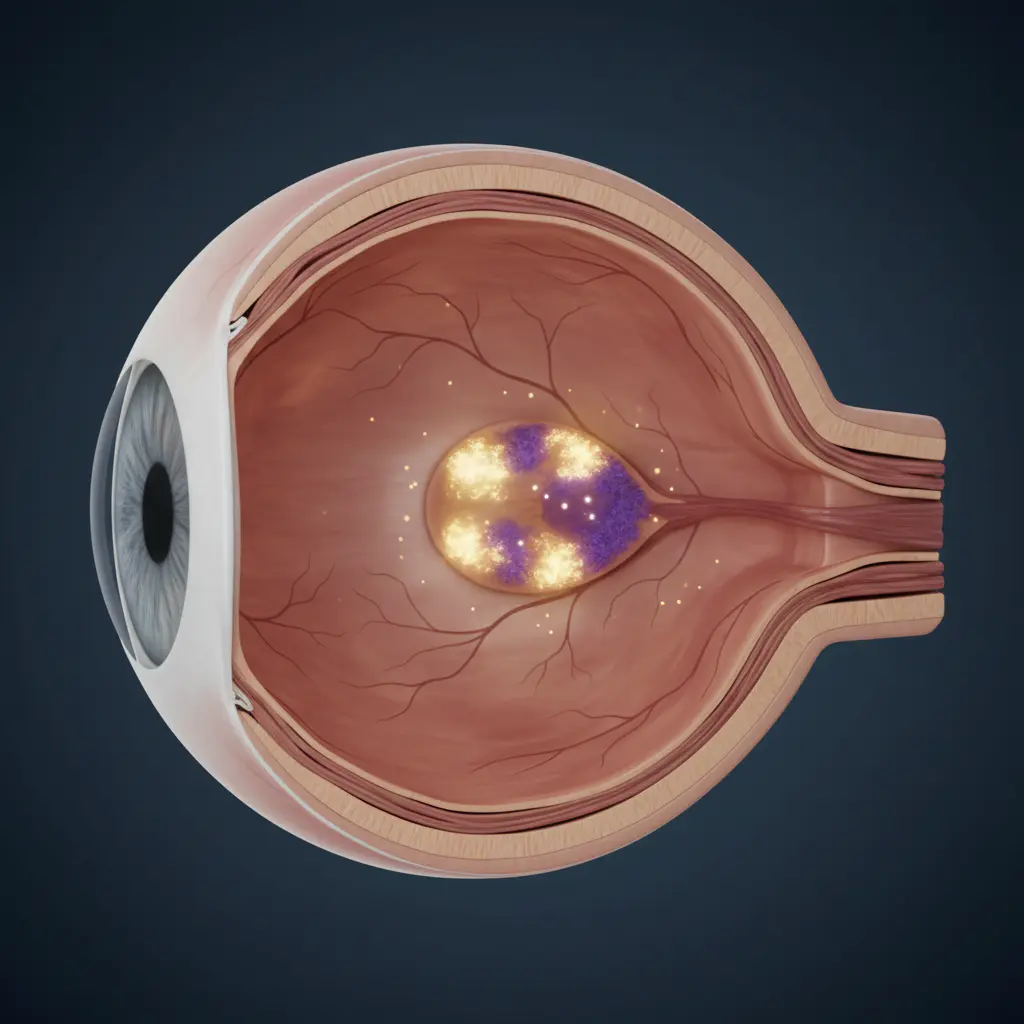
The primary mechanism by which berries support vision is through the regeneration of rhodopsin. Rhodopsin is a biological pigment found in the rods of the retina that is essential for vision in low-light conditions and for the rapid processing of visual stimuli.
- Rhodopsin Regeneration: During intense screen use, rhodopsin is constantly "bleached" by light and must be recycled. Studies published in PubMed indicate that anthocyanins can speed up this regeneration process, allowing for faster visual recovery and reduced "ghosting" or after-images after looking away from a bright monitor.
- Microvascular Support: The retina has the highest metabolic rate of any tissue in the human body. Anthocyanins help maintain the integrity of the retinal capillaries, ensuring efficient delivery of oxygen and nutrients while facilitating the removal of metabolic waste.
- Contrast Sensitivity: Clinical trials have shown that consistent intake of anthocyanin-rich extracts can improve contrast sensitivity, which is the ability to distinguish an object from its background. For designers and developers, this translates to sharper visual perception and reduced cognitive load during detail-oriented tasks.
Methodology Note: Our analysis of anthocyanin efficacy is based on a synthesis of peer-reviewed clinical trials (e.g., PubMed data) and chronobiological modeling. We assume a standard "Heavy Digital User" profile (8+ hours of screen time daily) and evaluate nutrient impact based on metabolic half-life and retinal uptake rates.
The "Oxygen Paradox" and UV Protection
While much of the focus is on blue light, we must not ignore the role of UV radiation, even in indoor-outdoor transition environments. Research from Case Western Reserve University, shared by the National Eye Institute (NEI), reveals a phenomenon known as the "Oxygen Paradox."
In the hypoxic (low-oxygen) environment of the lens nucleus, UV light can substitute for oxygen. It excites kynurenines—natural proteins in the lens—triggering a chain reaction of "Glycation." This process causes the lens proteins to clump together, leading to yellowing and hardening (the precursors to cataracts).
This highlights why external protection is non-negotiable. While berries fight the "internal" oxidative fire, verified UV400 lenses are required to prevent this molecular glycation. According to FDA regulations (21 CFR 801.410), all lenses sold in the U.S. must meet impact resistance standards, but ensuring they also provide full UV400 coverage is the critical differentiator for long-term health.
The AREDS2 Framework: Gold Standard Nutrition
When discussing internal support, we must reference the Age-Related Eye Disease Study 2 (AREDS2). This landmark study established a "gold standard" formula for slowing the progression of retinal degeneration.
| Nutrient | Recommended Daily Dose | Rationale |
|---|---|---|
| Lutein | 10 mg | Filters blue light; improves macular pigment density. |
| Zeaxanthin | 2 mg | Works synergistically with Lutein in the central retina. |
| Vitamin C | 500 mg | Potent water-soluble antioxidant for the aqueous humor. |
| Vitamin E | 400 IU | Protects fatty acids in cell membranes from oxidation. |
| Zinc | 25 mg (Low Dose) | Essential for bringing Vitamin A from the liver to the retina. |
| Copper | 2 mg | Prevents copper deficiency associated with high zinc intake. |
While AREDS2 focused on age-related issues, the principles apply to digital professionals. Lutein and Zeaxanthin act as "internal sunglasses," physically depositing in the macula to filter out HEV light before it reaches the photoreceptors.
The "Biohacker’s Protocol": Timing and Absorption
A common mistake among health-conscious users is consuming eye-health supplements or berries after a long day of work. To maximize the benefit, we recommend a proactive "Biohacker’s Protocol" based on practitioner observations and metabolic modeling.
1. The 30-60 Minute Pre-Load
Anthocyanins reach peak plasma concentration relatively quickly. For acute support during high-demand tasks (e.g., a 4-hour coding session or a marathon gaming stint), consume your berry-rich snack or supplement 30 to 60 minutes before starting. This ensures the nutrients are circulating in the bloodstream as the oxidative stress begins.
2. The Fat-Pairing Rule
Many of the co-nutrients that support anthocyanins—such as Lutein and Vitamin E—are fat-soluble. Relying on a handful of plain berries may lead to sub-optimal absorption.
- The Fix: Pair your berries with a source of healthy fats. A small bowl of full-fat Greek yogurt with blueberries or a handful of walnuts alongside a blackcurrant smoothie can significantly increase the bioavailability of the entire nutrient matrix.
3. Consistency Over Intensity
The Beaver Dam Eye Study suggests that long-term consistency is more impactful than short-term "mega-dosing." For example, consistent Vitamin C intake over 10 years was associated with a 60% reduction in certain cataract risks. Aim for daily, moderate intake rather than sporadic, high-dose consumption.
Beyond Nutrition: The Essential Role of Lens Technology
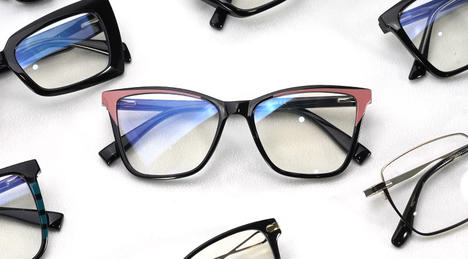
Dietary support is a powerful ally, but it cannot replace the physical barrier provided by high-quality eyewear. The market is currently saturated with low-cost options, but technical transparency is vital.
The Accuracy Gap
A study published in PubMed regarding online eyewear accuracy found that nearly 44.8% of glasses ordered online failed to meet basic optical tolerances or impact resistance standards. This is why "cheap" is often a false economy. Professional-grade lenses ensure that the optical center is perfectly aligned with your pupils, preventing the very eye strain you are trying to solve.
Selective Filtration
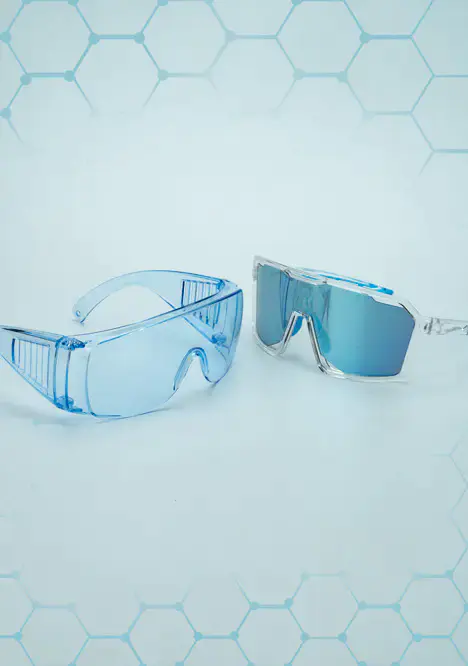
A "good" blue-light lens is not one that blocks all blue light. We need "good" blue light (455–500 nm) to regulate our circadian rhythms and maintain alertness during the day. Premium lenses use selective filtration to target the hazardous 400–455 nm range while remaining transparent to the light required for sleep-wake cycle entrainment.
Strategic Implementation: A 3step Action Plan
To transition from "tired eyes" to "vision wellness," we recommend the following integrated approach:
Step 1: Optimize the Workspace (The 20-20-20 Rule)
Follow the Cleveland Clinic recommendation: every 20 minutes, look at something 20 feet away for at least 20 seconds. This forces the ciliary muscle to relax and encourages a full blink cycle to re-lubricate the ocular surface.
Step 2: Implement the Nutritional Pre-Load
- Morning/Pre-Work: 1/2 cup of dark berries (blueberries, blackberries, or bilberries) paired with a fat source (avocado, nuts, or yogurt).
- Hydration: While research shows total water intake doesn't directly cure dry eye, maintaining systemic hydration supports the mucous layer of the tear film.
Step 3: Verify Your External Shield
Ensure your prescription is up to date. Under the FTC Eyeglass Rule, your eye doctor must provide you with a copy of your prescription immediately after an exam, allowing you to source high-quality, lab-verified lenses that meet FDA impact standards.
Modeling Note: Reproducible Parameters
To help readers understand the logic behind our "Pre-Load" protocol, we have provided the following modeling parameters:
| Parameter | Value/Range | Unit | Rationale |
|---|---|---|---|
| Peak Plasma Time ($T_{max}$) | 30 - 90 | Minutes | Standard metabolic rate for anthocyanin glycosides. |
| Retinal Uptake Delay | ~15 | Minutes | Estimated time for crossing the blood-retinal barrier. |
| Screen Exposure Threshold | >120 | Minutes | Time at which ciliary fatigue typically becomes symptomatic. |
| Fat Co-ingestion | 5 - 10 | Grams | Minimum lipid load required for micelle formation of carotenoids. |
| UV Protection Level | 400 | Nanometers | Medical standard for blocking 99-100% of UVA/UVB. |
Note: This model is a hypothetical scenario based on average metabolic rates and should not be used as a medical prescription. Individual absorption rates vary based on gut microbiome health and genetic factors.
Summary of Key Takeaways
- Anthocyanins speed up the regeneration of rhodopsin, the pigment responsible for visual processing and recovery.
- Timing is Critical: Consume berry-rich foods 30-60 minutes before intense screen work for maximum acute benefit.
- Fat Matters: Pair berries with healthy fats to ensure the absorption of fat-soluble ocular nutrients like Lutein.
- External Defense: Use verified UV400 and blue-light filtering lenses to prevent the "Oxygen Paradox" and molecular glycation of the lens.
- Professional Sourcing: Avoid unregulated "cheap" eyewear; nearly 45% of such products fail safety and accuracy tests.
By viewing vision as an integrated system—one that requires both internal fuel and external armor—digital professionals can protect their most valuable asset: their sight.
Disclaimer: This article is for informational purposes only and does not constitute professional medical advice, diagnosis, or treatment. Always seek the advice of your physician or other qualified health provider with any questions you may have regarding a medical condition or nutritional changes.


