








Best Lens Tints for Pilots: Why Polarized Isn't Always the Answer
The Critical Difference: Why Your Sunglasses Could Be a Flight Risk
For any pilot, clear and accurate vision is the most critical tool in the flight bag. Yet, a common piece of premium eyewear—polarized sunglasses—can create a significant and unexpected hazard in the cockpit. Many pilots discover this the hard way during a pre-flight check or while scanning for traffic, only to find their multi-thousand-dollar avionics display has gone completely black. This isn't a system failure; it's a predictable interaction between physics and technology that can compromise situational awareness.
This guide is written for aviation professionals—commercial pilots, flight instructors, and private aviators—who prioritize function and safety above all else. We will explore the science behind why polarized lenses are often unsuitable for flight, break down the ideal lens tints for various conditions, and cover the other essential features your eyewear must have. Making the right choice is not about fashion; it's about maintaining the highest level of safety and performance from the pilot's seat.

The Polarized Lens Paradox: When a Premium Feature Becomes a Hazard
On the ground, polarized lenses are highly effective. They contain a chemical filter that blocks horizontal light waves, the kind that reflect off flat surfaces like water or a wet road to create blinding glare. As Harvard Health Publishing explains, this filter works like a microscopic picket fence, only allowing vertical light to pass through, resulting in a clearer, more comfortable view.
However, this same technology creates serious problems in an aviation environment. The primary issue, as highlighted in a safety brochure for pilots from the Federal Aviation Administration (FAA), is their interaction with modern cockpit displays.
Technical Insight: How Polarization Affects Vision
- LCD Screen Blackouts: Most digital flight instruments, including Liquid Crystal Displays (LCDs) like the Garmin G1000 or Avidyne systems, use polarizing filters to make the screen readable. When you view one polarizing filter through another (your sunglasses), they can cancel each other out, causing the screen to appear black or dangerously dim from certain angles.
- Windshield Striations: Polarized lenses can also reveal stress patterns in tempered glass, making sections of the aircraft’s windshield appear as a distracting moiré or rainbow pattern. This can interfere with your ability to scan for other aircraft.
- Reduced Glint from Other Aircraft: That flash of light reflecting off another plane's fuselage is a key visual cue for spotting traffic. Polarized lenses can diminish or eliminate this glint, reducing your reaction time.
For these reasons, the consensus among experienced aviators and safety experts is clear: polarized lenses are generally not recommended for flying, especially in aircraft with glass-panel cockpits.

Decoding Lens Tints: FAA Recommendations for Optimal Clarity and Safety
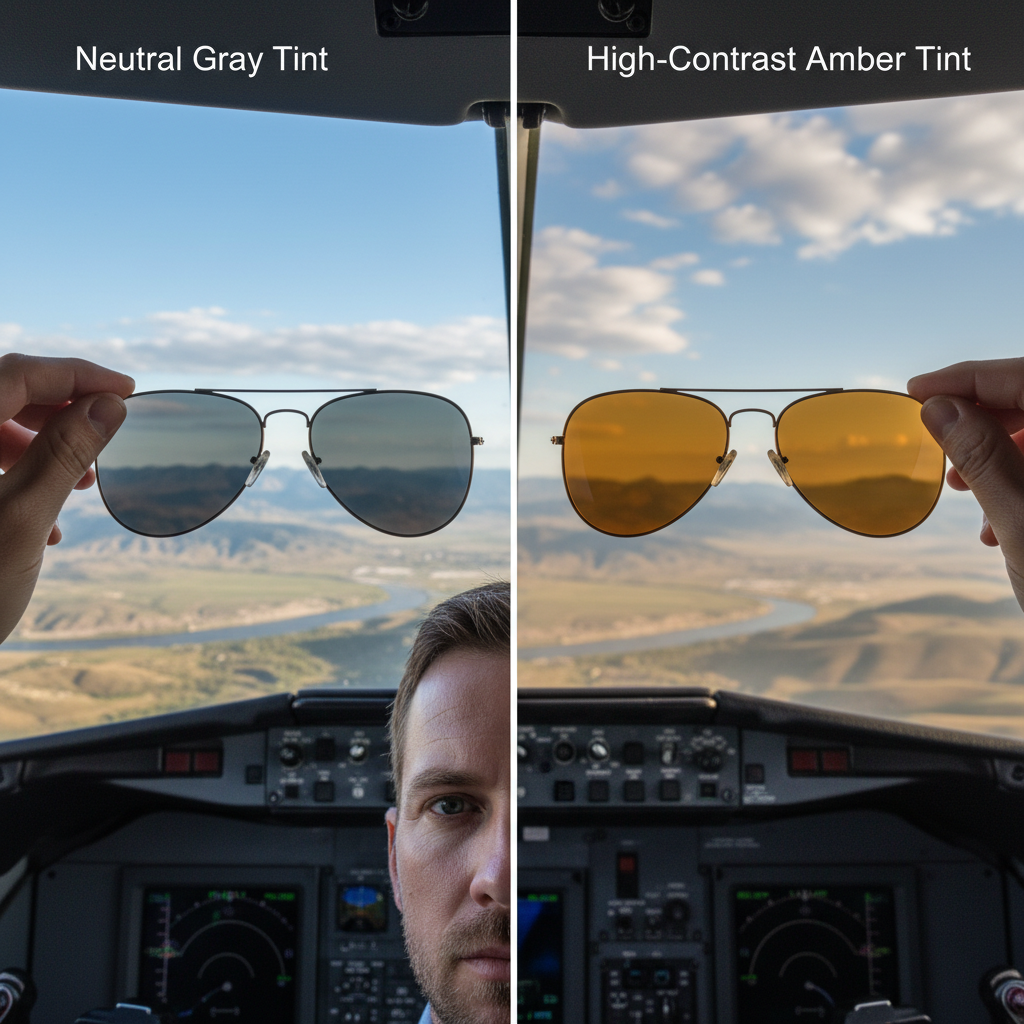
Choosing the right lens color is about optimizing the light that reaches your eyes to enhance vision without compromising color integrity. The FAA recommends a neutral gray tint that allows 15-30% of visible light to pass through. This provides sufficient protection from bright sun while ensuring you can still accurately identify colors on charts, instrument panels, and outside the cockpit.
Here’s a breakdown of the most common tints and their applications in aviation:
| Lens Tint | Primary Use | Pros | Cons | FAA Recommendation |
|---|---|---|---|---|
| Neutral Gray / Green-Gray | All-purpose, bright sun | Reduces overall brightness (VLT 15-30%). Transmits colors evenly for true color perception. | May not provide enough contrast in hazy or overcast conditions. | Highly Recommended |
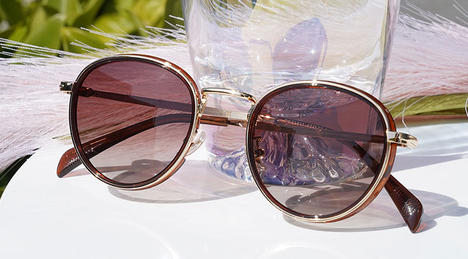
| Brown / Amber | Hazy, overcast, low-light | Enhances contrast and depth perception by filtering blue light. Makes ground contours more distinct. | Can cause some color distortion, particularly with green and red hues. | Use with caution |
| Yellow / "Blue Blocker" | Haze, low-light | Significantly increases contrast and makes scenes appear brighter. | Causes significant color distortion. The FAA explicitly warns against them as they can make it difficult to distinguish aviation color signals. | Not Recommended |
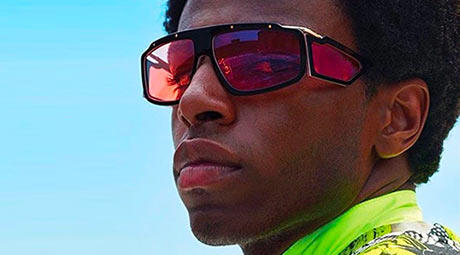
| Rose / Light Red | Marginal VFR, Haze | Helps cut through haze and can improve definition of ground objects. | Introduces noticeable color distortion. | Use with extreme caution |
Neutral Gray: The Gold Standard for Pilots
For most flying, especially in VFR conditions, neutral gray is the safest and most effective choice. The American Optometric Association (AOA) also recommends gray lenses for driving for the same reason: they are best for proper color recognition. This ensures you can correctly interpret runway lights, PAPI/VASI systems, and the colors on your digital displays without a second thought.
High-Contrast Tints: A Tool for Specific Conditions
While gray is the primary recommendation, some pilots carry a second pair of glasses with a brown or amber tint for marginal VFR or hazy days. According to Cleveland Clinic, amber and brown lenses are particularly effective at enhancing contrast. This can be a valuable tool for improving the definition of terrain or spotting other aircraft against a hazy sky, but it comes at the cost of minor color shifts.
Beyond the Tint: Essential Features for Aviation Eyewear
Beyond color and polarization, several other features are critical for pilot sunglasses.
1. 100% UV Protection (UV400)
UV radiation exposure increases with altitude, making protection a medical necessity. Cumulative exposure is a significant risk factor for developing cataracts and other eye conditions, as noted by the World Health Organization. Always choose lenses labeled "UV400" or "100% UV Protection," which block all harmful UVA and UVB rays up to 400 nanometers. A dark tint does not equal UV protection; in fact, a dark lens without a UV filter is more dangerous than no sunglasses at all, as it causes your pupil to dilate and let more radiation in.
2. Impact-Resistant Materials
Your eyes are vulnerable in the cockpit. The AOA recommends materials like polycarbonate or Trivex for their superior impact resistance. These materials can withstand high-velocity impacts, offering a layer of protection from potential hazards like bird strikes that could shatter standard plastic or glass lenses.
3. Frame Design and Fit
A proper fit is crucial for both comfort and safety. As experienced flight instructors will attest, frames that slip down your nose during high-G maneuvers or interfere with the seal of your headset are a dangerous distraction.
- Secure Fit: Look for frames with a slightly tighter temple fit or features like silicone nose pads that prevent slippage from heat and perspiration.
- Peripheral Coverage: To prevent peripheral light leakage, which can be a source of significant UV exposure, the American Academy of Ophthalmology recommends oversized or wraparound styles. This is particularly important in high-glare environments like flying over water or snow.
Frequently Asked Questions for Pilots
1. What about photochromic (transition) lenses? Photochromic lenses automatically darken in response to UV light. While convenient, they have two main drawbacks for aviation. First, most aircraft windshields block UV, which can prevent the lenses from getting fully dark inside the cockpit. Second, their reaction time can be too slow when moving rapidly from bright sun to shadow.
2. Is an anti-reflective (AR) coating necessary? Yes, an AR coating is highly recommended. It reduces glare from light reflecting off the back surface of your lenses, which can be a major source of distraction and eye fatigue. It also improves light transmission, giving you a clearer view.
3. Can I just wear my regular prescription glasses? If your daily glasses are untinted, they won't provide adequate protection from bright sunlight, leading to eye strain and fatigue. For flying, it is essential to have a dedicated pair of prescription sunglasses that are non-polarized, have a proper aviation tint, and offer full UV400 protection.
4. Where can I find non-polarized prescription sunglasses? When ordering prescription sunglasses, you must explicitly specify that you want non-polarized lenses. Most opticians and online retailers offer this option, but polarized is often the default for sunglasses. Always double-check your order to ensure you are getting the correct lenses for your flight needs.
Disclaimer: This article is for informational purposes only and does not constitute professional medical advice. Always consult with an eye care professional and your flight instructor to determine the best eyewear for your specific needs and flying conditions.
References
- Federal Aviation Administration (FAA). (n.d.). Sunglasses for Pilots. Retrieved from https://www.faa.gov/pilots/safety/pilotsafetybrochures/media/sunglasses.pdf
- Harvard Health Publishing. (2020). Polarized sunglasses: Protecting your eyes from harmful glare. Retrieved from https://www.health.harvard.edu/staying-healthy/polarized-sunglasses-protecting-your-eyes-from-harmful-glare
- American Optometric Association (AOA). (n.d.). UV Protection. Retrieved from https://www.aoa.org/healthy-eyes/caring-for-your-eyes/uv-protection
- Cleveland Clinic. (n.d.). Do Sunglasses Protect Your Eyes? Retrieved from https://health.clevelandclinic.org/do-sunglasses-protect-your-eyes
- World Health Organization (WHO). (2016). Ultraviolet radiation. Retrieved from https://www.who.int/news-room/fact-sheets/detail/ultraviolet-radiation
- American Academy of Ophthalmology (AAO). (n.d.). How to Choose the Best Sunglasses. Retrieved from https://www.aao.org/eye-health/glasses-contacts/sunglasses-3


