









Should You Wear Blue Light Blocking Glasses All Day?
TL;DR: Should You Wear Blue Light Blocking Glasses All Day?
For most people, wearing blue light blocking glasses all day is not recommended. Blue light from the sun is essential for regulating your mood and alertness during the day. The primary, science-backed benefit of these glasses is to improve sleep by preventing blue light from suppressing melatonin production at night.
- For Sleep: Wear glasses with a strong yellow or amber tint (blocking 60-90% of blue light) for 90 to 120 minutes before bed.
- For Eye Strain: The discomfort you feel from screens is typically Digital Eye Strain, caused by reduced blinking and focusing fatigue, not blue light itself. Better solutions include the 20-20-20 rule and using lubricating eye drops.
- For Daytime Glare: If you find screens harsh, a pair of glasses with a very light tint (blocking 15-30%) and an anti-reflective coating can help reduce glare without significantly altering color perception or blocking beneficial blue light.
Blue light blocking glasses have become a popular accessory for anyone spending hours in front of a screen. Marketed as a solution for everything from eye strain to better sleep, many users wonder if they should keep them on from their morning coffee to their evening scroll. While the intention is good, the science suggests that all-day wear is a misunderstanding of how blue light actually affects our bodies.
This article breaks down the evidence to provide a clear guide on when to wear your blue light glasses for maximum benefit, and when it's better to take them off.
The Myth of All-Day Protection: Blue Light and Eye Strain
The biggest misconception about blue light glasses is that they are a primary cure for Digital Eye Strain (DES). While they can help with screen glare, the root causes of DES are more complex and are not directly related to the blue light itself.
What Really Causes Digital Eye Strain?
If you experience headaches, tired eyes, or blurry vision after a long day of computer work, you're likely dealing with DES. According to ophthalmologist Dr. Nicole Bajic in a Cleveland Clinic article, this condition isn't caused by the toxicity of blue light. Instead, it’s a result of how we use our digital devices:
- Reduced Blink Rate: When we stare at screens, we tend to blink less frequently. This leads to dry, irritated, and tired eyes.
- Accommodation Issues: Your eyes are constantly refocusing to maintain a clear image on the screen. This sustained muscular effort can lead to fatigue, much like any other muscle in your body would after a long workout.
A rigorous double-blind study published in PubMed confirmed this by comparing blue-blocking lenses to placebo lenses. The researchers found that while all participants experienced increased symptoms of eye strain after a prolonged reading task, there was no significant difference between the group wearing blue-blockers and the control group. This strongly suggests that blocking blue light does not prevent the underlying causes of DES.
Debunking the "Anti-Fatigue" Claim
The myth that blue light glasses prevent eye fatigue is one of the most persistent. The real solution is not to filter a specific color of light, but to change your habits.
A Better Approach to Managing Eye Strain:
- Follow the 20-20-20 Rule: Every 20 minutes, take a 20-second break to look at something at least 20 feet away. This allows your eye muscles to relax.
- Use Artificial Tears: As recommended by experts at the University of Mississippi Medical Center, dry eye is a major contributor to discomfort. Over-the-counter lubricating drops can provide significant relief.
- Optimize Your Ergonomics: Adjust your monitor so the top of the screen is at or slightly below eye level, and sit at least an arm's length away.
Is Daytime Blue Light Actually Good for You?
Perhaps the most compelling reason to avoid wearing blue light glasses all day is that you’d be blocking something your body needs. A comprehensive review in the journal Chronobiology International explains that blue light is not a toxin, but a vital environmental signal.
During the day, exposure to natural blue light from the sun helps to:
- Boost alertness and cognitive function.
- Elevate mood.
- Regulate your circadian rhythm, telling your body it's time to be awake and active.
Blocking this signal all day can disrupt these natural processes. For children, the issue is even more critical. Some research suggests that depriving developing eyes of the full spectrum of natural light could potentially interfere with proper eye growth, a theory explored in a paper from the Mayo Clinic.
The Real Superpower: Using Blue Light Glasses for Better Sleep
While blue light glasses fall short as a cure for eye strain, they are a powerful tool for improving sleep. The key is understanding that the timing of light exposure is everything.
How Blue Light Affects Your Internal Clock
Your body’s internal clock, or circadian rhythm, is primarily controlled by light. When your retina detects blue light, it sends a signal to your brain to suppress the production of melatonin, the hormone that makes you feel sleepy.
During the day, this is a good thing. At night, however, exposure to blue light from screens, LEDs, and fluorescent bulbs can trick your brain into thinking it's still daytime. This delays the release of melatonin, making it harder to fall asleep and potentially reducing sleep quality.
The Evidence for Sleep Improvement
This is where blue light blocking glasses truly shine. By filtering out the disruptive wavelengths in the hours leading up to bed, you allow melatonin production to begin naturally.
- A Harvard Health Publishing blog reviewing the evidence noted that these glasses can help people fall asleep faster and improve overall sleep time.
- A major systematic review in PubMed that analyzed 16 randomized controlled trials found "substantial evidence" that wearing blue-blocking glasses in the evening reduces the time it takes to fall asleep, especially for people with insomnia or jet lag.
A Practical Protocol for Better Sleep
To get the most out of your glasses, use them as a targeted tool.
- Timing is Key: Put on your blue light glasses 90 to 120 minutes before your intended bedtime.
- Choose the Right Tint: For sleep purposes, you need lenses with a noticeable yellow or amber tint that can block a significant amount of blue light (over 60%). Clear lenses will not be effective for this purpose.
- Be Consistent: Make it part of your nightly wind-down routine. The benefits accumulate with consistent use.
A Practical Guide to Choosing and Using Your Glasses
Not all blue light glasses are the same. The right pair depends entirely on your goal.
Not All Tints Are Created Equal
The effectiveness of blue light glasses is determined by which wavelengths they filter and by how much. A quality lens should selectively filter harmful blue-violet light (around 400-455nm) while letting beneficial blue-turquoise light through, as detailed in an analysis in the Journal of Ophthalmic and Physiological Optics.
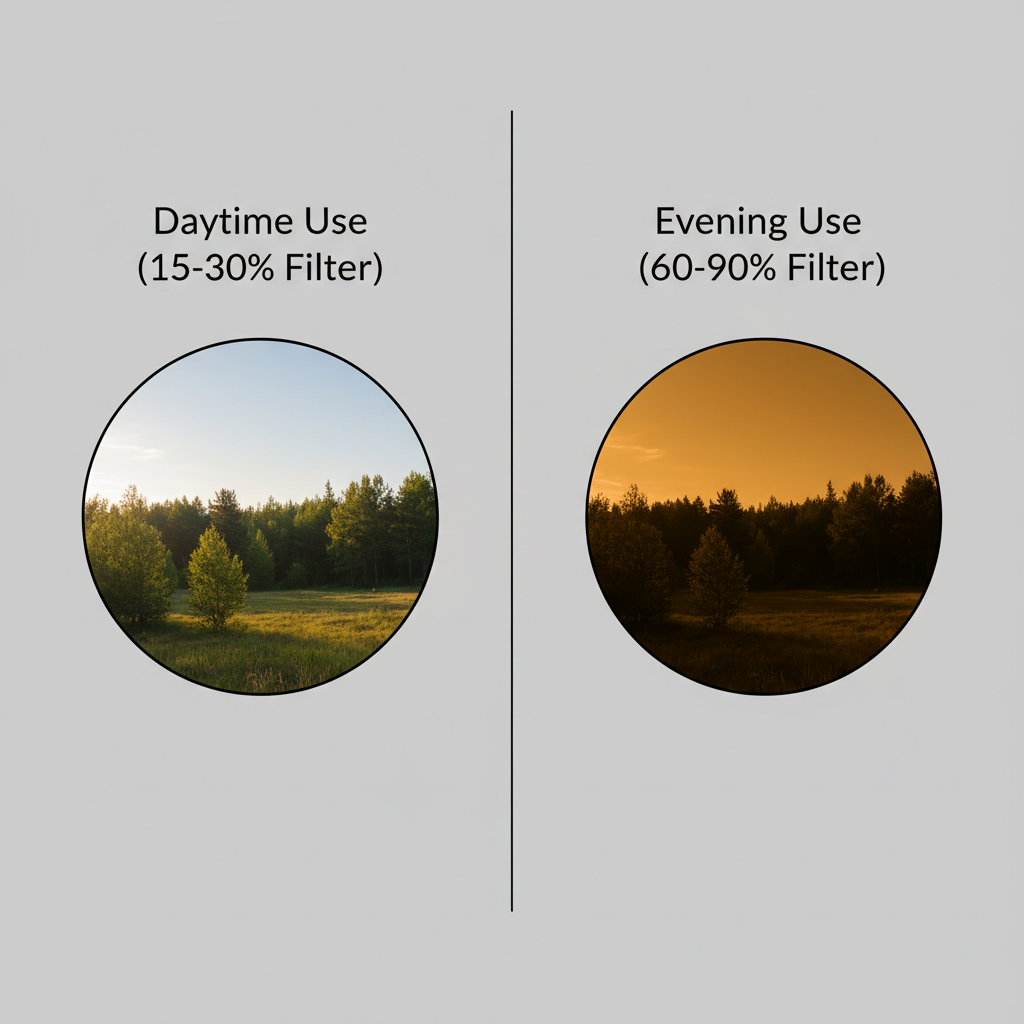
Here’s a simple breakdown of tint levels and their uses:
| Tint Level & Appearance | Blue Light Blockage | Best Use Case | Trade-offs |
|---|---|---|---|
| Light Tint (Virtually Clear) | 15–30% | Daytime Glare Reduction: For users sensitive to screen harshness who need accurate color perception (e.g., graphic designers). | Not effective for improving sleep. |
| Heavy Tint (Yellow/Amber) | 60–90%+ | Pre-Sleep Routine: For maximizing melatonin production 1-2 hours before bed. | Significant color distortion. Not suitable for driving or tasks requiring color accuracy. |
Why Fit Still Matters, Even for Non-Prescription Lenses
Even if you don't need a prescription, the fit of your glasses is crucial for comfort. A common issue is an incorrect Pupillary Distance (PD)—the distance between the centers of your pupils. If the optical centers of the lenses don't align with your pupils, it can induce its own form of eye strain and discomfort. If you've ever wondered [Does a Small PD Error Matter for Online Glasses?](https://www.lensmartonline.com/blogs/lensmartonline/pd-error-online-glasses-accuracy), the answer is yes, it certainly can.
The Importance of Anti-Reflective Coatings
An anti-reflective (AR) coating is a non-negotiable feature for any pair of glasses used for screen work. It minimizes the reflections from the front and back surfaces of the lenses, reducing glare and improving visual clarity. Without it, you may simply be trading one source of visual distraction for another.
Wrapping Up: Key Takeaways
Instead of thinking of blue light glasses as an all-day shield, it's more accurate to see them as a specialized tool for managing your circadian rhythm.
- Don't Wear Them All Day: Your body needs daytime blue light for alertness and mood regulation.
- Use Them as a Sleep Tool: The primary benefit is preventing melatonin suppression at night. Wear high-blockage amber lenses for 1-2 hours before bed.
- Tackle Eye Strain Directly: Use the 20-20-20 rule, lubricating eye drops, and proper ergonomics to combat Digital Eye Strain.
- Choose Wisely: Select a tint level based on your goal (light for daytime glare, heavy for pre-sleep) and always opt for an anti-reflective coating.
Frequently Asked Questions (FAQ)
Can I wear blue light glasses while driving at night?
No. You should never wear tinted glasses, especially yellow or amber ones, for night driving. They reduce the amount of light reaching your eyes, which can decrease visibility and impair your ability to react to hazards.
What about the blue light filters built into screens (like Night Shift or Night Light)?
These software solutions are a great first step. They work by warming the color temperature of your screen to reduce blue light emissions. However, glasses have the advantage of blocking blue light from all sources in your environment, not just one screen.
Are there any risks for children wearing blue light glasses?
Caution is advised. As mentioned, some researchers are concerned that blocking parts of the visible light spectrum could interfere with healthy eye development in children. Always consult with an optometrist or ophthalmologist before having a child use blue light blocking glasses.
How long will it take to notice a difference in my sleep?
Many people report feeling sleepier on the first night. However, to see a real change in your sleep patterns, give it a consistent two-week trial. Track how long it takes you to fall asleep and how rested you feel in the morning.
Disclaimer: This article is for informational purposes only and does not constitute professional medical advice. Please consult a qualified healthcare provider, such as an optometrist or ophthalmologist, for any health concerns or before making any decisions related to your eye health, especially if you have pre-existing conditions.
References
- Cleveland Clinic: Do Blue Light Blocking Glasses Actually Work?
- PubMed: Blue‐light filtering spectacle lenses: optical and clinical performances
- University of Mississippi Medical Center: Do blue-light glasses relieve digital eye strain?
- PMC: Effects of light on human circadian rhythms, sleep and mood
- PMC: Potential Role of Blue Light in the Pathogenesis of Myopia
- Harvard Health Publishing: Can blue light blocking glasses improve your sleep?
- PubMed: Blue-blocking glasses as a therapeutic intervention for sleep and circadian rhythm disorders: A systematic review
- PMC: Blue-blocking filters and their effect on circadian rhythm


