







Blue Light Glasses: Fact vs. Fiction for Eye Health
The Modern Dilemma: Screens, Blue Light, and Your Eyes
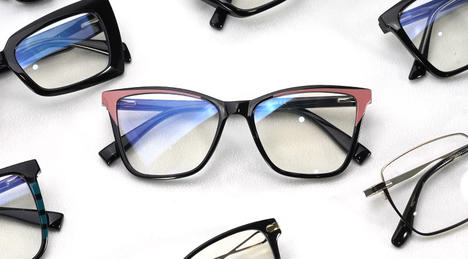
Digital screens are an inescapable part of modern life, but they come with a persistent question: are they harming our eyes? This concern has fueled the rapid rise of blue light blocking glasses, marketed as a cure-all for everything from eye fatigue to poor sleep. But what does the science actually say?
This article cuts through the marketing hype to provide a clear, evidence-based look at blue light glasses. We will separate the proven benefits from the popular myths, drawing on clinical research and expert insights to help you understand how these lenses work, when they are useful, and when they are unnecessary.
TL;DR: The Bottom Line on Blue Light Glasses
- Myth: They prevent digital eye strain. Fact: The discomfort you feel from screens is typically caused by reduced blinking and focusing effort, not blue light itself. The science does not support using these glasses for eye strain.
- Fact: They can significantly improve your sleep. Proof: Wearing blue light filtering glasses in the evening can prevent the suppression of melatonin, your body's sleep hormone, helping you fall asleep faster and improve sleep quality.
- It Depends: Not all blue light lenses are the same. "All-day" lenses offer subtle filtering with minimal color distortion, while "evening" lenses use a stronger tint for maximum sleep benefit.
- Caution: Experts advise against the indiscriminate use of blue light blockers for children, as there is a theoretical risk it could interfere with normal eye development.
Myth vs. Reality: Do Blue Light Glasses Stop Digital Eye Strain?
The number one reason people buy blue light glasses is to combat digital eye strain. We've all felt it: that tired, gritty, or sore feeling in your eyes after a long day of staring at a computer. It seems logical that blocking the blue light from the screen would solve the problem. However, the scientific consensus points in a different direction.
According to ophthalmologist Dr. Nicole Bajic at the Cleveland Clinic, Digital Eye Strain (DES) isn't caused by the blue light itself. Instead, it’s a problem of use. When we stare at screens, we blink less—often up to 50% less—which leads to dry, irritated eyes. We also force our eyes' focusing muscles to hold a fixed position for hours, causing fatigue.
This conclusion is backed by rigorous research. A double-blind randomized controlled trial published in PubMed, Rosenfield et al. (2020), studied participants reading on a tablet for 20 minutes. The study found that while all participants experienced an increase in eye strain symptoms, there was no significant difference between those wearing blue-blocking lenses and those wearing placebo (clear) lenses. The blue light filter provided no measurable relief from eye fatigue.
What Really Works for Digital Eye Strain
If blue light glasses aren't the answer, what is? The solutions are simpler and more effective. Experts at the University of Mississippi Medical Center confirm that the top cause of digital discomfort is dry eye and recommend the following strategies.
| Common Myth | Scientific Reality & Solution |
|---|---|
| Myth: Blue light from screens "poisons" or damages eye cells. | Reality: The amount of blue light from screens is a fraction of what you get from the sun. The real issue is reduced blinking and muscle fatigue. |
| Myth: You need special glasses to work comfortably on a computer. | Reality: Ergonomic and behavioral changes are far more effective at preventing eye strain. |
| Myth: Eye strain is an unavoidable part of using computers. | Reality: Simple, consistent habits can eliminate most symptoms of digital eye strain. |
Actionable Steps to Reduce Eye Strain:
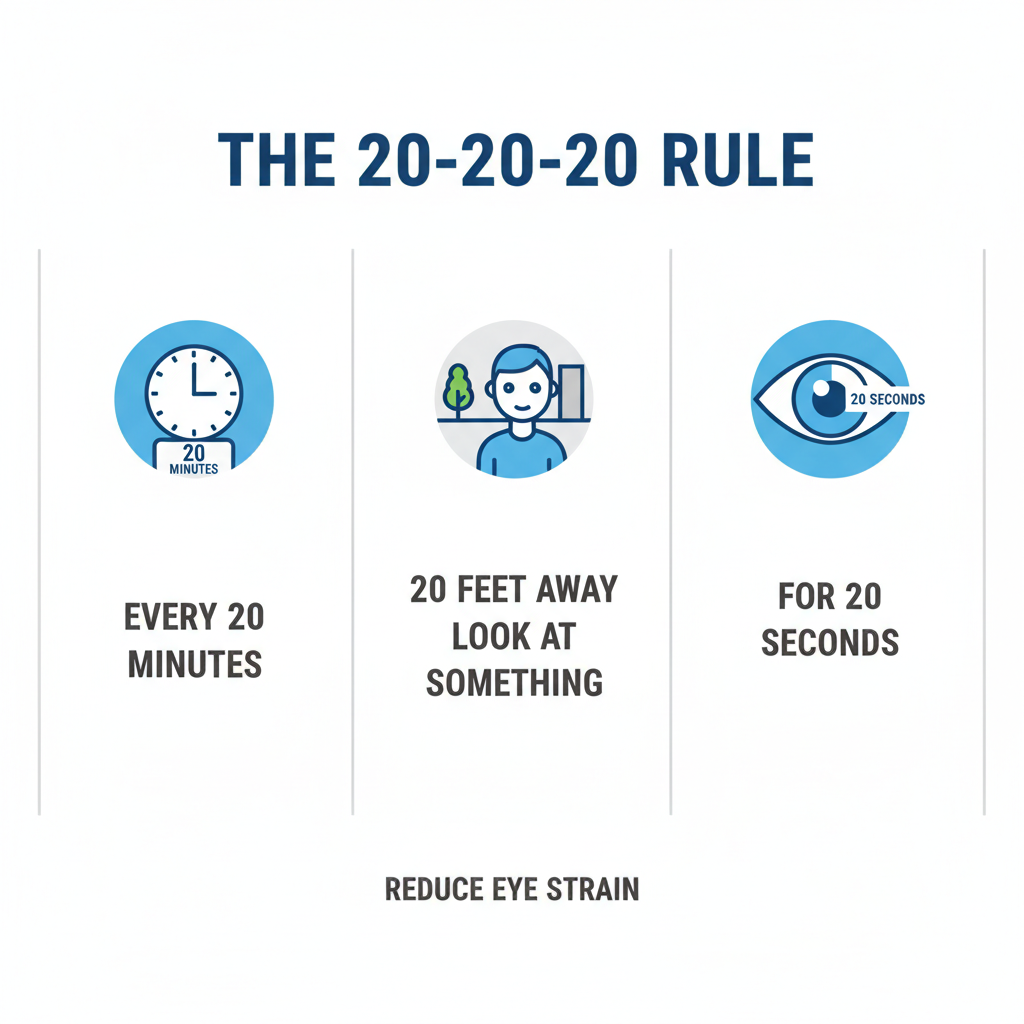
- Follow the 20-20-20 Rule: Every 20 minutes, look at something at least 20 feet away for 20 seconds. This simple trick relaxes your eye’s focusing muscles.
- Blink More Often: Make a conscious effort to blink fully and frequently to keep your eyes lubricated.
- Use Artificial Tears: If your eyes feel dry, applying preservative-free artificial tears can provide immediate relief. A pro tip is to keep them chilled for an extra soothing effect.
- Check Your Ergonomics: Position your monitor about an arm's length away, with the top of the screen at or just below eye level.
The Proven Benefit: Using Blue Light Glasses as a Sleep Tool
While the case for eye strain is weak, the evidence for improving sleep is compelling. Our bodies run on an internal clock called the circadian rhythm, and light is its primary regulator. As a review in the journal Chronobiology International explains, blue light is a powerful signal that tells our brain to be awake and alert.
This is helpful during the day, but it becomes a problem at night. Exposure to blue light from screens and artificial lighting in the hours before bed can trick your brain into thinking it's still daytime, suppressing the production of melatonin, the hormone that makes you feel sleepy. The result? You have trouble falling asleep.
This is where blue light glasses demonstrate their true value. A systematic review in the Journal of Psychiatric Research (Hester et al., 2021) analyzed 16 randomized controlled trials and found "substantial evidence" that wearing blue-blocking glasses in the evening reduces the time it takes to fall asleep, particularly for individuals with insomnia or jet lag.
Research from Harvard Health Publishing supports this, noting that blocking blue light in the 450–480 nm spectrum prevents melatonin suppression. For many users, this translates into falling asleep faster and enjoying more restful sleep.
Interestingly, one study noted a "placebo gap" where participants felt they slept better even if wearable trackers didn't show a massive objective change. This highlights a key takeaway: if the glasses help you feel more relaxed and ready for bed, they are serving their purpose.
How to Choose the Right Blue Light Lenses
Not all blue light filtering lenses are created equal. They are designed for different purposes, and choosing the right one depends on your primary goal.
Expert Warning: Fit and Accuracy Matter More Than a Filter
Before you even consider the type of filter, ensure your glasses fit correctly. An inaccurate Pupillary Distance (PD)—the measurement of the distance between your pupils—can cause blur, headaches, and eye strain. In fact, a PD error of just a few millimeters can create more visual discomfort than the blue light you’re trying to block. For this reason, getting an accurate measurement is critical. While you can learn how to measure your PD at home, a small error can make a big difference, especially for stronger prescriptions. As we discuss in our guide on whether a small PD error matters, precision is key to comfortable vision.
A Buyer's Decision Framework
Use this checklist to decide which type of lens, if any, is right for you.
1. Identify Your Primary Complaint:
-
Is it eye fatigue, dryness, or headaches?
- YES: You likely have Digital Eye Strain. Focus on the 20-20-20 rule and artificial tears first. A very light filter might slightly reduce perceived screen glare, but it is not a primary solution.
-
Is it difficulty falling asleep after evening screen use?
- YES: You are an excellent candidate for blue light blocking glasses. Proceed to step 2.
2. Choose Your Lens Type Based on Use-Case:
-
For All-Day Use (Glare Reduction):
- What to look for: Lenses that block 30–60% of blue light, often labeled as "computer glasses."
- Appearance: These are typically clear or have a very faint tint.
- Trade-off: They cause minimal color distortion, making them suitable for graphic designers or anyone needing accurate color perception. They offer limited sleep benefits.
-
For Evening Use (Sleep Improvement):
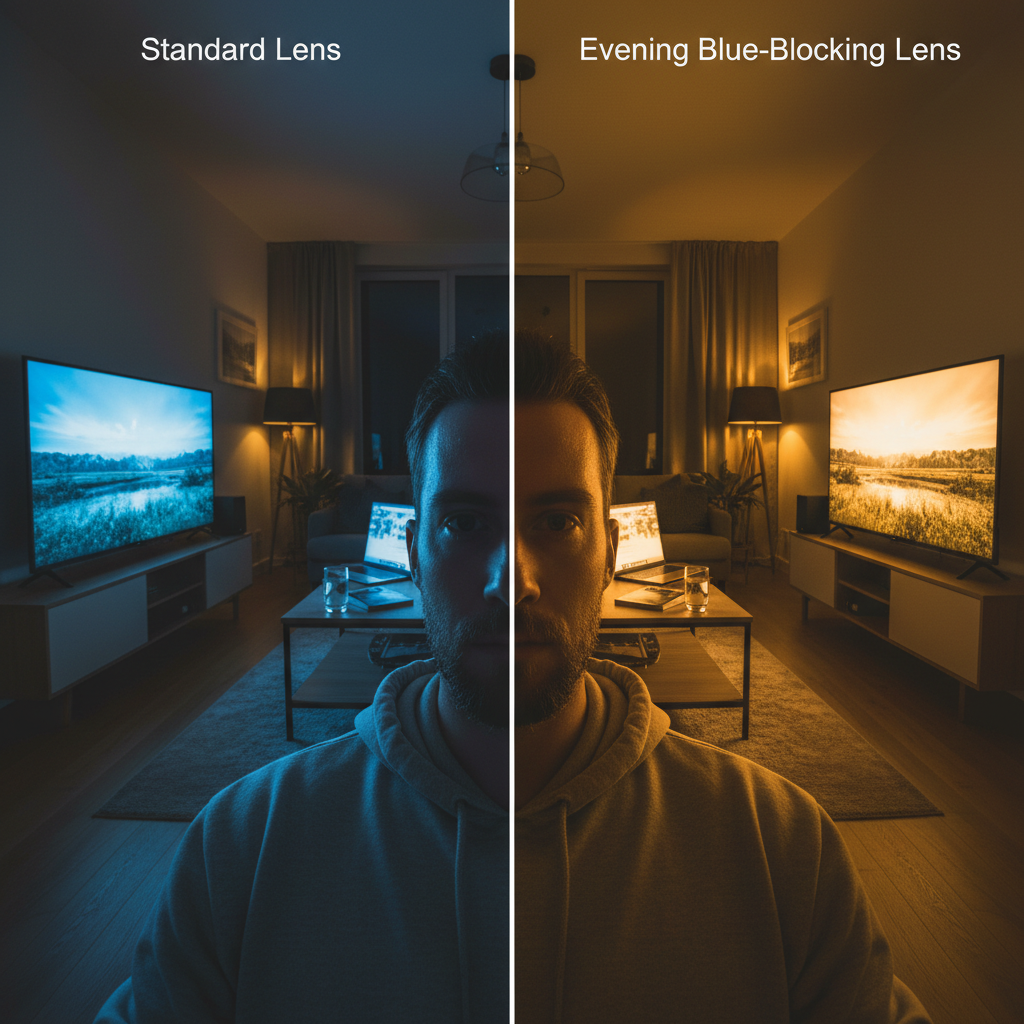
- What to look for: Lenses that block over 90% of blue light below 480 nm.
- Appearance: These lenses will have a noticeable yellow or amber tint.
- Trade-off: They significantly distort color perception and should only be worn for 1-2 hours before bed. They are the most effective option for protecting melatonin and promoting sleep.
A Special Consideration: Blue Light Glasses for Children
The question of whether children should wear blue light glasses is a serious one. While it may seem like a good idea to protect them, some research suggests caution.
A theoretical risk model published by the Mayo Clinic (Ostovari et al.) explores the idea that chronic deprivation of certain light spectrums in developing eyes could potentially disrupt emmetropization—the process by which a child's eye grows to achieve clear vision. The hypothesis suggests that blocking blue light could, in theory, contribute to the progression of nearsightedness (myopia).
While this is not yet proven definitively, it provides a strong scientific basis for advising against the routine use of blue light blockers for children. The American Academy of Ophthalmology does not recommend any special eyewear for computer use and instead encourages parents to focus on proven methods for eye health, such as ensuring children spend adequate time playing outdoors.
Key Takeaways
When it comes to blue light glasses, it's essential to be a discerning consumer. The evidence is clear: their power lies not in preventing eye strain, but in helping to regulate our sleep-wake cycle.
- Trust the Science: Don't buy blue light glasses to cure eye strain. Instead, adopt proven ergonomic habits like the 20-20-20 rule.
- Use Them as a Tool: If you struggle with sleep, wearing amber-tinted blue light glasses for an hour or two before bed can be a highly effective part of your evening routine.
- Fit is Paramount: Ensure your glasses have an accurate PD measurement to avoid unnecessary discomfort.
- Be Cautious with Kids: The potential risks for developing eyes outweigh the unproven benefits. Prioritize outdoor time over screen filters for children's eye health.
By understanding the facts, you can make an informed decision and use this technology for what it’s good for, without falling for the myths.
Frequently Asked Questions (FAQ)
Can I wear my amber-tinted blue light glasses all day? It is not recommended. These lenses significantly alter color perception. More importantly, exposure to blue light during the day is beneficial for alertness and mood. Restrict evening-wear lenses to the 1-2 hours before you plan to sleep.
What's the difference between cheap and expensive blue light glasses? The difference often comes down to the quality of the lens material, the precision of the filter, and the durability of the frame. Higher-quality lenses, as analyzed in optical studies like Rahmani et al., use more advanced technology to selectively filter out harmful wavelengths while minimizing color distortion. They may also come with better anti-reflective and scratch-resistant coatings.
Will blue light glasses cure my insomnia? They are a tool, not a cure. While they can be a "high-yield intervention" for reducing sleep onset latency, as noted by researchers, they cannot solve chronic insomnia on their own. They work best as part of a comprehensive sleep hygiene routine that includes a consistent sleep schedule, a relaxing bedtime ritual, and a dark, quiet sleeping environment.
Disclaimer: This article is for informational purposes only and does not constitute professional medical advice. Consult a qualified ophthalmologist or optometrist for any concerns about your eye health, especially if you have pre-existing conditions. Do not use this information to diagnose or treat any health problems.
References
- Bajic, N. (2022). "Do Blue Light Blocking Glasses Actually Work?" Cleveland Clinic Health Essentials. https://health.clevelandclinic.org/do-blue-light-blocking-glasses-actually-work
- Hester, L., et al. (2021). "Blue-blocking glasses as a therapeutic intervention for sleep and circadian rhythm disorders: A systematic review." Journal of Psychiatric Research. https://pubmed.ncbi.nlm.nih.gov/34030534/
- Ostovari, J., et al. (2024). "Spectral Deprivation by Blue-Blocking Glasses and its Theoretical Effect on Emmetropization in Children." Mayo Clinic Proceedings: Innovations, Quality & Outcomes. https://pmc.ncbi.nlm.nih.gov/articles/PMC12009466/
- Rosenfield, M., et al. (2020). "Do blue-blocking lenses reduce eye strain from extended screen time? A double-masked randomized controlled trial." American Journal of Ophthalmology. https://pubmed.ncbi.nlm.nih.gov/32007978/
- Tosini, G., et al. (2022). "The role of blue light in the regulation of circadian rhythms and sleep: A review." Chronobiology International. https://pmc.ncbi.nlm.nih.gov/articles/PMC8897255/


