






Why Teachers Should Consider Blue Light Glasses: Beyond Screens
The Teacher’s End-of-Day Headache: It Might Be Your Classroom Lights
As an educator, your day is a marathon of visual focus. From reading student work and managing a digital whiteboard to watching for raised hands across a brightly lit room, your eyes are constantly working. If you end the day with tired, strained eyes and a dull headache, you might blame the hours spent grading on a laptop. But the culprit could be hiding in plain sight: the very lights illuminating your classroom.
Modern schools have overwhelmingly switched to LED and fluorescent lighting. While energy-efficient, these lights emit a much higher concentration of high-energy blue light compared to older incandescent bulbs. This isn't just about screens; it's about your entire environment. This article will explore the science behind this environmental blue light, debunk common myths, and provide a practical guide for teachers on how blue light filtering glasses can become an essential tool for all-day visual comfort.
TL;DR: Key Takeaways for Educators
- It’s Not Just Screens: The overhead LED and fluorescent lights in most classrooms are a significant source of high-energy blue light, which can contribute to visual fatigue and glare.
- Strain vs. Sleep: Medical consensus suggests Digital Eye Strain is more about reduced blink rates and focusing effort than blue light itself. The primary, science-backed benefit of filtering blue light is regulating your sleep-wake cycle (circadian rhythm) by preventing melatonin suppression, especially if you work late.
- Filtering is Key: The goal isn’t to block all blue light. A moderate filter (20-30%) is often ideal for teachers, reducing harshness without distorting the colors of student artwork or whiteboard notes.
- Beyond the Filter: For classroom use, an anti-reflective (AR) coating is non-negotiable. It cuts down on distracting glare from overhead lights and windows. A secure, comfortable frame that doesn’t slip when you look down is just as important.

The Modern Classroom: A High-Intensity Visual Environment
The classroom has evolved into a space filled with diverse light sources, each placing a unique demand on your eyes. The assumption that eye strain only comes from personal devices overlooks the constant, ambient light that defines your workspace.
Beyond the Smartboard: Unseen Sources of Blue Light
The push for energy efficiency has fundamentally changed the way we light our schools. While beneficial for budgets and the environment, the shift from warm, incandescent bulbs to bright, cool-toned LEDs and fluorescent tubes has altered the spectrum of light we are exposed to for eight hours a day.
Research in optical physics confirms that these modern light sources have a distinct peak in the blue-violet wavelength range (around 400–455 nm). This high-energy visible (HEV) light is what can make classroom lighting feel sterile or harsh. While your eyes are resilient, constant exposure to this intense part of the spectrum can feel like listening to low-level static all day—it’s not immediately damaging, but it can be fatiguing over time.
What is Digital Eye Strain (and is Blue Light the Cause)?
Digital Eye Strain, also known as Computer Vision Syndrome (CVS), is a real and uncomfortable condition. Symptoms include dry eyes, headaches, blurred vision, and neck and shoulder pain. However, it's crucial to understand the primary cause.
According to ophthalmologists like Dr. Nicole Bajic at the Cleveland Clinic, the discomfort of eye strain isn't caused by blue light itself. Instead, it’s a repetitive strain injury stemming from two main factors:
- Reduced Blink Rate: When we stare intently at screens, our blink rate can drop by half—from a normal 15 times a minute to just 5-7. This leads to dry, irritated eyes.
- Accommodation Issues: The eye's focusing muscles work overtime to keep text and images sharp on a digital display, leading to muscle fatigue.
A rigorous double-blind study published in PubMed found no significant difference in eye strain symptoms between participants wearing blue-blocking lenses and those wearing placebo lenses. The conclusion is clear: blue light is not the direct cause of eye strain.
So, why consider the glasses? Because filtering intense blue light can reduce a source of high-energy visual "noise." For individuals sensitive to light (photophobia) or those who find overhead lighting glaring and uncomfortable, this filtering can improve overall visual comfort, even if it isn't treating the root cause of DES.
How Blue Light Filtering Lenses Actually Work
Understanding that these glasses are a tool for light management, not a medical cure, is the first step. Their real value lies in subtly modifying the light that reaches your eyes to support your body's natural rhythms.
It's a Filter, Not a Wall: The Science of Selective Filtration
Think of a blue light filter not as a brick wall, but as a very selective screen. High-quality lenses are engineered with polymers that absorb a percentage of light in a specific wavelength range—typically the 400-455 nm HEV spectrum. They are not designed to block 100% of blue light.
As a review in the journal Chronobiology International points out, blue light is not a toxin but a vital signal. Exposure to blue light during the day is essential for alertness, mood, and cognitive function. Therefore, the goal is moderation, not elimination. By reducing the "peak" intensity from artificial sources, the glasses aim to bring the indoor light spectrum a little closer to the balanced, natural light our eyes evolved with.
The Real Benefit: Supporting Your Body's Natural Clock
Here is where the science is most compelling. Your brain determines when to feel sleepy by tracking your light exposure. When your retina detects a decrease in blue light, it signals the pineal gland to start producing melatonin, the hormone that regulates sleep.
Multiple studies, including research from Harvard Health, confirm that exposure to blue light in the evening disrupts this process, effectively tricking your brain into thinking it's still daytime. For a teacher working late on lesson plans or grading under bright lights or on a screen, this can delay the onset of sleep and reduce its quality.
By wearing blue light filtering glasses during these late-night sessions, you help preserve your natural melatonin production. This makes them a powerful tool for sleep hygiene, helping you wind down more effectively and wake up more rested for another demanding day in the classroom.

A Teacher's Buying Guide: Choosing the Right Blue Light Glasses
Not all blue light glasses are created equal. For an educator, the specific features of the lenses and frame are critical for performance in a dynamic classroom environment.
Finding the Sweet Spot: Filter Strength and Tint
The percentage of blue light blocked matters. A lens that blocks over 40% might be great for a gamer playing in a dark room, but it can be a liability in a classroom. Strong filters often have a noticeable yellow or amber tint that can distort color perception, making it difficult to accurately assess student artwork, science experiments, or color-coded materials on a whiteboard.
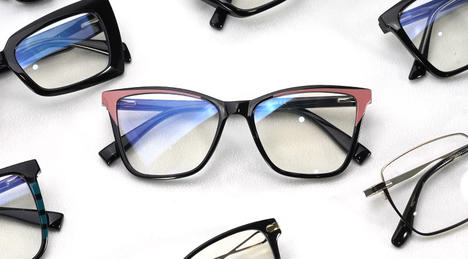
For all-day wear and maximum versatility, a filter in the 20-30% range is an ideal starting point. This is enough to soften the harsh peaks of LED lighting without significantly altering your color vision. While perfectly clear lenses are available and offer a completely neutral appearance, many educators find that a lens with a very slight, almost imperceptible, pale yellow or amber tint provides the most noticeable relief from glare and fluorescent flicker.
The Non-Negotiable Add-On: Anti-Reflective Coating
If you wear prescription glasses, an anti-reflective (AR) coating is perhaps the most important feature you can add for classroom comfort. An AR coating is a microscopic layer that eliminates the reflections on both the front and back of your lenses.
Its function is twofold:
- Reduces External Glare: It minimizes the distracting reflections from overhead lights and windows that can appear on the surface of your lenses.
- Eliminates Back-Glare: It prevents light from behind you from bouncing off the back of your lenses and into your eyes—a frequent and annoying issue in rooms with bright, diffuse lighting.
For comprehensive protection, it's also wise to ensure the AR coating includes a UV-absorbing layer. Research has shown that standard AR coatings can sometimes reflect UV rays from the back surface of the lens into the eye, and a specialized coating negates this risk.
Fit and Function: Frames That Stay Put
As a teacher, you are rarely still. You are leaning over desks, looking down at books, writing on the board, and turning quickly to address students. The last thing you need is to be constantly pushing your glasses back up your nose.
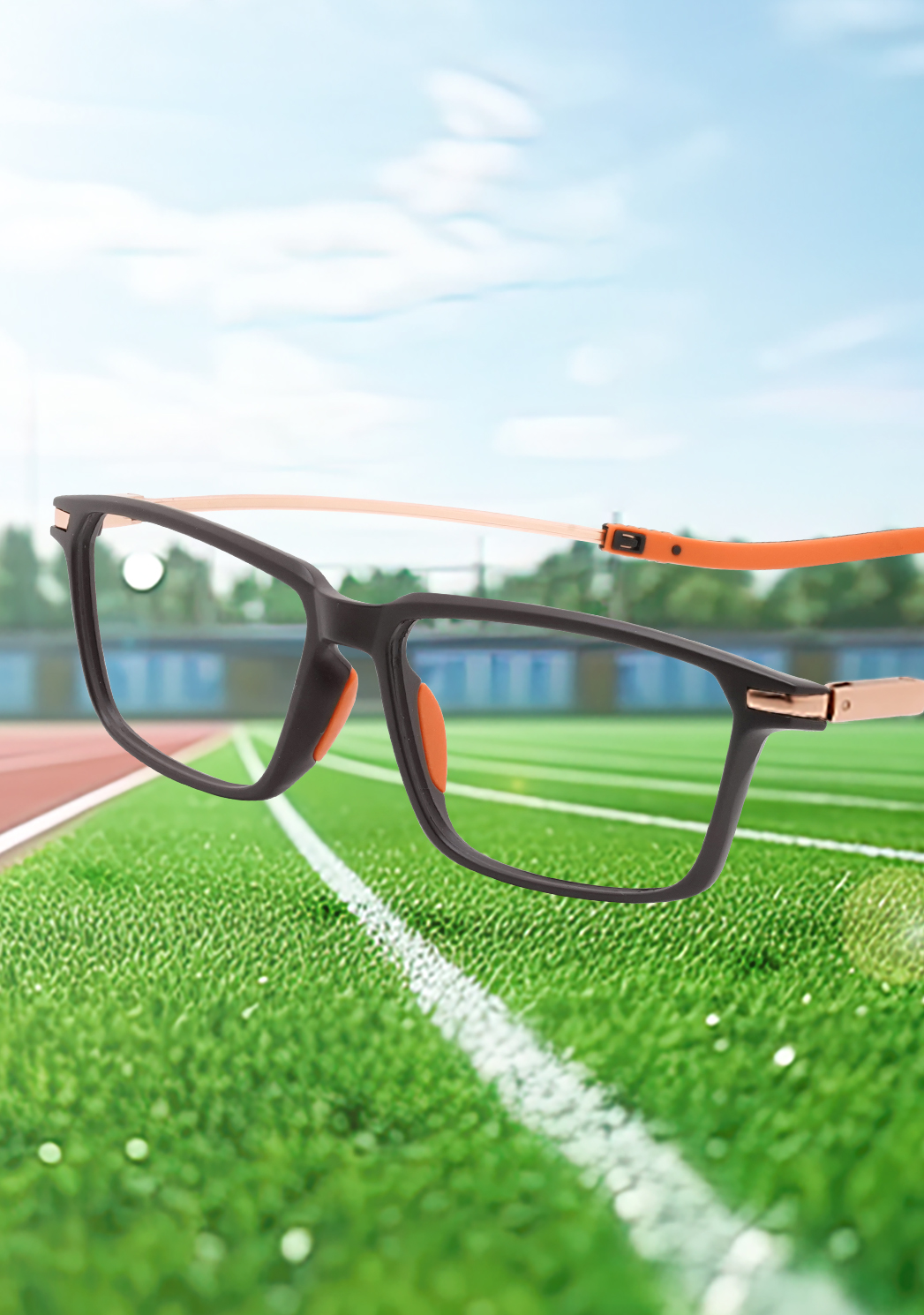
When selecting frames, pay close attention to functional details. Look for frames with secure, non-slip nose pads (embedded silicone is an excellent option) and temple tips that curve comfortably behind your ear. These features ensure your glasses stay in place, keeping the optical center of the lenses perfectly aligned with your pupils for clear, consistent vision, no matter how active you are.
Frequently Asked Questions (FAQ) for Educators
1. Can I get blue light filtering in my prescription lenses? Absolutely. Blue light filtering is a feature that can be integrated into almost any prescription lens material, from standard plastic to high-index lenses. You can learn more about how to add blue light filtering to prescription lenses for a seamless upgrade.
2. Is it safe to wear blue light glasses all day? Yes, for lenses with a moderate filter (under 40%), it is generally safe for all-day wear. As noted by chronobiology experts, you still receive plenty of ambient blue light from the sun and your environment to maintain alertness. The goal is to reduce the excessive peaks from artificial sources, not eliminate blue light entirely.
3. Will these glasses make everything look yellow? High-quality, low-to-moderate filtering lenses are designed to be nearly clear with minimal color distortion. Lenses with a higher filtering percentage will have a more noticeable warming or amber tint. For most classroom activities, a lens with low color distortion is preferable.
4. Should I get these for my students? This is a more complex issue. While digital eye strain is a concern for children, some research from the Mayo Clinic suggests that blocking blue light in developing eyes could theoretically interfere with emmetropization—the process by which the eye grows to the correct size. The most effective, science-backed strategy to protect children's vision is encouraging time outdoors, as natural light is proven to help prevent the onset and progression of nearsightedness. It's best to consult with an optometrist or ophthalmologist before considering blue light glasses for a child.
5. I still have eye strain even with the glasses. What now? Remember, the glasses are a tool to manage light, not a cure for strain. The most effective way to combat DES is the "20-20-20 rule": every 20 minutes, look at something 20 feet away for at least 20 seconds. This relaxes your focusing muscles. Additionally, as recommended by the University of Mississippi Medical Center, conscious blinking and using preservative-free artificial tears can combat the dryness caused by a reduced blink rate.
Disclaimer: This article is for informational purposes only and does not constitute professional medical advice. Please consult with a qualified eye care professional to determine the best vision solutions for your individual needs, especially if you have pre-existing eye conditions.
References
- Bajic, N. (2022). "Do Blue Light Blocking Glasses Actually Work?" Cleveland Clinic Health Essentials.
- Rosenfield, M., et al. (2020). "Do blue-blocking lenses reduce eye strain from extended screen time? A double-masked randomized controlled trial." PubMed.
- Tosini, G., et al. (2022). "Blue light, not a toxin but a signal." Chronobiology International.
- "Can blue light-blocking glasses improve your sleep?" (2021). Harvard Health Publishing.
- Ostovari, J., et al. (2024). "The Unseen Risks of Blue Light Deprivation in Pediatric Populations." Mayo Clinic Proceedings: Innovations, Quality & Outcomes.
- "How to Add Blue Light Filtering to Prescription Lenses." (n.d.). Lensmart Online Blog.


