







Can Blue Light Blocking Glasses Help Regulate Your Sleep Cycle?
TL;DR: The Short Answer
Yes, blue light blocking glasses can be a highly effective tool for helping to regulate your sleep cycle, but there’s a critical catch: you have to use the right kind. Amber or orange-tinted lenses worn in the evening are scientifically shown to help your brain produce melatonin, the hormone that signals it's time for sleep. However, the clear "computer glasses" marketed for all-day wear are not effective for this purpose.
Crucially, these glasses do not prevent digital eye strain. That feeling of tired, gritty eyes after hours on a screen is caused by reduced blinking and focusing fatigue, not blue light itself. For eye strain, the best solution remains the simple "20-20-20" rule.
The Science of Light and Sleep: Your Body's Internal Clock
Have you ever found yourself scrolling through your phone in bed, only to lie awake for an hour afterward, wondering why you can’t just drift off? You’re not alone. The culprit may be the very light emitting from your screen. To understand how, we need to look at the powerful connection between light, your brain, and your body's natural sleep rhythm.
Meet Melatonin: The "Hormone of Darkness"
Deep within your brain is the pineal gland, a tiny organ responsible for managing your sleep-wake cycle. As darkness falls, it begins to produce a hormone called melatonin. Melatonin travels through your bloodstream, telling every cell in your body that it's time to wind down and prepare for sleep. It doesn’t force you to sleep, but it creates the ideal conditions for rest.
Think of it as the starting pistol for a race to slumber. Without enough melatonin, your body never gets the "go" signal, leaving you feeling alert and awake when you should be getting tired.
How Blue Light Disrupts Your Sleep
Not all light is the same. Sunlight contains a full spectrum of colors, including red, green, and blue. During the day, the blue light portion of this spectrum is beneficial. It boosts alertness, reaction times, and mood. Your body interprets it as a signal to be awake and active.
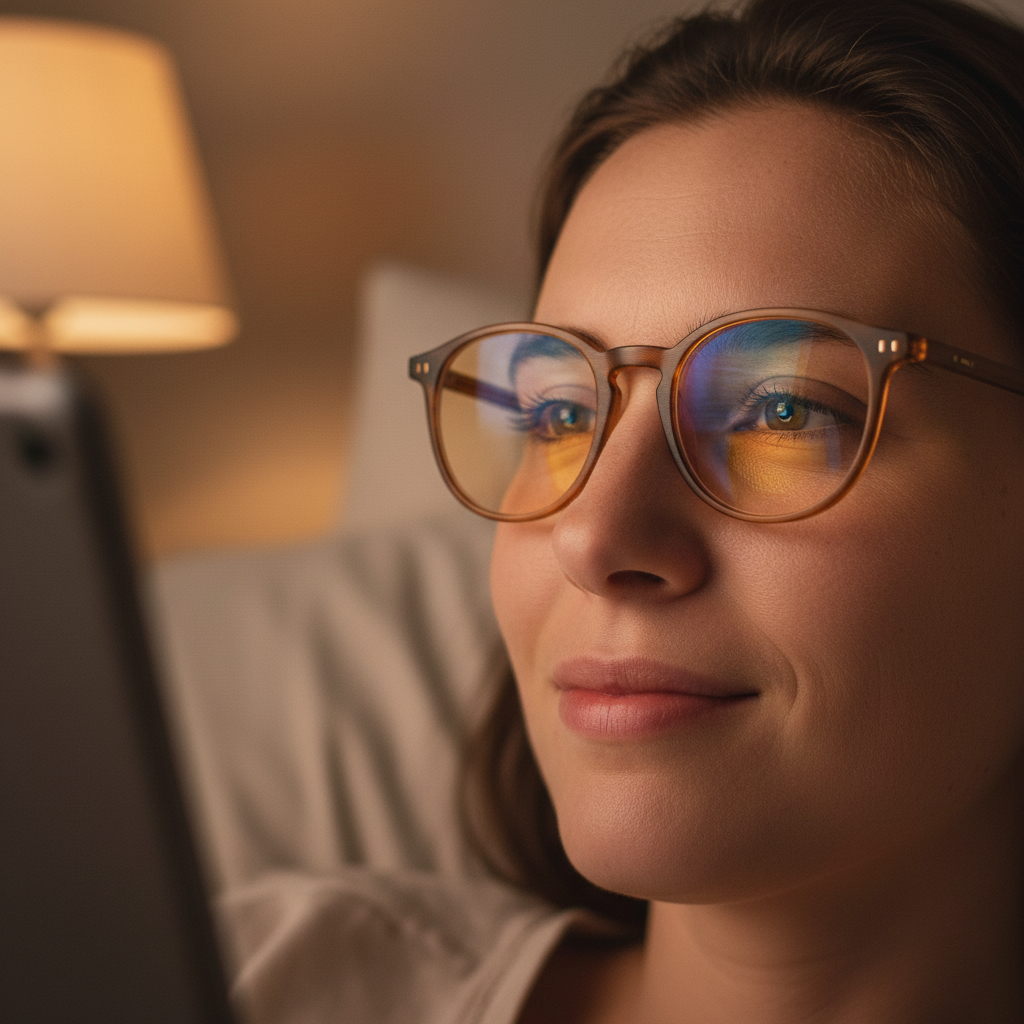
The problem arises after sunset. Our devices—phones, tablets, laptops, and LED lighting—emit a high concentration of blue light. When your eyes are exposed to this light in the evening, it sends a confusing message to your brain. It essentially tricks your body into thinking it's still daytime, causing the pineal gland to suppress melatonin production. According to research published by Harvard Health, light in the blue-wavelength spectrum is a potent suppressor of melatonin. By blocking this specific light, particularly in the 450–480 nm range, we can prevent this suppression and allow our sleep cycle to proceed naturally.
The Great Debate: Do Blue Light Glasses Actually Work?
The market is flooded with claims about blue light blocking glasses, and it's easy to get confused. They're often promoted as a cure-all for screen-related discomforts. Here, we separate the scientific evidence from the marketing myths.
Myth Debunked: They Won't Cure Digital Eye Strain
A common myth is that blue light from screens is what makes your eyes feel tired and strained. In reality, the evidence points elsewhere. According to ophthalmologist Dr. Nicole Bajic in an article for the Cleveland Clinic, digital eye strain is primarily caused by how we use our screens, not the light they emit. We blink less, which leads to dry, gritty eyes, and we stare at a fixed distance for long periods, which fatigues our eye muscles.
This is confirmed by rigorous scientific testing. A double-blind randomized controlled trial published in PubMed by Rosenfield et al. found no significant difference in eye strain symptoms between participants wearing blue-blocking lenses and those wearing placebo lenses. The most effective way to combat digital eye strain is to give your eyes a break using the 20-20-20 rule: Every 20 minutes, look at something 20 feet away for at least 20 seconds.
The Real, Proven Benefit: A Tool for Better Sleep
Where these glasses truly shine is in their ability to help regulate your sleep cycle. By filtering out the specific wavelengths of blue light that suppress melatonin, they allow your body's natural sleep processes to function as intended, even if you're using a screen before bed.
A systematic review of 16 studies published in PubMed by Hester et al. found "substantial evidence" that wearing blue light blocking glasses in the evening reduces the time it takes to fall asleep, particularly for people with insomnia or jet lag. While individual results vary, some studies suggest they can shorten sleep onset by 8-15 minutes and potentially increase total sleep time.
Think of them not as a magic pill for insomnia, but as a powerful tool to support your natural circadian rhythm in a modern, screen-filled world.
A Practical Guide to Choosing and Using Sleep Glasses
Simply buying any pair of "blue light glasses" won't guarantee results. Effectiveness comes down to two factors: the type of lens and when you wear them.
Not All Lenses Are Created Equal: Clear vs. Amber
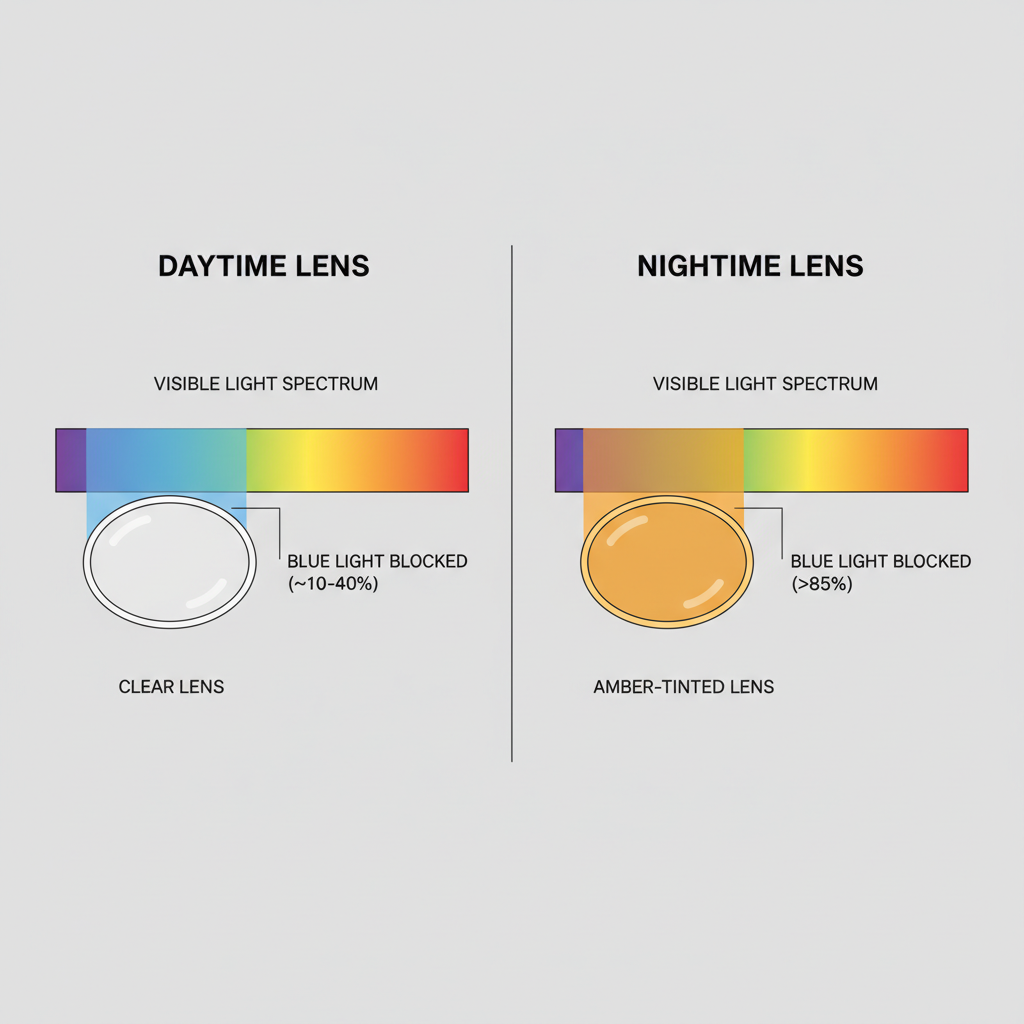
The most important factor is how much blue light the lenses actually filter. This is where the distinction between daytime and nighttime lenses becomes critical.
| Lens Type | Blue Light Filtration | Best For | How It Works |
|---|---|---|---|
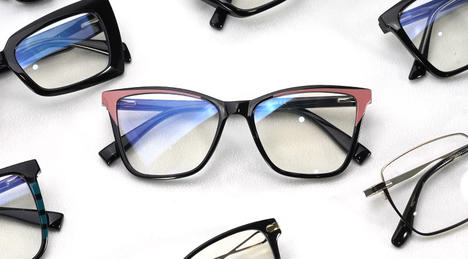
| Daytime Lenses (Clear) | Low (~10–40%) | Reducing glare, daytime screen comfort | These lenses have a coating that filters a small amount of the highest-energy blue-violet light. They are designed to make screen use more comfortable for some people without distorting color perception. They do not block enough blue light to significantly impact melatonin. |
| Nighttime Lenses (Amber/Orange) | High (>85–95%) | Regulating your sleep cycle | These lenses are visibly tinted and designed to block nearly all blue and some green light. This strong filtration is necessary to prevent melatonin suppression and signal to your brain that it's time to prepare for sleep. |
For sleep regulation, you must use amber or orange-tinted lenses. The clear lenses sold as "computer glasses" are intended for reducing subjective glare during the day and are not strong enough to protect your melatonin production at night.
The "When and How" Protocol for Maximum Effect
To get the full benefit of your sleep glasses, follow this simple protocol:
- Timing is Everything. Start wearing your amber-tinted glasses 2 to 3 hours before your intended bedtime. This gives your brain ample time to start producing melatonin without interruption.
- Consistency is Key. Make it part of your nightly wind-down routine. The more consistent you are, the more you reinforce a healthy sleep-wake cycle.
- Reserve Them for Evening Use. Avoid wearing heavily tinted amber lenses during the day. As noted by chronobiology expert Dr. Gianluca Tosini in a review for the National Institutes of Health, blue light exposure during the day is essential for alertness and mood.
- Ensure a Proper Fit. While the lens technology is key, a poor fit can cause its own problems. Headaches or eye strain from new glasses are often caused by an incorrect Pupillary Distance (PD)—the measurement between your pupils. Ensure your PD is measured accurately to avoid discomfort.
Wrapping Up: Your Key Takeaways
Blue light blocking glasses are a science-backed tool, but they are a specialized one. They are for managing your sleep cycle, not for preventing eye strain.
- For Better Sleep: Use amber or orange-tinted lenses for 2-3 hours before bed to block the blue light that suppresses melatonin.
- For Eye Strain: Use the 20-20-20 rule and lubricating eye drops to combat dryness and muscle fatigue.
- Choose Wisely: Understand that clear "computer glasses" and amber "sleep glasses" are two different products for two different purposes.
By using the right tool for the job, you can take control of your sleep schedule and enjoy more restful nights.
Frequently Asked Questions (FAQ)
1. Can't I just use my phone's "night mode" setting? Night mode is a good first step, as it reduces the amount of blue light from your phone screen. However, it doesn't block all of it, and it does nothing to protect you from other sources of light in your home, like your television, laptop, or LED light bulbs. Amber glasses provide more comprehensive protection.
2. Are blue light blocking glasses safe for children? This is an area where caution is advised. Some research, like a theoretical model from the Mayo Clinic, suggests that altering the light spectrum a child is exposed to could potentially interfere with normal eye development. For this reason, it's best to focus on limiting screen time before bed for children and consult with an optometrist or ophthalmologist before considering blue light blocking glasses for them.
3. Will I feel the effects on the very first night? You might. Many people report feeling sleepier earlier when they start using amber lenses. Interestingly, one study found that while participants felt they slept better, objective sleep tracker data didn't always show a major change at first. The most significant benefits come from consistent, long-term use as you establish a healthier circadian rhythm.
Disclaimer: This article is for informational purposes only and does not constitute professional medical advice. The information provided should not be used for diagnosing or treating a health problem or disease. Always seek the advice of a qualified health provider with any questions you may have regarding a medical condition. Never disregard professional medical advice or delay in seeking it because of something you have read in this article.
References
- Harvard Health Publishing: Can blue light blocking glasses improve your sleep?
- Cleveland Clinic: Do Blue Light–Blocking Glasses Actually Work?
- PubMed (Rosenfield et al.): Blue-blocking filters and digital eye strain
- PubMed (Hester et al.): The Effect of Blue-Blocking Glasses on Sleep, Mood, and Cognition
- PMC (Tosini): Blue light, not a toxin but a signal
- PMC (Ostovari et al.): Pediatric Risk Model


