







Are Blue Light Glasses a Good Choice for Young Students?
TL;DR: The Straight Answer on Blue Light Glasses for Students
With students spending more hours than ever on digital devices, many parents wonder if blue light filtering glasses are a necessary school supply. Here’s the quick takeaway:
- For Digital Eye Strain? No. The scientific consensus is that digital eye strain isn't caused by blue light. It's caused by how we use our screens—specifically, reduced blinking and focusing fatigue.
- For Better Sleep? Yes. The primary, evidence-backed benefit of these glasses is helping regulate sleep cycles. When worn in the evening, they can block blue light that suppresses melatonin, the hormone that signals your body it's time to sleep.
- Should Kids Wear Them All Day? No. Emerging research suggests that blocking blue light during the day might not be advisable for developing eyes. Natural blue light is an important signal for healthy eye growth.
This guide will walk you through the science, debunk the myths, and provide a practical framework for deciding if blue light glasses are the right tool to support your student's comfort and health.
Understanding Blue Light: A Signal, Not a Toxin
Before we can assess the glasses, it's crucial to understand what blue light is. Blue light is a part of the visible light spectrum that we are exposed to every day, primarily from the sun. It plays a vital role in regulating our sleep-wake cycle, also known as our circadian rhythm.
As a comprehensive review in the Journal of Chronobiology explains, blue light functions as a key biological signal. When your eyes detect it during the day, it sends a message to your brain to be alert and awake. The issue isn't the light itself, but its timing and intensity. In the evening, exposure to strong blue light from screens can confuse the brain, making it harder to wind down and fall asleep. The goal is not to eliminate blue light, but to manage our exposure to it, especially after dusk.
Myth vs. Fact: Do Blue Light Glasses Prevent Digital Eye Strain?
This is the most common claim made about blue light glasses, and it's largely a myth. While students often complain of tired, dry, or uncomfortable eyes after hours of online classes or homework, blue light is not the primary culprit.
According to ophthalmologist Dr. Nicole Bajic in a Cleveland Clinic article, the real causes of digital eye strain are a combination of factors, none of which are solved by filtering blue light:
- Reduced Blink Rate: When we stare at screens, we tend to blink less often, which leads to dry, irritated eyes.
- Accommodation Issues: The eye muscles have to work harder to maintain focus on a close-up screen for extended periods.
- Uncorrected Vision Problems: Even minor refractive errors can be exacerbated by prolonged screen use.
A rigorous double-blind study published in PubMed confirmed this. Researchers had participants perform a reading task and found that while symptoms of eye strain increased for everyone, there was no significant difference between those wearing blue-blocking lenses and those wearing placebo (clear) lenses.
To effectively combat digital eye strain, focus on proven methods instead.
| Cause of Discomfort | Ineffective Solution | Effective Solution |
|---|---|---|
| Dry, Itchy Eyes | Blue light blocking lenses | The 20-20-20 Rule: Every 20 minutes, look at something 20 feet away for 20 seconds. Use preservative-free artificial tears. |
| Focus Fatigue / Headaches | Blue light blocking lenses | Take regular breaks from close-up work. Ensure the student's prescription is up-to-date. Check for proper desk ergonomics. |
| Glare & Reflections | Basic blue light filters | Lenses with a high-quality anti-reflective (AR) coating. This coating reduces glare from screens and overhead lights, which can significantly improve comfort. |
The Real Benefit: Supporting a Healthy Sleep Cycle
While blue light glasses fall short as a cure for eye strain, they excel in another area: sleep hygiene. This is where the science is clear and the benefits are tangible for students, especially those who study late into the evening.
Your brain contains a master clock that relies on light cues. Evening exposure to blue light can delay the release of melatonin, disrupting the natural sleep cycle. Research from Harvard Health Publishing shows that wearing blue-light-blocking glasses in the hours before bed can prevent this melatonin suppression.
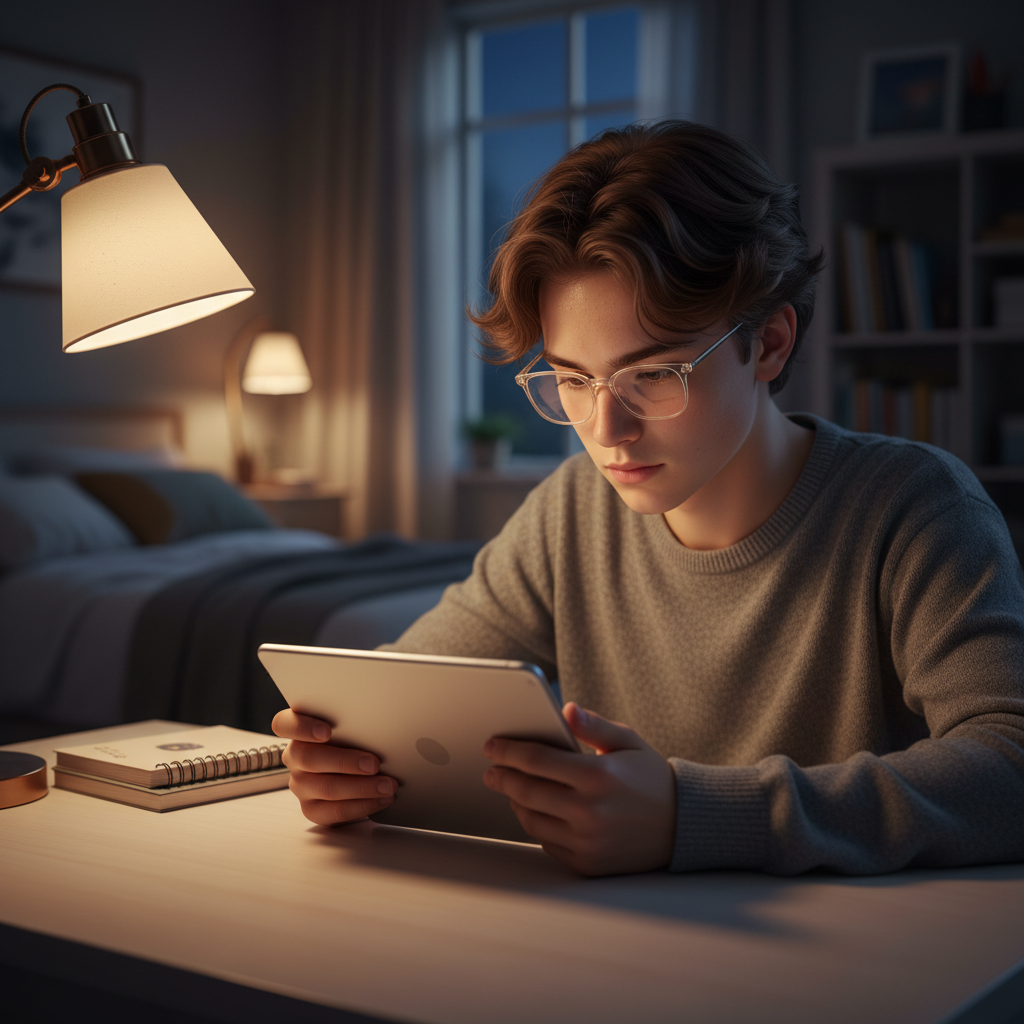
A large-scale systematic review in PubMed further validated these findings, concluding there is "substantial evidence" that wearing blue-blocking glasses in the evening reduces the time it takes to fall asleep for people with insomnia or circadian rhythm disorders. For a student cramming for an exam, this means that after they close the books, their brain can more easily transition into sleep mode, allowing for a more restorative night's rest.
Pro Tip: For this benefit, timing is everything. The glasses should be worn for 1-2 hours before the student's intended bedtime while they are using screens. There is no benefit to wearing them for sleep purposes during the day.
A Critical Warning for Children's Developing Eyes
While evening use is well-supported, the idea of a child wearing blue light glasses all day at school raises significant concerns among eye health experts. Natural blue light from the sun is essential for a process called emmetropization, which is how the eye develops and calibrates its focus during childhood.
Expert Warning: The Risk of Disrupting Healthy Eye Growth
A theoretical risk model explored by the Mayo Clinic raises an important question: could chronically blocking blue light during the day interfere with these crucial developmental signals? The hypothesis suggests that depriving a developing retina of the full spectrum of natural light could potentially disrupt the mechanisms that prevent the eyeball from growing too long, a key factor in the development of nearsightedness (myopia).
While this is an area of ongoing research, the consensus is to be cautious. Blue light is not a toxin to be blocked at all costs; it is a vital environmental signal. For this reason, indiscriminate, all-day use of blue light filtering glasses is not recommended for children.
A Practical Checklist for Parents
If you're considering blue light glasses for your student, treat them as a specific tool for a specific job—improving sleep hygiene.
Here is a simple decision-making checklist:
- [ ] Address Eye Strain First: Before buying any new glasses, enforce the 20-20-20 rule and ensure your child's workspace is set up ergonomically. If discomfort persists, schedule an eye exam to rule out underlying vision issues.
- [ ] Define the Goal: Are you trying to solve eye strain or improve sleep? If the goal is sleep, proceed. If the goal is eye strain, focus on the solutions in the table above.
- [ ] Time the Usage Correctly: Instruct your student to wear the glasses only during evening screen use, typically 1-2 hours before bed. Discourage all-day wear.
- [ ] Prioritize Fit and Quality: For any pair of glasses to be effective, they must fit correctly. This is especially true for children. A poor fit can cause distortion and discomfort. Also, opt for lenses that include an anti-reflective coating, which is more effective for reducing screen glare.
- [ ] Check School Policy: Some schools may have policies regarding tinted lenses in the classroom. Clear-lens blue light filters are usually not an issue, but darker amber or orange lenses could be restricted.
Wrapping Up: Key Takeaways for Student Eye Health
Making informed decisions about your child's health and well-being is paramount. When it comes to blue light glasses, it's essential to separate marketing hype from scientific reality.
- Treat the Cause, Not the Symptom: Blue light glasses are not a solution for digital eye strain. The most effective strategies are behavioral, such as taking regular breaks and ensuring proper hydration with eye drops.
- Use as a Sleep Tool: The primary value of these glasses is as an evening tool to support the body's natural sleep cycle. They are for "winding down," not for all-day protection.
- Let Kids Be Kids: During the daytime, children need exposure to the full spectrum of natural light for healthy eye development. Avoid unnecessary filtering.
- Prioritize Professional Advice: Always start with a comprehensive eye exam from an optometrist or ophthalmologist. They can provide personalized advice and ensure there are no underlying vision problems contributing to your student's discomfort.
By focusing on foundational habits and using tools like blue light glasses for their intended purpose, you can support your student's visual comfort and overall well-being in our increasingly digital world.
Frequently Asked Questions (FAQ)
Can my child wear blue light glasses all day long?
This is not recommended. Experts advise against all-day use, as natural blue light is important for alertness and the healthy development of a child's eyes. Their use should be limited to evening hours.
Will blue light glasses fix my child's headaches from screen time?
Unlikely. Headaches from screen use are more often linked to eye muscle strain, uncorrected vision, or poor posture. If headaches are a persistent issue, a comprehensive eye exam is the most important first step.
Are amber or orange tinted lenses better than clear ones?
Amber or orange lenses typically block a much higher percentage of blue light. They are very effective for sleep preparation but can significantly distort color perception. For general evening use, a lens that filters around 30-50% of blue light is often sufficient without altering colors too dramatically.
Do blue light glasses need a prescription?
No, you can get "plano" (non-prescription) blue light glasses. However, if your child already wears prescription glasses, you can have a blue light filtering treatment added to their prescription lenses.
Disclaimer: This article is for informational purposes only and does not constitute professional medical advice. The information contained herein is not a substitute for and should never be relied upon for professional medical advice. Always seek the advice of your physician or other qualified health provider with any questions you may have regarding a medical condition.
References
- Cleveland Clinic: Do Blue Light Blocking Glasses Actually Work?
- Harvard Health Publishing: Can blue light blocking glasses improve your sleep?
- Mayo Clinic (PMC): Blue-blocking filters and digital eyestrain
- PubMed: Blue-blocking filters and digital eye strain
- PubMed: The effect of blue-blocking glasses on sleep, sleep-related measures, and psychological outcomes: a systematic review and meta-analysis
- PMC: Effects of light on human circadian rhythms, sleep and mood


