







Blue Light Glasses vs. UV Sunglasses: Can One Pair Do Both?
The Ultimate Guide to Eyewear Protection: Blue Light Glasses vs. UV Sunglasses
It's a common scenario: you step away from your computer after hours of work and grab a pair of sunglasses for your commute home. This daily switch raises a critical question for the modern professional: are blue light glasses and sunglasses interchangeable? Or are you leaving your eyes vulnerable by choosing the wrong pair for the situation?
The assumption that all protective eyewear is created equal is a significant misconception. Lenses designed to filter artificial blue light from screens operate on entirely different principles than those built to block the sun's damaging ultraviolet (UV) radiation. Understanding this distinction is fundamental to safeguarding your long-term eye health.
This article will clarify the science behind each type of lens. We will explore the specific threats posed by UV and blue light, detail how different filtering technologies work, and provide a clear decision framework to help you determine if a single, multi-functional pair is a practical investment or if specialized glasses for screen time and sun exposure remain the wisest choice.
Understanding the Light Spectrum: A Tale of Two Threats
The light that reaches our eyes is a complex spectrum of energy. While much of it is harmless and essential for vision, specific wavelengths can pose significant risks. The two primary concerns for eye health are invisible ultraviolet radiation and a portion of the visible spectrum known as blue light.
The Invisible Danger: UV Radiation
Ultraviolet (UV) radiation from the sun is a high-energy, invisible light form that is a known risk to both skin and eyes. It is typically categorized into UVA and UVB rays, both of which can cause cumulative and irreversible damage.
According to research from the National Eye Institute, long-term UV exposure is a key factor in the development of cataracts, a condition where the eye's lens becomes clouded. The mechanism involves a process called glycation, where UV light damages lens proteins, causing them to clump together. Further, organizations like the MD Anderson Cancer Center note that UV exposure is linked to cancers of the eyelid and surrounding skin.
It is a critical error to assume UV rays are only a threat on bright, sunny days. The American Academy of Ophthalmology (AAO) warns that clouds do not block UV rays, meaning protection is necessary year-round, regardless of the weather.
The Visible Disruptor: High-Energy Blue Light
Blue light is part of the visible light spectrum, with the sun being its largest source. However, the health conversation around blue light is primarily focused on our prolonged, close-range exposure to artificial sources like LED screens on computers, smartphones, and tablets.
It's important to separate myth from fact. The AAO clarifies that there is currently no scientific evidence to suggest that blue light from electronic devices causes damage to the retina. The primary concern is not physical damage but disruption to our biological clocks. Research published by Harvard Health confirms that exposure to blue light, particularly in the evening, significantly suppresses the body's production of melatonin, the hormone that regulates sleep-wake cycles. This can make it harder to fall asleep and reduce sleep quality.
While many users report "digital eye strain," experts at the Cleveland Clinic note this is less about blue light and more about how we use our devices. Staring at screens causes us to blink less frequently—dropping from a normal rate of 15 times per minute to just 5-7 times—leading to dryness, irritation, and fatigue.

How Each Lens Works: A Tale of Two Filtering Technologies
To combat these distinct threats, eyewear manufacturers employ different technologies. A lens that excels at blocking UV radiation may do very little to filter blue light, and vice versa.
The Science of UV Sunglasses: An Invisible Shield
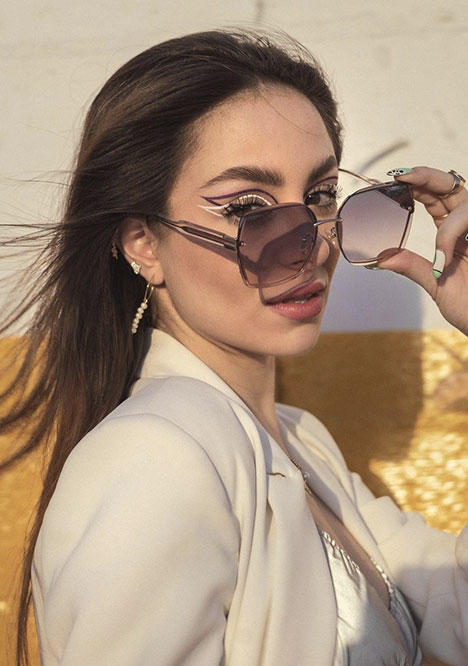
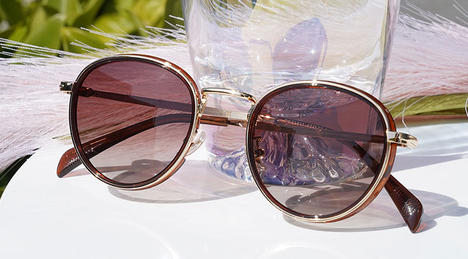
The primary goal of sunglasses is to provide a protective barrier against UV radiation. The industry standard for this is UV400 protection, which means the lenses block 99% to 100% of UVA and UVB rays up to 400 nanometers.
This protection is achieved by embedding UV-absorbing chemical compounds directly into the lens material or by applying a specialized coating. As noted by the University of Utah Health, modern polycarbonate lenses—a popular, impact-resistant material—have UV protection inherent in their structure.
The Darkness Myth Debunked A crucial point, detailed in our article on whether darker sunglass lenses are more protective, is that the tint or color of a lens has no bearing on its UV-blocking capability. In fact, wearing very dark sunglasses without certified UV400 protection is more dangerous than wearing no glasses at all. The dark tint causes your pupils to dilate, which widens the opening for invisible UV radiation to enter the eye, increasing the risk of damage. Always look for a label explicitly stating "UV400" or "100% UV Protection."
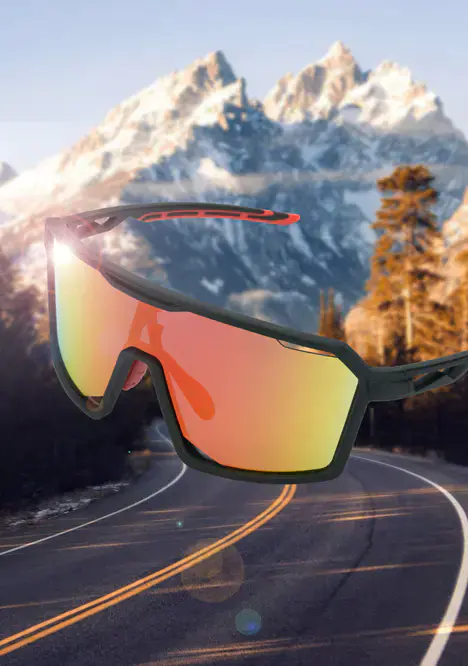
Furthermore, frame design plays a significant role. A study published in the National Library of Medicine highlights that wraparound styles or larger frames are more effective because they reduce peripheral light leakage from the sides and top.
The Mechanism of Blue Light Glasses: Selective Filtration
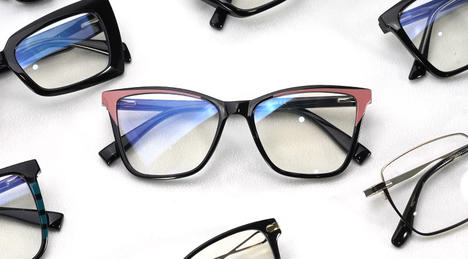
Blue light filtering lenses are designed for a more nuanced task. Instead of blocking an entire category of light, their goal is to filter a specific portion of the high-energy visible (HEV) blue-violet light, typically between 415 and 455 nanometers. This is the range most associated with melatonin suppression.
This is accomplished using a coating that either absorbs these specific wavelengths or reflects them away from the eye. This filtering process is why many blue light glasses have a faint yellow or amber tint, or show a blue-violet reflective sheen on their surface. The quality of this filter is key; some lenses offer minimal filtration, while others provide more substantial blocking for users with heavy screen exposure.
The "All-in-One" Solution: Can One Lens Truly Do It All?
With the rise of multi-functional coatings, many consumers wonder if they can get by with a single pair of glasses. Lenses that are photochromic (darken in the sun) or have combined coatings promise both UV protection and blue light filtration. But are they effective?
The answer lies in understanding the practical realities and compromises.
- UV Protection is the Priority: For any lens sold in the U.S., UV protection is a regulated safety feature. The FDA classifies sunglasses as Class I medical devices, and impact resistance is a mandatory standard. Therefore, any reputable combination lens will prioritize and deliver certified UV400 protection.
- Blue Light Filtration is the Compromise: In practice, opticians observe that in many combined lenses, the blue light filter is a secondary feature. It may only offer mild filtration, which might not be sufficient to provide noticeable comfort or circadian benefits for someone spending eight or more hours a day in front of a screen. A dedicated blue light lens is almost always more effective for this specific purpose.
- The Color Accuracy Trade-Off: A strong blue light filter will inherently create a warm, yellowish shift in color perception. This is generally not an issue for office tasks but can be a drawback outdoors. For activities like driving, where accurate color recognition is a safety issue, the American Optometric Association recommends neutral gray tints. A heavy blue-light tint could compromise this.
- Photochromic Lenses: These lenses are a popular all-in-one solution. They contain molecules that react to UV radiation, causing them to darken. When indoors, away from UV, they become clear. Most modern photochromic lenses include both 100% UV blocking and a blue light filter that works in their clear state. However, they have limitations, such as not darkening inside a car, as the windshield already blocks the UV rays needed to trigger the transition.

Making the Right Choice: A Decision Framework
Choosing the right eyewear depends entirely on your lifestyle and primary activities. Rather than searching for one perfect pair, consider which environment you need to optimize for most.
Scenario 1: The Heavy Screen User
- Who You Are: A software developer, graphic designer, writer, or anyone spending over 70% of their day focused on digital screens.
- Recommendation: A dedicated pair of blue light filtering glasses is your best investment.
- Why: Your primary goal is to mitigate digital eye fatigue and protect your sleep cycle. A high-quality, dedicated filter will provide more noticeable relief than the milder filter found in most combination lenses. You can easily add a blue light filter to prescription lenses to create a specialized tool for your workday.
Scenario 2: The Hybrid Professional
- Who You Are: An office worker, student, or individual with a balanced mix of indoor screen time and outdoor activities.
- Recommendation: A high-quality photochromic lens or a clear prescription lens with both UV400 and a blue light coating can be a convenient solution.
- Why: The convenience of a single pair may be the deciding factor. You get baseline protection in all environments. Acknowledge the compromise: the blue light filtration may not be as robust as a dedicated pair, but it provides a good all-around defense.
Scenario 3: The Outdoor Enthusiast
- Who You Are: A driver, athlete, gardener, or anyone who spends the majority of their time outdoors.
- Recommendation: Prioritize a dedicated pair of high-performance UV400 sunglasses.
- Why: Your non-negotiable priority is maximum protection from intense UV radiation and glare. Features like polarization, lens color, and a wraparound frame shape are far more critical to your safety and comfort than blue light filtration. For those who spend significant time on the road, investing in proper UV protection sunglasses for driving is essential.
| Your Primary Environment | Recommended Eyewear | Core Benefit |
|---|---|---|
| Primarily Indoors (Screens) | Dedicated Blue Light Glasses | Maximum blue light filtration for sleep cycle & comfort. |
| Mixed Indoor / Outdoor | Combination or Photochromic Lenses | The convenience of a single, all-purpose pair. |
| Primarily Outdoors (Sun) | Dedicated UV400 Sunglasses | Maximum UV safety, glare control, and durability. |
Final Thoughts on Smart Eye Protection
Blue light glasses and UV sunglasses are not interchangeable; they are specialized tools designed to solve different problems. UV lenses provide a crucial shield against the invisible, damaging radiation from the sun, while blue light lenses offer a filter for the visible light from screens that can disrupt our sleep.
While combination lenses offer a convenient compromise, they may not provide the level of performance needed for those at the extremes—either the dedicated digital professional or the avid outdoor adventurer. The most effective strategy is to assess your daily life honestly and build an "eyewear wardrobe" that offers optimized protection for every environment.
Ultimately, the power to protect your vision rests on one simple action: reading the label. A "UV400" certification is your guarantee of sun safety. A "blue light filter" is your tool for digital comfort. Understanding the difference empowers you to make an informed choice for your long-term eye health.
Disclaimer: This article is for informational purposes only and does not constitute professional medical advice. Consult with a qualified eyecare professional to determine the best eyewear solution for your specific needs, especially if you have pre-existing eye conditions.
References
- American Academy of Ophthalmology (AAO). "Blue Light and Eye Health."
- American Academy of Ophthalmology (AAO). "UV and Sun Protection."
- Cleveland Clinic. "Do Blue Light Glasses Actually Work?"
- FDA. "Guidance for Nonprescription Sunglasses." 21 CFR 801.410.
- Harvard Health Publishing. "Can blue light blocking glasses improve your sleep?"
- MD Anderson Cancer Center. "9 things to know about sunglasses, eye protection and cancer."
- National Eye Institute (NEI). "New research sheds light on how UV rays may contribute to cataract."
- PMC (PubMed Central). "Ocular UV Dosimetry & Frame Geometry."
- University of Utah Health. "How to Tell if Your Sunglasses Are Really Protecting Your Eyes."


