







Myths vs. Facts: What Blue Light Lenses Actually Do
Myths vs. Facts: What Blue Light Lenses Actually Do
This article cuts through the marketing hype to address common misconceptions about blue light glasses. We separate scientific facts from popular myths to help you understand their true function and limitations. The market is flooded with claims, but the science points to a very specific use case. My goal is to give you the clarity needed to decide if they are right for you.
TL;DR: The Bottom Line
- Myth: Blue light glasses prevent or cure digital eye strain. Fact: Digital eye strain is caused by reduced blinking and focusing effort, not blue light. The best solution is practicing good habits like the 20-20-20 rule.
- Fact: Blue light glasses can significantly help regulate your sleep cycle. Mechanism: They work by blocking the specific wavelengths of light that suppress your body's production of melatonin, the hormone that signals it's time to sleep.
- Not all lenses are equal. Clear-looking lenses offer minimal filtering (10-25%), while amber or yellow-tinted lenses provide the significant reduction (40-90%) needed to impact sleep.
- Caution for Kids: There is no strong evidence to support blue light glasses for children, and some experts suggest that altering light signals during development could have unintended consequences.
Myth: Blue Light Glasses Will Cure Your Digital Eye Strain
The most persistent myth is that blue light emitted from screens is the direct cause of the eye fatigue, dryness, and headaches we feel after a long day of computer work. However, the scientific consensus tells a different story.
According to ophthalmologists like Dr. Nicole Bajic from the Cleveland Clinic, the condition known as Digital Eye Strain (DES) or Computer Vision Syndrome is primarily caused by two factors: a reduced blink rate and accommodative stress (the constant effort of focusing your eyes on a close-up screen). It has very little to do with the type of light the screen emits.
In fact, a rigorous double-blind study published in PubMed by Rosenfield et al. compared participants wearing blue-blocking lenses against those with placebo lenses. The result? Both groups experienced the same increase in eye strain symptoms. There was no statistically significant difference between them, which strongly refutes the claim that filtering blue light alleviates DES.
The Real Solution for Eye Strain: The 20-20-20 Rule
Instead of relying on special glasses to fix DES, the most recommended intervention is behavioral. The "20-20-20 rule" is a simple and effective method:
- Every 20 minutes of screen time...
- Look at something 20 feet away...
- For at least 20 seconds.
This practice relaxes your eye's focusing muscles and encourages you to blink, which re-lubricates the surface of your eyes. For persistent dryness, many optometrists, like Dr. Roya Attar at the University of Mississippi Medical Center, recommend using chilled artificial tears as a more direct and effective treatment for digital discomfort.
Fact: Blue Light Glasses Are a Powerful Tool for Better Sleep
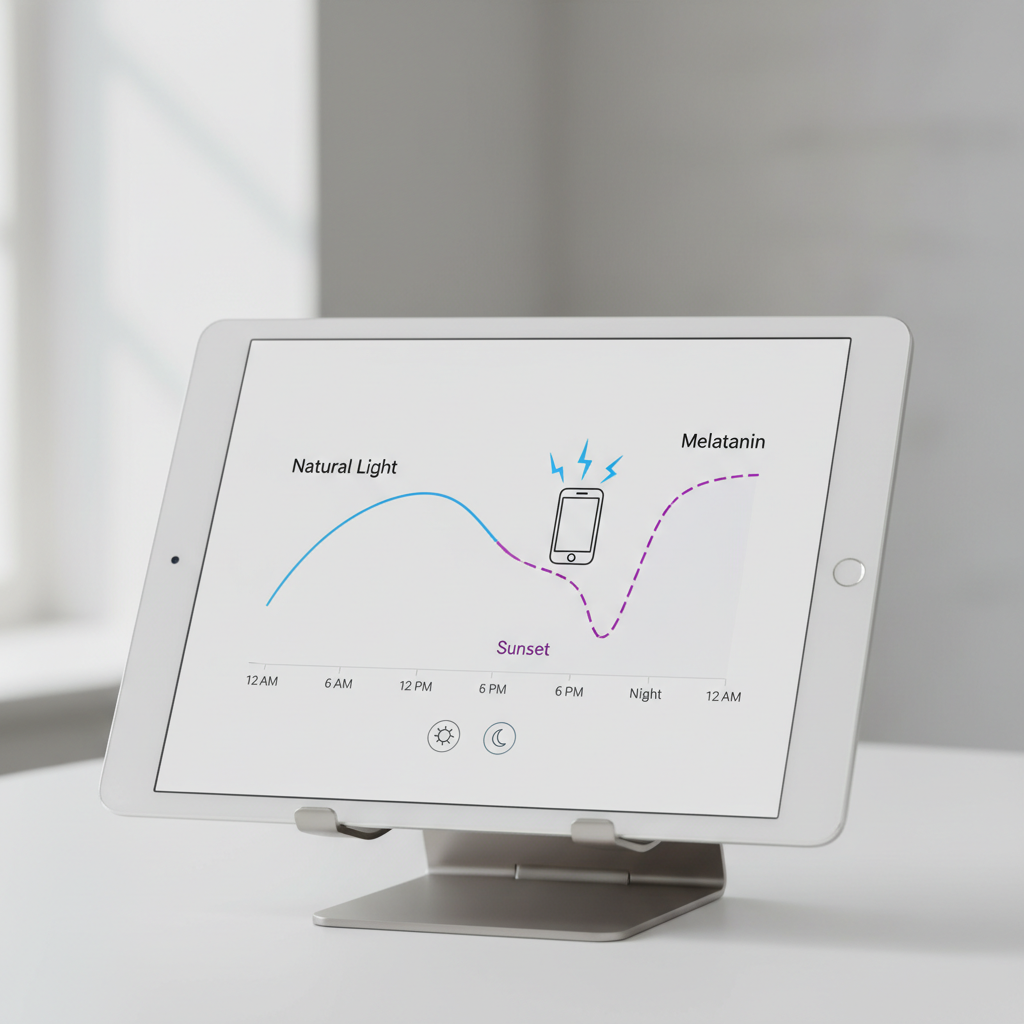
While blue light glasses fail to treat eye strain, they excel in another area: managing your circadian rhythm. Your body’s internal clock relies on light signals to know when to be awake and when to sleep. Blue light, which is abundant in daylight, is a primary signal for alertness.
The problem arises in the evening. Exposure to blue light from screens and artificial lighting after dusk can trick your brain into thinking it's still daytime. This suppresses the production of melatonin, the key hormone that regulates sleep. As research from Harvard Health Publishing confirms, blocking these specific wavelengths (around 450–480 nm) in the 2-3 hours before bed allows melatonin production to proceed naturally.
A systematic review of multiple studies published in PubMed by Hester et al. found "substantial evidence" that wearing blue-blocking glasses in the evening can reduce the time it takes to fall asleep, particularly for individuals with insomnia or jet lag.
It's important to manage expectations. You will likely feel sleepier, but it's not a cure for chronic insomnia. Think of these glasses as a tool for good sleep hygiene, similar to keeping your bedroom dark and cool.
Choosing the Right Lenses: A Tale of Two Filters
A common point of confusion is the vast difference between various "blue light" lenses on the market. The effectiveness of the glasses depends entirely on how much and which blue light is being filtered.
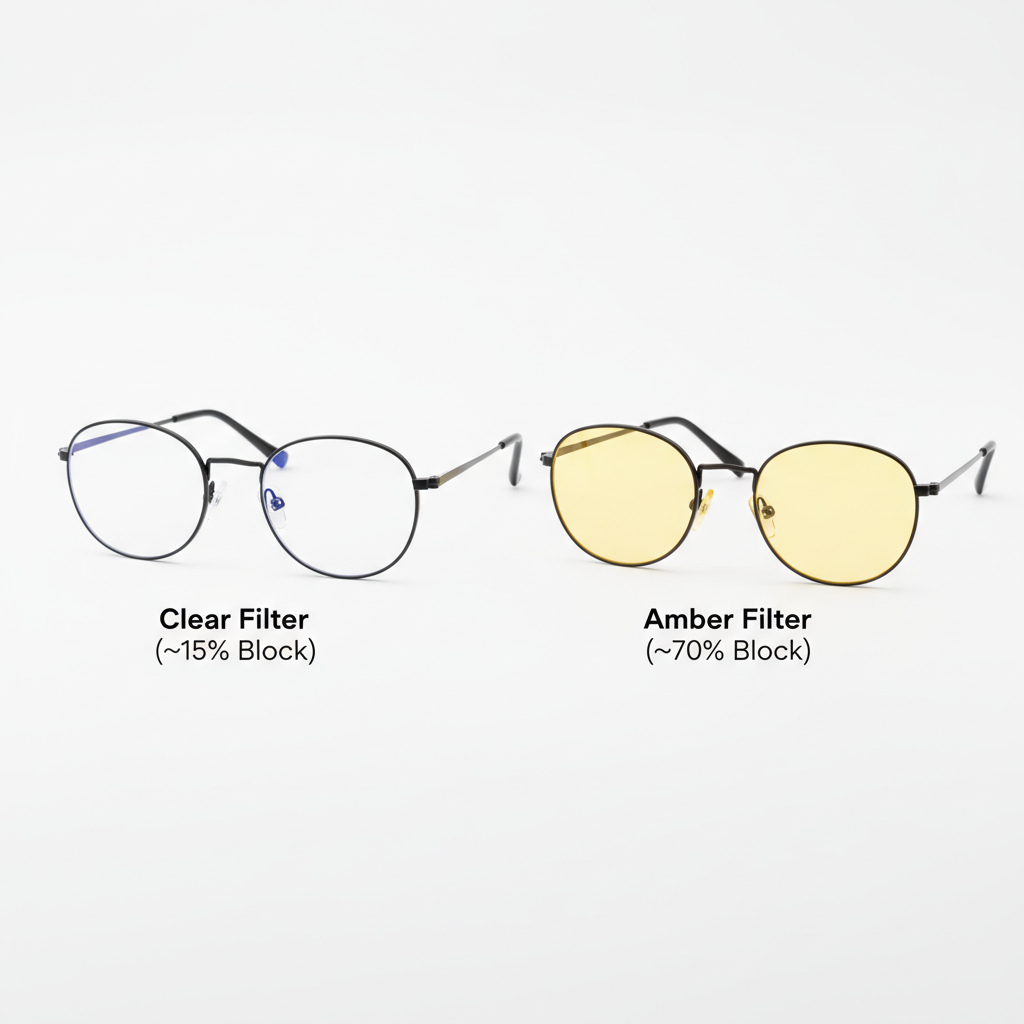
I have seen many lab reports (spectrophotometer readouts) for different lenses, and the variation is huge. A mistake I often see is customers expecting sleep benefits from lenses that are virtually clear. These coatings are designed for aesthetics and typically only reduce blue light transmission by about 10-25%. While this may slightly reduce glare, it is not enough to prevent melatonin suppression.
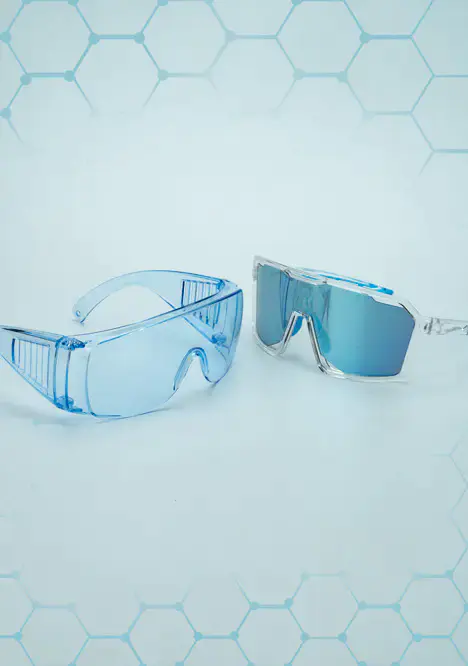
For a tangible impact on sleep, you need lenses with a visible yellow or amber tint. These lenses are capable of blocking 40% to over 90% of the targeted blue light wavelengths.
Here’s a breakdown to help you choose:
| Lens Type | Blue Light Blockage | Best For | Trade-offs |
|---|---|---|---|
| Clear "Coated" Lenses | Low (10-25%) | Minimal glare reduction during daytime computer use. | Ineffective for sleep improvement. Marketing often overstates benefits. |
| Yellow/Amber Lenses | High (40-90%+) | Evening use (2-3 hours before bed) to promote sleep. | Noticeable color distortion. Not suitable for tasks requiring accurate color vision. |
Pro Tip: Be skeptical of any product claiming "100% block" without providing a spectral transmission chart. A trustworthy vendor should be able to provide data showing exactly which wavelengths their lenses filter and by how much.
A Special Warning for Children
Parents often ask if blue light glasses are safe or beneficial for their children. Based on current science, the answer is to be cautious.
While the digital world is a big part of a child's life, there is no definitive research showing that blue light from screens harms their eyes. More importantly, some research, like a risk model analysis from the Mayo Clinic, explores the theoretical risk that chronically depriving a developing eye of certain light spectrums could interfere with normal eye growth (a process called emmetropization). The consensus is that instead of glasses, the best approach for children is to manage screen time, encourage outdoor activities, and ensure they stop using screens at least an hour before bedtime.
Key Takeaways
To put it simply, think of blue light glasses as a specific tool for a specific job. They are not a cure-all for digital life.
- They are Sleep Tools, Not Strain Cures: Use amber-tinted lenses in the evening to help your body wind down for a better night's sleep.
- Behavior is the Best Medicine for Eye Strain: Practice the 20-20-20 rule and use artificial tears to combat the real causes of digital eye fatigue.
- Lens Tint Matters: For sleep benefits, the lenses must have a visible yellow or amber tint. Clear coatings offer minimal protection.
- Prioritize a Comprehensive Eye Exam: If you experience persistent eye strain, headaches, or blurred vision, it's crucial to consult an optometrist. These can be symptoms of underlying vision issues that need correcting with a proper prescription. Ensuring your prescription is accurate and that your glasses fit correctly is far more important than any specialty coating. For more information, see our guide on why buying prescription glasses online can be a safe and effective choice.
Frequently Asked Questions (FAQ)
1. Can I wear blue light glasses all day? It's generally not recommended. Your body needs exposure to blue light during the day to maintain a healthy sleep-wake cycle and regulate mood and alertness. Daytime use is unnecessary and potentially counterproductive.
2. Will blue light glasses with a yellow tint make it hard to see? They will alter your color perception, making things appear warmer. This is normal and part of how they work. However, you should not wear them for activities that require perfect color vision, such as graphic design or driving at night.
3. Do I need blue light filtering if I already use my device's "night mode"? Night mode settings on phones and computers help by reducing the amount of blue light on the screen, but they are often not as effective as physical glasses. For best results, combining a device's night mode with amber-tinted glasses provides the most robust protection against melatonin suppression.
4. Can I get blue light filtering on my prescription lenses? Yes, both clear filtering coats and more effective amber tints can be applied to prescription lenses. This is a common option when ordering glasses.
Disclaimer: This article is for informational purposes only and does not constitute professional medical advice. Please consult with a qualified healthcare professional, such as an optometrist or ophthalmologist, for any eye health concerns, especially if you have pre-existing conditions.
References
- Cleveland Clinic: Do Blue Light Blocking Glasses Actually Work?
- PubMed (Rosenfield et al.): Blue-blocking filters and digital eye strain
- University of Mississippi Medical Center: Expert Consult on Blue Light
- Harvard Health Publishing: Can blue-light blocking glasses improve your sleep?
- PubMed (Hester et al.): The Effect of Blue-Blocking Glasses on Sleep, Mood, and Sleep-Wake Cycles
- Mayo Clinic (PMC): Blue-light filtering spectacle lenses for visual performance, sleep, and macular health in adults


