




Top 5 Contact Lens Mistakes Even Experienced Wearers Make
TL;DR: The 5 Most Common Contact Lens Mistakes
For the seasoned contact lens wearer, it's easy to let good habits slide. Here are the top five subtle mistakes that can compromise your eye health, even if you've been wearing contacts for years:
- Stretching the Schedule: Using bi-weekly or monthly lenses for longer than prescribed.
- "Topping Off" Solution: Adding new disinfectant to old solution in your case, diluting its cleaning power.
- Neglecting the Case: Failing to clean and replace your lens case regularly, allowing biofilm to form.
- Using Tap Water: Rinsing lenses or the case with tap water, exposing them to dangerous microorganisms.
- Ignoring Your Environment: Blaming lenses for discomfort caused by dry air, new medications, or increased screen time.
Introduction
You've been wearing contact lenses for years. You’re a pro. You can pop them in without a mirror, you know your prescription by heart, and you haven't had an issue in ages. But that very comfort can lead to complacency. Over time, small shortcuts can creep into your routine—habits that feel harmless because, so far, nothing bad has happened.
This is the paradox of the experienced wearer: the most dangerous habits are those born from repeated "success" without an immediate penalty. You fail to see the cumulative, subclinical damage that builds up, dramatically increasing your risk of a serious problem. This guide is for you. We'll break down the top five mistakes even veteran contact lens users make, explaining the science behind why these seemingly minor slip-ups are major risks.
1. The "Just One More Day" Fallacy: Over-wearing Your Lenses
It’s the end of your lens’s cycle, but it still feels comfortable. You think, "What's the harm in one more day? Or one more week?" This is arguably the most common and dangerous habit among experienced wearers. You're not saving money; you're gambling with your vision.
The Invisible Damage: Each contact lens is FDA-approved for a specific wear schedule (daily, bi-weekly, monthly) based on its material, design, and surface coatings. Exceeding that schedule compromises your eye's health in several ways:
- Reduced Oxygen: As a lens ages, protein deposits and lipid buildup clog microscopic pores in the material, reducing its ability to transmit oxygen to your cornea. This condition, known as corneal hypoxia, can lead to swelling, blurry vision, and an increased risk of infection.
- Microscopic Scratches: Over time, the lens surface degrades, creating microscopic scratches. These imperfections not only cause irritation but also create a perfect breeding ground for bacteria.
- Biofilm Formation: Aged lenses accumulate a layer of microorganisms and proteins called biofilm. This film shields bacteria from your tears and lens solution, making your eye more vulnerable.
This isn't just a theoretical risk. A landmark study found that sleeping in lenses (a common form of overwear) increases the risk of ulcerative keratitis—a painful, vision-threatening infection—by a staggering 8.25 times compared to those who remove their lenses daily (Case-Control Study: Overnight Wear Risks). Think of it like a kitchen sponge: it might look clean after a month of use, but it's teeming with bacteria you can't see.
2. The Topping-Off Trap: Why Diluting Your Solution Is Dangerous
Topping off your lens case—adding a splash of fresh solution to the old solution from the day before—seems efficient. In reality, it’s like trying to wash your hands in dirty water. Multipurpose disinfecting solutions are chemically balanced to kill germs effectively, a process that requires a specific concentration and volume of liquid.
When you "top off," you are adding fresh disinfectant to a solution that is already neutralized and full of debris, proteins, and microbes from the previous day's cleaning. This diluted mixture is no longer potent enough to achieve sterility. According to the Centers for Disease Control and Prevention (CDC), this practice is a major risk factor for eye infections (CDC: Contact Lens Fast Facts & Hygiene). You are essentially creating a microbial broth and then soaking your lenses in it overnight.
The Correct Method: The "Rub and Rinse" Doctrine
- Empty and Dry: After inserting your lenses, dump all the old solution from the case.
- Rinse: Rinse the case thoroughly with fresh contact lens solution (never water).
- Air Dry: Leave the case open and upside down on a clean tissue to air dry completely.
This simple routine ensures your case remains sterile and your lenses get the full-strength disinfection they need every night.
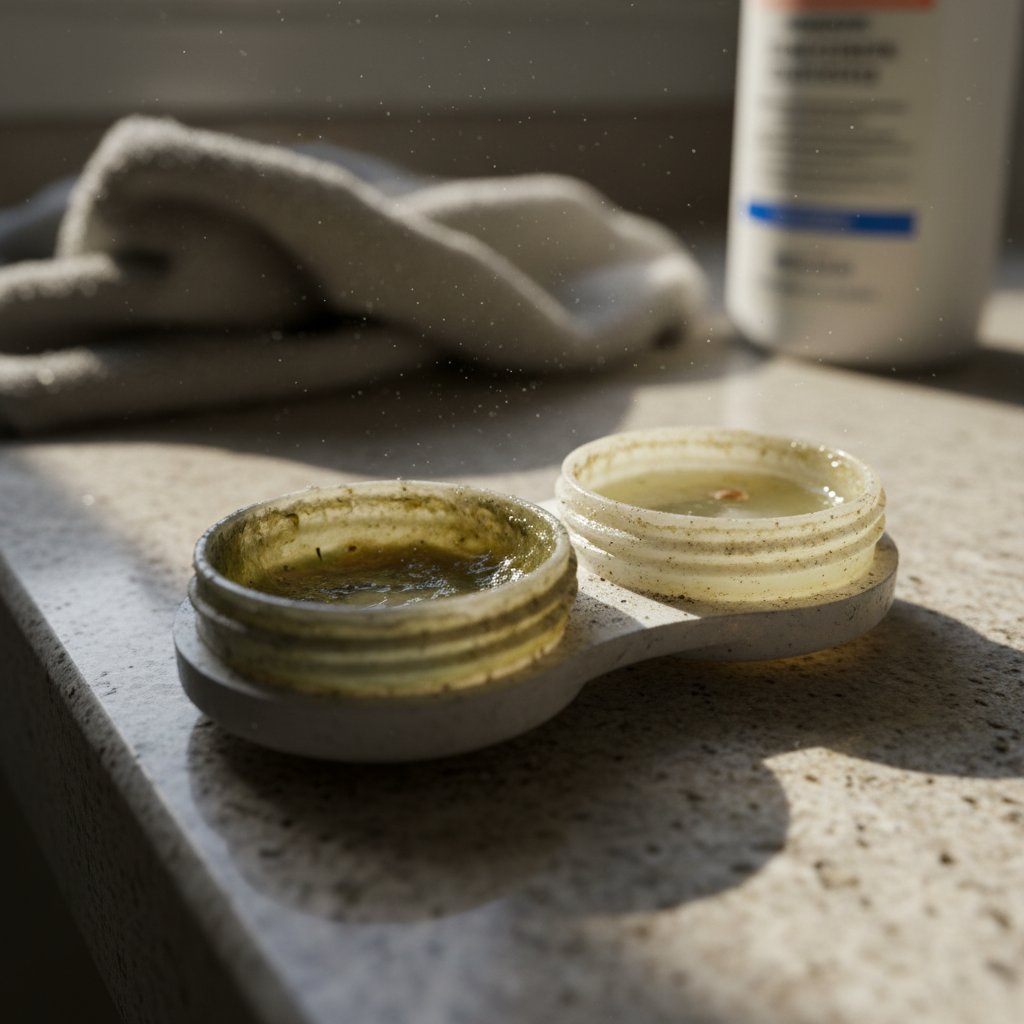
3. The Case of the Contaminated Case: Your Lens's Hidden Enemy
Many users meticulously clean their lenses but completely forget about the case itself. The lens case is the single most critical accessory for safe wear, and neglecting it is a direct path to infection.
Practitioners often use the "Case Rule": If you wouldn't feel safe drinking the liquid from your lens case, you shouldn't be storing your medical devices in it. Over time, a slimy, invisible biofilm can form on the case surfaces. Once this layer is established, even fresh disinfecting solution cannot penetrate it to kill the underlying bacteria. Research has shown alarming rates of contamination; one study found that 95% of reused daily disposable lens packages (used improperly for storage) were contaminated with bacteria like Staphylococcus (Contamination Risk of Reusing Daily Disposable Lenses).
The Non-Negotiable Rule: Replace your contact lens case at least once every three months. Most new bottles of solution come with a new case—use it. Write the date on the bottom of the new case with a marker to help you remember.
4. The Tap Water Temptation: A Shortcut to Serious Trouble
Whether it's for a quick rinse of a fallen lens or cleaning out your case, using tap water is one of the most severe mistakes a contact lens wearer can make. It may seem clean, but tap water, well water, and even distilled water can contain a dangerous microorganism called Acanthamoeba.

This parasite can attach to a contact lens, transfer to your eye, and cause Acanthamoeba keratitis, a severe infection that is notoriously difficult to treat and can lead to permanent vision loss or the need for a corneal transplant. The Environmental Protection Agency (EPA) explicitly warns against this practice, noting the organism is "resistant to treatment and cure" (EPA: Danger of Using Tap Water with Contact Lenses).
This rule is absolute: NEVER let tap water, saliva, or any liquid other than sterile lens solution touch your contact lenses or your case. This includes showering, swimming, or using a hot tub while wearing your contacts, as this also exposes them to contaminated water.
5. The Blame Game: Forgetting to Investigate Your Environment
As an experienced wearer, when your lenses suddenly become uncomfortable, your first instinct is to blame the lens. You might think you got a "bad batch" or that your eyes are "rejecting them." More often than not, the lens isn't the problem—your environment is.
Your eyes are a sensitive barometer of your overall health and surroundings. Sudden discomfort is often a symptom of a change in your daily life. Before you blame your contacts, consider these common triggers:
- Dry Air: Have you started a new job in a heavily air-conditioned office? Are you traveling more by plane? Low-humidity environments accelerate tear evaporation, leading to dryness and irritation.
- Increased Screen Time: Staring at digital devices causes your blink rate to drop from a normal 15 times per minute to as low as 5-7 times per minute (AAO: Computer Usage). Fewer blinks mean less tear film replenishment, causing your lenses to feel dry and gritty.
- New Medications: Many common medications, such as antihistamines, decongestants, antidepressants, and blood pressure medication, can reduce tear production as a side effect.
- Hormonal Changes: Fluctuations in hormones due to pregnancy, menopause, or birth control can affect the volume and composition of your tears.
When comfort changes, think like a detective. What else has changed in your life? Addressing the root environmental cause is often more effective than simply switching lens brands.
Frequently Asked Questions (FAQ)
Q: Is it safe to sleep in "extended wear" lenses? A: While some lenses are FDA-approved for overnight wear, this practice still significantly increases the risk of infection compared to daily removal. The CDC notes that sleeping in any type of contact lens increases your risk for an eye infection by 6 to 8 times. It should only be done under the strict guidance of your eye doctor.
Q: Why do my daily disposable lenses sometimes feel uncomfortable toward the end of the day? A: This is almost always due to environmental factors. Unlike monthly lenses that degrade over weeks, a daily lens is fresh every morning. If you experience end-of-day discomfort, it's likely caused by dry air, prolonged screen use, or dehydration. Try using rewetting drops approved for contact lenses and practicing the 20-20-20 rule during screen use.
Q: Can I really not even rinse my case with tap water? It seems wasteful to use solution. A: Correct, you must never use tap water. The risk of introducing Acanthamoeba into your case, however small, is not worth it. The cost of a bottle of solution is insignificant compared to the potential cost—and pain—of a severe, vision-threatening infection.
This article is for informational purposes only and does not constitute professional medical advice. Always follow the guidance of your eye care professional regarding the use, care, and replacement schedule of your contact lenses. If you experience pain, redness, or blurry vision, remove your lenses immediately and consult your doctor.
References
- Stapleton, F., et al. (1993). The risk of ulcerative keratitis in contact lens wearers. PubMed. https://pubmed.ncbi.nlm.nih.gov/8311770/
- Centers for Disease Control and Prevention. (2023). Contact Lens Care Systems & Solutions. CDC.gov. https://www.cdc.gov/contact-lenses/about/index.html
- Wu, Y. T., et al. (2011). Contamination of reused daily disposable contact lenses and lens care solutions. PubMed. https://pubmed.ncbi.nlm.nih.gov/22041587/
- Environmental Protection Agency. (2022). The Danger of Using Tap Water With Contact Lenses. EPA.gov. https://www.epa.gov/sdwa/danger-using-tap-water-contact-lenses
- American Academy of Ophthalmology. (2022). Computers, Digital Devices and Eye Strain. AAO.org. https://www.aao.org/eye-health/tips-prevention/computer-usage


