












Solution Sensitivity: Is Your Multipurpose Solution the Problem?
Is It Dryness or a Chemical Reaction?
That red, gritty, and irritated feeling is an all-too-common complaint for contact lens wearers. For many, the discomfort is a straightforward case of dry eyes, a condition that worsens with long hours and screen time. But what if you diligently follow your replacement schedule, clean your lenses perfectly, and still experience irritation the moment you put them in? The problem might not be the lens or your eyes, but the very solution you trust to keep them clean.
This is the classic sign of multipurpose solution (MPS) sensitivity. Unlike standard dryness that often develops over the day, solution sensitivity is an immediate chemical reaction. Here’s how to tell the difference:
- Timing is Everything: Sensitivity often manifests as a stinging or burning sensation immediately upon insertion. It’s a sharp, unwelcome feeling that doesn’t fade as the lens "settles."
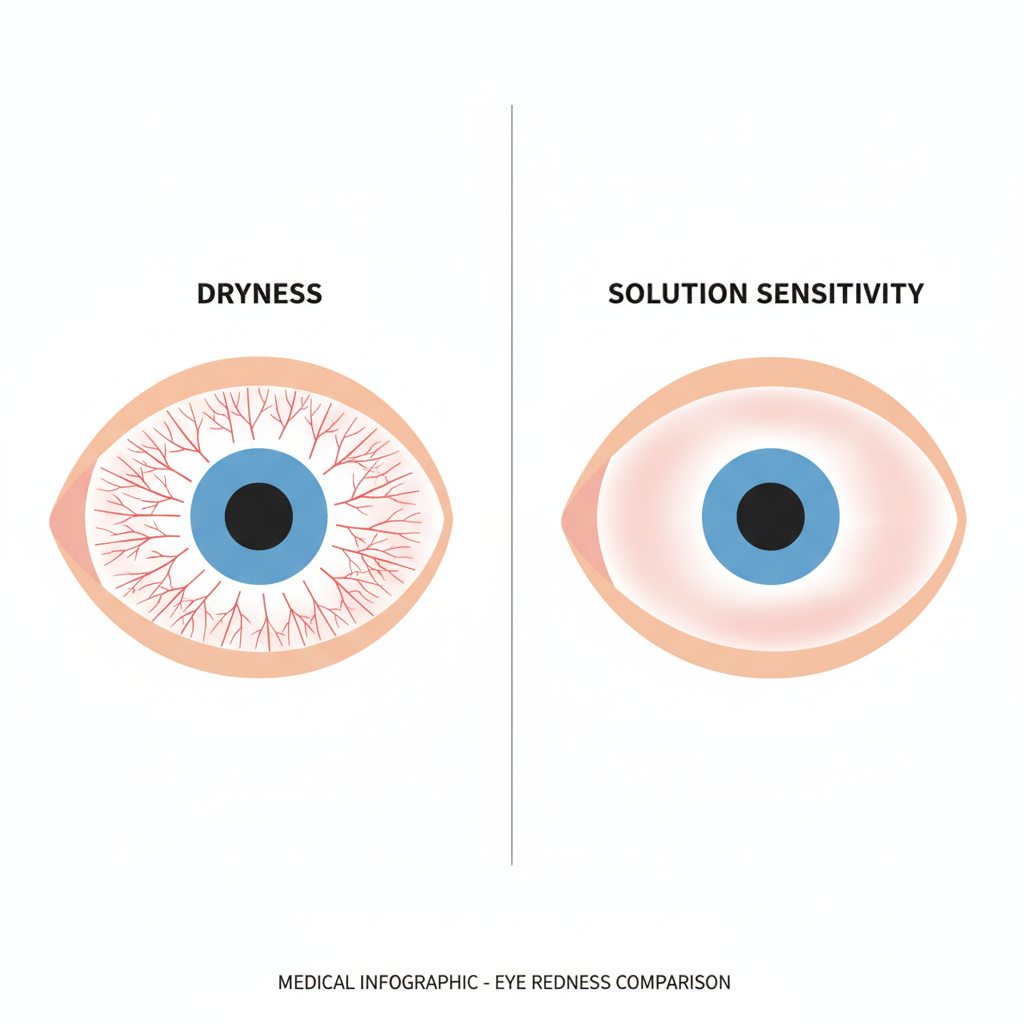
- The Look of Irritation: In clinical practice, we often see a distinct pattern. Pure dryness or lack of oxygen (hypoxia) can cause redness in the vessels at the edge of the cornea (the limbus). Solution sensitivity, however, frequently causes a diffuse, pinkish wash across the entire white of the eye (the conjunctiva). It’s a sign of widespread, low-grade inflammation.
- The Discomfort Lingers: While a dry lens might feel better after a few good blinks or a rewetting drop, sensitivity-related discomfort tends to persist as long as the lens is in your eye.
An At-Home Diagnostic: The 24-Hour Case Test A useful heuristic to isolate the problem is what I call the '24-hour case test.' Take a brand-new lens from its package and place it in your clean, dry case. Fill it with your usual multipurpose solution and let it soak for a full 24 hours. The next day, insert that lens. If it still stings, it’s a strong indicator that the lens material has absorbed the irritating preservative from the solution, confirming a chemical sensitivity.
Inside the Bottle: The Chemistry of Convenience
Multipurpose solutions are a marvel of chemical engineering, tasked with the delicate balance of killing dangerous germs without harming the delicate surface of your eye. To do this, they rely on preservatives.
The two most common disinfecting agents in multipurpose solutions are PHMB (polyhexamethylene biguanide) and Polyquad (polyquaternium-1). While both are effective, they have different chemical properties that can affect your comfort:
- PHMB: This is a highly effective, broad-spectrum disinfectant. However, it is a smaller molecule that can penetrate soft lens materials and is a known irritant for a subset of the population.
- Polyquad: This is a larger molecule that tends to remain on the surface of the lens. While this often results in less initial stinging upon insertion compared to PHMB, some wearers find it contributes to more late-day dryness as it interacts with the tear film.
The real problem arises from incomplete cleaning. According to the Centers for Disease Control and Prevention (CDC), a critical step is to mechanically "rub and rinse" your lenses before storing them. When you skip the rub, you leave behind a thin layer of proteins and lipids from your tears. Preservatives in your MPS can bind to this film, creating a concentrated patch of irritants that sits directly on your cornea all day, leading to chronic inflammation.
The Hydrogen Peroxide Alternative: A Preservative-Free Deep Clean
If you’ve identified MPS as the source of your discomfort, one of the most effective alternatives is a hydrogen peroxide (H2O2) cleaning system. These systems are a go-to recommendation for patients with chemical sensitivities.
Here’s how they work: You place your lenses in a special basket-like case. You fill the case to a line with a 3% hydrogen peroxide solution. A platinum catalyst disc at the bottom of the case immediately begins to react with the H2O2, creating tiny bubbles that actively clean the lens surface. Over a period of six hours, this catalyst completely neutralizes the peroxide, converting it into a gentle, preservative-free saline solution.
The Benefits:
- Unmatched Disinfection: Hydrogen peroxide provides powerful disinfection against a wide range of microorganisms.
- Completely Preservative-Free: By the time you put the lenses in your eyes, you are only touching a simple saline solution, eliminating the source of chemical irritation.
- Symptom Resolution: Many users who switch to peroxide systems report a dramatic reduction or complete elimination of the chronic redness and irritation they experienced with MPS.
CRITICAL SAFETY WARNING: The convenience of MPS is replaced by a strict, non-negotiable routine. You must never put un-neutralized hydrogen peroxide solution directly into your eye. It is a caustic acid that will cause a painful chemical burn. Always use the special case provided, soak for the full six-hour neutralization period, and never use the peroxide solution to rinse your lenses before insertion.
The Ultimate Fix: Eliminating the Solution Entirely
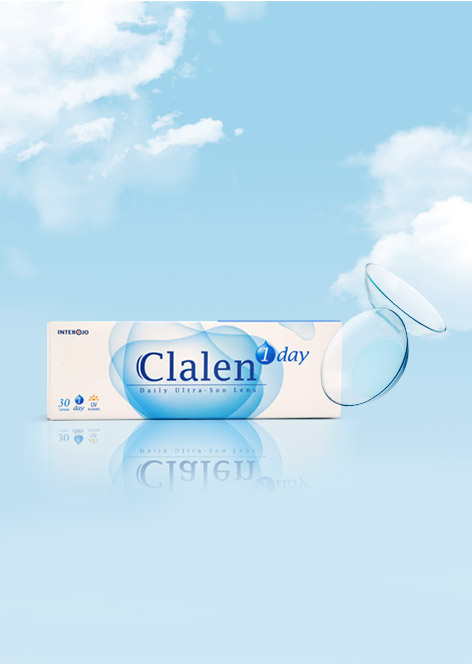
While hydrogen peroxide systems are an excellent step up, the gold standard for anyone with significant sensitivities—or for anyone who wants the healthiest, most convenient option—is switching to daily disposable lenses.
A landmark study published in the CDC's Morbidity and Mortality Weekly Report found that a staggering 99% of contact lens wearers engage in at least one risky hygiene behavior. Daily disposables engineer-out this human error.
The logic is simple and powerful: you get a fresh, sterile, perfectly clean lens every single morning, straight from its sterile saline packaging. There is no cleaning, no cases, no solutions, and therefore zero opportunity for preservative build-up, protein deposits, or contamination. At the end of the day, you simply throw the pair away.
For wearers suffering from solution-induced irritation, the switch to daily disposables often brings immediate relief. This approach completely removes the variable of cleaning solutions and the potential for retained irritants. While the upfront cost may seem higher, it often balances out when you factor in the money saved on bottles of solution and cases, not to mention the immense benefit of reducing your risk of painful and costly eye infections.
Your Action Plan for Comfortable Vision
If you’re tired of the daily battle with red, uncomfortable eyes, it’s time to investigate the root cause. Don't just accept discomfort as a normal part of wearing contact lenses.
-
Diagnose: Start by tracking your symptoms. Does the irritation start immediately upon insertion? Do your eyes have a diffuse pinkish look? Try the 24-hour case test to see if a pre-soaked lens is the problem.
-
Consult Your Eye Doctor: Before making any changes, schedule an appointment with your optometrist. Explain your symptoms and your suspicions. They can perform a thorough examination to rule out other issues and provide a professional diagnosis. They are your best resource for finding the right lens material and care system for your specific needs.
-
Explore Your Options: Based on your doctor's advice, consider the hierarchy of solutions:
- Good: If your sensitivity is mild, your doctor might suggest trying a different brand of MPS that uses a different preservative.
- Better: Transitioning to a hydrogen peroxide system is a highly effective way to eliminate preservative-related irritation for good.
- Best for Sensitivity: Switching to daily disposable lenses offers the ultimate solution by removing cleaning and preservatives from the equation entirely, providing a fresh, comfortable experience every day. You can learn more about how they can help in our guides to reducing eye redness and relieving dry eyes.
This article is for informational purposes only and does not constitute professional medical advice. Always consult with a qualified eye care professional for any issues concerning your eye health and before changing your contact lens type or care regimen.


