







The Risk of 'Topping Off' Your Contact Lens Solution
TL;DR: The Single Most Important Contact Lens Habit
Topping off your contact lens case with new solution instead of emptying it and refilling it is one of the most common and dangerous mistakes you can make. This habit turns your lens case into a breeding ground for bacteria, significantly increasing your risk of painful and potentially sight-threatening eye infections. The safest and simplest way to wear contacts is to switch to daily disposable lenses, which eliminate the need for cases and solutions altogether.
What is 'Topping Off' and Why Is It So Dangerous?
It seems harmless enough. You get ready for bed, take out your lenses, and notice there’s still some solution left in the case from the night before. To save a little time and money, you simply add a splash of new solution on top of the old liquid. This is called "topping off."
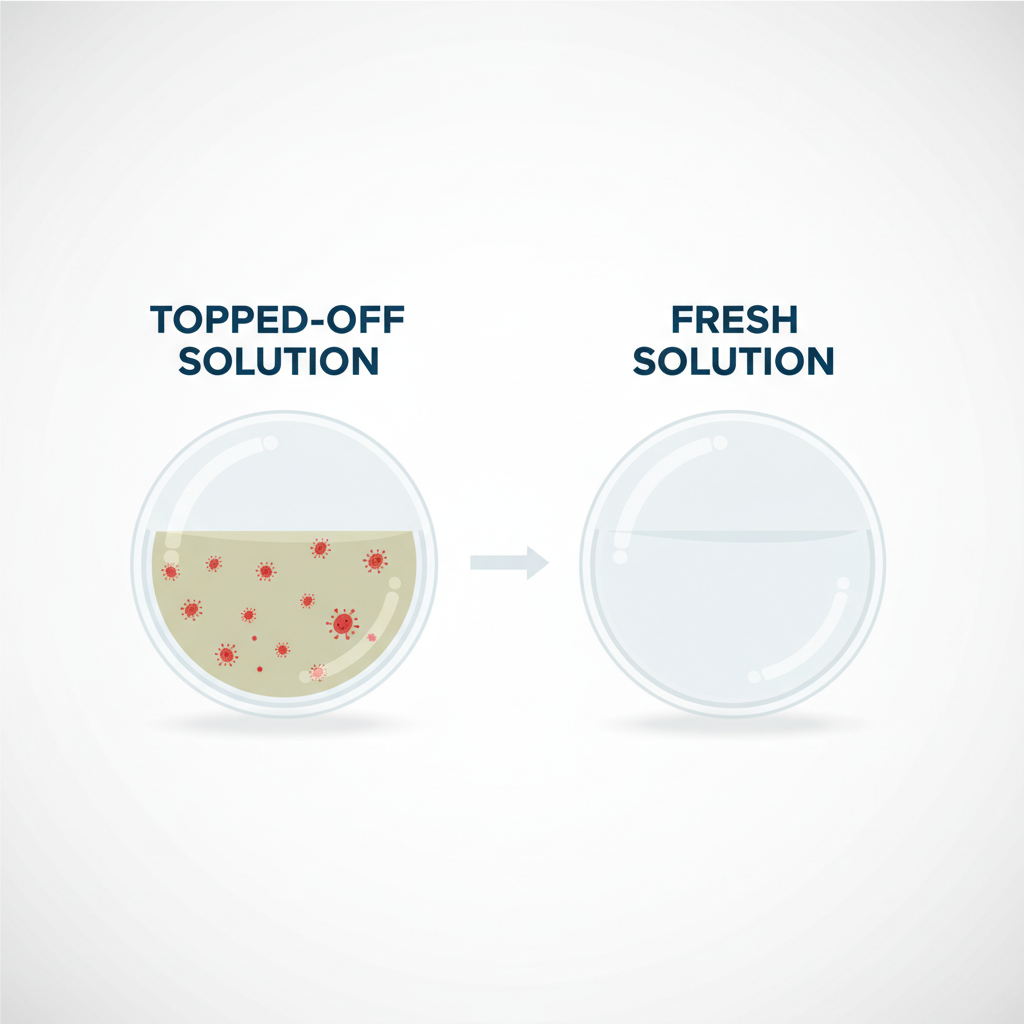
While it might feel resourceful, you are actually neutralizing the very thing that keeps your lenses safe. Contact lens solution is a disinfectant. Once it has been used to clean your lenses for a night, its germ-killing ingredients are depleted. When you top it off, you are merely diluting the fresh disinfectant with used, contaminated liquid. According to the Centers for Disease Control and Prevention (CDC), this practice is a major risk factor for eye infections because it fails to adequately disinfect your lenses.
The old solution is no longer a protective fluid; it’s a microbial swamp. Any bacteria, fungi, or other pathogens from your eye or the environment can now multiply unchecked. Each time you put that "clean" lens back in your eye, you are introducing a concentrated dose of germs directly onto your cornea.
The Science of a Contaminated Case
The primary culprit in contact lens-related infections is often Pseudomonas aeruginosa, a common bacterium that thrives in moist environments like a poorly maintained lens case. A comprehensive review in the journal Cureus identifies this pathogen as the most frequent cause of microbial keratitis, a severe infection of the cornea. Topping off creates the perfect conditions for it to flourish.
Furthermore, if you ever use tap water to rinse your case (or your lenses), you introduce an even greater danger: Acanthamoeba. As the Environmental Protection Agency (EPA) warns, this parasite is commonly found in tap water and can cause Acanthamoeba keratitis, an infection that is notoriously difficult to treat and can lead to permanent vision loss or the need for a corneal transplant.
The Unseen Consequences: From Chronic Irritation to Severe Infection
Many people think an infection will be obvious, but the problems often start subtly. You might experience minor redness, dryness, or a feeling that something is in your eye. These are early warning signs that your hygiene routine is failing.
Over time, this low-grade inflammation can lead to conditions like Giant Papillary Conjunctivitis (GPC), where bumps form under your eyelid, making lens wear uncomfortable or impossible. However, the greatest risk is a corneal ulcer—an open sore on your cornea. The U.S. Food and Drug Administration (FDA) lists symptoms like unusual light sensitivity, worsening pain, and a gritty feeling as red flags that require immediate medical attention. A corneal ulcer can scar your cornea, permanently impairing your vision.
Common Misconception: "If My Eyes Don't Hurt, My Habits Are Fine."
A pervasive myth among contact lens wearers is that the absence of pain equals the absence of risk. This is dangerously false. In a landmark study published in the CDC's Morbidity and Mortality Weekly Report, researchers found that a staggering 99% of contact lens wearers reported at least one risky hygiene behavior. You might go weeks, months, or even years topping off solution without an incident. During this time, however, you are building up a biofilm—a sticky, invisible layer of bacteria—inside your lens case. Each day you reuse that case without properly cleaning it, the risk compounds. It only takes one instance of a contaminated lens causing a microscopic scratch on your cornea for a full-blown infection to take hold.
The Core 4: Simple Rules for Safe Reusable Lens Wear
If you wear reusable lenses (bi-weekly or monthly), protecting your vision depends on impeccable hygiene. Forget complicated protocols; focus on these four non-negotiable rules. I have found that my patients who master these simple steps dramatically reduce their risk of complications.

| Habit | The Action | Why It Matters |
|---|---|---|
| 1. Rub and Rinse | Before and after each wear, gently rub the lens in your palm with fresh solution for 5-10 seconds, then rinse thoroughly. | The CDC calls this the "rub and rinse" doctrine. It is the single most effective way to mechanically remove deposits and microbes. "No-rub" solutions can't replace this critical step. |
| 2. Fresh Solution, Every Time | Always discard all the old solution from the case. Rinse the case with fresh solution, and fill it with new solution before storing your lenses. | This is the central rule. It ensures the disinfectant is at full strength to kill germs. Never top off old solution. |
| 3. Meticulous Case Care | After putting your lenses in, empty the case, rinse it with fresh solution (never water!), and leave it uncapped and upside down on a clean tissue to air-dry. | A wet case breeds germs. Air-drying keeps it clean. You must replace your case at least every three months, or immediately if it is cracked or stained. |
| 4. Clean, Dry Hands | Always wash your hands with soap and water, and dry them completely with a lint-free towel before touching your lenses or case. | Wet hands can transfer bacteria and parasites like Acanthamoeba to your lenses. Dry hands are much safer. |
The Ultimate Upgrade: How Daily Disposables Eliminate the Risk
While perfect hygiene with reusable lenses is possible, it leaves room for human error. The simplest and most effective way to ensure a safe, healthy contact lens experience is to remove the variables of cleaning and storage entirely.
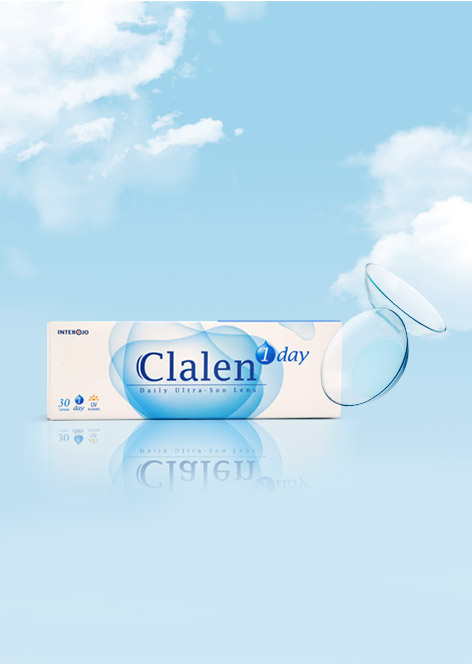
This is the core benefit of daily disposable lenses. You wear them once and then throw them away. There is no case to clean, no solution to top off, and no opportunity for a biofilm to develop. Every morning starts with a fresh, sterile lens straight from its sealed blister pack.
This shift towards a safer modality is reflected in clinical practice. A 24-year global survey of prescribing trends shows that daily disposable lenses have grown from just 17% of fittings in 2000 to become the most prescribed type of soft contact lens today, accounting for nearly 47% of new fits.
Addressing the Cost: An Investment in Your Vision
Price-sensitive consumers often hesitate at the perceived higher cost of daily disposables. However, it's crucial to frame the cost in terms of overall value and risk avoidance. The cost of a contact lens-related infection is not just financial—it includes pain, time off work, and the potential for irreversible vision loss. The CDC study noted that these infections result in an estimated economic burden of $175 million per year in the U.S.. When you factor in the money saved on bottles of solution and replacement cases, the daily cost difference for daily disposables can be modest, representing a wise investment in your long-term eye health.
Furthermore, studies show that switching to daily disposables can solve common issues for "problem patients." One retrospective study found that wearers who switched from reusable to daily disposable lenses reported a significant reduction in dryness symptoms.
Key Takeaways
Your vision is too precious to gamble with. Understanding the risks of poor contact lens hygiene is the first step toward protecting it.
- Never "Top Off" Solution: This is the most dangerous habit. Always use fresh disinfecting solution every single time you store your lenses.
- Hygiene is Non-Negotiable: For reusable lenses, the "Rub and Rinse" method, daily case cleaning, and quarterly case replacement are essential.
- Daily Disposables are the Safest Choice: By eliminating the need for cleaning and storage, single-use lenses remove the primary sources of contamination and infection risk, offering peace of mind and unparalleled convenience.
Frequently Asked Questions (FAQ)
Can I store my lenses in the saline from the blister pack?
No. This is incredibly dangerous. The liquid in a blister pack is a simple saline solution, not a disinfectant. One study that tested reused daily disposable lenses stored in their original blister packs found that 95% of the packs were contaminated with bacteria, primarily Staphylococcus. Once opened, the pack is no longer sterile.
Is it really necessary to replace my case every 3 months?
Yes, absolutely. Over time, an invisible layer of bacteria and fungi called a biofilm can form on the plastic surfaces of the case. This film is resistant to disinfectants and can continuously contaminate your lenses. Replacing your case quarterly is a critical and inexpensive safety measure.
What are the immediate signs of an eye infection?
According to the FDA and other eye health authorities, you should remove your lenses and contact your eye doctor immediately if you experience any of the following: worsening eye pain, increased redness, unusual sensitivity to light, blurred vision that doesn't clear, a gritty feeling under the eyelid, or excessive discharge.
Disclaimer: This article is for informational purposes only and does not constitute professional medical advice. Do not use this information to diagnose or treat any health problems. Always consult a qualified eye care professional for any questions or concerns about your eye health and before starting or changing your contact lens wear or care routine.
References
- Centers for Disease Control and Prevention (CDC): Contact Lens Care
- U.S. Food and Drug Administration (FDA): Contact Lens Risks
- U.S. Environmental Protection Agency (EPA): Danger of Using Tap Water with Contact Lenses
- Morbidity and Mortality Weekly Report (MMWR): Contact Lens Wearer Demographics and Risk Behaviors
- Cureus: A Review on Contact Lens-Associated Complications
- Contact Lens and Anterior Eye: Global trends in contact lens prescribing 2000-2023
- Optometry and Vision Science: Refitting "Problem" Patients with Daily Disposables
- Optometry and Vision Science: Microbial Contamination of Daily Disposable Lenses


