







The Cornea: How Your Eye’s First Line of Defense is UV Damaged
The Unseen Battle: How Your Cornea Defends Against UV Radiation
The cornea, the transparent dome at the very front of your eye, acts as its primary window to the world. It is a marvel of biological engineering, but its constant exposure to the environment makes it the first line of defense against a relentless and invisible assailant: ultraviolet (UV) radiation. While we often associate sun damage with our skin, the eye, and particularly the cornea, is just as vulnerable. Understanding this risk is the first step toward preserving your vision for a lifetime.
Globally, the World Health Organization (WHO) estimates that up to 10% of the 15 million cases of blindness due to cataracts can be attributed to UV exposure. This statistic highlights a critical truth: the damage is not just a temporary discomfort; it is cumulative, progressive, and can lead to irreversible vision loss. This article will explore the precise mechanisms by which UV light harms your cornea, from acute "sunburns" to the slow-developing diseases that threaten long-term sight, making the case for high-quality sunglasses as an essential piece of medical equipment.
An Invisible Threat: How UV Light Targets the Cornea
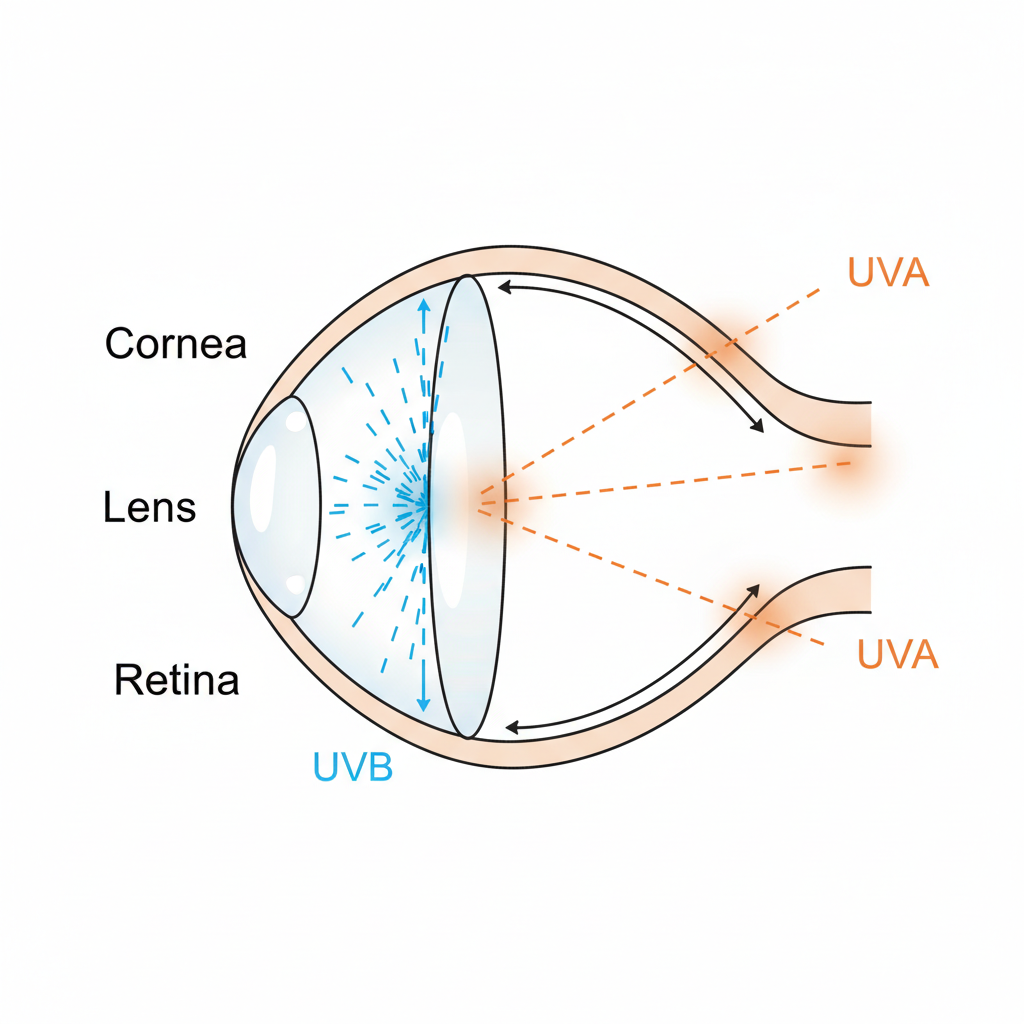
Not all light is created equal. Sunlight contains a spectrum of radiation, including invisible UV rays categorized as UVA, UVB, and UVC. While the Earth's ozone layer blocks most UVC, both UVA and UVB rays reach the ground and interact with our bodies. The cornea bears the brunt of this assault.
According to a foundational study in Investigative Ophthalmology & Visual Science, the cornea is a highly efficient natural filter for the most damaging short-wavelength rays. Its outermost layer, the epithelium, absorbs UVB radiation at a rate 1.8 times higher than the layers behind it. While this protects the delicate retina from some harm, it means the cornea itself sustains significant damage in the process. It effectively sacrifices itself to protect the inner eye.
This leads to a dangerous misconception known as the "Darkness Fallacy." As experts at the MD Anderson Cancer Center warn, wearing dark-tinted sunglasses without certified UV protection can be more harmful than wearing no sunglasses at all. The dark lenses cause your pupils to dilate, opening the door for more unfiltered UV radiation to flood the eye. This is why verifying UV protection is non-negotiable.
From Acute Sunburn to Chronic Disease: The Two Faces of UV Damage
UV damage manifests in two distinct ways: acute, painful episodes and slow, silent degradation over years. Both are rooted in the same cellular destruction.
Acute Damage: Photokeratitis
Photokeratitis is, quite literally, a sunburn of the cornea. It occurs after intense, short-term exposure to UVB rays. Symptoms often appear hours later and include pain, redness, extreme light sensitivity, and a gritty feeling, as if sand is in the eye. The most extreme form of photokeratitis is "arc eye," a debilitating injury common among welders, whose work exposes them to radiation classified as a Group 1 carcinogen, increasing ocular melanoma risk by up to 10-fold, according to the International Agency for Research on Cancer.
Environments with high reflectivity, such as snow (which can double UV exposure), water, or sand, dramatically increase the risk of photokeratitis. While painful, it is usually temporary, with the corneal epithelium healing within a few days. However, each episode contributes to the eye's cumulative lifetime dose of UV radiation.
Cumulative Damage: The Slow Erosion of Sight
More insidious is the damage that accumulates over decades. This chronic exposure is a primary driver of several sight-threatening conditions.
-
Pterygium and Pinguecula: A pinguecula is a yellowish, raised growth on the white of the eye, composed of damaged proteins and fat. If this growth extends onto the cornea, it is called a pterygium (or "Surfer's Eye"). These growths are a direct result of UV-induced damage. Research published in StatPearls notes that by their 80s, nearly 100% of individuals show some evidence of pinguecula. The development is often driven by the "Coroneo Effect," where UV light entering from the side of the eye is focused onto the nasal region of the cornea, a common site for these growths.
-
Cataracts: This clouding of the eye's natural lens is a leading cause of blindness worldwide. Research from the National Eye Institute has revealed the precise mechanism: in the low-oxygen environment of the lens, UV light triggers a process called glycation, causing proteins to clump together and form the cloudy opacities that define a cataract. Long-term use of high-quality UV protection is one of the most effective strategies for delaying their onset. For those who have already had surgery, understanding the need for protection is paramount, as detailed in our guide on sunglasses for post-cataract surgery.
-
Cancers of the Eye and Eyelid: While less common, UV radiation is a significant risk factor for ocular melanoma, particularly for individuals with light-colored eyes (blue, green, or hazel), who have less protective melanin. Furthermore, the skin of the eyelid is extremely thin and vulnerable. According to MD Anderson, 90% of cancers occurring on or around the eyelid are UV-induced basal cell carcinomas.
The Cellular Battle: A Microscopic Look at UV Destruction
At a cellular level, UV radiation initiates a cascade of destructive events that undermine the cornea's structure and function. This damage pathway continues long after you step out of the sun.
-
Triggering Cellular Self-Destruct: Research has identified a "ceramide-ER stress-AMPK" signaling axis that is activated by UV light. In simple terms, UV exposure triggers a stress signal within the retinal pigment epithelium (RPE) cells, initiating a process that can lead to apoptosis, or programmed cell death. This is a key mechanism driving the progression of Age-Related Macular Degeneration (AMD).
-
The "Dark Toxic Effect": One of the most startling discoveries is that UV damage doesn't stop when the exposure does. A study published in the journal Cells found that oxidized byproducts of cellular metabolism, created by the initial UV exposure, continue to diffuse through the cells and cause toxic damage for hours, even in complete darkness. This highlights that protection is not just about avoiding the midday sun; it's about preventing the initial trigger.
-
Weakening Natural Defenses: The human eye has its own internal UV filters, primarily derivatives of an amino acid called kynurenine. However, research shows that the concentration of these protective compounds, along with antioxidants like glutathione, decreases steadily with age. This leaves the aging eye progressively more susceptible to UV-induced damage, making external protection even more critical as we get older.
Your Shield: An Evidence-Based Guide to Effective Protection
Protecting your corneas from a lifetime of UV damage goes beyond simply owning a pair of sunglasses. It requires a strategic approach to selecting and wearing them. Many people are rightly concerned, asking "Can cheap sunglasses damage your eyes?". The answer lies in understanding the features that truly matter.
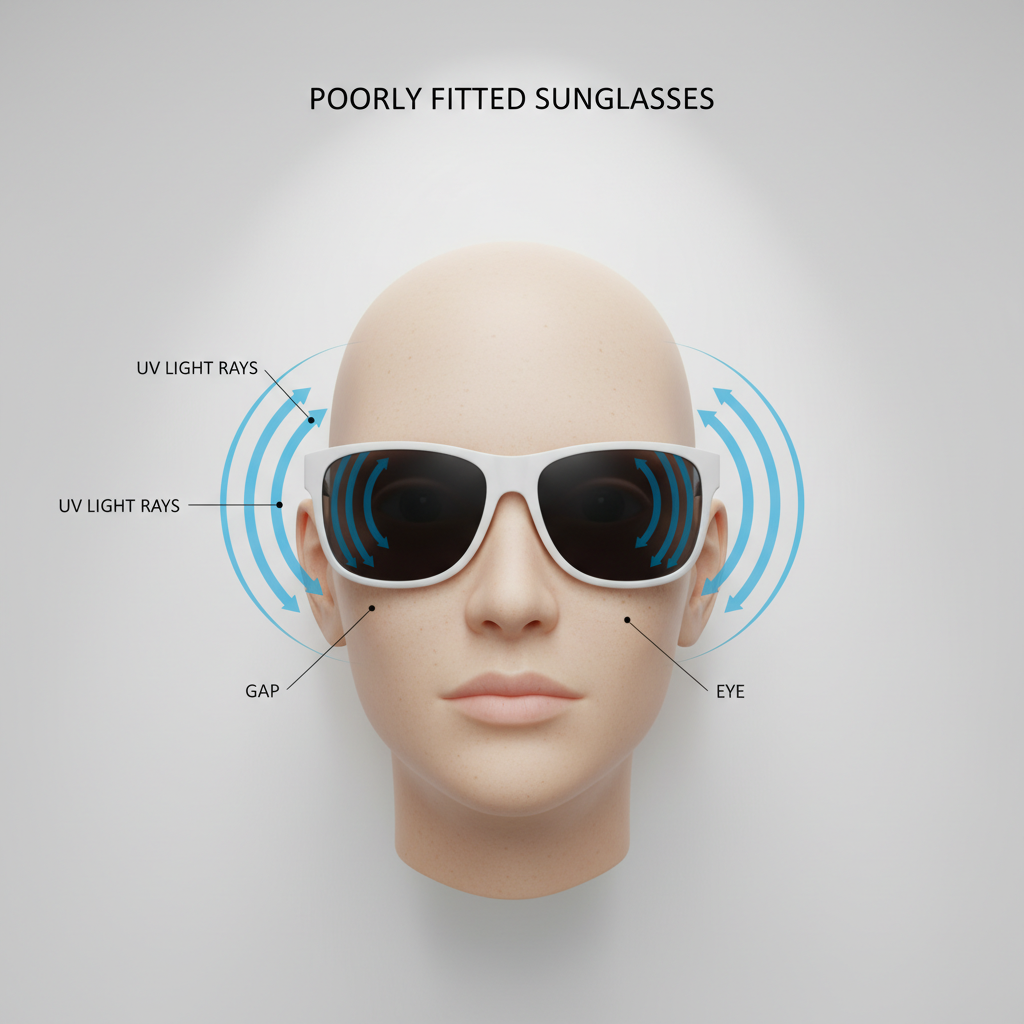
A Note from Experience: In clinical practice, a common and critical oversight is neglecting peripheral UV exposure. Even lenses with 100% frontal UV blockage can fail if the frame design is poor. We frequently observe that sunglasses sitting more than 10mm away from the brow and temple allow significant unfiltered light to enter from the sides. This oblique-angle UV reflects off the inner surface of the lens directly onto the cornea, contributing to conditions like pterygium over time.
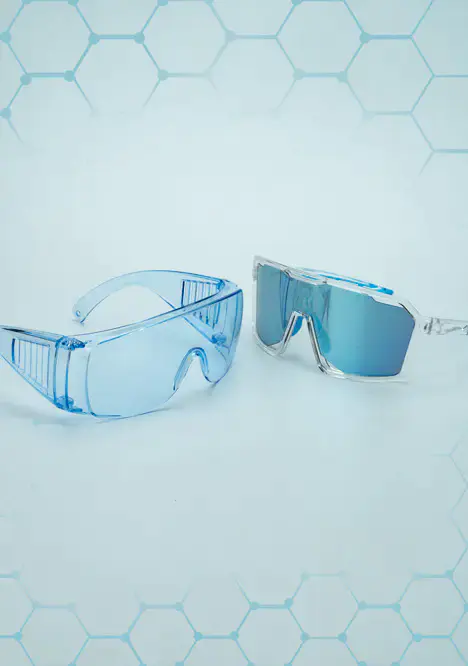
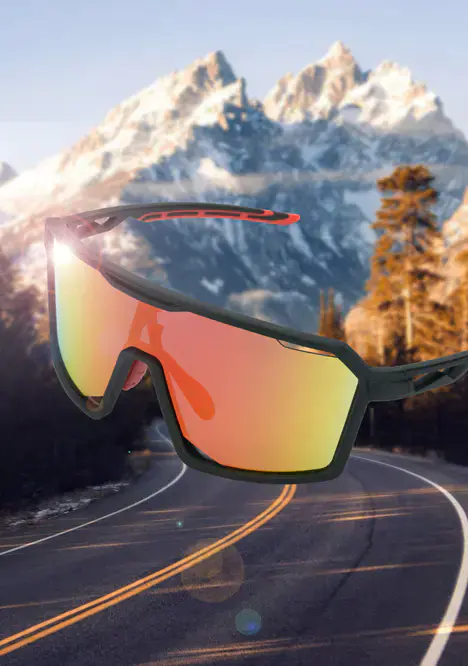
1. Frame Geometry is as Important as the Filter: A 3D study using sensor-equipped mannequins confirmed that "middle-sized," flatter fashion frames offered the least protection due to this peripheral light leakage. The most effective designs are large, oversized, or wraparound styles that sit close to the face, forming a physical barrier. As recommended by the American Academy of Ophthalmology (AAO), this geometry is crucial for blocking UV rays from all angles.
2. Verify the UV400 Standard: The label "UV400" signifies that the lenses block all light rays with wavelengths up to 400 nanometers, which covers all UVA and UVB rays. This is the standard you should look for. Some older or lower-quality standards only protect up to 380 nm, leaving a dangerous gap. A technical report in PubMed highlights that the 380-400 nm range contains 45% more UV energy than the range below it, making UV400 protection a medical necessity, not a marketing gimmick.
3. Understand Lens Material and Durability: Modern polycarbonate lenses often have UV protection embedded directly into the material itself, meaning it won't scratch off. However, as noted from our own observations and confirmed by experts at University of Utah Health, some budget lenses rely on a thin external coating for UV protection. This coating can degrade over time with scratches and chemical exposure (like sunscreen or saltwater), potentially reducing its efficacy. This invisible degradation creates a false sense of security, which is why it's important to understand if your sunglasses expire.
4. Start Protection Early: UV damage begins in childhood. The lens inside a child's eye is much clearer than an adult's, allowing more radiation to penetrate to the retina. According to the Royal Australian and New Zealand College of Ophthalmologists (RANZCO), up to 80% of a person's lifetime UV exposure occurs before the age of 18. Equipping children with high-quality, durable sunglasses is one of the most important investments you can make in their long-term eye health.
Your eyes are irreplaceable. Treating sunglasses as a critical health tool, rather than just a fashion accessory, is the key to shielding your corneas from the silent, cumulative damage of ultraviolet radiation. By choosing well-fitting, UV400-certified eyewear, you are taking a proactive and powerful step to preserve the clarity of your vision for all the years to come.
This article is for informational purposes only and does not constitute professional medical advice. Consult a qualified ophthalmologist or optometrist for any concerns about your eye health.
References
- World Health Organization (WHO). (n.d.). Ultraviolet radiation. https://www.who.int/news-room/fact-sheets/detail/ultraviolet-radiation
- Kolozsvári, L., et al. (2002). UV-B absorption in the human cornea. Investigative Ophthalmology & Visual Science. https://iovs.arvojournals.org/article.aspx?articleid=2123733
- MD Anderson Cancer Center. (2023). 9 things to know about sunglasses, eye protection and cancer. https://www.mdanderson.org/cancerwise/9-things-to-know-about-sunglasses--eye-protection-and-cancer.h00-159699123.html
- Di Girolamo, M. (2022). Pinguecula. StatPearls. https://www.ncbi.nlm.nih.gov/books/NBK558965/
- National Eye Institute (NEI). (2014). New research sheds light on how UV rays may contribute to cataract. https://www.nei.nih.gov/about/news-and-events/news/new-research-sheds-light-how-uv-rays-may-contribute-cataract
- Kaarniranta, K., et al. (2013). Ceramide-ER stress-AMPK-autophagy axis is a key pathogenic mechanism in AMD. Cellular and Molecular Life Sciences. https://pmc.ncbi.nlm.nih.gov/articles/PMC3676843/
- Ying, G., et al. (2022). Bisretinoid Oxidation Products in the Dark. Cells. https://pmc.ncbi.nlm.nih.gov/articles/PMC9602730/
- Al-Jazazi, S., et al. (2019). Ocular UV Dosimetry. Applied Sciences. https://pmc.ncbi.nlm.nih.gov/articles/PMC6803516/
- Masili, M., & Schor, R. (2019). Solar UV protection by sunglasses: a technical report. Revista da Associação Médica Brasileira. https://pubmed.ncbi.nlm.nih.gov/31274741/


