







Better Breathability: How Dailies Boost Eye Health
TL;DR
Choosing daily disposable contact lenses is one of the most effective decisions you can make for your long-term eye health. Their advanced silicone hydrogel materials allow significantly more oxygen to reach your cornea compared to older lens types, reducing redness and the risk of complications. Furthermore, using a fresh, sterile pair every day eliminates the dangerous buildup of proteins and bacteria common with reusable lenses, making them the superior choice for both comfort and safety.
What is Oxygen Permeability and Why Does Your Cornea Need to Breathe?
Think of the last time you wore contact lenses for a long day. Did your eyes feel tired, dry, or look red by the evening? While several factors can cause this, a primary culprit is often a lack of oxygen. Your cornea, the clear front surface of your eye, is unique. It has no blood vessels (a state known as being avascular) and must get most of its oxygen directly from the atmosphere to stay healthy and transparent.
A contact lens, by its very nature, sits on the cornea and can act as a barrier to this essential oxygen supply. This is where the concept of "breathability" becomes critical.
The Science of Dk/t Explained
In the world of optometry, a lens's breathability is measured by its oxygen transmissibility, or "Dk/t." This value tells us exactly how much oxygen can pass through a specific contact lens to reach the cornea. Let's break it down:
- Dk (Permeability): This represents the ability of the lens material itself to allow oxygen to pass through. Materials like silicone hydrogel have a very high Dk value.
- t (Thickness): This is the thickness of the lens at its center. A thinner lens allows for faster oxygen transport.
Simply put, Dk/t is the material's permeability divided by the lens's thickness. A higher Dk/t value is always better. As expert practitioners know, a high Dk material is meaningless if the lens is too thick; the Dk/t value is the number that truly matters for your eye's health. This is why a lens for a high prescription, which may be thicker or thinner at the center, can have a different effective breathability than a lens for a low prescription, even if they're made of the same material.
The Material Difference: How Advanced Lenses Enhance Oxygen Flow
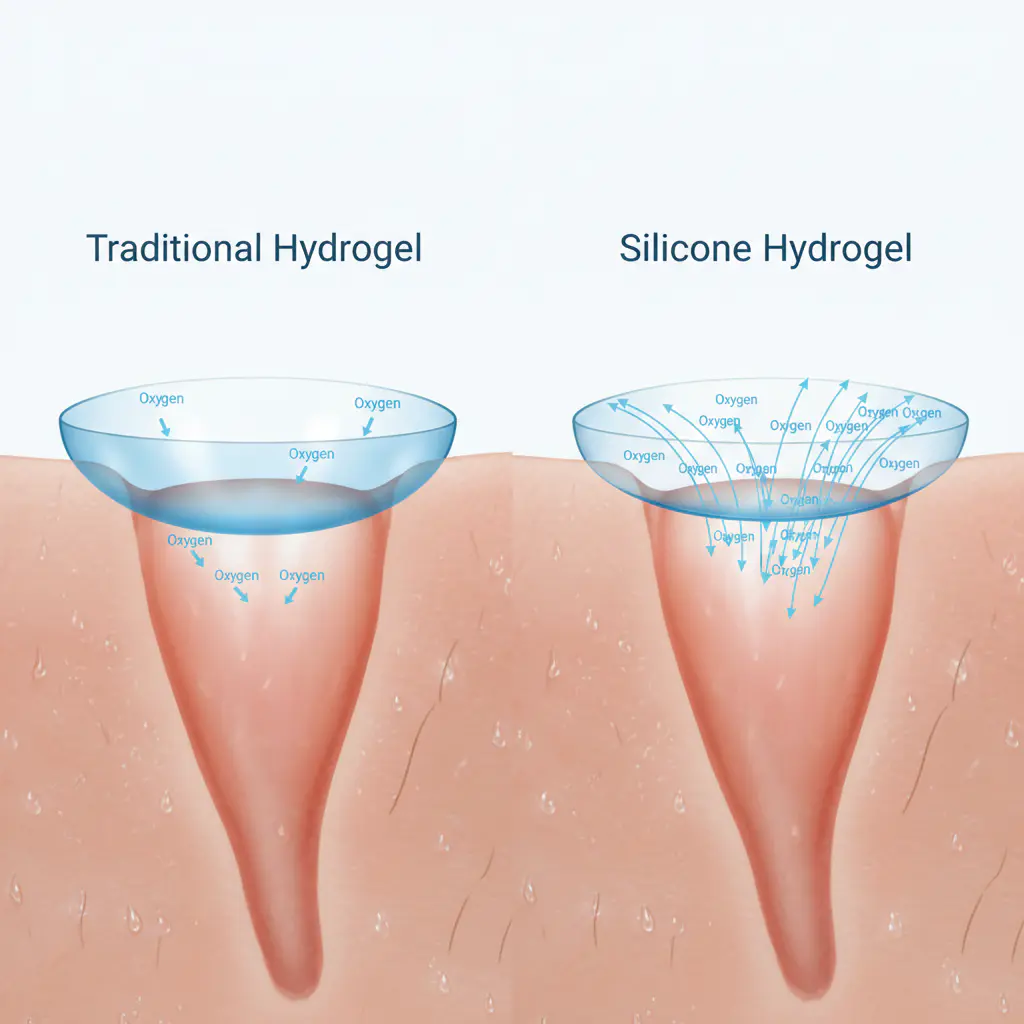
The most significant leap in contact lens technology for breathability was the development of silicone hydrogel materials. According to research tracking the evolution of lens polymers, this innovation fundamentally changed how lenses work, moving from a water-dependent system to a more efficient silicone-based one.
Silicone Hydrogels vs. Traditional Hydrogels
For decades, standard soft lenses were made from "hydrogel," a water-loving plastic. In these lenses, oxygen was carried to the eye through the water in the lens. The rule was simple: more water meant more oxygen. However, this created a problem. As the day went on, these high-water lenses could lose moisture to the air, and then try to pull that moisture back from your tear film, leading to dryness.
Silicone hydrogel (SiHy) revolutionized this. As detailed in scientific reviews like those in the journal Cureus, SiHy materials create tiny channels within the lens that allow oxygen to pass directly through the silicone. This means the lens doesn't have to rely on water for oxygen transport. The result is a lens that can have a lower water content—making it less prone to drying out—while delivering vastly superior amounts of oxygen to the cornea.
Here’s a direct comparison:
| Feature | Traditional Hydrogel Lenses | Silicone Hydrogel (SiHy) Lenses |
|---|---|---|
| Oxygen Transport | Primarily via water content | Via silicone matrix and water channels |
| Oxygen Transmissibility (Dk/t) | Lower to Moderate | Significantly Higher |
| Dehydration Risk | Higher (lens can pull moisture from eye) | Lower (less dependent on water) |
| Common Modality | Older monthly/bi-weekly lenses | Most modern daily and monthly lenses |
The Health Benefits of Better Breathability
Ensuring your cornea gets enough oxygen isn't just about comfort—it's about preventing serious, long-term health issues. When the cornea is deprived of oxygen (a condition called hypoxia), it can lead to several complications.
Reducing Hypoxia-Related Issues
Insufficient oxygen can cause immediate problems like end-of-day redness and discomfort. Over time, chronic hypoxia can lead to more severe issues:
- Corneal Swelling (Edema): The cornea can absorb water and swell, causing hazy or blurry vision.
- Redness (Limbal Hyperemia): The blood vessels at the edge of your cornea can become enlarged and red as they try to supply more oxygen.
- Corneal Neovascularization: In serious cases of chronic hypoxia, new blood vessels can start growing from the white of the eye into the normally clear cornea in an attempt to supply oxygen. This is a significant complication that can threaten vision.
High Dk/t lenses, particularly the modern silicone hydrogel dailies, are a primary tool for preventing these conditions by maintaining a healthy oxygen supply throughout the day.
Myth Debunked: "All Modern Lenses Are Breathable Enough"
A common misconception is that any modern contact lens is "good enough" when it comes to breathability. While technology has improved across the board, significant differences remain, and wearing habits are just as important as the material itself. The single greatest risk factor for serious eye infections is sleeping in lenses. According to a landmark study, overnight wear increases the risk of ulcerative keratitis by over 8 times compared to daily wear. Even lenses approved for extended wear carry this elevated risk.
This is where daily disposables offer a dual advantage. They are typically made from the highest Dk/t materials, and the single-use modality eliminates the temptation to sleep in them, drastically reducing the risk of both infection and hypoxia.
Daily Disposables: The Ultimate Combination of Health and Convenience
While the material science of breathability is a huge part of the story, the true health benefit of daily disposables comes from combining that technology with a sterile, fresh lens every single day.
Eliminating Biofilm and Protein Buildup
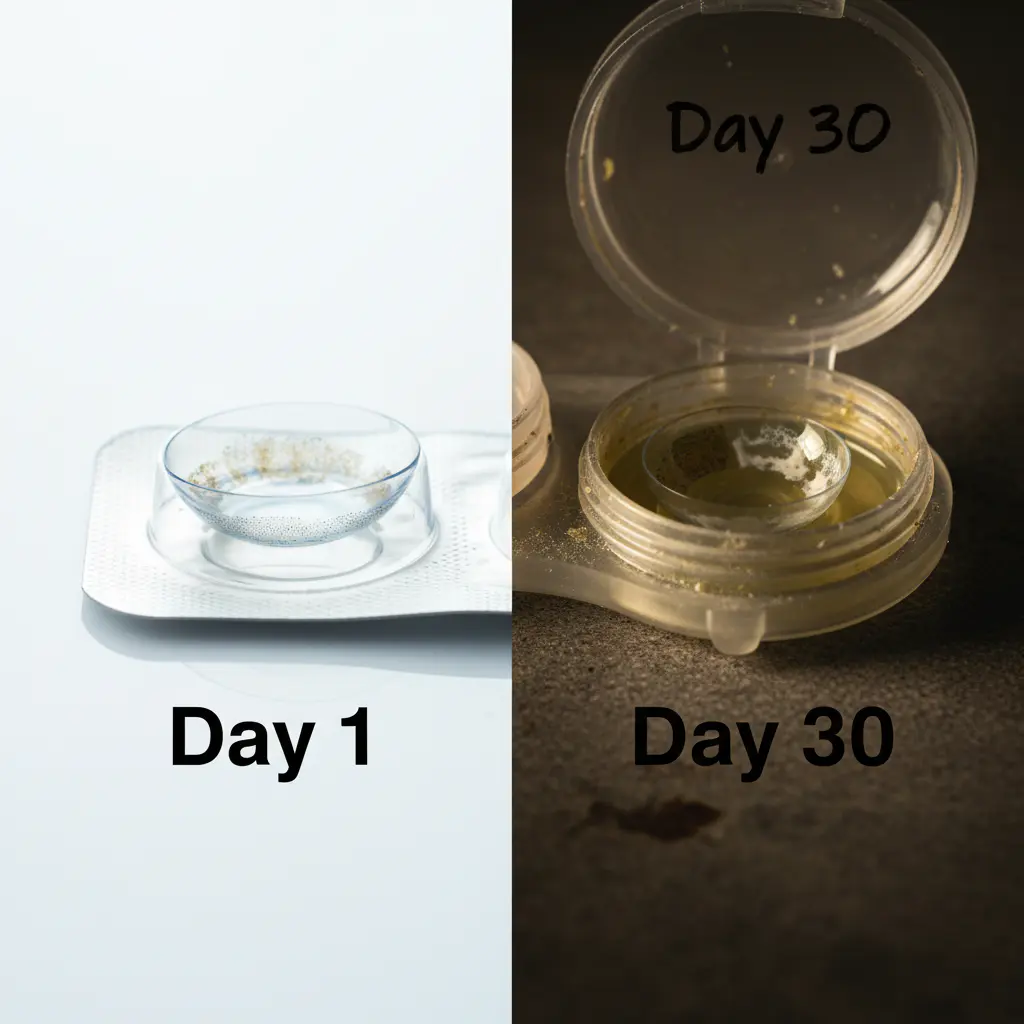
When you wear a reusable (monthly or bi-weekly) lens, your eye’s natural proteins, lipids, and other tear film components begin to build up on the surface. Over time, this creates a deposit layer known as a biofilm. This biofilm not only causes irritation and allergic reactions but also acts as an additional barrier, reducing the lens's oxygen performance and creating a surface where harmful bacteria can thrive.
Daily disposables completely eliminate this risk. You start each day with a perfectly clean, sterile, and smooth lens surface, maximizing comfort, vision, and oxygen flow. Given that studies from the Centers for Disease Control and Prevention (CDC) show that a staggering 99% of contact lens wearers engage in at least one risky hygiene behavior, dailies remove the potential for human error in cleaning and storage.
A Healthier Choice for Problem Wearers
For those who experience dryness or allergy-like symptoms with reusable lenses, switching to dailies can be a transformative solution. A study focused on refitting patients who had problems with reusable lenses found that switching to daily disposables significantly reduced symptoms of dryness and signs of corneal distress. By preventing the daily accumulation of allergens and deposits, single-use lenses provide a cleaner and more comfortable experience.
Wrapping Up: Your Eyes Deserve a Fresh Start Every Day
Prioritizing your eye health means looking beyond just clear vision. The science is clear: your eyes need to breathe. By choosing daily disposable contact lenses made from advanced silicone hydrogel materials, you are not just opting for convenience; you are making a conscious decision to provide your corneas with the vital oxygen they need.
Combining superior breathability with the unparalleled hygiene of a fresh lens every day, dailies stand out as the modern standard of care. They drastically reduce the risks associated with oxygen deprivation and poor hygiene, ensuring your eyes stay comfortable, white, and healthy for years to come.
Frequently Asked Questions (FAQ)
Q1: Are daily disposables worth the extra cost?
While the upfront cost may seem higher, daily disposables can be more economical in the long run. You eliminate the need to buy lens cases and cleaning solutions. More importantly, you are investing in your eye health, significantly reducing the risk of costly and painful infections that can result from contaminated reusable lenses.
Q2: Can I reuse my daily disposables just for a few hours to save money?
Absolutely not. This is extremely dangerous. Daily disposable lenses are not designed or approved for reuse. Their material is often thinner and not built to withstand cleaning. Storing them in their blister pack saline is also unsafe; one study found that 95% of reused daily disposable lenses were contaminated with bacteria. Always discard them after one use.
Q3: Do I still need an eye exam for daily disposables?
Yes. A contact lens is a Class II or Class III medical device regulated by the FDA. A comprehensive eye exam and professional fitting are required to get a prescription. Your eye care provider will determine the right material, size (base curve and diameter), and power for your specific eyes to ensure a safe and healthy fit.
Disclaimer: This article is for informational purposes only and does not constitute professional medical advice. The information contained herein is not intended to be a substitute for, and should never be relied upon for, professional medical advice. Always seek the advice of your optometrist or other qualified health provider with any questions you may have regarding a medical condition. Never disregard professional medical advice or delay in seeking it because of something you have read in this article.
References
- Cureus: A Comprehensive Review on Contact Lens-Induced Complications. https://pmc.ncbi.nlm.nih.gov/articles/PMC9644230/
- PubMed: Ulcerative keratitis in contact lens wearers: incidence and risk factors. https://pubmed.ncbi.nlm.nih.gov/8311770/
- Morbidity and Mortality Weekly Report (CDC): Contact Lens Wearer Demographics and Risk Behaviors. https://pmc.ncbi.nlm.nih.gov/articles/PMC5779588/
- PubMed: A retrospective study of contact lens-intolerant patients and their subsequent refitting with daily disposable lenses. https://pubmed.ncbi.nlm.nih.gov/24709223/
- PubMed: The risks of reusing daily disposable contact lenses. https://pubmed.ncbi.nlm.nih.gov/22041587/


