













Sanitizing Readers: How to Disinfect Frames Without Fading
In an era of heightened hygiene awareness, knowing how to properly disinfect your reading glasses is more important than ever. However, reaching for the nearest sanitizer or household wipe can cause irreversible damage to your frames and lenses. Many common cleaning agents can strip protective coatings, fade colors, and even weaken the structural integrity of your eyewear. We see it every day: well-intentioned cleaning habits leading to chalky, brittle frames.
This guide provides an authoritative, step-by-step process for safely sanitizing your glasses. We will review which cleaning agents are safe for materials like acetate and metal, and which you must avoid to protect your investment and ensure your readers last.
TL;DR: Safe Cleaning Quick Guide
For those in a hurry, here is a summary of safe and unsafe cleaning agents for your reading glasses.
| Material/Component | Safe Cleaners | UNSAFE Cleaners (Avoid at All Costs) |
|---|---|---|
| Acetate & Plastic Frames | Diluted phosphate-free dish soap, Water | Alcohol, Hand Sanitizer, Bleach, Ammonia, Windex, Acetone |
| Metal Frames | Diluted phosphate-free dish soap, Water | Bleach, Ammonia, Abrasive cleaners |
| Coated Lenses | Diluted phosphate-free dish soap, Microfiber cloth | Alcohol, Windex, Paper Towels, Clothing, Tissues |
| Hinges & Nose Pads | Soft brush, Diluted soap, Water | Harsh chemicals, Thick soaps that leave residue |
Why Your Cleaning Method Matters: A Look at Frame Materials
Before we detail the proper cleaning technique, it’s crucial to understand what your frames are made of. Different materials react differently to chemicals, and what might seem harmless can cause significant damage. As the FDA classifies spectacle frames as Class I Medical Devices, they require specific care, just like the lenses they hold.
Acetate Frames: The Porous Contender
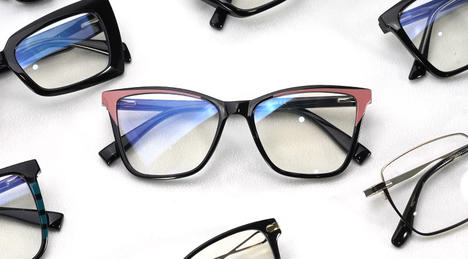
Most fashion-forward and colorful frames are made from cellulose acetate, a plant-based plastic prized for its rich color possibilities. However, acetate is more porous than standard plastic. This is its greatest vulnerability.
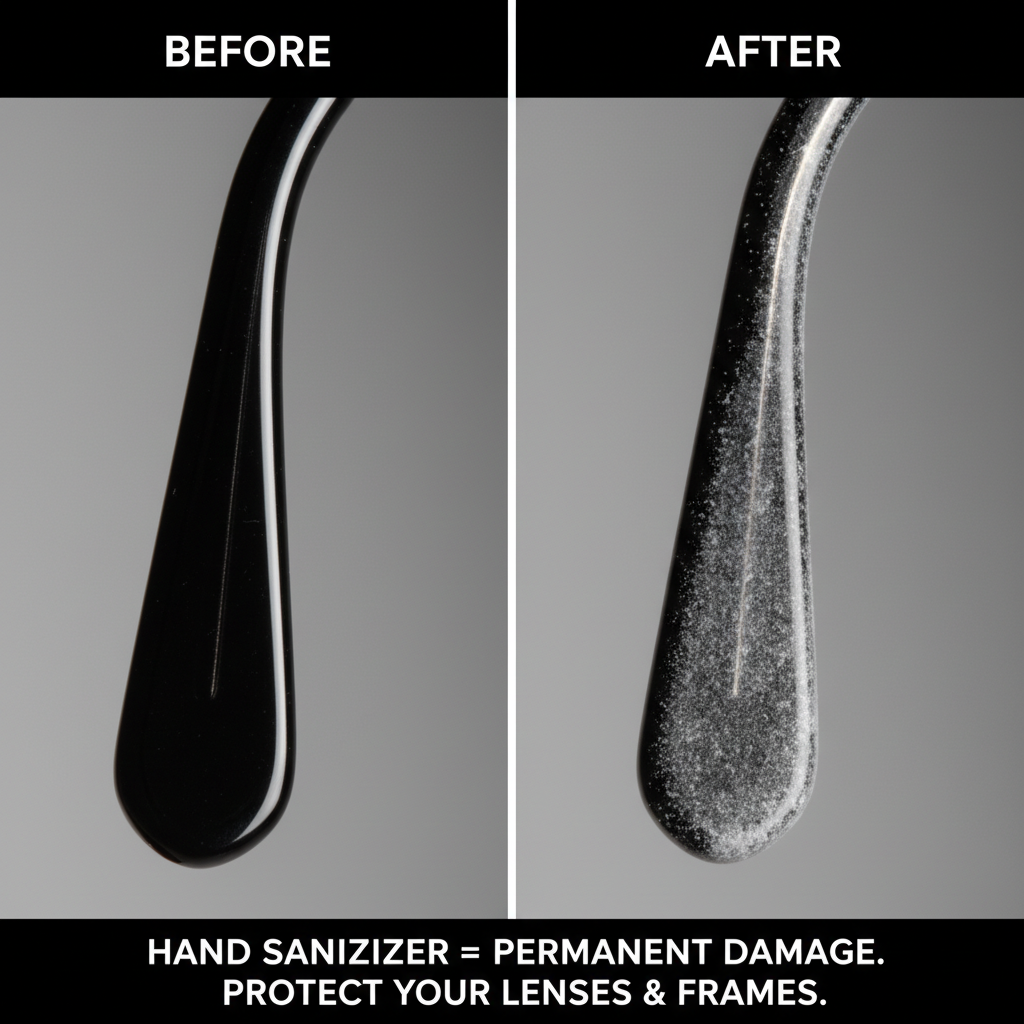
From our experience in optical labs, the primary culprit for modern frame damage is alcohol, most commonly found in hand sanitizers. When alcohol-based products come into contact with acetate, they strip away the plasticizers that keep the material supple. This chemical reaction leaves a signature dull, white, chalky film that is, in most cases, permanent. Even pre-moistened wipes containing alcohol should never be used on your frames.
Metal Frames: The Risk of Corrosion
Metal frames, whether titanium or stainless steel, are generally more resilient to chemical damage than acetate. However, their weak point is moisture. The most common mistake we see is the failure to thoroughly dry the frame after washing. Water trapped in the tiny crevices of hinges and nose pad arms can lead to oxidation and corrosion. This results in stiff, creaky hinges that can eventually seize up or break.
Lenses and Coatings: A Delicate Surface
Modern lenses are complex. They aren’t just curved plastic; they are sophisticated optical components often enhanced with multiple coatings for anti-reflection, scratch resistance, and blue light filtering. According to insights from The Vision Council, these coatings are applied in micro-thin layers that are easily compromised. Harsh chemicals like ammonia (in Windex) or alcohol can strip these coatings, creating blemishes in your field of vision and negating their benefits.
Furthermore, cleaning lenses with abrasive materials like paper towels, napkins, or the corner of your shirt grinds microscopic dust and debris across the surface, causing a web of fine scratches over time.
The Definitive Guide: How to Clean and Disinfect Your Readers
This method is safe for all frame materials and lens types. The key is to be gentle and thorough.
Step 1: Wash Your Hands
Before you touch your glasses, wash your hands with soap and water to remove natural oils, dirt, and lotions that can smear on the lenses.
Step 2: Rinse Your Glasses
Run your glasses under a gentle stream of lukewarm water. Never use hot water, as extreme temperatures can warp plastic frames and damage lens coatings. This initial rinse removes dust and grit, preventing you from scratching the lenses in the next step.
Step 3: Apply a Single Drop of Soap
Use a phosphate-free dish soap. These formulas are gentle and rinse clean without leaving a residue. Place one small drop on your fingertip and gently lather it onto the frames, lenses, nose pads, and ear tips. Get into all the small corners.
Step 4: The 60-Second Rule
Here is a critical piece of advice from optical technicians: total contact time for any cleaning solution on the frame should not exceed one minute. This is more than enough time to break down oils and grime. Letting soap or any other agent sit for longer offers no additional benefit and only increases the risk of material damage.
Step 5: Rinse Thoroughly
Place your glasses back under the lukewarm stream of water and rinse until all traces of soap are gone. If soap residue is left behind, it can cause skin irritation and leave a film on the lenses.
Step 6: Dry with Precision
First, gently shake the glasses to remove most of the water. Then, use a clean, dry, lint-free microfiber cloth to pat the lenses and frames. Avoid rubbing in a circular motion; a gentle blot is all that is needed.
For metal frames, pay special attention to the hinges. We recommend using a separate, dry, soft-bristled brush (like a clean makeup or watercolor brush) to gently wick moisture out of the hinges and the area around the nose pads. This simple action is the single best way to prevent rust and corrosion.

Troubleshooting and Frequently Asked Questions
Q: My acetate frames already have a white, chalky film. Can I fix it?
A: Unfortunately, this type of chemical damage is typically irreversible as the alcohol has permanently altered the frame material. In some minor cases, an optician may be able to professionally polish the frame to restore some shine, but this is not always successful. Prevention is the only true solution.
Q: Are pre-moistened lens wipes safe to use?
A: They can be, but with a major caveat. You must check the ingredients. If the wipe contains alcohol, it should only be used on the lenses and should not touch an acetate frame. Given the risk of accidentally wiping the frame, we recommend our primary soap-and-water method. Alcohol-free wipes are a safer alternative for on-the-go cleaning.
Q: How often should I deep clean my glasses?
A: A daily cleaning using the method above is ideal. It prevents the buildup of skin oils and cosmetics that can degrade frame materials over time. Consistent, gentle cleaning is far superior to infrequent, aggressive scrubbing.
Q: Why do my glasses get loose or stiff over time?
A: Stiffness, particularly in metal frames, is often due to hinge corrosion from improper drying. Looseness can occur from normal wear and tear. Both issues can typically be resolved with a simple adjustment from an optician.
Q: What is the best way to care for lenses with special coatings?
A: Lenses with anti-reflective, anti-fog, or other coatings are particularly sensitive to chemicals. As explained by eyecare professionals at institutions like WMU Unified Clinics, these coatings are paramount to visual quality. The soap-and-water method is the gold standard for cleaning them without causing damage. Always avoid alcohol and ammonia-based cleaners.
Final Thoughts on Frame Care
Caring for your reading glasses doesn’t need to be complicated. By understanding the vulnerabilities of their materials and adopting a simple, daily cleaning routine, you can keep them in pristine condition. The two most important takeaways are to avoid alcohol-based products on your frames at all costs and to ensure you dry every part of your glasses thoroughly, especially the hinges. This small investment of time protects your eyewear, ensuring clear vision and a fresh look for years to come.
Disclaimer: This article is for informational purposes only and does not constitute professional medical advice. The cleaning methods described are based on common optical industry best practices. If you have specific concerns about your eyewear or vision, please consult a qualified optician or optometrist.


