





Ditch the Case: The Hygiene of No-Clean Daily Lenses
TL;DR: The Hygiene of No-Clean Lenses
- Eliminate the Source: Daily disposables remove the single biggest risk factor for infection: the contact lens case.
- Prevent Buildup: By using a fresh lens daily, you prevent the gradual accumulation of proteins, lipids, and microorganisms that occurs on reusable lenses.
- Reduce Infection Risk: Clinical evidence shows that while no lens is risk-free, single-use lenses significantly lower the chances of developing serious, vision-threatening infections by breaking the chain of contamination.
- Ultimate Convenience: A "no-clean" routine means no more solutions, no more cases, and no more nightly cleaning rituals—just fresh, sterile lenses every morning.
For many, wearing contact lenses offers freedom from glasses, but it comes with a nagging responsibility: the daily cleaning and storing routine. We've all had that moment of doubt, wondering if our lenses are truly clean and safe. What if the most effective way to ensure contact lens hygiene wasn't a better cleaning solution, but eliminating the need to clean altogether?
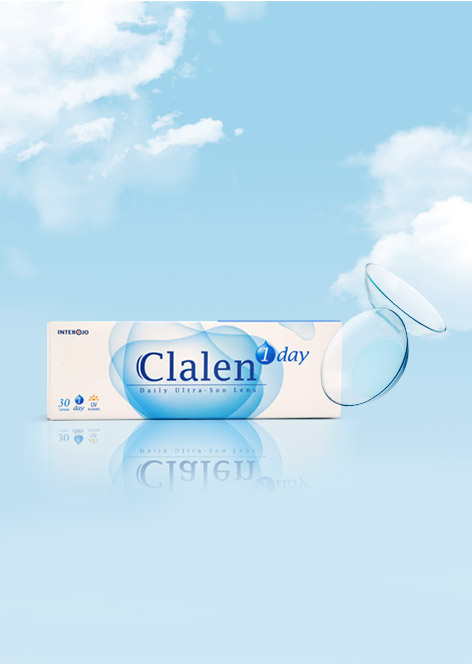
This is the principle behind daily disposable contact lenses. By starting with a sterile, new lens every single day, you sidestep the most common hygiene pitfalls associated with contact lens wear. It’s not just about convenience; it’s a fundamental shift in managing the health and safety of your eyes.
The Hidden Dangers in Your Contact Lens Case
If you wear reusable contact lenses (such as monthlies or bi-weeklies), your lens case is an essential tool. Unfortunately, it's also the most significant source of contamination. Think of it as a reusable food container that you only quickly rinse each day. Over time, it can become a breeding ground for harmful bacteria.
Research consistently shows that wearers struggle with proper hygiene. A landmark study published in the CDC's Morbidity and Mortality Weekly Report found that a staggering 99% of surveyed lens wearers reported at least one hygiene risk behavior. These behaviors—like improper cleaning of the case, topping off old solution, or exposing lenses to water—create the perfect environment for microbes to thrive.
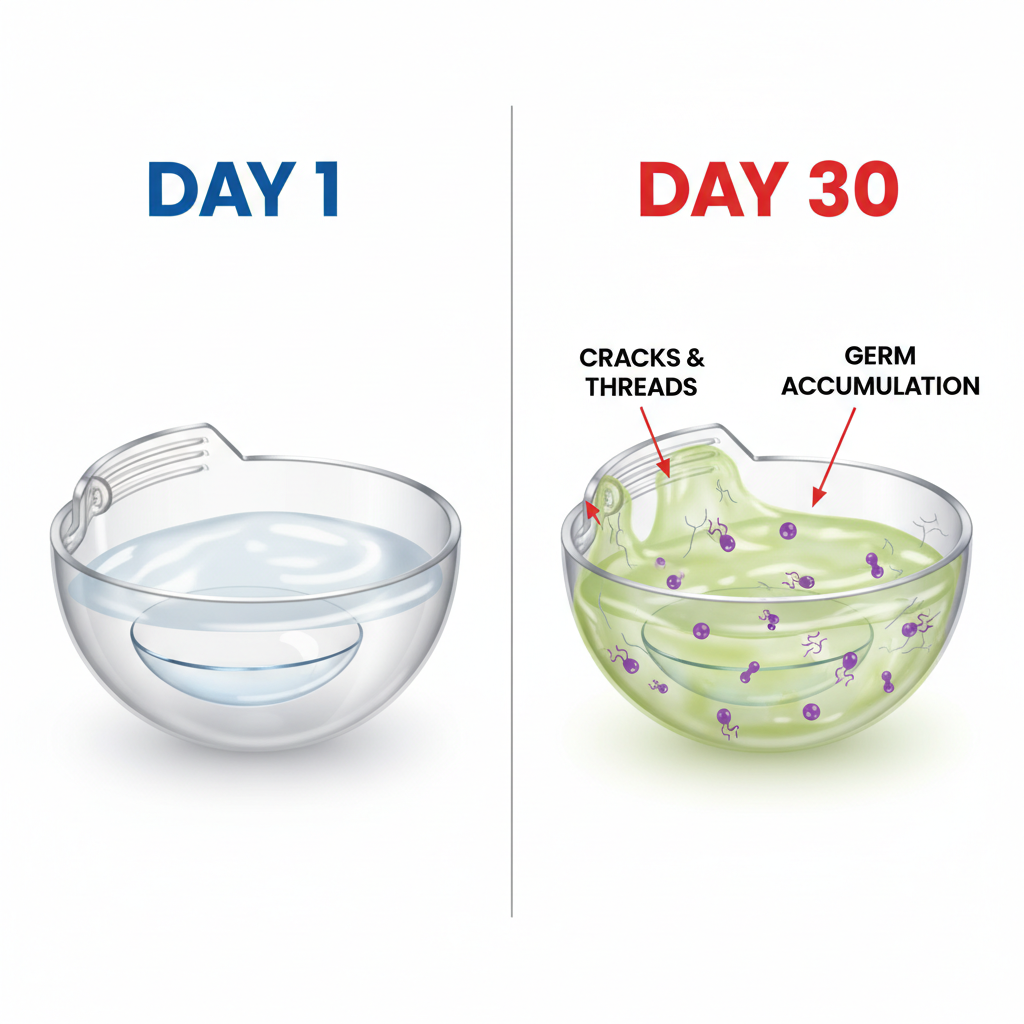
This isn't just a theoretical risk. When bacteria colonize a lens case, they can form a protective layer called a biofilm. This sticky matrix adheres to your lenses and, subsequently, your cornea. The most common culprit in serious contact lens infections is Pseudomonas aeruginosa, a bacterium that can cause microbial keratitis—a painful infection of the cornea that can lead to scarring and even permanent vision loss. According to a review in Cureus, this pathogen is the most frequent cause of microbial keratitis, an outcome directly linked to contamination from lens cases and poor hygiene.
The Daily Disposable Difference: A Fresh Start Every Day
The beauty of daily disposable lenses lies in their simplicity. By discarding the lens each night, you completely break the chain of contamination. There is no lens case to become a petri dish, no solution to "top off," and no opportunity for a biofilm to develop on the lens over weeks of use.
Each morning, you open a factory-sealed blister pack containing a perfectly sterile and clean lens. This has profound benefits, especially for those who have struggled with reusable lenses.
I have often seen patients in my practice who complain of dryness, redness, or general discomfort that worsens as their monthly lenses approach their replacement date. In many instances, switching them to daily disposables makes a world of difference. A study on "problem patients" refitted with daily disposables found significant reductions in symptoms of dryness and corneal staining. This is because a fresh lens has a pristine, smooth surface free of the microscopic deposits that accumulate over time, leading to irritation.
Common Hygiene Mistakes and How Dailies Solve Them
Let's be honest: life gets busy, and it’s easy to cut corners with lens care. Daily disposables are designed for the reality of human behavior, making the safest choice the easiest choice. Here’s how they solve the most common—and dangerous—hygiene mistakes.
| Common Mistake with Reusable Lenses | The Daily Disposable Solution |
|---|---|
| "Topping Off" Old Solution | You never use lens solution or a case, making this impossible. |
| Showering or Swimming with Lenses | While still not recommended, the risk is lower as you discard the potentially contaminated lens immediately after, rather than storing it. |
| Using Tap Water on a Lens or Case | Lenses are never cleaned, avoiding contact with tap water, which the EPA warns can contain Acanthamoeba, a parasite that causes a severe, hard-to-treat infection. |
| Forgetting to Replace Your Lens Case | There is no case to forget. You eliminate the primary source of biofilm and bacterial growth. |
| Wearing Lenses Longer Than Recommended | The one-day schedule is simple and clear, reducing the temptation to "stretch" a lens for another week. |
Expert Warning: The Myth of Reusing a Daily Lens "Just Once" A common and dangerous misconception is that it’s safe to take out a daily disposable for a nap and put it back in, or to store it overnight "just this once." A clinical study put this to the test and the results were alarming. When daily disposable lenses were reused after being stored in their original blister packs, 95% of the lenses became contaminated with bacteria. The sterile saline in the package is not a disinfectant and becomes a breeding ground for germs the moment it's opened.
Are Daily Disposables Right for You?
While anyone can benefit from the enhanced hygiene and convenience of daily disposables, they are a particularly strong choice for certain individuals.
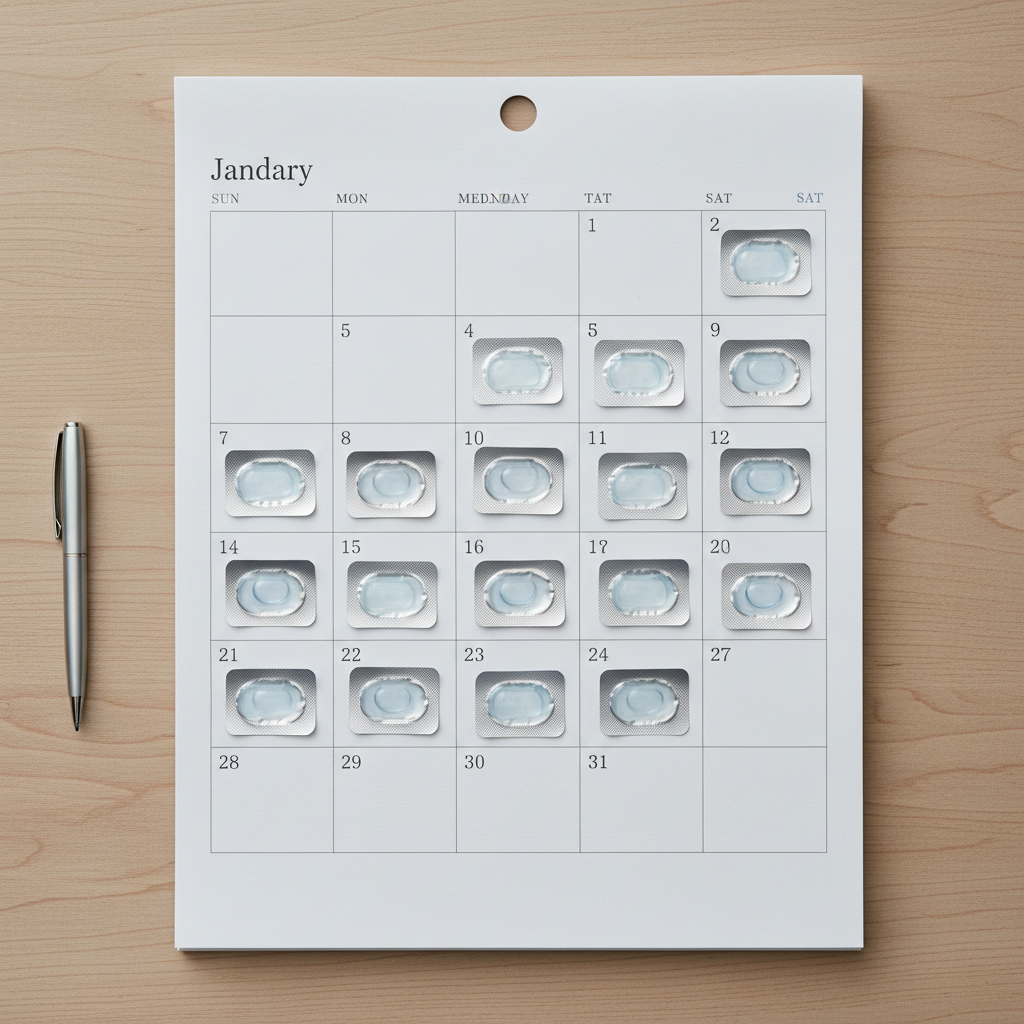
Consider making the switch if you identify with any of the following:
- You Have Allergies: A fresh lens every day means you dispose of pollen and other allergens that can accumulate on the lens surface, reducing irritation during allergy season.
- You Experience Dryness or Discomfort: If you find your reusable lenses feel less comfortable over time, a fresh, smooth surface every morning can provide significant relief.
- You Are a Teenager or First-Time Wearer: The simple "wear and toss" routine eliminates the complex learning curve of a full cleaning regimen, making it easier for new wearers to be compliant and safe.
- You Wear Contacts Infrequently: For those who only wear contacts for sports, social events, or a few days a week, daily disposables are perfect. You don't have to worry about a case of solution sitting and stagnating for weeks between wears.
Wrapping Up: Health, Safety, and Peace of Mind
Choosing the right contact lenses goes beyond just vision correction; it's a decision that directly impacts your eye health. While reusable lenses are safe when cared for perfectly, the reality is that perfect compliance is rare. Daily disposable lenses acknowledge this reality by providing a system that is inherently safer and simpler.
By eliminating the lens case and the entire cleaning and storage process, you remove the most significant risk factors for contamination and infection. The small daily ritual of opening a fresh, sterile lens provides not only comfort and clear vision but also invaluable peace of mind.
Frequently Asked Questions (FAQ)
1. Are daily disposable lenses more expensive? While the upfront cost per box is often higher, the total cost is more comparable than you might think. With dailies, you completely eliminate the recurring expense of large bottles of contact lens solution and replacement lens cases. Furthermore, the reduced risk of infection can save you from costly doctor visits and medications.
2. Is it bad for the environment to throw away lenses every day? This is a valid concern. The plastic waste from blister packs and lenses is a trade-off for the medical and hygienic benefits. Some manufacturers have started recycling programs for their products. It's best to view contact lenses as a medical device where safety is the top priority. Disposing of them properly is part of their intended use to protect your vision.
3. I have astigmatism. Can I get daily disposables? Yes. Years ago, options were limited, but today, most major brands offer daily disposable lenses for astigmatism (toric lenses) and for presbyopia (multifocal lenses). The technology has advanced to cover a wide range of prescriptions.
4. Can I switch to a daily disposable version of my current brand on my own? No. Even within the same brand, different lens types have different base curves, diameters, and materials. A lens that is not properly fitted can cause discomfort or even damage to your cornea. You must consult your eye care professional for a new fitting and prescription before switching to any new type of contact lens.
Disclaimer: This article is for informational purposes only and does not constitute professional medical advice. Do not use this information to diagnose or treat any health problems. Always consult a qualified eye care professional for any questions about your vision or eye health, and before starting or changing your contact lens type or wear schedule. If you experience eye pain, light sensitivity, discharge, or persistent blurred vision, remove your lenses and contact your doctor immediately.
References
- Centers for Disease Control and Prevention (CDC). (2018). Contact Lens Wearer Demographics and Risk Behaviors. https://pmc.ncbi.nlm.nih.gov/articles/PMC5779588/
- Cureus. (2022). A Comprehensive Review on Contact Lens-Induced Complications. https://pmc.ncbi.nlm.nih.gov/articles/PMC9644230/
- Optometry and Vision Science. (2014). Refitting "Problem" Patients With Daily Disposable Lenses. https://pubmed.ncbi.nlm.nih.gov/24709223/
- Environmental Protection Agency (EPA). The Danger of Using Tap Water With Contact Lenses. https://www.epa.gov/sdwa/danger-using-tap-water-contact-lenses
- Optometry and Vision Science. (2011). Contamination Risk of Reusing Daily Disposable Lenses. https://pubmed.ncbi.nlm.nih.gov/22041587/


