





Are Drugstore Reading Glasses a Safe Bet for Your Eyes?
Many of us have been there: squinting at a restaurant menu or holding a phone at arm's length just to make the text sharp. It’s a telltale sign of presbyopia, the natural, age-related change in vision that makes close-up tasks a challenge. The reading glasses on display at the local drugstore seem like a quick and affordable fix. But are they a safe bet for your long-term eye health?
For many people, the answer is yes—with some important caveats. Over-the-counter (OTC) readers can be a perfectly suitable choice for simple, age-related vision changes. However, they are not a one-size-fits-all solution. Understanding their limitations is key to making an informed decision and knowing when it's time to invest in a custom pair prescribed by an eye doctor.
What is Presbyopia? The "Why" Behind Reading Glasses
Before we can assess the solution, it helps to understand the problem. Presbyopia is not a disease, but a normal part of aging that typically becomes noticeable in our early to mid-40s. According to StatPearls, a resource from the National Center for Biotechnology Information, this condition occurs as the natural lens inside your eye gradually thickens and loses its flexibility. As the lens hardens, it can no longer change shape as easily to focus on objects up close.
This change results in a few classic symptoms:
- Blurry vision when reading or doing close-up work.
- The need to hold reading material farther away, sometimes called the "trombone effect."
- Headaches or eye strain after short periods of reading.
If this sounds familiar, you're in good company. A study on the global prevalence of presbyopia highlights that it is the most common vision impairment in adults over 40. It is a universal experience, but how you correct it matters.
The Anatomy of a Drugstore Reader
Over-the-counter reading glasses are essentially two simple magnifying lenses mounted in a frame. They are designed to offer a basic, uniform boost in power to both eyes. You'll typically find them in a range of strengths, or diopters, from +1.00 D up to +3.25 D. While this simplicity is what makes them accessible and affordable, it's also the source of their biggest limitations.
Here’s what drugstore readers don’t offer:
-
Correction for Astigmatism: Astigmatism is an imperfection in the curvature of the eye’s cornea or lens. This irregularity causes light to focus unevenly on the retina, resulting in vision that is blurry or distorted at all distances. As the American Academy of Ophthalmology (AAO) guide on choosing readers points out, OTC glasses cannot correct for astigmatism. If you have it, you'll likely still experience blur and strain even with readers on.
-
Different Powers for Each Eye: Many people have a slightly different prescription in their left and right eye, a condition known as anisometropia. OTC readers have the same power in both lenses. If your eyes have different needs, wearing these glasses can lead to one eye working harder than the other, causing discomfort and headaches.
-
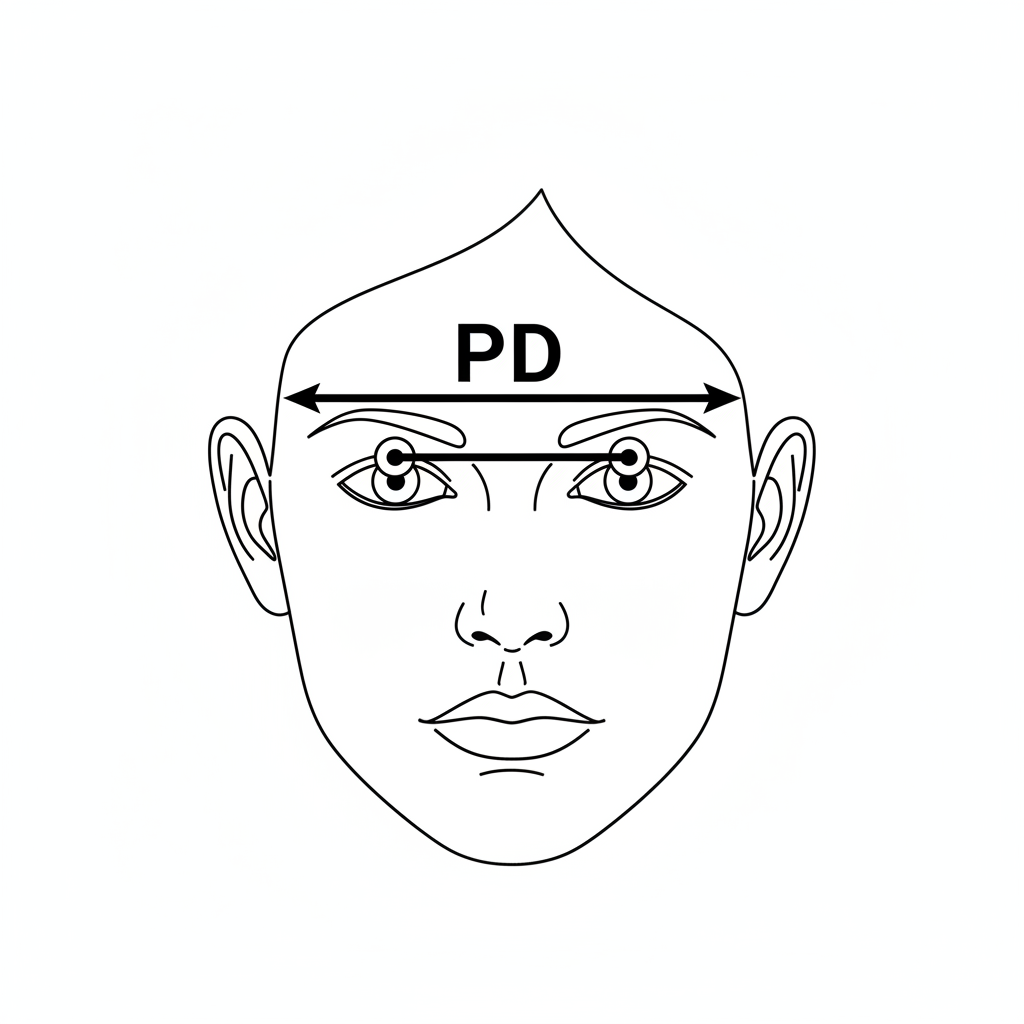
A Precise Pupillary Distance (PD): Your pupillary distance (PD) is the measurement between the centers of your pupils. For glasses to work effectively, the optical center of each lens should align perfectly with your pupils. Drugstore readers are built with a generic, average PD. If your PD is significantly wider or narrower than this average, you may experience a "pulling" sensation, eye strain, or even double vision. A small mismatch can make a big difference in comfort, which is why a precise PD measurement is so important for custom glasses.
Myth Debunked: "Cheap Readers Will Damage Your Eyes"
A common myth is that wearing inexpensive reading glasses can somehow harm your eyes or make your vision worse. According to ophthalmologists at the Cleveland Clinic, this is not true. The glasses themselves are not harmful. The primary risk comes from self-diagnosing with readers when you might have an underlying condition—like astigmatism or a more serious eye disease—that requires a professional diagnosis and a custom prescription.
When Are Drugstore Readers a Good Choice? A Decision Framework
So, how do you know if you can safely opt for an off-the-shelf pair? I often advise people to think of it as a simple checklist. You are likely a good candidate for OTC readers if you meet all of the following criteria:
- You have clear distance vision. If you don't need glasses for driving or watching TV, your primary challenge is likely simple presbyopia.
- You require the same, low power in both eyes. A good starting point is the lowest power that allows you to read comfortably at about 14-16 inches away.
- You do not have significant astigmatism. As a general rule, if an optometrist has told you your cylinder (CYL) value is 0.75 or higher, you will benefit more from a custom prescription.
- You plan to use them for short-term tasks. They are great as a backup pair or for quick tasks like reading a menu or a price tag.
On the other hand, you should schedule an eye exam and get custom prescription glasses if any of these apply to you:
- You have blurry or distorted vision at any distance.
- You know you have astigmatism or need a different power in each eye.
- OTC readers give you headaches, dizziness, or eye strain.
- You need a reading power stronger than +2.50 D. At higher powers, precise lens positioning becomes much more critical to avoid distortion.
- You spend many hours a day doing close-up work. The superior comfort and clarity of custom lenses are a worthwhile investment for heavy use.

The Hidden Value of a Comprehensive Eye Exam
The most significant drawback of relying solely on drugstore readers is that it encourages you to skip routine eye exams. An eye exam is far more than just a test to see if you need glasses. It is a vital health check-up.
During a comprehensive exam, an optometrist screens for serious, often asymptomatic, eye diseases such as:
- Glaucoma: A condition that damages the optic nerve.
- Macular Degeneration: A leading cause of vision loss in older adults.
- Cataracts: A clouding of the eye's natural lens.
As experts at Johns Hopkins Medicine explain, it's crucial to distinguish between normal age-related changes like presbyopia and more serious "low vision" conditions that require medical management. Furthermore, an eye exam can sometimes detect other systemic health issues, like diabetes and high blood pressure.
Remember, you have a right to your prescription. The FTC's Eyeglass Rule mandates that your eye doctor must give you a copy of your prescription immediately after your exam, giving you the freedom to purchase your glasses from wherever you choose.
Comparison: Over-the-Counter vs. Custom Prescription Glasses
To make the choice clearer, here is a direct comparison of the two options.
| Feature | Over-the-Counter (OTC) Readers | Custom Prescription Glasses |
|---|---|---|
| Astigmatism Correction | None | Precisely corrects for your specific CYL and Axis. |
| Power Customization | Same power in both lenses. | Custom power for each eye (corrects anisometropia). |
| Pupillary Distance (PD) | Based on a population average. | Measured precisely for your unique facial geometry. |
| Lens Options | Basic lenses; limited coatings. | Wide choice of materials, designs, and coatings (AR, etc.). |
| Best For | Simple presbyopia; backup pairs. | All refractive errors; primary daily-wear glasses. |
| Health Screening | None. | Includes a comprehensive eye health examination. |
Wrapping Up: Your Vision, Your Choice
Drugstore reading glasses are a safe, affordable, and effective tool for many people with straightforward, age-related presbyopia. They are excellent as a spare pair or for occasional use. However, they are not a substitute for professional eye care.
If you have any underlying complexity to your vision—like astigmatism, different needs in each eye, or a strong prescription—a custom-made pair of glasses will provide significantly better comfort and clarity. Most importantly, nothing replaces a comprehensive eye exam for safeguarding the long-term health of your eyes. By understanding the pros and cons of each option, you can make a smart, confident choice that keeps your world in focus.
Frequently Asked Questions (FAQ)
Can drugstore readers hurt my eyes? No, the glasses themselves are not harmful. However, if they are not the right power or don't account for your specific vision needs (like astigmatism or a custom PD), they can cause temporary eye strain and headaches. The main risk is in forgoing a professional eye exam, which could lead to an undiagnosed eye condition.
How do I know what strength of reading glasses to buy? As a starting point, hold a piece of text at a comfortable reading distance (about 14-16 inches) and try the lowest power available (+1.00 or +1.25). Increase the power until the text is clear and comfortable to read. If you feel any strain, it may be too strong. Age-based charts can provide a rough estimate, but individual needs vary.
Why do I get headaches from my drugstore readers? Headaches are a common sign that OTC readers are not right for you. The cause is often an incorrect pupillary distance (PD), uncorrected astigmatism, or a power that is too strong or too weak. It's your eyes' way of telling you they are struggling to compensate.
Is it okay to have different pairs of glasses for different tasks? Absolutely. This is an excellent strategy. As noted by sources like AARP, many people benefit from having multiple pairs of readers. For instance, your ideal focal distance for a computer screen (typically 20-24 inches) is different from that for a book in your lap, so a slightly weaker power is often more comfortable for computer use.
Disclaimer: This article is for informational purposes only and does not constitute professional medical advice. Always consult with a qualified eye care professional for any concerns about your vision or eye health, especially if you have pre-existing conditions.
References
- Cleveland Clinic - Are Drugstore ‘Cheaters’ as Good as Prescription Reading Glasses?
- American Academy of Ophthalmology (AAO) - Tips for Choosing the Right Reading Glasses
- Johns Hopkins Medicine - Low Vision: What You Need to Know as You Age
- NCBI StatPearls - Presbyopia
- FTC Consumer Advice - Buying Prescription Glasses Or Contact Lenses: Your Rights


