








Durable Sunglasses for the Weekend Adventurer
From winding mountain trails to sun-drenched coastlines, your weekend adventures demand gear that performs without fail. Too often, sunglasses are treated as a mere fashion accessory, only to disappoint when they slip, scratch, or shatter during the activities you love most. This guide moves beyond style to focus on what truly matters for outdoor performance: impact resistance, a secure fit, and optical excellence.
Here’s the bottom line for choosing sunglasses that can keep up with your adventures:
- Impact Resistance: Your first line of defense comes from the lens material. Prioritize polycarbonate or Trivex lenses, as they are engineered for superior shatter resistance compared to standard plastic or glass.
- Secure Fit: A durable frame is useless if it won't stay on your face. A proper "three-point fit" is the key to all-day comfort and retention, ensuring the frames only touch your nose bridge and the area behind your ears.
- UV Protection: This is non-negotiable. Look for a "UV400" rating, which certifies that the lenses block 100% of harmful UVA and UVB rays.
- Lens Technology: The right lens tint and features like polarization can dramatically enhance your visual experience, but the best choice depends on your environment.
The Foundation of Durability: Lens Material and Impact Resistance
The most critical element of any durable sunglasses is the lens. It's not just about seeing clearly; it's about protecting your eyes from physical impact, whether from a stray branch on the trail or kicked-up gravel on a bike path.
Beyond "Plastic": The Baseline for Safety
In the United States, all sunglass lenses must meet a minimum standard for impact resistance as mandated by the Food and Drug Administration (FDA). This regulation, detailed in 21 CFR 801.410, requires lenses to pass the "drop ball test," where a 5/8-inch steel ball is dropped from a height of 50 inches onto the lens. The lens must not fracture.
While this ensures a basic level of safety for casual wear, weekend adventurers need a higher standard of protection. This is where specialized materials come into play.
Material Showdown: Polycarbonate vs. Trivex
For outdoor and sports applications, two materials stand out for their exceptional toughness: Polycarbonate and Trivex. While both are vast improvements over basic CR-39 plastic, they have distinct trade-offs. I've found that choosing between them often comes down to balancing optical purity with budget.
| Feature | Polycarbonate | Trivex | Best For |
|---|---|---|---|
| Impact Resistance | Excellent | Excellent | Both are top-tier for safety and sports. |
| Optical Clarity | Good, but can have minor distortion at the edges. | Excellent, with edge-to-edge clarity similar to glass. | Prescription wearers or those demanding the sharpest optics. |
| Weight | Extremely lightweight. | Lightest of all common lens materials. | All-day comfort, minimizing pressure points. |
| Cost | More economical. | Higher cost, a premium option. | Budget-conscious buyers who still need high impact resistance. |
| UV Protection | Inherent, blocks 100% of UV rays without extra coatings. | Inherent, blocks 100% of UV rays without extra coatings. | Both provide full protection as a core material property. |
Pro Tip: For safety-critical use, avoid high-index plastic lenses (those with a refractive index above 1.60). While they are thinner and lighter for strong prescriptions, they achieve this by becoming more brittle and less impact-resistant than polycarbonate or Trivex.
Myth Debunked: "Darker Lenses Offer More Protection"
A common and dangerous misconception is that the darkness of a lens equates to its protective capability. In reality, the tint of a lens has no bearing on its UV protection or impact resistance. As experts at the MD Anderson Cancer Center warn, wearing dark sunglasses that lack certified UV protection can be more harmful than wearing no sunglasses at all. The dark tint causes your pupils to dilate, allowing even more damaging UV radiation to enter your eye. Always verify the UV400 rating, regardless of lens color.
The Unsung Hero: Frame Construction and Secure Fit
A high-performance lens is only as good as the frame that holds it. For the weekend adventurer, a frame must be both durable and exceptionally stable during dynamic movement.
It's All About the Fit: The Three-Point Contact System
The secret to a secure fit that remains comfortable all day is the "three-point contact" system. This ergonomic principle dictates that the frame should only touch your head in three places: the bridge of your nose and the two spots just behind your ears. The frames should not press against your cheeks or temples.
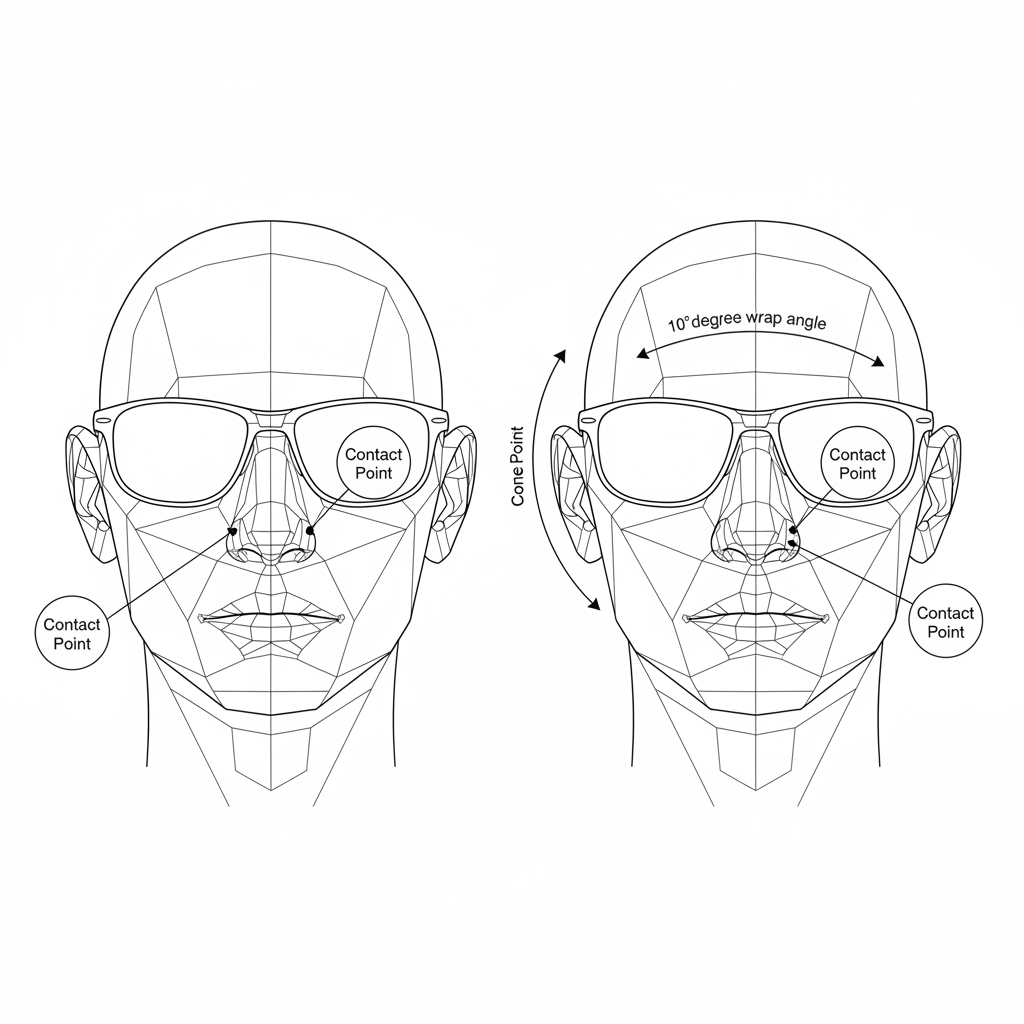
From my experience fitting outdoor enthusiasts, here are two practical heuristics for achieving a rock-solid fit:
- Temple Wrap: Look for a frame with a gentle curve, often called a "base curve." A temple wrap of about 10–12 degrees allows the arms to conform to the shape of your head, providing security without squeezing.
- Cheek Clearance: With the sunglasses settled on your face, there should be a 2–6 millimeter gap between the bottom edge of the frame and your cheeks. This prevents the glasses from being dislodged when you smile or make facial expressions and improves air circulation to reduce fogging.
Frame Materials Built for Abuse
Look for frames made from flexible, stress-resistant materials. Nylon-based composites like TR90 are a popular choice for sports and performance eyewear. They can bend under stress and return to their original shape, making them highly resistant to damage from drops or impacts.
In-Field Durability: A Maintenance Checklist
Even the best frames have potential failure points, most commonly at the hinges. A little preventative maintenance can save you from a mid-adventure gear failure.
- Check Your Screws: Before a big trip, check that your hinge screws are snug. A tiny screwdriver from an eyewear repair kit is a great tool to have.
- Secure the Hinges: For a semi-permanent fix, you can apply a tiny drop of a non-permanent, removable thread-locking compound to the hinge screws to prevent them from vibrating loose.
- Use a Retention Strap: A simple strap is the ultimate backup. It will save your glasses from a fall during high-intensity activities and is a must-have for any water sports.
- Know When to Retire: If you notice cracks in the frame, especially around the lenses or hinges, it's time to replace them. A compromised frame can fail unexpectedly and may not hold the lens securely during an impact.
Optical Clarity for the Outdoors: Seeing is Believing
Beyond durability, your sunglasses must provide a clear and accurate view of the world. This involves blocking harmful light while selectively managing visible light to enhance your perception of the environment.
The UV400 Mandate: Non-Negotiable Eye Safety
UV radiation is an invisible threat present even on cloudy days. Cumulative exposure is linked to serious eye conditions, and as the Mayo Clinic notes, this damage begins in childhood. The only label you should trust is "UV400," which signifies the lenses block all light rays with wavelengths up to 400 nanometers.
Some older standards only certified protection up to 380 nm, which is insufficient. A technical report published in the journal Applied Optics highlighted that the 380-400 nm band contains a significant amount of high-energy UVA radiation. Insisting on UV400 closes this critical safety gap.
To Polarize or Not? A Guide for the Weekend Warrior
Polarization is a filter that blocks horizontal glare reflected off flat surfaces like water, pavement, and snow. It is a separate feature from UV protection. The difference can be visualized with a "picket fence" analogy, as explained by Science News Explores: the filter acts like the slats in the fence, blocking light waves that are oriented horizontally (glare) while letting vertical light through.
Whether you need it depends on your activity:
- On the Water (Fishing, Kayaking): Essential. Polarization cuts through surface glare, allowing you to see into the water.
- On the Road (Driving, Cycling): Highly recommended. It reduces glare from the road surface and other vehicles, reducing eye strain.
- On the Trail (Hiking, Running): Beneficial, but some users find it can slightly alter depth perception on very technical terrain.
- Heads-Up Displays: Be aware that polarized lenses can cause LCD screens—like those on your phone, car dashboard, or some GPS devices—to appear blacked out. The Federal Aviation Administration specifically advises pilots against them for this reason.
For a deeper dive into how coatings and tints work, our guide on Dark Tints vs. UV Coatings: The Truth About Sun Protection provides more detail.
Lens Tints for Your Environment
The color of your lenses acts as a visual filter, and choosing the right one can enhance your performance and comfort.
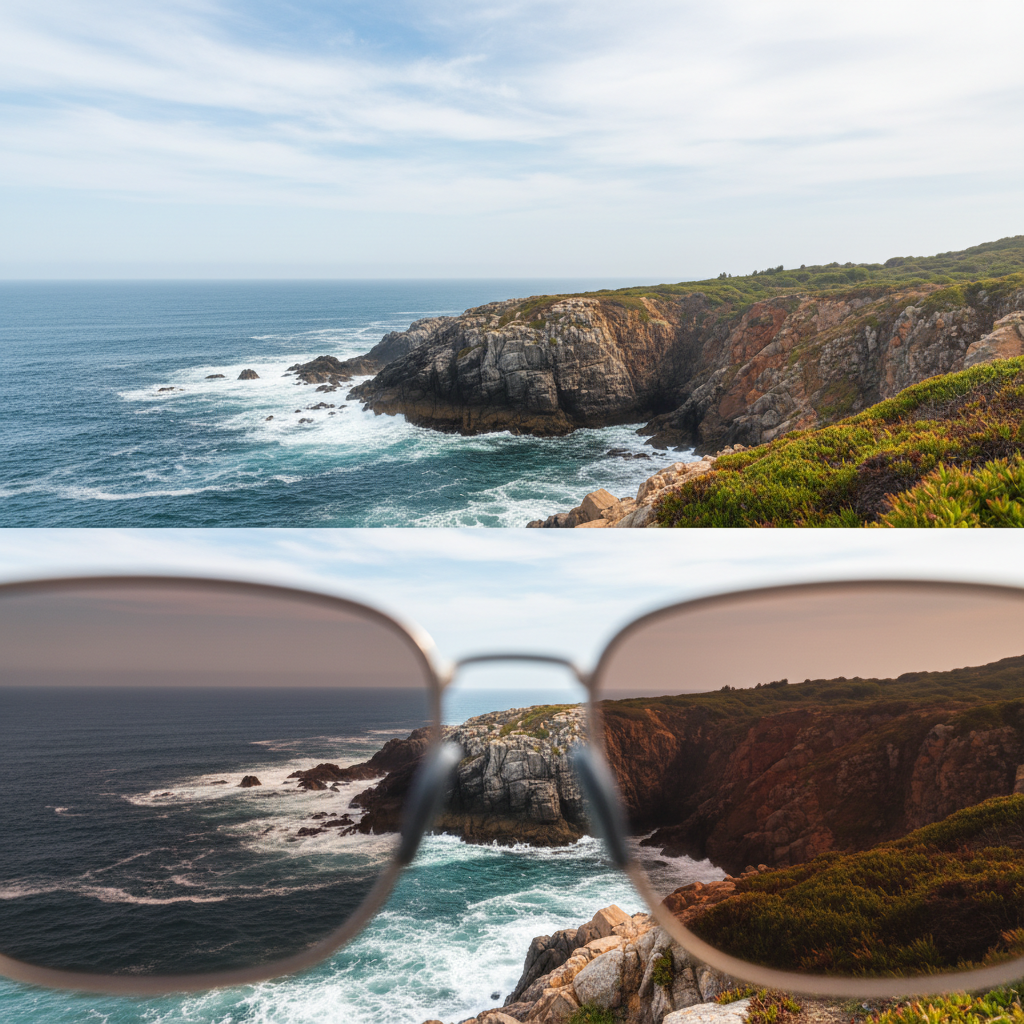
- Gray/Green: These tints are color-neutral, meaning they reduce brightness without distorting colors. The American Optometric Association recommends gray lenses for activities like driving where accurate color recognition is critical.
- Brown/Amber/Copper: These tints enhance contrast and depth perception by filtering out blue light. They are excellent for activities like hiking, trail running, and sight fishing, making terrain features and details appear more vivid.
Care, Maintenance, and Knowing When to Replace
Treat your sunglasses like any other piece of essential outdoor gear. Proper care will extend their life and ensure they perform when you need them.
The Right Way to Clean Your Lenses
A common mistake is to wipe dusty or salty lenses directly with a shirt or cloth. This grinds the abrasive particles across the surface, causing scratches. The correct method is:
- Rinse First: Immediately rinse the lenses with fresh water to wash away grit like salt, chlorine, or sand.
- Wipe Gently: Use a clean, soft microfiber cloth to gently dry the lenses.
- Store Safely: When not in use, store your sunglasses in a rigid or semi-rigid case to protect them from being crushed or scratched in your pack.
Do Sunglasses Expire? The Truth About Lens Coatings
While the lens material itself is stable, the protective coatings can degrade over time. Research has shown that UV-blocking coatings can lose their effectiveness after prolonged exposure to sunlight. One study noted a measurable decline in UV absorption after just 50 hours of intense simulated sun exposure. For this reason, if you are an avid outdoor adventurer who spends significant time in the sun, it’s a good practice to consider replacing your primary sunglasses every two to three years to ensure you’re still getting full protection.
Wrapping Up: Key Takeaways for Your Next Pair
Choosing a pair of durable sunglasses isn't about finding the most expensive brand; it's about understanding the technology and making informed choices. By focusing on the right materials, a secure fit, and proven protection, you can find a reliable partner for all your weekend adventures.
- Lenses: Start with Trivex for the best combination of optical clarity and toughness, or choose Polycarbonate for a great, budget-friendly, impact-resistant option.
- Frame: Demand a snug, three-point fit to keep the frame stable. Flexible materials like TR90 will withstand the rigors of active use.
- UV Protection: Never compromise. The UV400 label is the only certification that guarantees complete protection.
- Customization: Select polarization and lens tints based on your primary activities to enhance your vision and comfort.
- Maintenance: Care for your eyewear as you would any other critical piece of gear. Clean it properly and know when it’s time for a replacement.
Frequently Asked Questions (FAQ)
Are more expensive sunglasses always better? Not necessarily. While high-end brands often use quality materials, the price tag is not a reliable indicator of safety. A study published in Ophthalmic & Physiological Optics found that while glasses from unregulated vendors were riskier, price alone did not correlate with UV-blocking performance. The most important factors are the certified UV400 rating and the use of impact-resistant materials like polycarbonate or Trivex.
Can I put prescription lenses in any durable frame? This can be challenging, especially with highly curved "wraparound" styles. The curvature can distort vision for those with stronger prescriptions. It’s crucial to select a frame that is compatible with your needs. For more information, see our guides on if any sunglass frame can take a high prescription and the specifics of wraparound high prescription sunglasses.
What's the best way to stop my sunglasses from slipping when I sweat? A secure three-point fit is the primary solution. If the frame is already properly fitted, adding a retention strap (e.g., Croakies, Chums) is the most effective way to guarantee they stay in place during intense activity.
Disclaimer: This article is for informational purposes only and does not constitute medical advice. Consult with a qualified eye care professional to address your specific vision needs and to determine the best eyewear for your health and activities.
References
- FDA Guidance: Impact Resistant Lenses (21 CFR 801.410). Link
- MD Anderson Cancer Center: 9 Things to Know About Sunglasses. Link
- American Optometric Association: UV Protection. Link
- PubMed: Sunglasses Standards Compliance (Cole BL). Link
- Science News Explores: Polarized vs. UV Blocking. Link
- FAA Pilot Safety Brochure: Sunglasses. Link


