















Eyelid Twitches (Myokymia) and Screen Time: Causes and Cures
That Annoying Twitch: Your TL;DR Guide
You know the feeling: that persistent, fluttering spasm in your eyelid that comes and goes without permission. It’s distracting, annoying, and can feel a little unnerving. This phenomenon, known as benign essential myokymia, is incredibly common in our screen-saturated world. While rarely a sign of a serious medical issue, it’s a clear signal from your body that something is out of balance.
Here’s the quick rundown of what you need to know:
- The Cause: Eyelid twitching is a muscle spasm often triggered by a perfect storm of digital eye strain, stress, fatigue, and caffeine. It’s less about the blue light from your screen and more about how you’re using it.
- The Mechanism: The main culprits are a dramatically reduced blink rate while staring at screens (leading to dry, irritated eyes), prolonged muscle tension from focusing, and heightened neuromuscular excitability from stress and stimulants.
- The Fixes: Immediate relief can be found with simple exercises and eye drops. Long-term solutions involve creating an ergonomic workspace, adopting better visual habits, and managing lifestyle factors.
- The Gear: Specialized lenses with anti-reflective coatings can significantly reduce visual triggers, but they work best as part of a holistic strategy, not as a standalone cure.
The Science Behind the Spasm: Why Your Eyelid Betrays You
To effectively stop a twitch, you first need to understand its root causes. The issue is rarely a single factor but rather a combination of physical strain and environmental triggers that push the delicate muscles around your eyes to their breaking point.
It's Not Blue Light—It's Your Brain on Screens
It’s a common misconception that the blue light emitting from our devices is the direct cause of eye strain and twitching. While blue light can disrupt our sleep cycles, extensive research, including a gold-standard Cochrane review, has found no clear evidence that blue-light filtering glasses reduce eye strain in the short term. The Cleveland Clinic confirms that Digital Eye Strain (DES), or Computer Vision Syndrome (CVS), is primarily caused by physical issues—not light toxicity.

The real problem is how we interact with our screens. According to the American Academy of Ophthalmology, our normal blink rate of about 15 times per minute plummets to just 5-7 times per minute when we’re focused on a digital display. This "blink deficit" means the tear film that protects your cornea doesn't get replenished, leading to dryness, irritation, and a prime environment for muscle spasms.
The "3-Factor Rule": A Practitioner's Diagnostic Checklist
In clinical practice, we often find that persistent myokymia isn’t caused by just one thing. It’s typically a combination of three factors that create a feedback loop of irritation and fatigue. We call it the "3-Factor Rule":
- Near-Work Overload: Spending more than six hours a day focused on screens locks the ciliary muscles inside your eye into a state of constant tension. This prolonged accommodative stress leads to deep muscular fatigue that can manifest as a twitch.
- Blink Deficit & Dryness: As mentioned, the drastic reduction in blinking leads to dry eye, one of the most common triggers for twitching. Many blinks become incomplete, further reducing lubrication.
- Stimulants & Stress: Caffeine is a well-known trigger. Consuming over 300mg daily (about three 8-oz cups of coffee) can increase neuromuscular excitability. Combine that with the stress hormone cortisol, which also makes muscles more prone to firing, and you have a recipe for spasms.
The Role of Your Environment: LEDs and Glare
While blue light itself may not be the primary villain for eye strain, the type of light in your environment matters. Many modern offices use high-efficiency LED lighting, which has a different spectral output than natural light. For some individuals, the pupillary constriction and ciliary muscle work required to process this light can be an added source of strain. In these specific, LED-heavy environments, a quality blue-light filtering lens may offer more noticeable comfort by mitigating this subtle stress, even if it doesn't "cure" the underlying ergonomic issues.
Immediate Relief: How to Stop an Eyelid Twitch Right Now
When a twitch strikes, you want it gone fast. These techniques are designed to interrupt the spasm cycle and provide immediate, if temporary, relief.
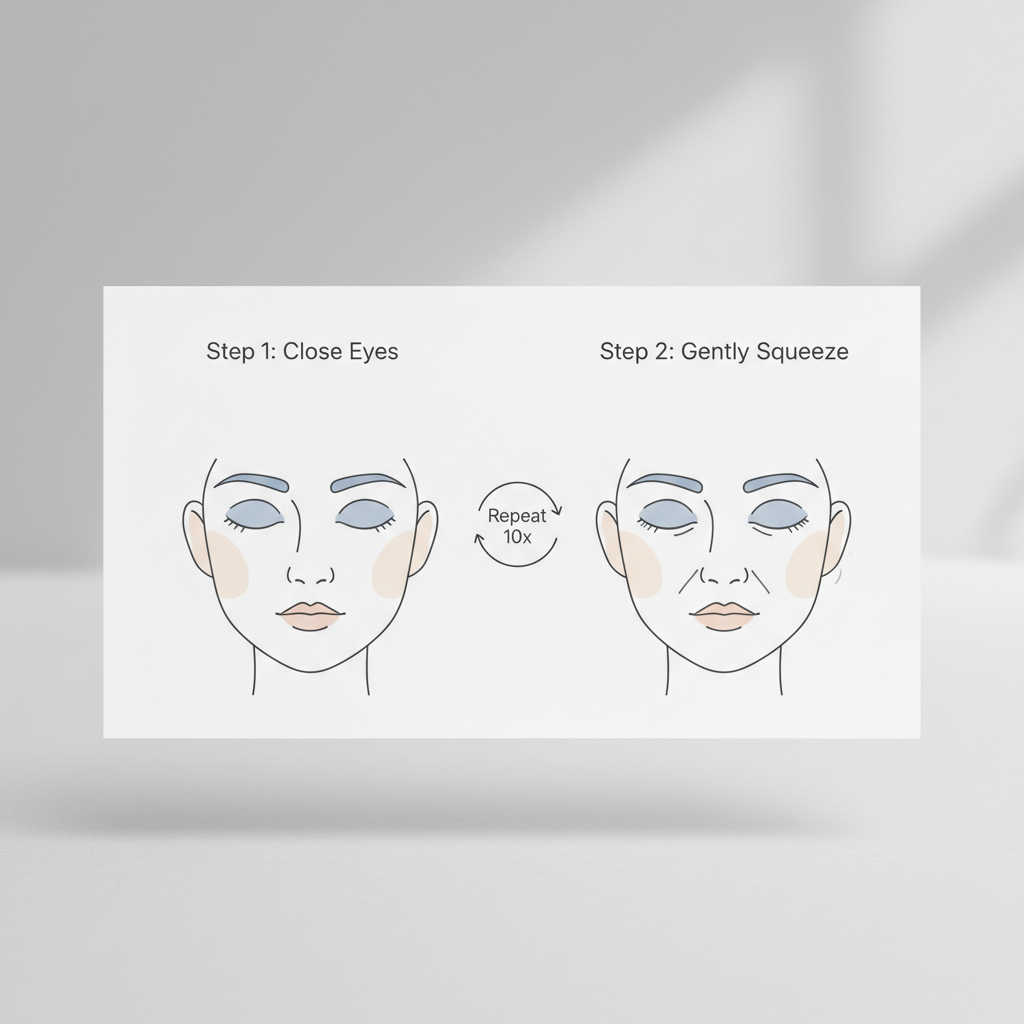
The "Full Squint" Fatigue Technique
This simple exercise, often recommended by optometrists, works by intentionally fatiguing the over-firing muscle (the orbicularis oculi) to reset its neuromuscular signal.
- Close Your Eyes: Find a comfortable position and gently close your eyes.
- Gently Squeeze: Squeeze your eyelids tightly shut, as if you were making a "full squint" but without engaging other facial muscles. You should feel a definite tension in the eyelids themselves.
- Hold: Maintain the squeeze for 2-3 seconds.
- Release: Relax your eyelids completely.
- Repeat: Perform this cycle 10 times.
This active fatigue is often more effective than passive rest for stopping a stubborn spasm.
The 20-20-20 Rule: A Mandate, Not a Suggestion
You’ve likely heard of it, but it’s crucial to implement it correctly. As recommended by the American Optometric Association, the rule is simple: every 20 minutes, look at something 20 feet away for at least 20 seconds.
This works because it forces the ciliary muscle inside your eye to relax its focus, breaking the accommodative spasm that contributes to fatigue. Set a timer on your computer or phone to make this a non-negotiable part of your workflow.
Lubrication and Hydration
Since dry eye is a major trigger, addressing it directly is key. Use preservative-free artificial tears to rehydrate the ocular surface. For an extra level of relief, one expert from the University of Mississippi Medical Center suggests keeping the drops in the refrigerator; the cold can help reduce inflammation and provide a more soothing sensation.
Long-Term Solutions: Building a Twitch-Proof Workstation and Habits
Stopping a twitch today is good, but preventing it from coming back is better. This requires a more holistic look at your environment and habits.
Ergonomic Foundations: Your Chair and Desk
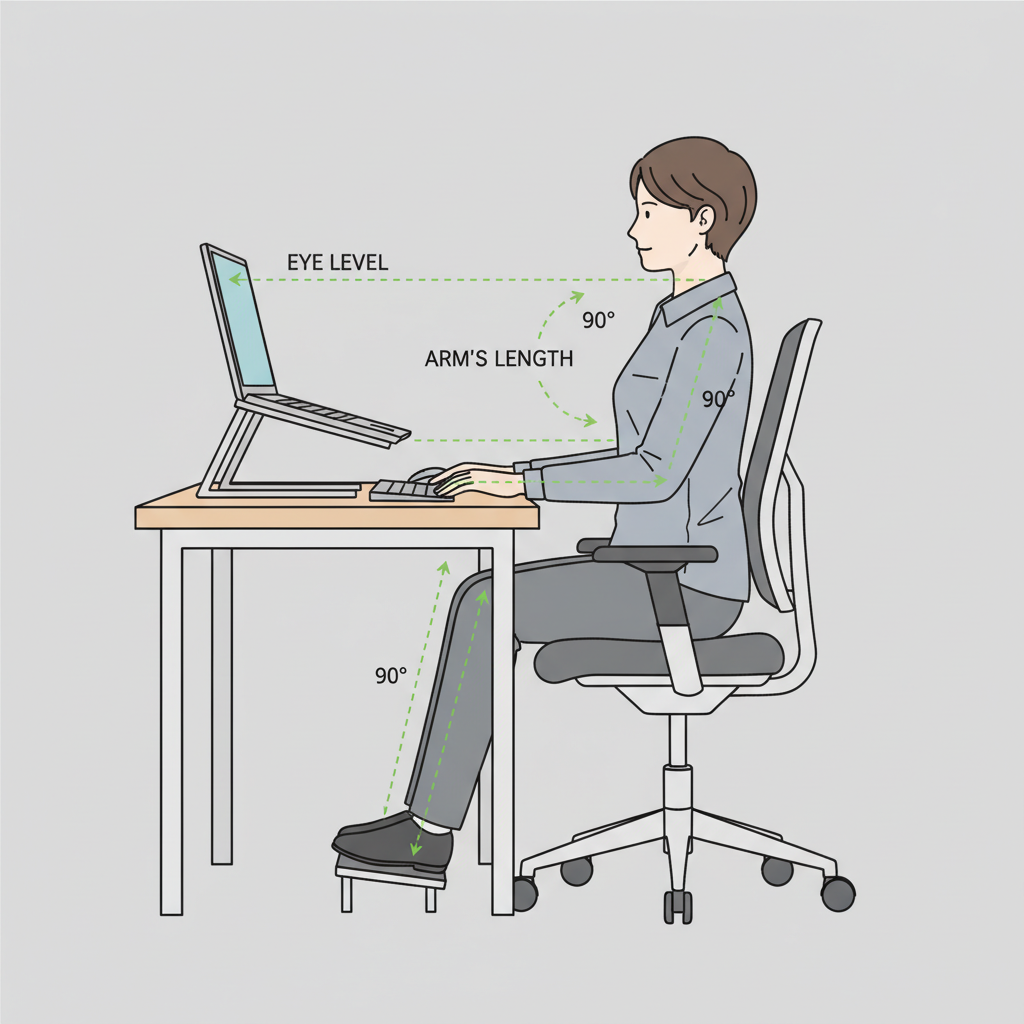
Proper posture minimizes the neck and shoulder strain that often travels upward, contributing to facial muscle tension.
- Monitor Placement: The top of your screen should be at or just below eye level, and the monitor should be about an arm's length away. If you use a laptop, invest in a laptop stand and an external keyboard and mouse to achieve this positioning. This advice aligns with foundational ergonomic principles from standards like ANSI/HFES 100-2007, which emphasize adjustability.
- Posture: Aim for 90-degree angles at your elbows and knees, with your feet flat on the floor. This prevents you from hunching forward and straining your neck to see the screen.
Optimizing Your Digital Space
- Adjust Text Settings: Research has shown that reading speed and comfort are optimized with medium-sized fonts and high-contrast text (e.g., black text on a white or off-white background). Make text bigger if you find yourself leaning in.
- Use Dark Mode Wisely: Dark mode can reduce pupil accommodation stress in low-light environments, making it ideal for evening work. However, in a brightly lit room, the reversed contrast can sometimes cause more strain.
- Control Glare: Position your monitor so that windows or bright overhead lights are not creating reflections on your screen. If you can’t move your desk, consider an anti-glare screen filter.
The Role of Lenses: More Than Just a Filter
Your glasses are your most important tool for visual comfort. An outdated or incorrect prescription is a leading cause of eye strain.
- Anti-Reflective (AR) Coatings: This is a non-negotiable feature for heavy screen users. AR coatings eliminate the reflections from your screen and overhead lights that bounce off your lenses, reducing visual "noise" and allowing your eye muscles to relax.
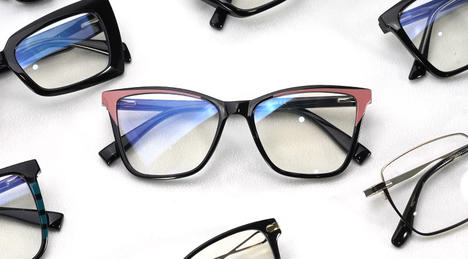
- Blue-Light Filtering Lenses (The Nuanced Take): As discussed, these lenses are not a magic bullet for eye strain. However, they are effective tools for managing your circadian rhythm. Research from Harvard Health confirms that blocking specific wavelengths of blue light in the evening can improve sleep. For twitching, their primary benefit is as a "comfort aid" that may reduce subtle strain from LED lighting. Think of them as a feature that supports overall visual wellness rather than a direct cure for spasms.
Frequently Asked Questions (FAQ)
Is my eyelid twitch a sign of a serious problem? In the vast majority of cases, eyelid myokymia is completely harmless and temporary. However, if the twitching is severe, persists for several weeks, causes the eyelid to close completely, or is accompanied by other facial spasms, it’s wise to consult a doctor to rule out more serious neurological conditions like benign essential blepharospasm or hemifacial spasm.
How much caffeine is too much? While sensitivity varies, many experts recommend staying below 300-400 milligrams of caffeine per day. This is equivalent to about three to four 8-ounce cups of brewed coffee. If you have a persistent twitch, try cutting your intake in half to see if it provides relief.
Can lack of sleep cause eye twitching? Absolutely. Sleep is when your body repairs and resets its neural circuits. When you’re sleep-deprived, your neurons can become hyperexcitable and fire spontaneously, leading to muscle twitches.
Do vitamins help with eye twitching? A balanced diet rich in minerals like magnesium and potassium and vitamins like the B-complex group is essential for proper nerve and muscle function. While a deficiency could theoretically contribute to twitching, it’s a rare cause. For most people, lifestyle factors like stress, caffeine, and screen time are the primary culprits.
Disclaimer: This article is for informational purposes only and does not constitute professional medical advice. If you have persistent or concerning symptoms, please consult a qualified healthcare provider or eye care professional.


