











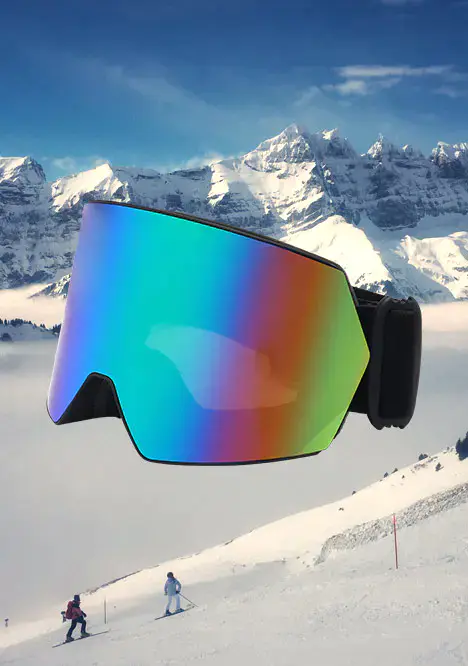

Face Form Angle: Why Curved Frames Need Prescription Mapping
The Hidden Hiccup in Curved Sunglasses: Understanding Face Form Angle
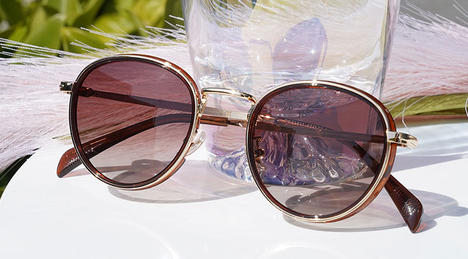
You found the perfect pair of wraparound sunglasses. They’re stylish, offer maximum coverage, and fit your active lifestyle. You order them with your prescription, but when they arrive, something is off. The world looks distorted, almost like you’re viewing it from inside a fishbowl. Straight lines curve, your peripheral vision feels unstable, and a headache starts to creep in.
This frustrating experience isn't due to a mistake in your prescription. It's caused by a critical, often-overlooked factor in eyewear manufacturing: Face Form Angle, also known as frame wrap.
Putting a standard prescription into a highly curved frame without adjustment is like trying to fit a square peg into a round hole—it fundamentally changes the optics. This guide breaks down what face form angle is, why it creates visual errors, and how specialized "prescription mapping" or compensation ensures your vision is clear and comfortable, even in the most stylishly curved frames.
TL;DR: Why Your Curved Frames Need a Special Rx
- What is Face Form Angle? It’s the degree to which your glasses curve to fit the contour of your face. Flatter, traditional frames have a low angle, while sports and fashion sunglasses have a high angle.
- The Optical Problem: Tilting a prescription lens induces optical errors. It can change the lens power, create unwanted astigmatism, and cause a prismatic effect that makes you feel dizzy or off-balance.
- The Solution is Compensation: Labs use digital lens technology to "compensate" the prescription. They recalculate the lens surface to counteract the errors created by the frame's wrap angle, ensuring the vision you experience matches what your doctor prescribed.
- Who Needs It Most? This is critical for anyone with a moderate-to-high prescription (especially over +/-4.00D), astigmatism, or those who are simply sensitive to visual distortions. The higher the frame's curve, the more crucial compensation becomes.
What is Face Form Angle and Why Does It Distort Vision?
Think of a standard pair of eyeglasses. The lenses sit relatively flat in front of your eyes, perpendicular to your line of sight. Face form angle, or wrap, is the measurement in degrees of how much the frame front curves to follow your face.
- Low Face Form Angle (0-5 degrees): Typical of classic, flat-fronted eyeglasses.
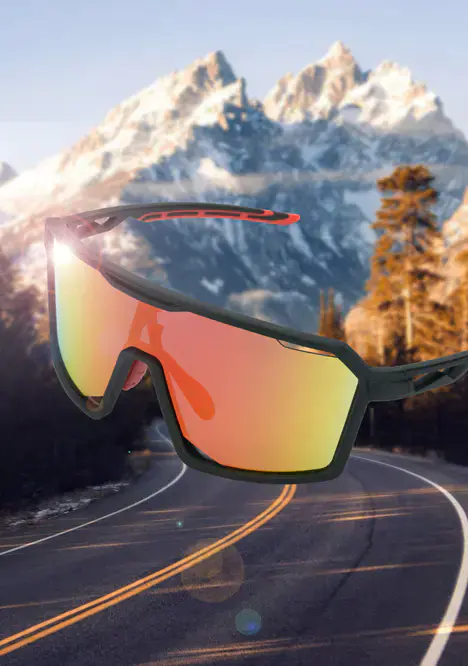
- High Face Form Angle (10-25 degrees): Common in sports sunglasses, cycling shields, and many modern, large-format fashion frames.

When you take a lens designed to be worn flat and tilt it significantly—as required by a high-wrap frame—you alter the optical physics. This induces three primary types of errors that your eyes and brain are not prepared for.
1. Induced Sphere Power Error
Tilting the lens changes the effective power your eye experiences. For most prescriptions, especially those for nearsightedness (minus powers), the wrap makes the lens feel stronger than it actually is. This over-correction can lead to eye strain and blurry distance vision.
2. Induced Cylinder (Astigmatism)
This is the most significant source of the "fishbowl" effect. Even if you have no astigmatism in your prescription, tilting a spherical lens creates it. This induced astigmatism causes straight lines to appear curved and makes your peripheral vision feel warped and unstable. For wearers who already have astigmatism, the wrap angle can either magnify or interfere with their prescribed correction, leading to significant discomfort.
3. Induced Prismatic Effect
A prism bends light, causing an object's image to appear shifted from its actual location. When a prescription lens is tilted in a wrap frame, it creates an unwanted prismatic effect. Your brain must work overtime to fuse the slightly displaced images from each eye, a struggle that often results in eye strain, headaches, and a feeling of being off-balance or even nauseous.

The Solution: How Labs Map Your Prescription to the Curve
To solve these induced errors, optical labs don't change your doctor's prescription. Instead, they use a sophisticated process called prescription compensation or prescription mapping. Using advanced digital surfacing technology, they precisely recalculate the lens optics to neutralize the distortions caused by the frame's specific geometry.
This process accounts for several key measurements:
- Face Form Angle: The wrap of the frame itself.
- Pantoscopic Tilt: The vertical angle of the lens as it sits on your face (most frames have a slight downward tilt).
- Vertex Distance: The distance from the back of the lens to the front of your cornea.
A Look Inside the Lab: The Rules of Compensation
In practice, experienced lab technicians use established optical formulas and rules of thumb to make these adjustments. This isn't guesswork; it's a precise science.
Methodology Note: The following insights are based on standard optical laboratory practices for surfacing high-wrap prescription lenses. These are not medical advice but an explanation of the manufacturing process.
- The Sphere Power Rule: For a minus (nearsighted) prescription, a common rule is to add approximately +0.25 D of sphere power for every 10 degrees of face form angle over the standard 5 degrees. This counteracts the induced minus power caused by the wrap.
- Base Curve Matters: A critical error is applying a single compensation formula to all lenses. The base curve of the lens (its inherent front curvature) dramatically affects how light bends. An 8-base lens in a wrap frame will induce different errors than a 6-base lens and requires a different compensation formula.
- Verification is Non-Negotiable: After the compensated lens is surfaced and cut, it must be verified in the actual frame with a specialized lensometer. This final check ensures the power the wearer will actually experience through the tilted lens matches their original prescription.
For wearers with high-minus prescriptions (e.g., > -6.00 D), neglecting this compensation in a wrap frame can be debilitating. The intense peripheral "swim" and distortion can cause immediate headaches and make the glasses functionally unwearable. This is why investing in digitally surfaced, compensated lenses is essential for high-wrap styles, as explored in our guide to wraparound high prescription sunglasses.
Who Needs Compensated Lenses? A Quick Checklist
While compensation is beneficial for any prescription in a curved frame, it becomes absolutely critical in certain situations. Use this checklist to determine if you are a prime candidate.
You definitely need compensated lenses if:
- Your Sphere Power is high: Greater than +3.00 D or -4.00 D. The stronger your prescription, the more pronounced the induced errors will be. For more on this, see our article on how strong prescription lenses can distort your eyes.
- You have Astigmatism: Your cylinder (CYL) value is -1.00 D or higher. The wrap angle will interact with your existing astigmatism correction, requiring careful compensation.
- You've Chosen a High-Wrap Frame: The frame has a noticeable curve, typically with a face form angle of 15 degrees or more.
- You are sensitive to visual changes: Some individuals are simply more perceptive to peripheral distortion and will benefit from compensation even with milder prescriptions.
You might not need compensation if:
- Your prescription is very mild (e.g., between +1.00 and -1.00 D with no astigmatism).
- You have chosen a frame with a very low face form angle (less than 5-7 degrees).
Your Practical Guide to Ordering High-Wrap Prescription Eyewear
Navigating the world of compensated lenses is straightforward when you know what to look for. Follow these steps to ensure a successful order.
Step 1: Choose a Compatible Frame Look for frames designed to handle prescriptions. Pay attention to the "base curve" of the lenses. A base curve of 6 or 8 is common for wrap styles and indicates the lens itself is highly curved and will require digital compensation.
Step 2: Ensure Your Prescription is Current and Accurate Compensation formulas are precise. They rely on an accurate baseline prescription from a recent eye exam. An old or inaccurate Rx will result in poorly compensated lenses, no matter how advanced the technology.
Step 3: Provide a Precise Pupillary Distance (PD) Your PD—the distance between your pupils—is always important, but it's even more critical for compensated lenses. It ensures the optical center of the lens is perfectly aligned with your pupil, which is the reference point for all compensation calculations. An incorrect PD can undo all the benefits of prescription mapping.
Step 4: Trust the Lab's Adjustments When you receive your compensated glasses, don't be alarmed if the power measured on a standard lensometer doesn't exactly match your prescription slip. This is normal and expected. The lens was designed to provide the correct power only when worn at the specific angle of your new frame. The goal is to minimize distortion in your prescription sunglasses, and this intentional adjustment is how it's achieved.
Frequently Asked Questions & Troubleshooting
Q: Why do my new sports sunglasses feel so strange? A: There is often a short adaptation period (a few hours to a few days) as your brain adjusts to the new visual field, even with perfectly compensated lenses. However, if you experience persistent headaches, dizziness, or severe "swim," it could indicate an issue with the compensation or measurements. Contact customer service for assistance.
Q: Can I use the lenses from my old glasses in a new, curved frame? A: No. Lenses are surfaced and cut for a specific frame geometry. A lens designed for a flat frame will produce significant distortion if forced into a curved one.
Q: Is prescription compensation more expensive? A: Yes, typically. It requires digital "free-form" surfacing technology, which is more advanced and costly than traditional lens manufacturing. However, the cost is justified by the vast improvement in visual clarity and comfort.
Q: My vision still feels "off" after a week. What should I do? A: First, ensure you've given your brain adequate time to adapt. Wear the new glasses consistently for several days. If the distortion or strain persists, there may be an issue. The most common culprits are an inaccurate PD measurement or a miscalculation in the compensation. Contact the retailer to have the glasses checked and remade if necessary.
Disclaimer: This article is for informational purposes only and does not constitute medical advice. Consult with a qualified optometrist or ophthalmologist for any questions regarding your eye health and prescription needs.
References
- Cleveland Clinic. (n.d.). How to Read Your Eye Prescription. Retrieved from https://health.clevelandclinic.org/how-to-read-your-eye-prescription
- The Vision Council. (n.d.). How Prescription Glasses and Contact Lenses Are Made. Retrieved from https://thevisioncouncilfoundation.org/protect-your-eyes/how-prescription-glasses-and-contact-lenses-are-made-crafting-your-perfect-eyewear/


