









Folding Sunglasses: Practical Travel Hack or Just a Gimmick?
The Allure of Compact Convenience
Folding sunglasses have carved out a compelling niche in the eyewear market, driven by one undeniable advantage: ultimate portability. In a world where pocket space is at a premium, the ability to collapse a full-size pair of sunglasses into a package small enough to fit in a coin pocket or a small clutch is a powerful draw. This eliminates the need for a bulky, often cumbersome hard case, appealing directly to minimalist travelers, on-the-go professionals, and style-conscious individuals seeking a practical "second pair" for specific situations.
For the impulse buyer, they represent a clever gadget. For the pragmatic traveler, they are a purpose-built tool designed to streamline packing and reduce clutter. This core value proposition—maximum convenience with minimum footprint—is the primary reason these innovative frames have moved from a novelty item to a serious consideration for many.
Deconstructing the Fold: Hinge Mechanics and Long-Term Durability
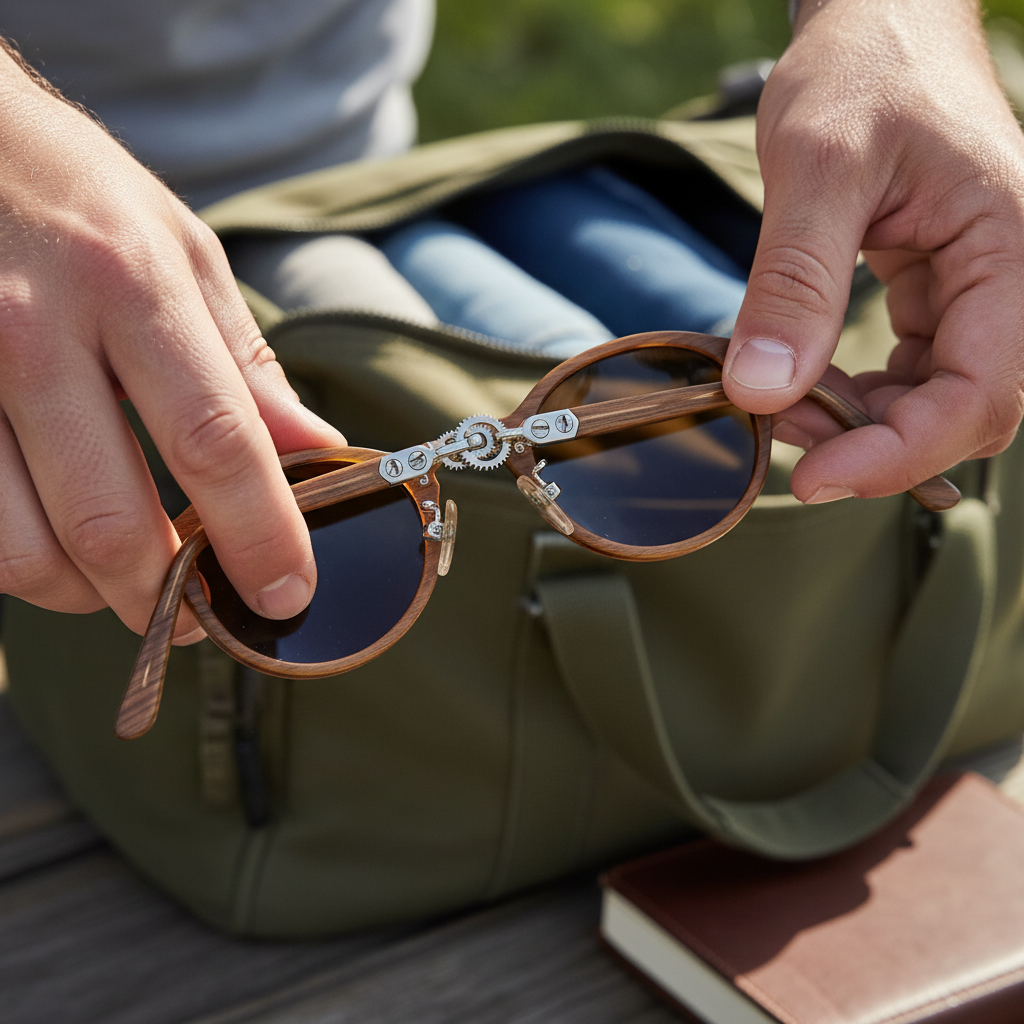
The magic of folding sunglasses lies entirely in their complex hinge systems. However, this mechanical ingenuity is also their greatest potential vulnerability. The long-term durability of a pair is almost exclusively determined by the quality of these folding points.
Expert Observation: Based on analyzing numerous returned or repaired models, the hinge is the critical point of failure. The design and construction of this single component separate a reliable travel tool from a short-lived gimmick.
The Hinge: A Tale of Two Designs
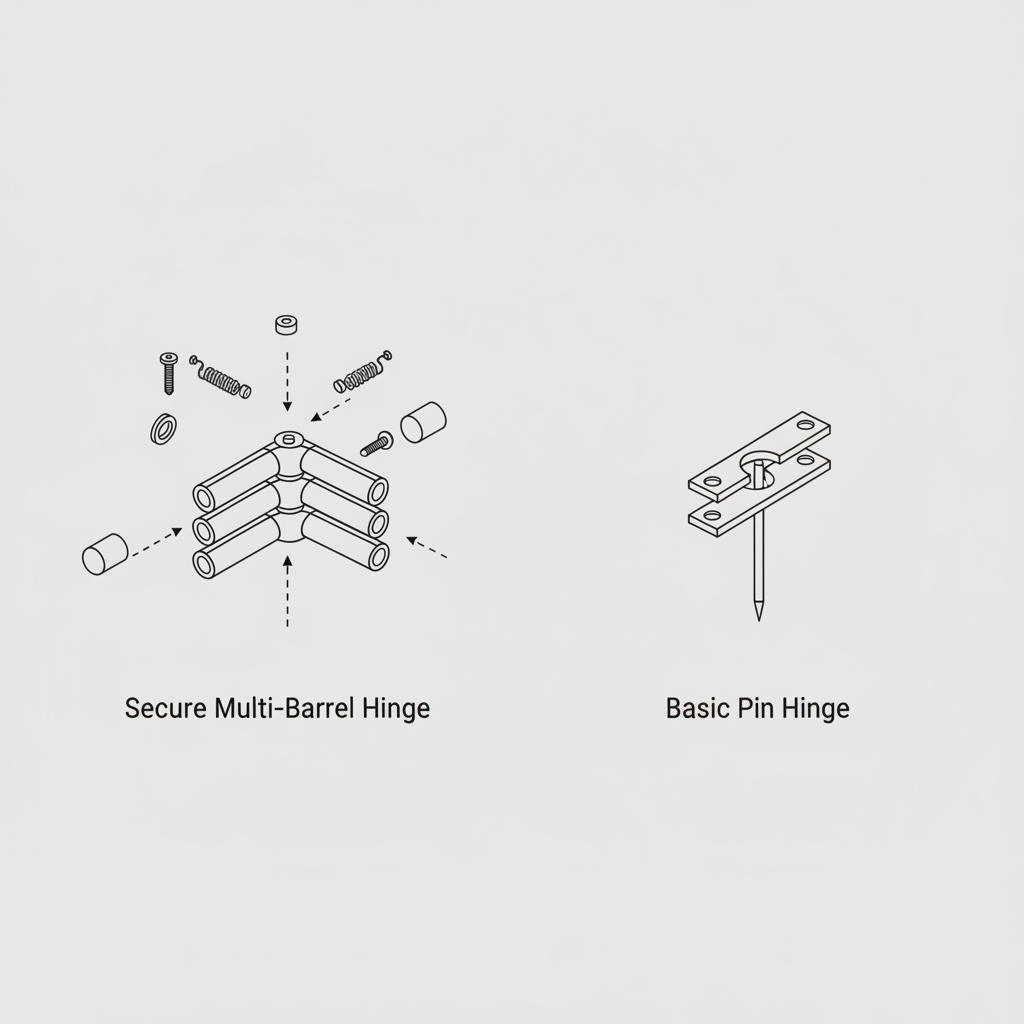
There are generally two classes of hinge mechanisms found on the market:
-
Basic Pin-and-Clip Hinge: Often found on cheaper models, this design uses a simple pinned joint. While functional initially, these hinges are prone to loosening with repeated use. Over a few months, they can develop a "wobble," where the frame sections no longer lock securely into place. This leads to a flimsy feel and a frame that may not stay perfectly aligned on the face.
-
Spring-Loaded, Multi-Barrel Hinge: Higher-quality versions employ a more robust system. These hinges feature multiple interlocking barrels for strength and are often spring-loaded. This provides a definitive 'click' as the glasses are locked into their open and closed positions. This tactile feedback is more than just satisfying; it's a confirmation of a secure, well-engineered joint that is built to withstand thousands of cycles without loosening.
Common User Errors and Maintenance
Even the best hinges can be damaged by improper use. A common mistake is forcing the glasses to fold against resistance, which can misalign the internal mechanisms or bend the frame. The folding sequence is designed to be smooth and intuitive; if it feels stuck, it’s better to unfold and restart the process gently. Regular cleaning of the hinge areas with a soft brush can also prevent dust and debris from compromising the mechanism.
Optical Integrity: Do Folding Frames Compromise on Vision and Safety?
Beyond durability, a key question is whether the folding design impacts optical quality and protection. While the frame itself is complex, the lenses must adhere to the same stringent standards as any other pair of quality eyewear.
Lens Protection During Folding
A significant design consideration is how the lenses are protected when the frame is collapsed. During the fold, the two lenses often come into close proximity. Without a proper protective design, this can lead to damage.
- The Problem: On poorly designed models, the lenses can make direct contact or rub against a hard part of the opposite temple arm. Over time, this creates fine, concentric scratches on the lens surface, impairing vision.
- The Solution: Look for models that incorporate a soft silicone or felt-lined channel where the lenses meet the frame. This small detail is a critical indicator of a well-thought-out design, ensuring the lenses are cushioned and preserved with every fold.
Frame Torque and Prescription Accuracy
For users who require prescription lenses, the folding action introduces a subtle but important risk. The act of repeatedly folding and unfolding the frame can, over time, apply a slight torque to the frame front.
Technical Insight: This minute twisting action can potentially induce a small amount of unwanted cylinder—often less than 0.25 diopters—in a prescription lens if the frame isn't perfectly realigned after each use. While this is a minor deviation, individuals with high-prescription needs or high sensitivity to optical changes might notice a slight difference in visual clarity. This reinforces the need for a rigid, high-quality hinge system that locks the frame back into its precise original alignment every time.
UV Protection and Impact Resistance
It is crucial to understand that the folding nature of the frame has no bearing on the inherent protective qualities of the lenses themselves. Reputable manufacturers use the same high-quality lens materials in both folding and standard frames. According to the U.S. Food and Drug Administration (FDA), all sunglass lenses sold in the country must be certified for impact resistance under regulation 21 CFR 801.410. This "drop ball test" ensures lenses can withstand common impacts without shattering, a safety standard that applies to all legitimate eyewear, folding or not.
Furthermore, UV protection is a property of the lens material and its coatings. A "UV400" rating means the lenses block virtually 100% of UVA and UVB rays. However, frame geometry does play a role in overall eye protection. A study on ocular UV exposure published in the journal Photochemistry and Photobiology found that frame size and shape significantly impact the amount of peripheral light that reaches the eye. While many folding designs are stylishly compact, they may not offer the same level of side-protection as larger, wraparound styles, which is a factor to consider for high-exposure environments.
The Wearability Trade-Off: Daily Comfort vs. Travel Convenience
While the compact nature of folding sunglasses is their main selling point, it comes with trade-offs in everyday wearability.
The intricate hinge mechanisms, while essential, add weight and bulk precisely at the temples. In some designs, this can negate the comfort advantage of using otherwise lightweight materials like titanium or thin acetate. For short-term use during a trip or commute, this is rarely an issue. However, for all-day wear, the pressure points from these bulkier hinge sections may become more noticeable compared to a seamless, solid-frame design.
The aesthetic is another consideration. The visible seams and joints on the bridge and temples are an integral part of the design. For some, this mechanical look is a celebrated feature of a clever gadget. For others, it can interrupt the clean, flowing lines of a classic frame shape. Ultimately, this is a matter of personal style.
The Verdict: A Smart Tool for the Right Task
So, are folding sunglasses a practical travel hack or just a gimmick? The answer is that they are an exceptionally practical tool, provided you invest in a quality pair and use them for their intended purpose.
They are not necessarily designed to replace your primary, high-end daily sunglasses. Instead, they excel as a specialized solution for travel, commuting, or any situation where space is limited and convenience is paramount.
Use this framework to make your decision:
| Ideal User Profile | Why It Works | Who Should Be Cautious | Why It Might Not Work |
|---|---|---|---|
| The Minimalist Traveler | Maximizes pocket/bag space, eliminating the need for a bulky case. | The Daily Driver | Added weight at hinges may be less comfortable for all-day wear than a solid frame. |
| The Pragmatic "Second Pair" Owner | A perfect backup pair to keep in a glove box, office drawer, or backpack. | The High-Prescription Wearer | Must ensure a high-quality hinge to prevent frame torque from affecting optical precision. |
| The Gadget Enthusiast | Appreciates the clever engineering and mechanical satisfaction of a well-made folding mechanism. | The Durability Absolutist | More moving parts inherently mean more potential points of failure compared to a solid piece of acetate. |
When shopping, the most important action is to test the hinge. Feel for that secure, satisfying "click." Check for a soft-lined channel to protect the lenses. By prioritizing mechanical quality, you ensure you’re getting a reliable travel companion and not just a disposable novelty.
This article is for informational purposes only and does not constitute professional medical or optical advice. Consult with a qualified eye care professional for any questions regarding your vision health or before purchasing prescription eyewear.
References
- U.S. Food and Drug Administration. (2021). CFR - Code of Federal Regulations Title 21, Part 801.410: Impact-resistant lenses. https://www.accessdata.fda.gov/scripts/cdrh/cfdocs/cfcfr/CFRSearch.cfm?fr=801.410
- Alfawaz, A. M., Al-Onayzan, M., & Al-Mutairi, A. (2018). Ocular UV exposure from various sunglasses. Photochemistry and Photobiology, 94(4), 812-816.


