









Choosing Frames to Flatter High Prescription Lenses
TL;DR: Your Quick Guide to Flattering Frames for High Prescriptions
Choose High-Index Lenses: This is non-negotiable. Materials like 1.67 or 1.74 high-index are thinner and lighter, forming the foundation for a stylish look.
Go Smaller & Rounder: Smaller, rounded, or oval frames require less lens material, which drastically minimizes edge thickness for nearsightedness or center bulk for farsightedness.
Material is Your Ally: Thicker acetate or combination frames are excellent for hiding lens edges. Thin metal frames can work, but require careful lens selection.
Prioritize Fit Over Fashion: A well-fitting bridge and adjustable nose pads are critical to prevent glasses from slipping, especially with the added weight of stronger lenses.
Check Key Dimensions: Pay attention to frame measurements (Eye Size, Bridge Width, Temple Length) to ensure a balanced, centered fit for your face.
Choosing new glasses should be exciting, but when you have a strong prescription, it can feel like a series of compromises. You're often told your options are limited to small, clunky frames that feel more medical than modern. The fear of "coke bottle" lenses, facial distortion, or glasses that constantly slide down your nose is real.
But it doesn’t have to be this way. Go beyond basic face shape rules. This guide will teach you how to think like an optician, using frame thickness, shape, and material to your advantage. We'll explore how to work with your high-prescription lenses—not against them—to find a pair of glasses you'll love to wear.
Understanding Your Prescription and Its Impact on Lenses
Before we dive into frames, it's crucial to understand why a "high" prescription presents a challenge. Generally, a prescription is considered high if your Sphere (SPH) value is beyond ±4.00 diopters or your Cylinder (CYL) value for astigmatism is greater than ±2.00 diopters. If you need help deciphering your Rx, our Reading Your Eyeglass Prescription: A Simple Guide can walk you through it.
For Nearsightedness (Myopia, a minus ‘-’ SPH value): Lenses are thinnest at the center and thickest at the edges. The stronger the prescription, the thicker the outer edge becomes.
For Farsightedness (Hyperopia, a plus ‘+’ SPH value): Lenses are thickest at the center and thinner at the edges. A strong prescription can create a "bug-eye" effect, magnifying your eyes.
The First Solution: High-Index and Aspheric Lenses
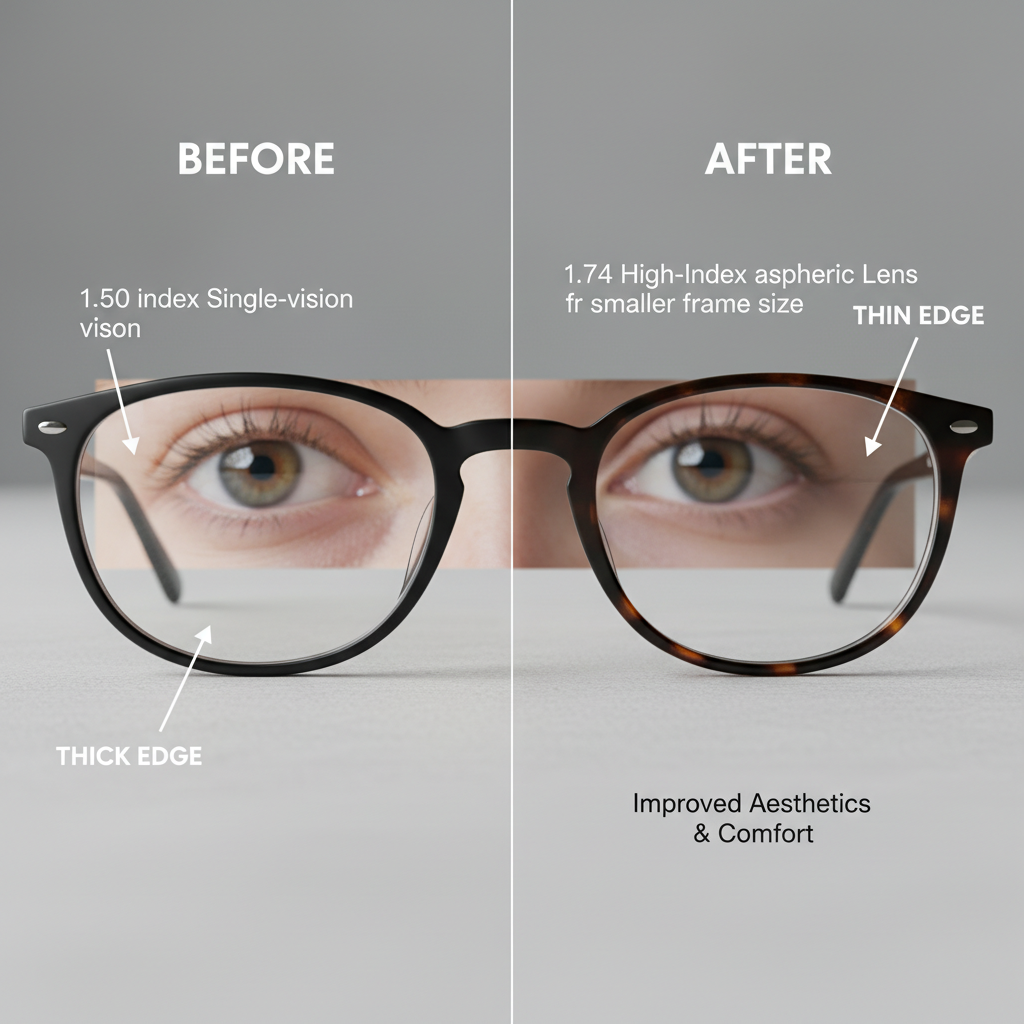
The single most important step you can take is to upgrade your lens material. Standard plastic (CR-39) or polycarbonate lenses will be noticeably thick and heavy with a strong prescription.
This is where high-index lenses come in. According to optical experts at Ferris State University, materials with a higher refractive index (like 1.67 or 1.74) bend light more efficiently. This means less material is needed to correct your vision, resulting in a significantly thinner and lighter lens. For users with prescriptions stronger than ±4.00 D, I always recommend prioritizing these materials.
Pairing a high-index material with an aspheric lens design is another pro-level move. Aspheric lenses have a more complex, flatter curvature across their surface. This not only further reduces thickness and weight but also minimizes the facial distortion and magnification effects common with strong prescriptions.
The Art of Frame Selection: Turning Theory into Practice
With the right lenses selected, the frame becomes your tool for aesthetic refinement. The goal is to choose a frame that strategically conceals any remaining lens thickness and creates a sense of visual balance.
Principle 1: Smaller, Rounder Shapes are Your Best Friend
This is the golden rule. The larger the lens, the more of that thick edge (for minus lenses) will be visible. By choosing a frame with a smaller, more rounded or oval shape, you are essentially "cutting away" the thickest part of the lens blank. This has the most dramatic impact on reducing the final thickness and weight of your glasses.
Principle 2: Use Frame Material and Thickness to Your Advantage
While you might be drawn to delicate, thin metal frames, they offer nowhere for the lens edge to hide. Instead, consider these options:
Acetate (Plastic) Frames: A thicker acetate frame is the easiest and most stylish way to conceal lens thickness. The material itself has substance, making the lens edge blend in seamlessly.
Combination Frames: These frames, which might mix an acetate front with metal temples, offer a great balance of style and function.
Beveled Rims: Look for metal frames that have a thicker, beveled profile instead of a simple wire rim. This adds a bit of depth that can help mask the edge.
Expert Warning: The "Oversized Frame" Misconception
A common mistake I see is someone with a high prescription choosing a very large, geometric fashion frame. They assume a high-index lens will solve the problem. However, every lens starts as a circular "blank." If the frame is too large or wide, the lab may not be able to cut the lens to fit without the edges becoming exceptionally thick or, in some cases, not being able to make it at all. Always aim for frames where your eyes are well-centered in the lens opening.
Principle 3: A Secure Fit is Non-Negotiable
High-prescription lenses are denser and heavier, even in high-index materials. This makes fit absolutely critical. If the frame isn't secure, it will constantly slide down your nose.
The Bridge: For acetate frames, ensure the bridge sits flush against your nose without a gap. If you have a low or narrow nose bridge, look for frames with a keyhole design or built-in plastic nose pads.
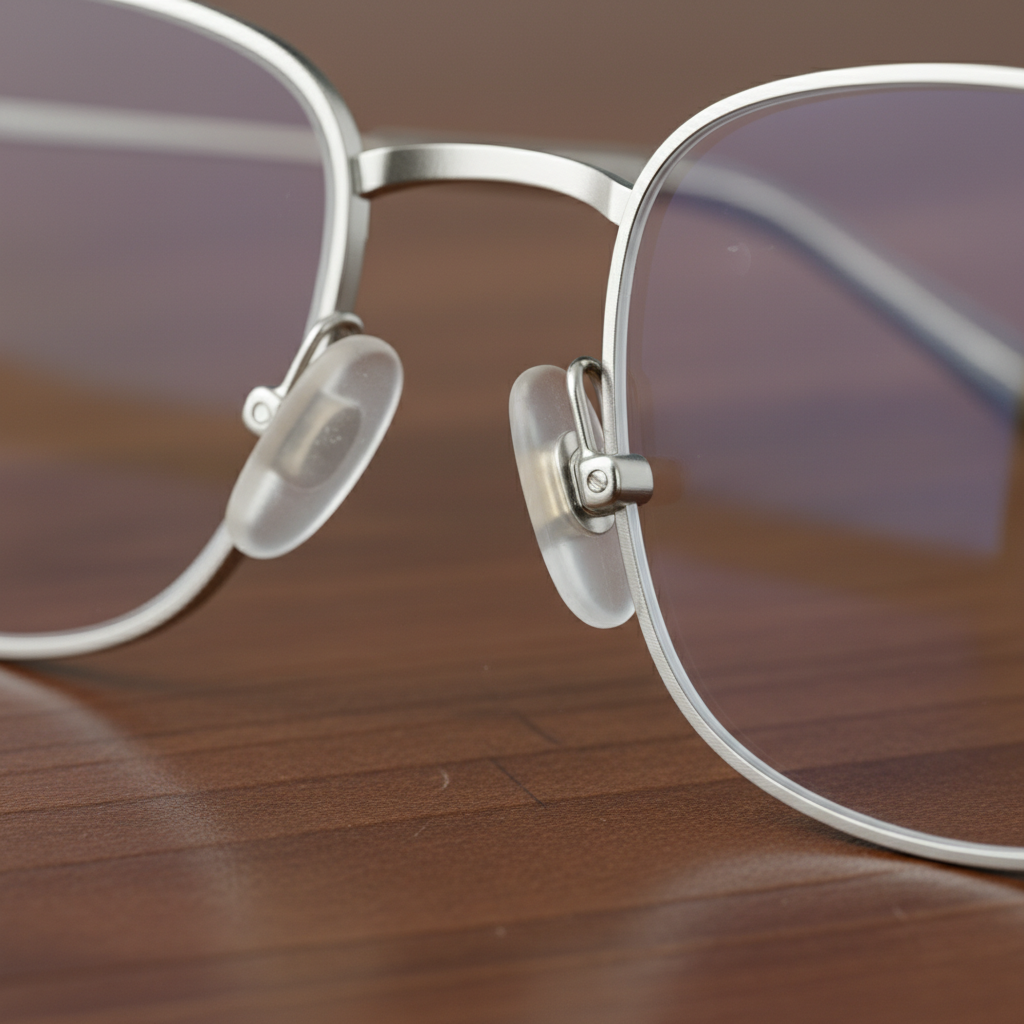
Adjustable Nose Pads: For metal frames, adjustable nose pads are a must. They allow for precise adjustments to keep the glasses in the correct position and distribute weight evenly, preventing red marks and discomfort. If you're considering buying prescription glasses online, a safety checklist should always include confirming fit options.
A Practical Comparison of Frame Styles
To make this easier, here is a quick-reference table to guide your decisions.
| Frame Style | Best For High Myopia (-) | Best For High Hyperopia (+) | Key Considerations |
|---|---|---|---|
| Full-Rim Acetate | Excellent | Excellent | The top choice. Offers the best concealment for lens thickness and a wide variety of styles. |
| Thin Metal | Use with Caution | Good | Can work for plus lenses as edges are thin. For minus lenses, requires the highest index and a small lens shape. |
| Semi-Rimless | Not Recommended | Use with Caution | Exposes the thickest part of a minus lens. Can work for plus lenses if the lens is polished and beveled well. |
| Rimless | Not Recommended | Not Recommended | Offers zero edge coverage and requires drilling into the lens, which is risky with thinner high-index materials. |
Final Checks for Optical and Safety Excellence
Once you've narrowed down your style choices, a few final technical points ensure your glasses perform as good as they look.
The Importance of Accurate Measurements
Precise measurements are crucial for all glasses, but the margin for error is much smaller with high prescriptions. An incorrect Pupillary Distance (PD) can induce prism and cause eye strain or headaches. For prescriptions with high cylinder, the axis must be perfectly aligned to avoid blurry vision. I strongly recommend getting a monocular PD (measuring the distance from each pupil to the center of your nose) for the most accurate results. While you can learn how to measure your PD at home, even a small PD error can matter significantly with a strong prescription.
Your Right to Your Prescription and Safety Standards
Remember, you are legally entitled to a copy of your prescription immediately following an eye exam. The FTC's Eyeglass Rule ensures you can take that prescription to any retailer you choose. Furthermore, all prescription eyewear sold in the United States must comply with impact-resistance standards set by the FDA. As detailed in the FDA's guidance documents (21 CFR 801.410), lenses must pass a "drop ball" test to ensure their durability for everyday wear.
Key Takeaways
Finding the perfect frames for a strong prescription isn't about limiting your style; it's about making informed, strategic choices. By prioritizing high-index lenses, you open up a world of possibilities. From there, focus on smaller, well-centered frames made from materials like acetate that provide coverage. Pay close attention to the fit of the bridge and temples to ensure comfort. By combining these optical principles with your personal taste, you can confidently select glasses that not only help you see clearly but also look fantastic.
Frequently Asked Questions (FAQ)
1. What is the best high-index material: 1.67 or 1.74?For prescriptions up to around ±8.00 D, 1.67 high-index offers a great balance of thinness and value. For prescriptions stronger than that, 1.74 high-index will provide the maximum cosmetic thinness, though it often comes at a higher cost. Both are excellent choices.
2. Can I really not wear thin metal frames with my high prescription?You might be able to, but it requires careful planning. This is the central question we explore in our guide, Can You Wear Thin, Stylish Frames with a High Rx? It's possible if you combine a very high-index lens (1.74), an aspheric design, and a small, round frame shape. However, a thicker acetate frame is a much more forgiving option.
3. How do I know if the online prescription feels wrong?When you first get new glasses with a strong prescription, a brief adaptation period is normal. However, if you experience persistent headaches, dizziness, or eye strain after a few days, something may be off. Our guide on what to do if your new online prescription feels wrong provides a step-by-step checklist to troubleshoot the issue.
4. What about frames with a steep wrap or curve?I would strongly advise against them. Highly curved frames can induce a type of distortion known as oblique astigmatism, which is much more pronounced with high-prescription lenses and can be very disorienting.
Disclaimer: This article is for informational purposes only and does not constitute professional medical advice. The information provided is intended to help you make informed decisions about your eyewear in consultation with a qualified eye care professional. Always consult your optometrist or ophthalmologist for any health-related concerns, especially with high prescriptions or pre-existing eye conditions.


