






What frames should you avoid with progressive lenses?
TL;DR: Frames to Avoid for Progressives
- Frames That Are Too Short: Any frame with a vertical lens height (B-measurement) under 30mm will likely cut off a portion of your reading zone.
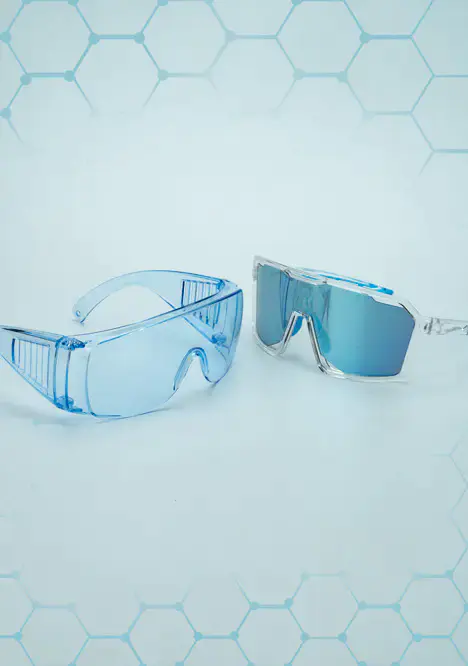
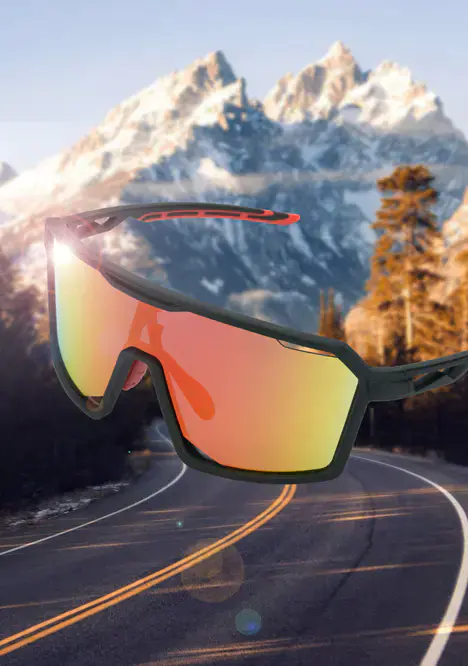
- Frames with Excessive Wrap: Sporty, highly curved frames can induce peripheral distortion and a "swim" effect, causing dizziness.
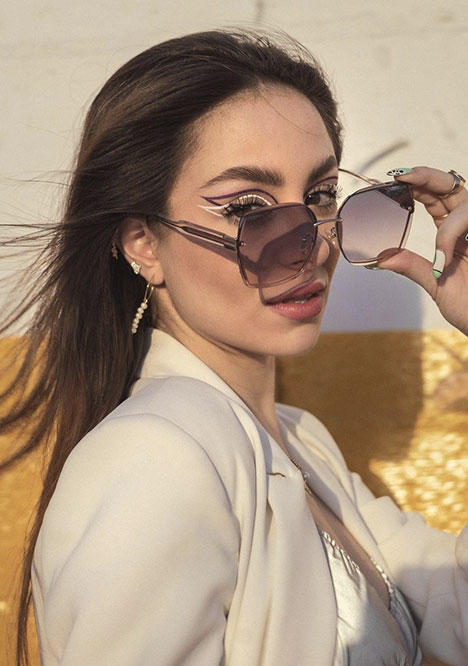
- Frames with Extreme Shapes: Sharp cat-eyes, classic aviators, and other dramatic shapes often amputate the necessary reading area located in the bottom-nasal part of the lens.
- Flimsy or Non-Adjustable Frames: If an optician can't precisely adjust the frame's tilt and position, the advanced optics of your progressive lenses can be rendered ineffective.
The #1 Mistake: Frames That Are Too Short (The 30mm Rule)
The most common reason for progressive lens failure has nothing to do with the lens itself—it's a frame that is vertically too small. Progressive lenses are engineered with a vertical gradient of power, known as the "progressive corridor." This corridor contains three distinct zones:
- Distance Zone: The top portion of the lens, used for seeing things far away.
- Intermediate Zone: A narrow channel in the middle, perfect for computer screens or viewing a car's dashboard.
- Near Zone: The bottom portion, designed for reading books, phones, or menus.
When a frame is too short, it physically cuts off the bottom of the lens. As a result, the reading zone is either partially or completely missing. Based on extensive fitting experience, a frame should have a minimum vertical lens height—often called the "B-measurement"—of at least 30mm. Anything less forces you into an unnatural "chin-up" posture to hunt for the reading power, leading to neck pain, headaches, and the frustrating sense that your new glasses "don't work."

The "Dizzy" Frame: Excessive Wrap or "Face-Form"
Have you ever tried on a pair of sporty, wraparound sunglasses and felt a strange, dizzying sensation in your peripheral vision? This effect, known as the "swim effect," is magnified when progressive lenses are placed in a highly curved frame.
Here’s the optical reason: When light enters a lens at a steep angle—as it does with a wrapped frame—it induces unwanted astigmatism. This is a type of distortion that your brain isn't prepared for. Our analysis of fitting data shows that even a modest frame wrap of 8 to 10 degrees can create 0.25 diopters of unwanted cylinder power in the periphery. For a sensitive wearer, this is more than enough to cause a persistent feeling of instability and dizziness.
While specialized progressive designs exist for high-wrap frames, they require specific manufacturing techniques to compensate for the curve. For your primary, everyday pair, it is far safer to choose a frame with a relatively flat front to ensure your peripheral vision remains clear and stable.
The Zone Killers: Aviators, Cat-Eyes, and Extreme Shapes
While stylistically bold, certain frame shapes are fundamentally at odds with the design of a progressive lens. The reading zone is strategically placed in the lower-nasal (bottom-inside) portion of the lens to align with where your eyes naturally converge for close-up tasks. Frames that cut away this specific area are a recipe for failure.
- Classic Aviators: The signature downward slope on the inner part of the lens often carves away the most useful part of the reading zone.
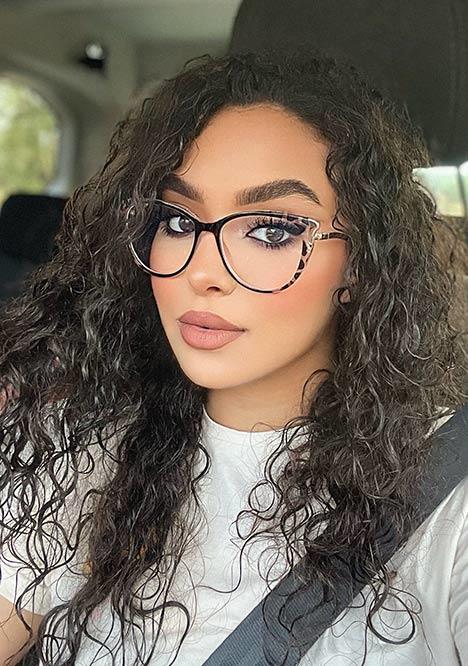
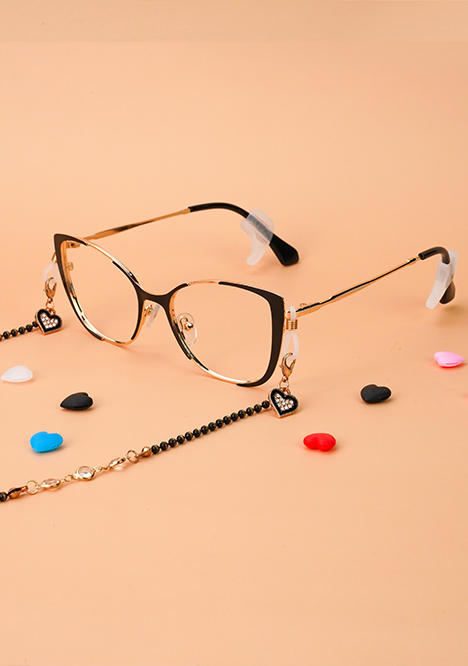
- Sharp, Upswept Cat-Eyes: These designs remove lens real estate from the bottom, compromising the near vision area for the sake of a dramatic shape.
- Geometric Oddities: Any frame with a narrow bottom, severe angles, or an unusual shape risks interfering with the smooth transition between vision zones.
Choosing one of these shapes means you are paying for the advanced technology of a full progressive lens but only getting to use a fraction of its power. You are essentially buying a high-performance machine and then blocking its most important feature.
The Unfittable Frame: Flimsy Materials and Non-Adjustable Parts
A successful progressive lens experience depends on a precision fit. The lenses must be positioned perfectly in front of your pupils. An optician achieves this by making several critical adjustments to the frame itself:
- Pantoscopic Tilt: The vertical angle of the frame front relative to your face.
- Vertex Distance: The distance from the back of the lens to the front of your eye.
- Face Form: The horizontal wrap or curvature of the frame.
This is why flimsy, brittle plastic frames or metal frames without adjustable nose pads are poor choices. If an optician cannot bend and shape the temple arms or reposition the nose pads, they cannot guarantee the optical center of the lens aligns with your pupil. According to a clinical trial published in Optometry and Vision Science, customized free-form lenses provide significantly wider fields of view, but this benefit is lost if the fitting is incorrect. (Optometry and Vision Science, 2011)
Modern digital "free-form" lenses are surfaced with 0.01-diopter precision, but their complex distortion-canceling algorithms rely on accurate measurements of the frame's tilt and wrap. If these values are estimated or defaulted because the frame is unadjustable, the lens performance is severely compromised. You might experience more "swim" or a narrower reading area, issues often blamed on cheap lenses when the true cause is a low-quality frame. (IOT Lenses, 2022)
Your Frame Selection Checklist
Instead of focusing on what to avoid, here is a simple checklist for finding a "progressive-friendly" frame:
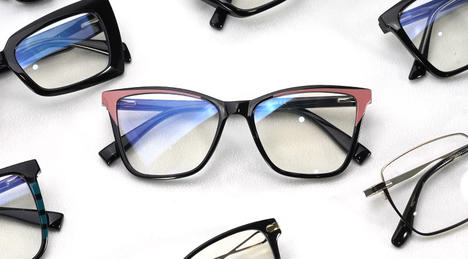
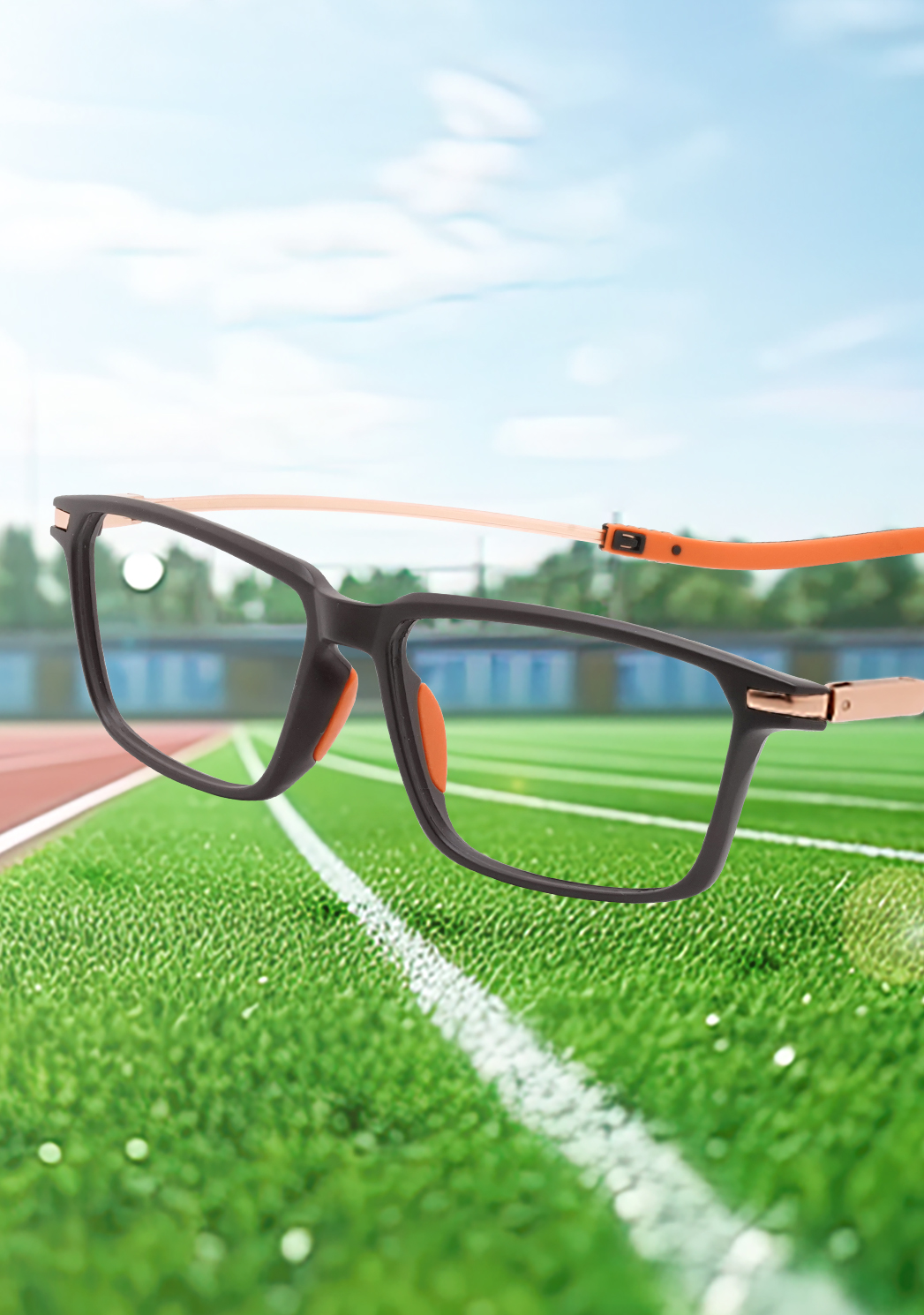
- Check the Height: Look for frames with a lens height of at least 30mm, though 32-36mm is an even safer range for more comfortable reading.
- Check the Shape: Favor fuller shapes like rounded squares or gentle ovals. These provide ample real estate for all three vision zones.
- Check the Curve: Hold the frame and look down its top edge. It should be relatively flat, not aggressively curved like a sport sunglass.
- Check for Adjustability: Choose frames made from quality materials with adjustable nose pads (especially for metal frames) and temple arms that an optician can professionally manipulate.
- Check the Fit: The frame should sit securely on your nose without sliding. The geometric center of the frame should align closely with your pupil center when you're looking straight ahead.
Frequently Asked Questions
Can I use my old frames for new progressive lenses? Maybe. If your old frames meet the criteria above—especially the 30mm height rule and good adjustability—they can often be reused. An optician can evaluate them to confirm they are suitable for a progressive lens.
Why do my new progressive lenses make me dizzy? Dizziness, or "swim effect," can be caused by several factors. It might be a frame with too much wrap, an incorrect fitting measurement, or simply the normal neuro-adaptation period as your brain gets used to the new lens design. Most wearers adapt within one to two weeks.
Are bigger frames always better for progressives? Not necessarily. While taller frames are better, an excessively wide frame doesn't add much benefit, as the clearest vision is always through the central corridor. A well-fitted, medium-sized frame with adequate height is superior to a poorly-fitted, oversized one.
Why do I have to point my nose at what I’m reading? This is the correct way to use progressives. Because the different power zones are in a vertical corridor, you must learn to move your head to align the corridor with your target. You look through the top of the lens for distance and drop your head slightly to look through the bottom for reading, always pointing your nose toward your subject.
By understanding the relationship between the frame and the lens, you move from being a passive buyer to an informed partner in your own vision care. Choosing a frame that is optically compatible with your progressive lenses is the single most important step you can take to ensure a successful and comfortable experience.
Disclaimer: This article is for informational purposes only and does not constitute professional medical advice. Consult with a qualified optometrist or optician to determine the best eyewear solution for your specific needs, especially if you have pre-existing conditions.
References
- Ciarnello, D. (2011). Clinical assessment of a customized free-form progressive addition lens. Optometry and Vision Science, 88(1), 80-86. Sourced from: https://pubmed.ncbi.nlm.nih.gov/21217408/
- IOT Lenses. (2022). Manufacturing Errors in Progressive Lenses and Their Impact on Wearer Satisfaction. Sourced from: https://iotlenses.com/de/blog/manufacturing-errors-progressive-lenses.html
- Lord, S. R. (2024). Falls in older adults wearing multifocal glasses: a systematic review and meta-analysis. Journal of the American Geriatrics Society. Sourced from: https://pubmed.ncbi.nlm.nih.gov/39882858/
- Golebiowski, B., et al. (2020). The Association Between Non-optimal Neck Posture and Computer Vision Syndrome. International Journal of Environmental Research and Public Health, 17(3), 1003. Sourced from: https://www.mdpi.com/1660-4601/17/3/1003


