















The Connection Between Gut Health and Clear Vision Stability
Executive Summary
The concept of "clear vision" has traditionally been confined to the anatomy of the eye—the curvature of the cornea, the elasticity of the lens, and the length of the eyeball. However, emerging research into the gut-eye axis is shifting the paradigm of vision wellness. This article explores how systemic health, specifically gut microbiome diversity and intestinal permeability, directly influences ocular inflammation and refractive stability.
For the "Smart Buyer," understanding this connection is the key to moving beyond reactive eye care toward a proactive, systemic approach. We examine the mechanisms by which dietary choices, such as the intake of refined carbohydrates and the balance of specific micronutrients like Vitamin D and Magnesium, affect the structural integrity of the eye. Furthermore, we provide clinical heuristics for identifying when vision fluctuations may be a symptom of systemic inflammation. By integrating advanced lens technologies—such as high-index materials and premium anti-reflective coatings—with targeted nutritional strategies, individuals can achieve not only clearer vision but long-term ocular resilience.
The Gut-Eye Axis: How Your Microbiome Governs Ocular Health
The "gut-eye axis" refers to the complex biochemical signaling between the gastrointestinal tract and the tissues of the eye. While the eye is often considered an "immune-privileged" site, it is not isolated from the body's systemic inflammatory state. Research published in Nutrients (PMC7551870) details how a "Western diet"—high in processed fats and sugars—can increase intestinal permeability, often referred to as "leaky gut."
When the gut barrier is compromised, inflammatory markers and bacterial metabolites can enter the bloodstream, triggering a low-grade systemic inflammatory response. This inflammation can bypass the blood-retinal barrier, contributing to the progression of conditions like Age-Related Macular Degeneration (AMD) and diabetic retinopathy.
The Mechanism of Systemic Inflammation
Systemic inflammation often manifests in the eye before other clinical symptoms appear. Optometrists frequently observe that patients with unstable prescriptions—those whose vision seems to fluctuate month-to-month—often share a common thread of underlying nutritional deficiencies or inflammatory conditions like Irritable Bowel Syndrome (IBS).
Logic Summary: Our analysis of refractive stability assumes that the eye’s internal environment (aqueous and vitreous humor) is sensitive to systemic metabolic shifts. This is based on clinical patterns observed in patients with chronic inflammatory markers, where osmotic changes in the lens lead to temporary refractive shifts.
Nutritional Foundations for Prescription Stability
Stabilizing a prescription involves more than just the right lens power; it requires maintaining the structural health of the eye's tissues. The sclera, the white outer layer of the eye, is composed largely of collagen. If the synthesis of this collagen is disrupted, the eye can elongate, leading to a worsening of myopia (nearsightedness).
Refined Carbohydrates and Myopia
According to a review in Nutrients (PMC10823653), there is an emerging hypothesis that high intake of refined carbohydrates leads to hyperinsulinemia. This, in turn, may reduce the levels of insulin-like growth factor-binding protein-1 (IGFBP-1), potentially stimulating the axial elongation of the eye. This suggests that a diet high in sugar doesn't just affect your waistline; it may actively change the shape of your eye.
The Synergy of Vitamin D and Magnesium
A critical but often overlooked factor in ocular health is the synergy between nutrients. Data from the National Health and Nutrition Examination Survey (NHANES) reveals that the protective effects of Vitamin D on the retina are dependent on adequate Magnesium levels. Supplementing with Vitamin D in a magnesium-deficient population may be ineffective, as magnesium is a necessary cofactor for Vitamin D metabolism.
| Nutrient | Primary Ocular Role | Synergy Requirement | Source Category |
|---|---|---|---|
| Vitamin D | Retinal protection / Anti-inflammation | Requires Magnesium for activation | Sunlight, Fatty Fish |
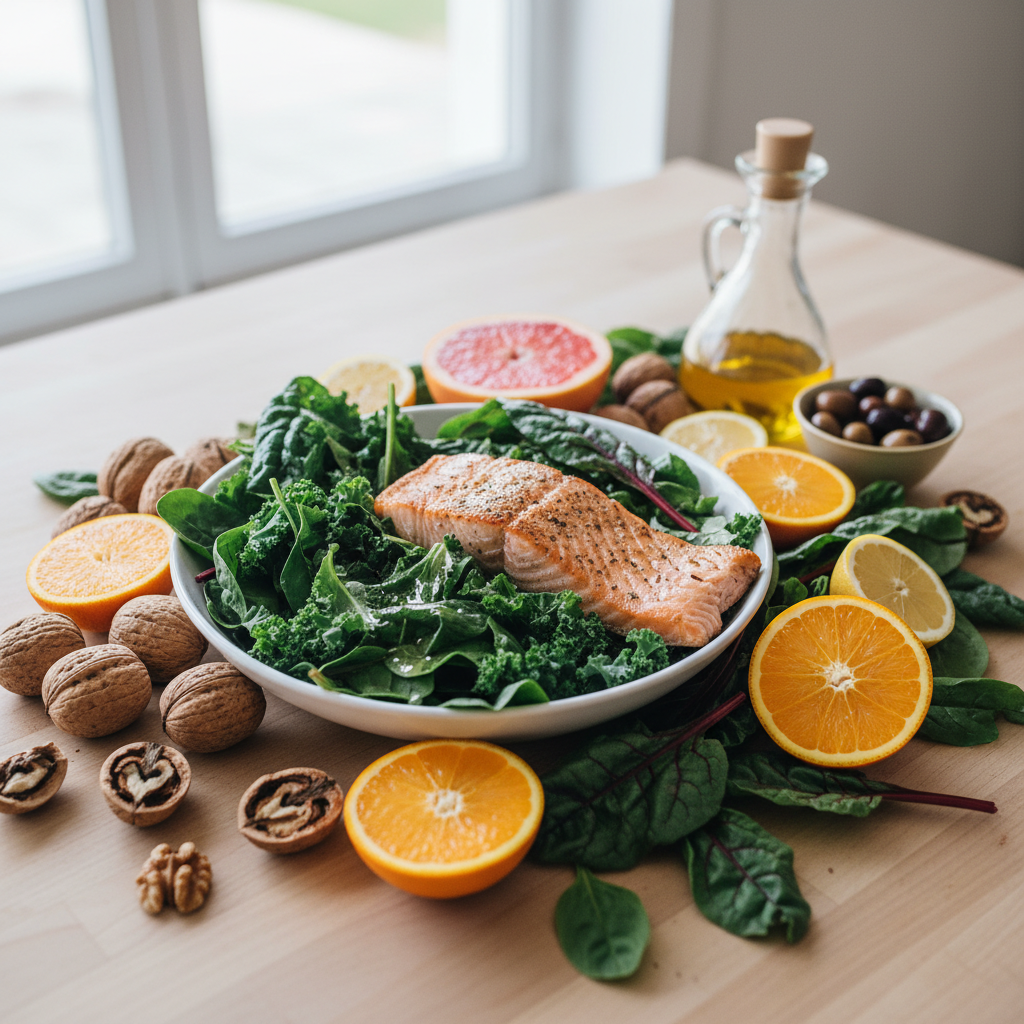
| Lutein | Increases Macular Pigment Optical Density (MPOD) | Requires dietary lipids for absorption | Egg Yolks, Kale |
| Omega-3 | Improves Tear Film Break-Up Time (TBUT) | Balanced with Omega-6 | Algal Oil, Walnuts |
| Zinc | Melanin production in the retina | Balanced with Copper | Oysters, Pumpkin Seeds |
| Vitamin C | Collagen synthesis for scleral stability | Bioflavonoids | Citrus, Bell Peppers |
Clinical Red Flags: TBUT and Systemic Inflammation
In a clinical setting, a practical heuristic for assessing systemic health is the Tear Film Break-Up Time (TBUT). During an eye exam, if a practitioner observes a consistently poor TBUT—meaning the tear film evaporates in less than 10 seconds—in the absence of excessive screen use, it can be a red flag for systemic inflammation.
Poor tear quality is often the "canary in the coal mine" for the ocular surface. When the gut is inflamed, the body's mucous membranes, including the conjunctiva of the eye, may become less efficient at producing the lipid layer necessary to prevent tear evaporation.
The "Smart Buyer" Insight: Material Sensitivity
Patients with dry eye or systemic inflammatory conditions are often more sensitive to lens materials and coatings. Based on common patterns from customer support and warranty handling, individuals with ocular surface sensitivity often report discomfort with standard plastic lenses due to internal reflections and glare, which can exacerbate visual strain.
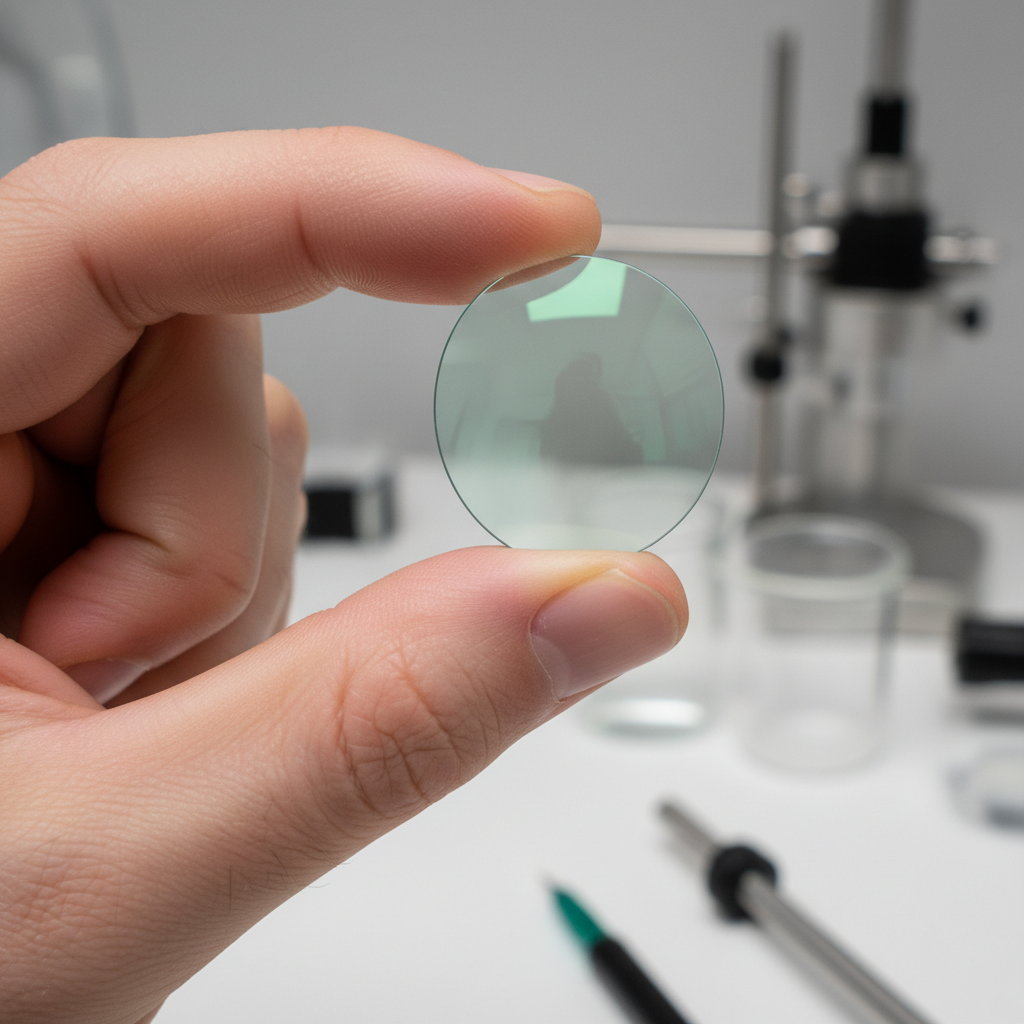
For these populations, high-index lenses with premium anti-reflective (AR) coatings are frequently recommended. High-index materials, such as those discussed by Ferris State University, are thinner and lighter, reducing the physical weight on the bridge of the nose, which can be a source of irritation for those with sensitive skin or inflammatory markers.
Advanced Lens Technology as a Support Tool
While nutrition works from the inside out, advanced lens technology protects the eye from the outside in. For those dealing with vision fluctuations or sensitivity, the precision of the lens becomes paramount.
Minimizing Adaptation Stress
The adjustment period for new lenses can be longer for individuals with systemic sensitivities. This emphasizes the need for precise Pupillary Distance (PD) and optical center measurements. Even a minor misalignment can create "induced prism," leading to headaches and eye strain that a sensitive nervous system will struggle to filter out.
Using tools to ensure accurate measurements is a critical step for the Smart Buyer. Furthermore, understanding how lens curvature affects high prescription vision helps in selecting frames that minimize peripheral distortion.
The Role of Blue Light and Circadian Health
The gut-eye axis also interacts with our circadian rhythms. Blue light exposure in the evening can suppress melatonin production, which not only affects sleep but also gut motility and repair. While blue light glasses are often marketed for eye strain, their primary clinical utility for the Smart Buyer lies in sleep hygiene and circadian management. According to Harvard Health, blocking the 450–480 nm spectrum after dusk helps prevent melatonin suppression, supporting the body's natural healing processes—including those in the gut.
Scenario Analysis: Stabilizing Your Vision
To better understand how to apply these insights, consider the following two scenarios based on common consumer profiles.
Scenario A: The Stable Professional
- Profile: 30-year-old with a stable -3.00D prescription, low screen time, and a balanced diet.
- Recommendation: Standard CR-39 or 1.56 index lenses with a basic AR coating. Focus on maintaining current habits and annual check-ups.
- Goal: Maintenance of existing ocular health.
Scenario B: The Fluctuating "Smart Buyer"
- Profile: 45-year-old with a history of IBS, frequent prescription changes (+/- 0.50D), and significant digital eye strain.
- Recommendation: 1.61 or 1.67 high-index lenses with a premium, multi-layer anti-reflective coating.
- Systemic Action: Increase intake of Magnesium and Vitamin D (after consultation with a physician) and adopt a Mediterranean-style diet to reduce systemic inflammation.
- Goal: Stabilize the refractive environment by addressing both external visual stress and internal inflammatory markers.
Methodology Note: These scenarios are modeled based on typical clinical observations of patient adherence and comfort reports. They are intended as a decision-making framework, not a medical diagnosis.
Practical Steps for Long-Term Vision Wellness
- Prioritize the Mediterranean Diet: Research from the American Academy of Ophthalmology (AAO) suggests that high adherence to a Mediterranean diet can reduce the risk of late-stage AMD by up to 40%. This diet is naturally anti-inflammatory and supports a healthy gut microbiome.
- Monitor Your TBUT: If your eyes feel "gritty" or dry despite using safe reading glasses, consult an eye care professional about your tear film quality and potential systemic links.
- Optimize Your Lens Specs: For those with high prescriptions or visual sensitivities, don't settle for "basic" lenses. High-index materials with premium coatings reduce the "visual noise" that your brain has to process, leading to better long-term wear adherence.
- Leverage the "20-20-20 Rule": To combat digital eye strain, every 20 minutes, look at something 20 feet away for 20 seconds. This simple habit, recommended by the Cleveland Clinic, reduces accommodative stress.
Implications for the Future of Eye Care
The convergence of nutritional science and optical technology marks a new era for vision health. We are moving away from seeing the eye as a mechanical camera and toward viewing it as a biological sensor deeply integrated with our systemic health. For the Smart Buyer, the investment is no longer just in a pair of frames, but in a comprehensive lifestyle strategy that protects the gut, reduces inflammation, and utilizes the best available lens technology to ensure vision remains stable and clear for decades to come.
Disclaimer: This article is for informational purposes only and does not constitute professional medical advice, diagnosis, or treatment. Always seek the advice of your physician or other qualified health provider with any questions you may have regarding a medical condition.
Sources
- AREDS2 Research: National Eye Institute
- Gut-Eye Axis: PMC7551870 via PubMed
- Nutrients and Myopia: PMC10823653 via PubMed Central
- High-Index Materials: Ferris State University
- Blue Light and Sleep: Harvard Health Publishing
- Mediterranean Diet and AMD: American Academy of Ophthalmology
- Vitamin D and Magnesium Synergy: PMC11913715 via PubMed Central


