






The Hidden Eye Damage from Uncertified Sunglasses
TL;DR: How Uncertified Sunglasses Can Harm You
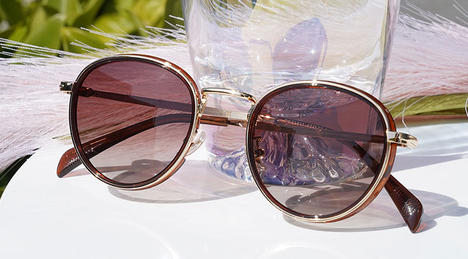
Many cheap or counterfeit sunglasses offer little to no ultraviolet (UV) protection, even if the lenses are dark. This is dangerous because the dark tint makes your pupils dilate, allowing more damaging UV radiation to enter your eye than if you wore no glasses at all. This exposure is linked to serious conditions like cataracts, eyelid cancers, and "surfer's eye" (pterygium). True safety comes from lenses certified to block 99-100% of UV rays up to 400 nanometers—the standard known as "UV400."
The Darkness Myth: Why a Dark Tint Can Be a Trap
A common and dangerous misconception is that the darkness of a sunglass lens is a measure of its UV protection. In reality, tint is designed to reduce visible light, easing glare and improving comfort, but it has no inherent relationship to blocking invisible UV radiation. This creates a significant risk.
Your pupil naturally constricts in bright light to limit the amount of light entering the eye. As noted by experts at the MD Anderson Cancer Center, when you wear dark lenses without adequate UV filtering, you trick your pupils into opening wide. This dilated state allows a flood of unfiltered UVA and UVB radiation to penetrate the eye, potentially causing more harm than wearing no sunglasses at all.
True protection comes from specific chemical coatings or inherent properties of the lens material that absorb or reflect UV photons. That's why a pair of perfectly clear lenses with a UV400 rating offers superior protection to dark, uncertified lenses.
The Anatomy of Eye Damage: What UV Radiation Really Does
UV radiation is a scientifically recognized cause of several serious and irreversible eye conditions. The damage is cumulative, meaning it builds up over your lifetime, which is why the Mayo Clinic advises that children should start wearing protective sunglasses as early as age six months.
Here’s how UV light affects your eyes:
- Photokeratitis: Often called a "sunburn of the cornea," this is a painful, temporary condition caused by intense, short-term UV exposure, common in snow or water environments. Symptoms include pain, redness, and a gritty feeling in the eyes.
- Cataracts: This clouding of the eye's natural lens is strongly associated with a lifetime of UVB exposure. A comprehensive review published in Photochemistry and Photobiology confirms that chronic sun exposure is a primary risk factor for the development of cortical cataracts.
- Pterygium ("Surfer's Eye"): This is a fleshy growth on the white of the eye that can advance over the cornea and interfere with vision. It is directly linked to UV exposure, particularly from light reflecting off water. Research highlights a phenomenon known as the "Coroneo Effect," where unframed sunglasses allow peripheral light to focus onto the nasal side of the eye, a common site for these growths.
- Eyelid Cancers: The delicate skin on and around the eyelids is highly susceptible to UV damage. According to MD Anderson, about 90% of cancers in this area are basal cell carcinomas, directly linked to sun exposure.

Expert Warning: The Widespread Doubt Fueling Risk
Why do so many people still wear unsafe eyewear? A study in the medical journal PMC provides a critical insight: researchers found that among people who don’t wear sunglasses, nearly half (47%) cited "uncertainty in the efficiency of UV protection" as the main reason. Consumers are rightfully confused and skeptical of marketing claims, unable to distinguish between genuinely protective glasses and cheap, ineffective ones. This trust gap is a major public health challenge. It underscores the need for consumers to learn how to verify claims rather than relying on a sticker price or a dark tint.
Your Verification Checklist: How to Confirm Real UV Protection
Navigating the market requires a bit of knowledge. Not all labels are trustworthy, and some standards are better than others. Use this checklist to ensure you are buying genuinely protective eyewear.
| Verification Step | What to Look For | Why It Matters |
|---|---|---|
| 1. Check the Label | Look for a sticker or tag that explicitly states "UV400" or "100% protection against UVA and UVB." | This is the most important feature. UV400 means the lenses block all light rays with wavelengths up to 400 nanometers, which covers the entire spectrum of UVA and UVB rays. |
| 2. Demand the Standard | Ask if the glasses conform to ANSI Z80.3 (in the U.S.) or EN ISO 12312-1 (in Europe). Reputable sellers can provide this. | These standards regulate UV filtration and optical quality. Compliance ensures the product has been properly tested. |
| 3. Understand the "400nm Gap" | Prefer UV400 over older "UV380" or generic "UV blocking" claims. | As a technical report in the journal PubMed points out, older standards that only measure to 380 nm miss a significant portion of high-energy UVA light. The 380-400 nm range contains up to 45% more solar energy, making UV400 a medically necessary standard, not just a marketing term. |
| 4. Test Optical Quality | The American Academy of Ophthalmology suggests a simple test: look at a rectangular pattern, like floor tiles. Cover one eye and move the glasses. If the lines wiggle or distort, the optical quality is poor. | Lenses with poor optical quality can cause eye strain and headaches. |
| 5. Get a Professional Test | For ultimate certainty, take your sunglasses to an optical shop. Most have a UV photometer and can test your lenses, often for free. | This is the only way to be 100% certain about the UV-blocking capabilities of your glasses, especially if you are skeptical of the label. |
Beyond the Lenses: Why Frame Fit and Material Matter
Even a perfect UV400 lens can fail if your frames aren't right. A groundbreaking study published in PMC used 3D head-forms with UV sensors to measure actual radiation reaching the eye. The findings were clear: the amount of protection is heavily dependent on frame geometry.
- The Danger of Peripheral Leakage: The study found that "middle-sized" sunglasses offered the least protection because they allowed significant UV leakage from the top and sides. Your best defense is a frame that sits close to your face.
- Choose Wraparound or Oversized Styles: The American Optometric Association (AOA) recommends large or wraparound-style frames to cut down on peripheral light that can sneak in from the sides.
Lens material is also a critical factor. According to insights from optical experts, modern polycarbonate and Trivex lenses have UV protection embedded directly into the material itself. This is superior to cheaper plastic lenses that rely on a thin coating, which can scratch or degrade over time, compromising safety.
Frequently Asked Questions (FAQ)
Are more expensive sunglasses always better?
Not necessarily. Price is often tied to brand name, frame materials, and design—not UV protection. A certified, affordable pair of UV400 sunglasses is far safer than a non-certified luxury pair. The key is verification, not price.
When should I replace my sunglasses?
Research has shown that lens coatings can degrade over time with prolonged exposure to sunlight, a process known as photobleaching. If your lenses are visibly scratched, or if they are several years old and have seen heavy use, it is wise to replace them to ensure protective efficacy.
Can I get UV protection in my clear prescription glasses?
Yes. Most modern prescription lenses made from polycarbonate or high-index materials have built-in UV400 protection. You can also add a UV-protective coating. For comprehensive protection, consider a backside anti-reflective coating that also absorbs UV rays, preventing them from reflecting off the back of the lens into your eye. For more on this, see our guide on lens coatings you need for a strong prescription.
What is the difference between polarized and UV-protective lenses?
This is a crucial distinction. Polarization is a filter that only blocks horizontal glare, which is reflected light from surfaces like water or roads. UV protection blocks harmful radiation from the sun. The two are completely separate features. A lens can be polarized but offer no UV protection, making it dangerous. Always verify UV400 protection independently. Learn more in our Polarized vs. Non-Polarized Rx Sunglasses guide.
Disclaimer: This article is for informational purposes only and does not constitute professional medical advice. Consult with a qualified eye care professional for any concerns about your eye health, especially if you have pre-existing conditions.
References
- American Academy of Ophthalmology (AAO): "Choosing the Best Sunglasses"
- American Optometric Association (AOA): "UV Protection"
- Harvard Health Publishing: "Polarized Sunglasses: Protecting Your Eyes from Harmful Glare"
- MD Anderson Cancer Center: "9 Things to Know About Sunglasses"
- Mayo Clinic: "Why Sunglasses Are a Must-Wear"
- PMC (NCBI): "Ocular UV Dosimetry & Frame Geometry"
- PubMed (NCBI): "Solar UV Protection Technical Report (Cole BL)"
- PMC (NCBI): "Public Awareness of UV Harm (Bakkar et al.)"


