






Can Any Sunglass Frame Take a High Prescription?
TL;DR: Can Any Sunglass Frame Take a High Prescription?
No, not every sunglass frame is suitable for a high prescription. The ideal frames are generally smaller, rounder, and have a flat front (low base curve). Large, oversized, or highly curved "wraparound" styles present significant challenges for strong lenses, often leading to visual distortion, thick and heavy glasses, and a poor fit. Choosing the right frame is just as crucial as selecting the right lenses for a comfortable and clear visual experience.
You’ve found the perfect pair of sunglasses—the style is exactly what you want. But when you have a strong prescription, a critical question follows: can these frames actually handle my lenses? The answer, unfortunately, is not always yes.
For those with high refractive errors, the physics of lens design imposes real-world limits on frame selection. Pushing a powerful lens into an incompatible frame can lead to distorted vision, uncomfortable weight, and poor aesthetics. This guide breaks down the technical limitations, explaining why frame curvature, size, and material are critical for anyone with a high prescription. We'll give you the expert knowledge to choose sunglasses that not only look great but also perform flawlessly.
Why High Prescriptions Have Special Frame Requirements
A prescription lens works by bending light to focus it correctly onto your retina. The stronger the prescription, the more light-bending power is needed, which directly impacts the lens's shape and thickness. This is the fundamental reason why frame choice becomes so critical.
The Physics of Lens Thickness
Understanding your prescription is the first step. Prescriptions are measured in diopters (D) and fall into two main categories:
- Myopia (Nearsightedness): If you have trouble seeing distant objects, you have a "minus" (-) prescription. These lenses are thinnest at the center and thickest at the edges. The higher the number (e.g., -5.00D, -8.00D), the thicker the outer edge becomes.
- Hyperopia (Farsightedness): If you struggle with near vision, you have a "plus" (+) prescription. These lenses are thickest at the center and taper off at the edges. The higher the number (e.g., +4.00D, +6.00D), the more pronounced the center bulge.
This inherent thickness is what we need to manage. A frame that is too large will require a larger lens blank, dramatically increasing either the edge thickness (for myopia) or the center thickness and weight (for hyperopia).
High-Index Materials: The First Line of Defense
The primary tool for managing lens thickness is the use of high-index lens materials. As explained by Ferris State University's College of Optometry, these advanced plastics have a higher refractive index (e.g., 1.67, 1.74) compared to standard plastic (1.50). This means they can bend light more efficiently.
Why it matters to you: A more efficient material allows the lens to be made significantly thinner and lighter, providing better comfort and a more attractive appearance. For prescriptions stronger than ±4.00D, a high-index lens is not just an upgrade; it's a necessity.

Visual Distortion and the "Magnifying Glass" Effect
High-prescription lenses can sometimes distort the appearance of your eyes to others. High minus lenses can make your eyes look smaller, while high plus lenses can create a magnified, "bug-eye" look. While advanced aspheric lens designs can help reduce this distortion, the size and shape of your frame play a huge role in minimizing these effects.
Frame Characteristics That Matter Most
Once you've committed to high-index lenses, the focus shifts to the frame itself. Certain design features are either ideal or completely unsuitable for strong prescriptions.
Frame Size and Shape: Smaller is Better
This is the golden rule I share with my clients. For high-prescription wearers, smaller, rounder, or more oval-shaped frames are vastly superior to large, rectangular ones.
- For Myopia (-): A smaller frame allows the lab to use the central, thinnest part of the lens blank, cutting away the thickest parts of the edge. This can reduce the final edge thickness by several millimeters.
- For Hyperopia (+): A smaller frame reduces the overall diameter of the lens needed, which directly cuts down on the center thickness, weight, and magnification.
A well-chosen smaller frame can make a -8.00D lens look as neat as a -4.00D in an oversized frame. This is often the single most impactful choice you can make.
The Challenge of Wraparound and Highly Curved Frames
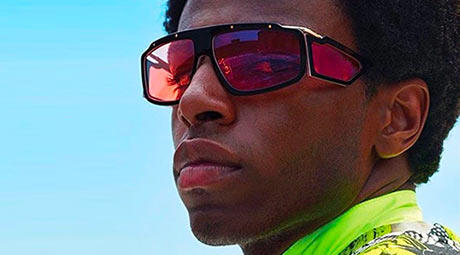
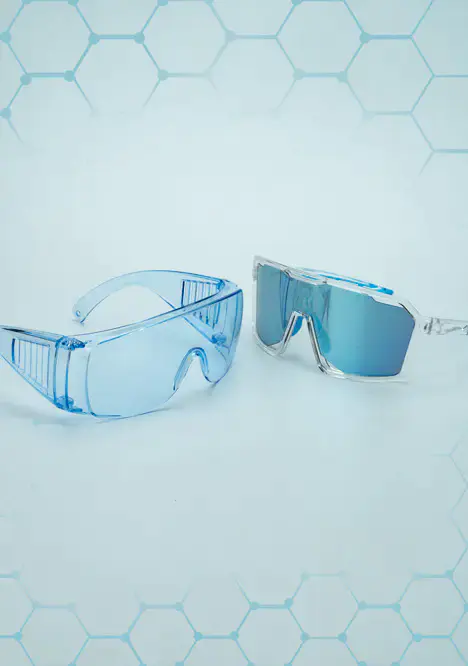
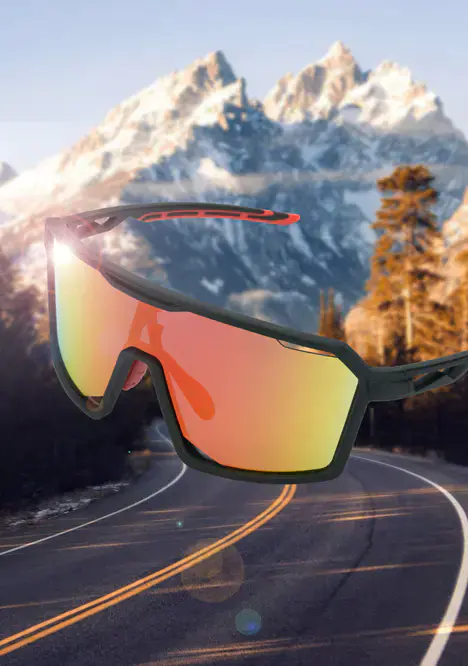
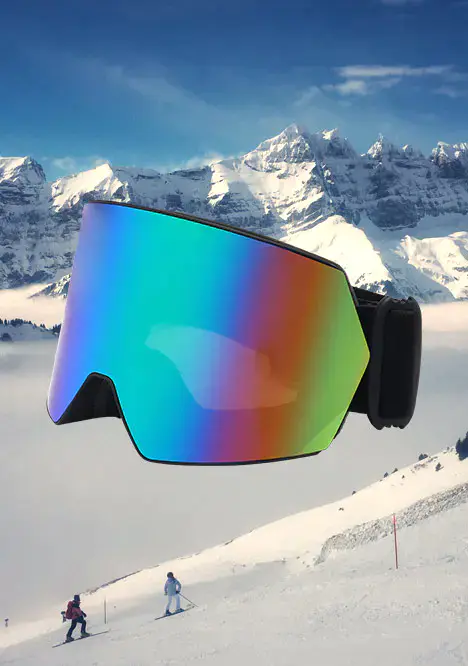
Many popular sunglass styles, especially for sports, feature a high "base curve," meaning the frame front is significantly curved to wrap around the face. While stylish and great for peripheral coverage, these frames are notoriously difficult for high prescriptions.

Fitting a strong prescription into a high-wrap frame can induce what opticians call "prismatic effect" or "power error," leading to distorted vision, eyestrain, and even a swimming sensation. It requires specialized digital lens surfacing to compensate, which is complex and not always successful for very high powers or prescriptions with significant astigmatism. For the best visual clarity, a flatter frame front (a base curve of 4 or less) is a much safer bet.
Frame Material and Rim Construction
The material and structure of the frame determine its ability to securely hold a potentially thicker or heavier lens.
- Full-Rim Frames (Acetate or Metal): These are the best choice. A sturdy, full rim provides a deep groove (bevel) that holds the entire edge of the lens securely. Acetate frames are particularly good at concealing edge thickness.
- Semi-Rimless or Rimless Frames: These are challenging. Semi-rimless frames leave the bottom edge of the lens exposed, making edge thickness highly visible. Rimless frames require drilling into the lens itself, which can be a point of stress and potential fracture, especially with thinner high-index materials.
Frame Suitability for High Prescriptions: A Quick Guide
| Frame Style | Best For High Rx? | Key Considerations |
|---|---|---|
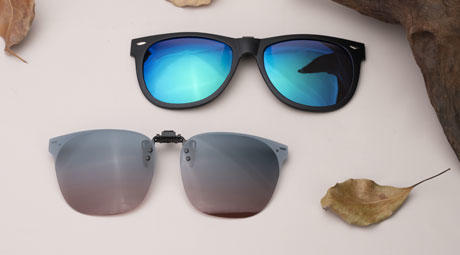
| Classic Wayfarer | Yes | Sturdy, full-rim, and relatively flat. Excellent for concealing edge thickness. |
| Round / Panto | Yes | The ideal shape for minimizing both edge and center thickness. |
| Aviator | With Caution | Often large and thin-rimmed, which can expose lens thickness. Choose smaller sizes. |
| Cat-Eye | It Depends | Smaller, upswept styles can work well. Avoid oversized or very angular versions. |
| Wraparound / Sport | Not Recommended | High base curve causes significant distortion issues for strong prescriptions. |
| Rimless / Drilled | Not Recommended | Lacks support and exposes lens edges; risk of lens chipping or cracking. |
Expert Warning: Debunking a Common Myth
Myth: A skilled optical lab can fit any lens into any frame I choose.
Reality: While technicians are highly skilled, they cannot defy the laws of physics. Forcing a high-power lens into a deeply curved or oversized frame creates stress on the lens and compromises its optical integrity. This can lead to poor visual acuity and may even prevent the lens from meeting mandatory safety standards. According to the FDA, all spectacle lenses sold in the U.S. must be impact-resistant, and improperly mounting a lens can compromise this safety feature. The best approach is always to select a frame that is inherently compatible with your prescription from the start.
A Practical Checklist for Choosing High-Prescription Sunglasses
Feeling empowered? Use this step-by-step checklist to guide your search for the perfect pair.
- Start With Your Prescription: Have your full, current prescription ready, including your Sphere (SPH), Cylinder (CYL), Axis, and Pupillary Distance (PD). For powers above ±4.00D, a precise PD measured by a professional is non-negotiable.
- Commit to High-Index Lenses: Don't consider standard plastic. Select a high-index material (1.67 or 1.74) to ensure your lenses are as thin and light as possible.
- Filter by Frame Shape First: Begin your search by looking for frames that are smaller and have rounded or oval lens shapes. Think about how closely the lens shape follows the shape of your eye socket.
- Check the Frame Curve: Avoid high-wrap styles. A good test is to place the sunglasses upside down on a table; a suitable frame will lie relatively flat.
- Favor Full-Rim Construction: Prioritize sturdy acetate or full-metal frames that will support and conceal the lens edges effectively.
- Consider Lens Add-Ons: An Anti-Reflective (AR) coating is highly recommended for high-index lenses, as they reflect more light than standard plastic. This improves both visual clarity and the cosmetic appearance of your glasses.
Wrapping Up: Frame Choice is Optical Choice
Choosing sunglasses with a strong prescription isn't just about fashion; it's a technical decision. The frame is not merely a holder for your lenses—it's an integral part of the optical system. By prioritizing smaller, flatter, and sturdier frames, you set yourself up for success.
This doesn't mean you have to sacrifice style. It means shopping smarter, armed with the knowledge of what works best for your visual needs. By understanding the relationship between your prescription and the frame's design, you can confidently select sunglasses that deliver exceptional clarity, comfort, and style. For more advice on getting used to new high-power glasses, see our guide to finding a comfortable fit.
Frequently Asked Questions (FAQ)
What is considered a "high" prescription?
Generally, a spherical (SPH) power of ±4.00D or higher, or a cylinder (CYL) power for astigmatism of ±2.00D or higher, is considered to be in the high-prescription range where lens thickness becomes a significant factor in frame selection.
Can I get progressive lenses in wraparound sunglasses?
This is extremely challenging and generally not recommended. The combination of a high prescription, the variable power of a progressive lens, and the distortion from a high-wrap frame often results in a very narrow field of clear vision and a frustrating user experience.
Do mirrored or colored tints affect my prescription?
No. Tints, mirror coatings, and polarization are surface treatments that do not change the corrective power of the lens. They are applied after the prescription has been ground into the lens.
Are glass lenses a better option for high prescriptions?
While glass offers excellent optical clarity, it is significantly heavier than modern high-index plastics and performs poorly on impact resistance tests. For safety and comfort, high-index plastic lenses are the standard and recommended choice for nearly all prescriptions.
Disclaimer: This article is for informational purposes only and does not constitute medical advice. Consult with a qualified optometrist or ophthalmologist to determine the best eyewear solution for your specific visual needs.
References
- Ferris State University. (n.d.). High Index Lenses. College of Optometry. Retrieved from https://www.ferris.edu/optometry/patient-care/lensmaterial/high-Index-Lenses.htm
- U.S. Food and Drug Administration. (2021). Impact-Resistant Lenses: Questions and Answers. FDA.gov. Retrieved from https://www.fda.gov/regulatory-information/search-fda-guidance-documents/impact-resistant-lenses-questions-and-answers


