



How Many Hours a Day Is It Safe to Wear Contact Lenses?
How Many Hours a Day Is It Safe to Wear Contact Lenses?
The standard advice for contact lens wear is a straightforward 8 to 12 hours per day. However, this is more of a general guideline than a strict rule. The true answer is highly personal and depends on a combination of your lens technology, your daily environment, and your unique eye health.
This article provides a detailed framework to help you determine your personal safe wear time. We will explore the science behind the limits, the factors you must consider, and the warning signs of overwear that you should never ignore.
TL;DR: Your Safe Contact Lens Wear Time
- The Baseline: For most people, 8-12 hours is a safe starting point.
- Modern Lenses: Silicone hydrogel lenses often allow for longer, more comfortable wear (up to 16 hours in some cases) because they let more oxygen reach the eye.
- Listen to Your Eyes: The ultimate rule is comfort. If your eyes become red, blurry, dry, or painful, it's time to take your lenses out, regardless of how long you've had them in.
- Never Sleep in Lenses: Unless prescribed specific overnight lenses, sleeping in daily wear contacts increases the risk of serious eye infections by more than eightfold.
The Science Behind Wear Time: Why Your Eyes Need to Breathe
Your cornea—the clear, dome-shaped front surface of your eye—is one of a few parts of the body that gets most of its oxygen directly from the air, not from blood vessels. A contact lens sits on top of the cornea, acting as a partial barrier.
The key to safe, extended wear is a concept called oxygen permeability. This measures how much oxygen can pass through the lens material to reach the cornea. Insufficient oxygen, a state known as hypoxia, can lead to several complications:
- Corneal Swelling (Edema): The cornea can swell, causing blurry or hazy vision.
- Neovascularization: In response to chronic oxygen deprivation, your eye may grow new, fragile blood vessels into the cornea to supply oxygen. According to a comprehensive review in Cureus, this can interfere with vision and compromise the cornea's health.
- Increased Infection Risk: A-hypoxic cornea is more vulnerable to bacteria and other pathogens. The Centers for Disease Control and Prevention (CDC) explicitly states that improper lens wear is a major risk factor for microbial keratitis, a severe and potentially blinding infection.
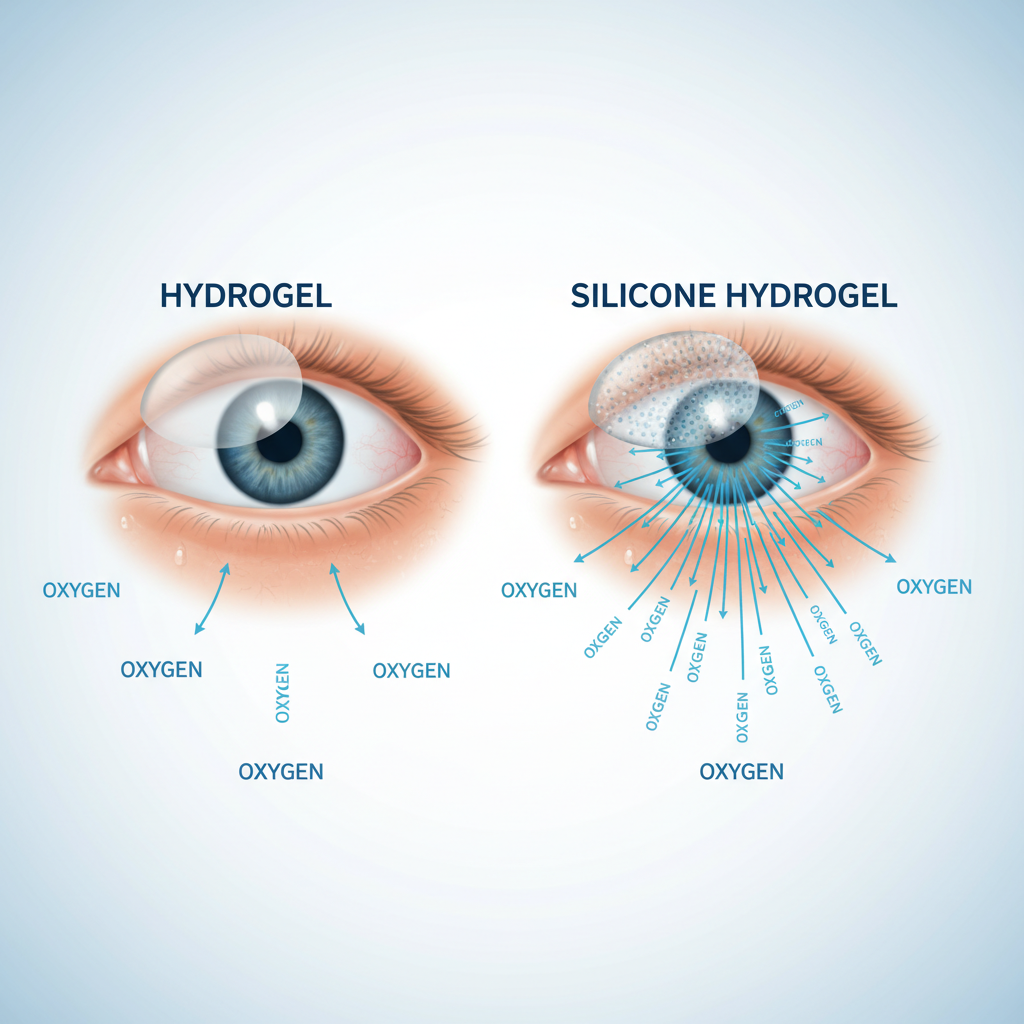
Modern contact lenses have made significant strides in addressing this. Early soft lenses were made of hydrogel polymers, which held water to stay comfortable but had limited oxygen permeability. Today’s advanced silicone hydrogel (SiHy) lenses incorporate silicone, which creates microscopic channels for oxygen to pass through far more efficiently, allowing for longer and healthier wear.
Key Factors That Determine Your Personal Wear Limit
Your ideal wear time isn't just about the lens itself. It’s an interplay between technology, environment, and your personal biology.
1. Your Lens Type and Material
- Silicone Hydrogel (SiHy) Lenses: These are the current standard for most daily and monthly disposable lenses. Their high oxygen permeability is what allows for a potential wear time of up to 16 hours under ideal conditions.
- Hydrogel Lenses: While less common now, some specialty or older-generation lenses are still made of hydrogel. These typically have a shorter recommended wear time, often maxing out around 8 hours, due to lower oxygen transmission.
- Rigid Gas Permeable (RGP) Lenses: These "hard" contacts are smaller and move more on the eye, allowing tears (which carry oxygen) to circulate underneath. Their wear time varies greatly among individuals.
2. Your Daily Environment
Where you spend your day has a massive impact on lens comfort.
- Office and Air Travel: Dry, air-conditioned spaces are notorious for causing lens discomfort. Low humidity accelerates the evaporation of tears from the lens surface, leading to dryness and a gritty feeling.
- Digital Screen Use: When we stare at screens, our blink rate can drop by more than half. Blinking is what re-moistens the lens surface. Reduced blinking leads directly to discomfort and is a primary cause of "end-of-day" dryness.
- Seasonal Changes: Many wearers find their lenses are comfortable in the humid summer months but become irritating during the dry winter. This requires proactive adjustments, such as more frequent use of rewetting drops.
3. Your Individual Eye Health
No two pairs of eyes are the same. Pre-existing conditions can significantly shorten your comfortable wear time.
- Dry Eye Syndrome: If you naturally produce fewer or lower-quality tears, you will struggle with lens wear.
- Allergies: Seasonal or environmental allergies can cause inflammation and deposits on the lens surface, making them feel scratchy and uncomfortable.
- Blepharitis: Inflammation of the eyelids can introduce debris and bacteria into the tear film, complicating lens wear.
As outlined in the StatPearls clinical overview on contact lenses, certain conditions are absolute contraindications, meaning you should not wear contacts at all. This is why a professional fitting and annual eye exams are non-negotiable.
4. Your Hygiene Habits
This is the factor you have the most control over. Poor hygiene can turn a safe medical device into a serious health risk. A study published in the CDC's Morbidity and Mortality Weekly Report found that a staggering 99% of wearers reported at least one hygiene risk behavior.
The most critical rule is to never reuse daily disposable lenses. A microbiological study found that 95% of reused daily disposable lenses stored in their original blister pack saline were contaminated with bacteria.

A Practical Self-Assessment: The Four-Hour Check
Experienced eye care practitioners often use a simple heuristic to distinguish between a poor lens fit and simple overwear: the "Four-Hour Check."
If you experience significant dryness, redness, or discomfort within the first four hours of putting your lenses in, the problem is likely not that you've worn them too long. Instead, it points to an underlying issue:
- The lens fit (curvature or diameter) is wrong for your eye.
- You are having a reaction to your cleaning solution.
- You have an underlying dry eye or allergy issue that needs to be addressed.
If, however, your lenses feel great for the first 8-10 hours and only then begin to feel dry or tired, you are likely just reaching your personal daily limit.
Warning Signs of Overwear
Your body will tell you when it's time to stop. According to the U.S. Food and Drug Administration (FDA), you should remove your lenses immediately if you experience any of the following:
- Redness or irritation
- Unusual pain or a "gritty" feeling
- Blurred or hazy vision that doesn't clear with blinking
- Watery eyes or unusual discharge
- Sensitivity to light (photophobia)
Ignoring these signs and continuing to wear your lenses is a dangerous gamble.
Frequently Asked Questions (FAQ)
1. What should I do if I accidentally fall asleep in my contacts? Remove them as soon as you wake up. Your eyes will likely feel very dry, and the lens may be stuck to your cornea. Use sterile saline or preservative-free rewetting drops to lubricate the eye before attempting to remove the lens. Do not wear lenses for the rest ofthe day to give your eyes a chance to recover. If you experience significant pain, redness, or vision changes, contact your eye doctor immediately.
2. Can I wear my contacts for 16 hours straight? While some modern silicone hydrogel lenses may allow for this on occasion for someone with perfectly healthy eyes in an ideal environment, it should not be your daily routine. Consistently pushing your wear time to the absolute maximum leaves no margin for error and can lead to chronic inflammation and intolerance to contact lenses over time.
3. Do daily disposables have a different wear time than monthly lenses? Not necessarily. The safe wear time is dictated by the lens material (e.g., silicone hydrogel) and your individual eye health, not the replacement schedule. The primary benefit of daily disposables is hygiene; starting with a fresh, sterile lens every day dramatically reduces the risk of deposit buildup and infections. This often translates to better end-of-day comfort.
4. Why do my contacts get blurry in the afternoon? This is a classic sign of either dryness or deposits. As the lens dehydrates, its shape can change slightly, affecting the clarity of your vision. Protein and lipid deposits from your tears can also build up on the lens surface throughout the day, creating a hazy film. A midday "refresh"—removing, rinsing, and reinserting your lenses (if they are not dailies)—or using rewetting drops can often solve this problem.
Disclaimer: This article is for informational purposes only and does not constitute professional medical advice. Always consult with a qualified eye care professional for any health concerns or before making any decisions related to your vision or contact lens wear.
References
- Centers for Disease Control and Prevention (CDC). (2022). Contact Lens Care Systems & Solutions. https://www.cdc.gov/contactlenses/care-systems.html
- U.S. Food and Drug Administration (FDA). (2018). Contact Lens Risks. https://www.fda.gov/medical-devices/contact-lenses/contact-lens-risks
- Cope, J. R., Collier, S. A., et al. (2017). Contact Lens Wearer Demographics and Risk Behaviors for Contact Lens-Related Eye Infections — United States, 2014. Morbidity and Mortality Weekly Report, 66(32), 841–845. https://pmc.ncbi.nlm.nih.gov/articles/PMC5779588/
- Willcox, M. D. P., Keir, N., et al. (2021). CLEAR - Contact lens material, design and methods of wear. Contact Lens and Anterior Eye, 44(2), 1-33. https://pmc.ncbi.nlm.nih.gov/articles/PMC6356913/
- Paugh, J. R., Stapleton, F., et al. (1993). The excess risk of ulcerative keratitis associated with contact lens wear. PubMed, 8311770. https://pubmed.ncbi.nlm.nih.gov/8311770/


