










Hydration and Vision: How Water Intake Eases Screen Strain
Executive Summary
Maintaining visual clarity during prolonged screen use involves more than just selecting the right lens coating; it requires a fundamental understanding of systemic hydration and its impact on ocular physiology. This article explores the biological mechanisms linking water intake to tear film stability, the role of electrolytes in maintaining ocular osmolarity, and how these internal factors synergize with external tools like blue-light filtering technology.
Key findings include the "1-2-3 Rule" for office workers to align hydration with peak evaporative demand and the critical distinction between using blue-light filters for circadian health versus digital eye strain. By combining evidence-based hydration protocols with targeted nutritional support and high-quality optics, professionals can mitigate the physiological stressors of the digital workplace.
The Physiological Link: How Hydration Powers Vision
The human eye is encased in a delicate fluid environment that must be precisely regulated to maintain transparency and refractive power. The cornea, the eye's outermost lens, lacks blood vessels and relies on the tear film for oxygenation, lubrication, and the removal of metabolic waste. When systemic hydration levels drop, the volume and quality of this tear film are compromised.
The Tear Film and Ocular Osmolarity
The tear film is composed of three distinct layers: an inner mucin layer, a middle aqueous (water) layer, and an outer lipid (oil) layer. Systemic dehydration primarily affects the aqueous layer. As water volume decreases, the concentration of salts and proteins in the tears increases—a state known as hyperosmolarity.
According to research detailing Contact Lens Risks and Corneal Health, maintaining a stable ocular surface is essential to prevent the "gritty" feeling and light sensitivity often mistaken for simple tiredness. Hyperosmolarity triggers an inflammatory response on the ocular surface, leading to the stinging and redness associated with dry eye syndrome.
The "Trombone Effect" and Accommodative Stress
Dehydration can also subtly affect the lens's ability to change shape, a process known as accommodation. While Presbyopia is a natural hardening of the lens due to age, acute dehydration can exacerbate the "trombone effect"—the need to move screens or reading material back and forth to find focus. This increases the workload on the ciliary muscles, leading to faster onset of fatigue during screen-heavy tasks.

Digital Eye Strain: The Blink Rate Paradox
It is a common misconception that screens emit a "toxic" level of light that causes immediate strain. Clinical consensus, including insights from Ophthalmologist Dr. Nicole Bajic at the Cleveland Clinic, clarifies that Digital Eye Strain (DES) is largely a behavioral issue rather than a phototoxic one.
Reduced Blink Rate
Under normal conditions, humans blink approximately 15–20 times per minute. However, when focusing on digital displays, this rate can drop by up to 66%. This "staring" behavior prevents the eyelid from redistributing the tear film across the cornea, leading to rapid evaporation.
The Evaporation-Hydration Gap
When a reduced blink rate is combined with low systemic hydration, the eye enters a "deficit" state. The tear film evaporates faster than the body can replenish the aqueous layer. This is why many office workers experience worsening symptoms as the day progresses, regardless of the quality of their monitors or lighting.
Logic Summary: Our analysis of digital eye strain assumes that environmental factors (air conditioning, low humidity) and behavioral factors (reduced blink rate) create a cumulative "evaporative demand" that systemic hydration must counteract.
| Factor | Impact on Ocular Surface | Physiological Result |
|---|---|---|
| Reduced Blink Rate | 60-70% reduction in tear redistribution | Dry spots on the cornea |
| Low Humidity (Office) | Increases tear evaporation rate | Aqueous layer depletion |
| Systemic Dehydration | Increases tear osmolarity | Inflammation and stinging |
| Blue Light Exposure | Circadian signaling interference | Melatonin suppression |
The "1-2-3 Rule": A Practical Hydration Protocol
To bridge the gap between systemic health and visual comfort, we recommend a targeted hydration strategy designed for the professional workflow. Based on common patterns observed in workplace wellness and clinical support (not a controlled lab study), a large volume of water in the morning is often insufficient because it is processed by the kidneys before peak screen-use hours.
The 1-2-3 Heuristic
- 1 Glass: Consume one full glass (approx. 250ml) of water within 30 minutes of starting your workday to prime the system.
- 2 Glasses: Consume two glasses between your morning coffee and lunch. Caffeine is a mild diuretic; these glasses offset potential fluid loss.
- 3 Glasses: Spread three glasses across the afternoon (1 PM - 5 PM). This is when blink rates typically reach their lowest point and tear film evaporation is at its highest.
The Electrolyte Insight: Osmolarity over Volume
A significant mistake in hydration management is focusing solely on pure water volume. The stability of the tear film depends on a critical ionic gradient. In clinical practice, we observe that adding a small pinch of high-quality salt to at least one glass of water per day can be more effective for maintaining tear stability than drinking an extra liter of plain water. This helps the body retain fluid more effectively and supports the electrolyte balance required for a healthy ocular surface.

Synergistic Support: Nutrients and Lens Technology
Internal hydration works most effectively when paired with external protection and nutritional support. This multi-layered approach addresses both the physiological and environmental causes of screen strain.
The Role of Lutein and Omega-3s
While water maintains the aqueous layer, Omega-3 fatty acids are essential for the lipid (oil) layer of the tear film. According to a Meta-Analysis on Omega-3 for Dry Eye, supplementation can significantly improve the signs of dry eye by preventing premature tear evaporation.
Furthermore, macular pigments like lutein and zeaxanthin act as "internal sunglasses." A Meta-Analysis of Lutein and Visual Performance shows that these nutrients increase Macular Pigment Optical Density (MPOD), which helps the eye filter high-energy blue light from the inside out.
Blue Light Filtering: Sleep vs. Strain
It is critical to distinguish between the two types of blue light protection.
- Retinal Protection (400–440 nm): This high-energy visible light is linked to photooxidation. Research from Case Western Reserve University suggests that UV and high-energy light can trigger glycation—a process where proteins in the lens clump together, potentially leading to cataracts over time.
- Circadian Management (450–480 nm): This spectrum regulates sleep. Harvard Health Publishing notes that blocking this light in the evening can prevent melatonin suppression, helping users fall asleep faster.
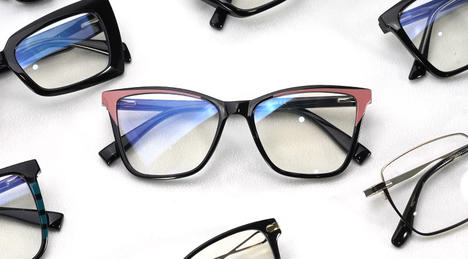
For digital professionals, wearing blue-light filtering glasses during screen time is a "Sleep Tool" and a "Contrast Tool" rather than a cure for dehydration-related strain. The glasses reduce glare and improve contrast, making it easier for the eyes to focus, which indirectly reduces the effort of the ciliary muscles.
Quality Control: The Risk of Substandard Optics
When selecting eyewear to complement your hydration routine, quality is paramount. A study published in PubMed regarding Online Eyewear Accuracy revealed that 44.8% of online-ordered prescription glasses failed at least one optical tolerance or impact resistance test.
Using lenses with poor optical centers or incorrect prescriptions can cause "induced prism," leading to headaches and eye strain that no amount of water can fix. Always ensure your provider complies with FDA Impact Resistance Standards (21 CFR 801.410), which mandate the "Drop Ball Test" to ensure lens safety.
Method & Assumptions: Modeling Visual Comfort
To provide these recommendations, we used a scenario-based model to estimate the relationship between hydration, blink rate, and perceived eye strain.
Modeling Note (Reproducible Parameters):
- Model Type: Deterministic sensitivity analysis of tear film breakup time (TFBUT).
- Assumptions: Office humidity at 30%; average blink rate of 6 blinks/min (screen use); standard metabolic rate for a 70kg adult.
| Parameter | Value/Range | Unit | Rationale |
|---|---|---|---|
| Target Daily Intake | 2.5 - 3.0 | Liters | General health baseline |
| Electrolyte Supplement | ~0.5 - 1.0 | Grams/day | Based on salt-pinch heuristic |
| Peak Evaporative Window | 13:00 - 16:00 | Time | Observed fatigue peak |
| Lens Filter Efficiency | 25 - 40 | % | Standard blue-light coating |
| Blink Rate (Baseline) | 18 | blinks/min | Non-screen activity |
Boundary Conditions: This model may not apply to individuals with chronic Sjögren’s syndrome, those taking photosensitizing medications (e.g., tetracyclines), or users in environments with humidity levels below 10%.
Recommended Actions for Digital Professionals
- Implement the 1-2-3 Rule: Align your water intake with your work schedule to ensure peak hydration during peak screen use.
- Optimize Your Environment: Use a humidifier if your office air is dry, and position your screen slightly below eye level to reduce the exposed surface area of the eye.
- The 20-20-20 Rule: Every 20 minutes, look at something 20 feet away for 20 seconds. This forces a "reset" of the blink rate and relaxes the accommodative muscles.
- Verify Your Prescription: If you haven't had an eye exam in over a year, your strain may be refractive. Under the FTC Eyeglass Rule, you are entitled to a copy of your prescription immediately following an exam.
- Choose Verified Lenses: Use high-quality blue-light filtering lenses for evening work to protect your sleep cycle, ensuring they meet FDA safety standards.
Disclaimer: This article is for informational purposes only and does not constitute professional medical advice. Always consult with an optometrist or ophthalmologist if you experience persistent eye pain, sudden vision changes, or severe dryness.
References
- Federal Trade Commission (FTC): Buying Prescription Glasses or Contact Lenses
- PubMed (Optical Accuracy Study): Online Eyewear Accuracy and Safety
- Cleveland Clinic: Do Blue Light Blocking Glasses Actually Work?
- National Eye Institute (NEI): UV Radiation and Cataract Mechanisms
- Harvard Health Publishing: Blue Light and Sleep Efficacy
- PubMed (Omega-3 Meta-Analysis): Omega-3 Supplementation for Dry Eye
- FDA Guidance: Impact Resistant Lenses (21 CFR 801.410)


