














Hypoallergenic Frames: Best Materials for Sensitive Skin
TL;DR: Your Quick Guide to Allergy-Free Frames
- Safest Bets: For zero irritation, choose frames made from Pure Titanium or Cellulose Acetate.
- Use With Caution: "Surgical Stainless Steel" can still contain nickel. Ensure it has a high-quality, durable PVD coating.
- The Main Culprit: Nickel allergy is the number one cause of skin irritation from glasses. It's often hidden in cheap metal alloys labeled "metal frame."
- Inspect Everything: A hypoallergenic frame is useless if the nose pads or temple tips are made from a reactive material. Check every part that touches your skin.
Why Are My Glasses Irritating My Skin?
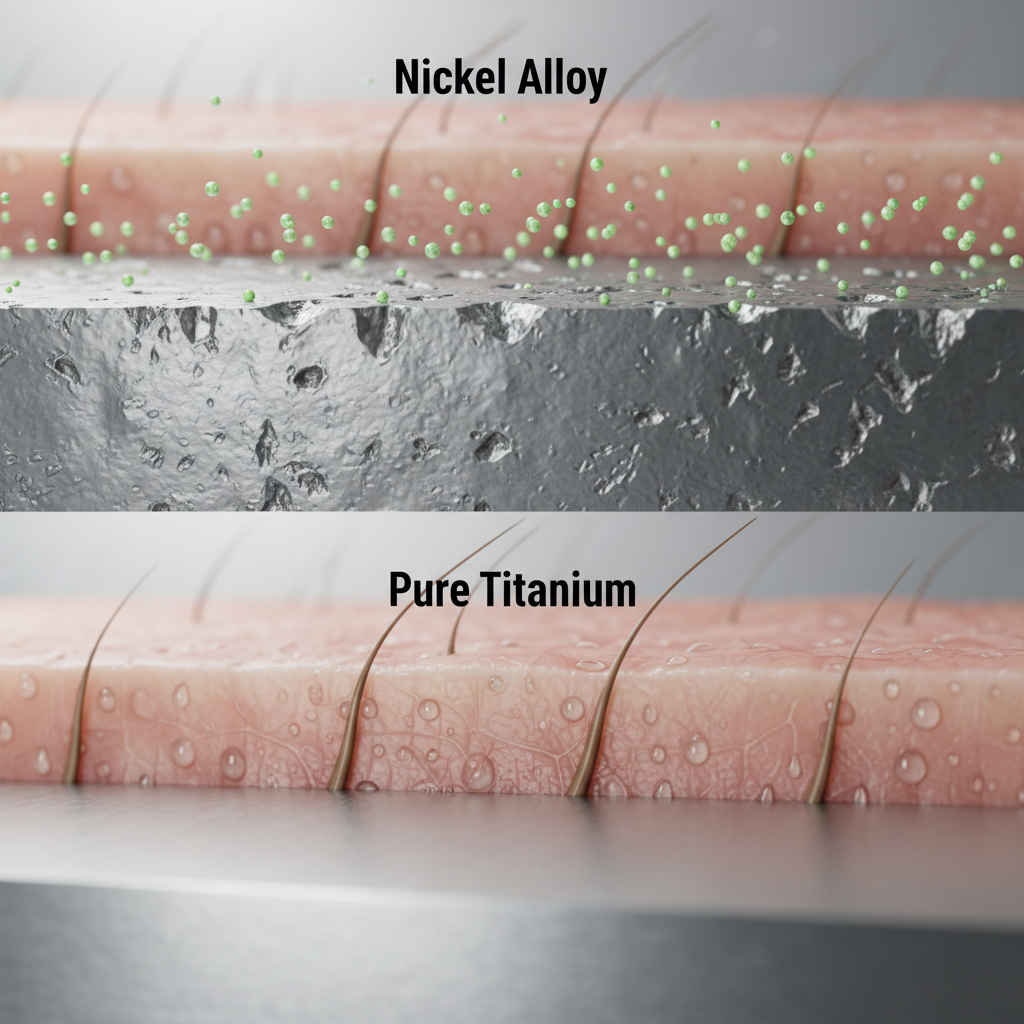
That persistent rash on the bridge of your nose or the itchy, red marks behind your ears aren't just a nuisance—they're likely a form of contact dermatitis. For eyeglass wearers, the most frequent trigger is a nickel allergy. This occurs when your immune system reacts to the nickel ions present in many common metal alloys used for frames.
Symptoms of a nickel allergy from glasses include:
- Redness, itching, or swelling where the frame touches your skin.
- Dry patches of skin that may resemble a burn.
- In some cases, blistering or fluid-filled bumps.
- Greenish or black discoloration on the skin, which is a sign of the metal oxidizing against your skin.
It's crucial to understand that "hypoallergenic" is an unregulated marketing term, not a medical standard. A frame labeled as such can still cause a reaction. True relief comes from choosing materials that are inherently inert and biocompatible.
The Gold Standard: Best Materials for Highly Sensitive Skin
When your skin is highly reactive, compromising isn't an option. These two materials are consistently recommended by opticians and dermatologists as the safest choices for avoiding allergic reactions.
Pure Titanium: The Aerospace-Grade Solution
Widely used in medical implants for its biocompatibility, pure titanium is the undisputed champion for hypoallergenic eyewear. It is a completely nickel-free element, meaning it is inherently inert and will not cause a reaction even on the most sensitive skin.
Key Properties:
- 100% Nickel-Free: It's not an alloy containing nickel; it's a pure element.
- Extremely Lightweight: Significantly lighter than steel, making for a very comfortable fit.
- Incredibly Strong & Durable: It resists corrosion from sweat and skin oils, ensuring it remains inert over its lifetime.
When shopping, be specific. Ask for "100% pure titanium" or "CP titanium." Some frames are "titanium alloys" or have "titanium in them," which may still include nickel or other metals to add flexibility. For true hypoallergenic security, pure is always better.
Cellulose Acetate: The Plant-Based Champion
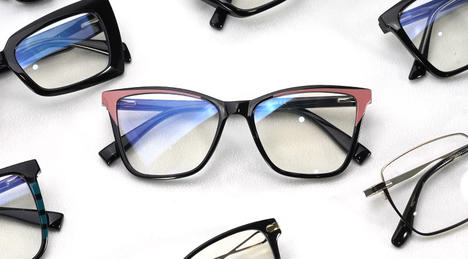
If you prefer the rich colors and warm feel of plastic frames, cellulose acetate is your best choice. Unlike petroleum-based plastics that can contain potential irritants, acetate is derived from natural sources like cotton and wood pulp. This plant-based origin makes it naturally hypoallergenic.
Key Properties:
- Naturally Hypoallergenic: Made from organic materials that are non-reactive.
- Rich, Deep Colors: The color is embedded within the material itself, not painted on, so it won't flake or fade.
- Warm & Comfortable: It adapts to your skin temperature and feels less clinical than metal.
Expert Tip: Cellulose acetate can become brittle over time in very dry, arid climates. To prolong the life of your frames, consider storing them in a case with a small humidifier (like a piece of a damp sponge in a separate compartment) to prevent them from drying out and cracking.
Navigating the Grays: Materials to Approach with Caution
Some materials aren't automatically bad, but they require a deeper level of scrutiny before you can trust them against your skin.
Stainless Steel: Not All Is Created Equal
"Surgical stainless steel" sounds safe, but most grades still contain 8-12% nickel. This nickel is what gives the steel its corrosion resistance. For someone without a nickel allergy, this is fine. For someone with sensitive skin, it's a potential problem.
The only way stainless steel can be considered safe for sensitive skin is if it is sealed with a high-quality coating. Physical Vapor Deposition (PVD) is a process that bonds a protective, inert layer to the base metal. This barrier prevents nickel from leaching out and contacting your skin.
However, this leads to a critical point based on in-practice observations: coatings wear off. With daily use, sweat, and cleaning, a PVD coating can degrade over 12 to 18 months. The first place to wear through is often behind the ears or on the nose bridge—exactly where rashes appear. If you opt for stainless steel, treat it as a frame with a limited lifespan of skin-safe wear.
"Memory Metal" and Other Alloys
Flexible frames, often marketed as "memory metal," are typically made from an alloy called Nitinol, which is a blend of nickel and titanium. While impressively durable, the direct presence of nickel makes them unsuitable for anyone with a known sensitivity unless they feature a robust, intact coating.

The Complete Hypoallergenic Checklist
A common fitting mistake is focusing only on the frame front while ignoring the other components that touch your face. Before you buy, run through this checklist.
-
Check the Nose Pads: These are a major point of contact. Most are made of silicone, which is generally hypoallergenic. However, if you have a specific silicone sensitivity, ask your optician if they can be swapped for pads made of pure titanium or, in some high-end cases, ceramic.
-
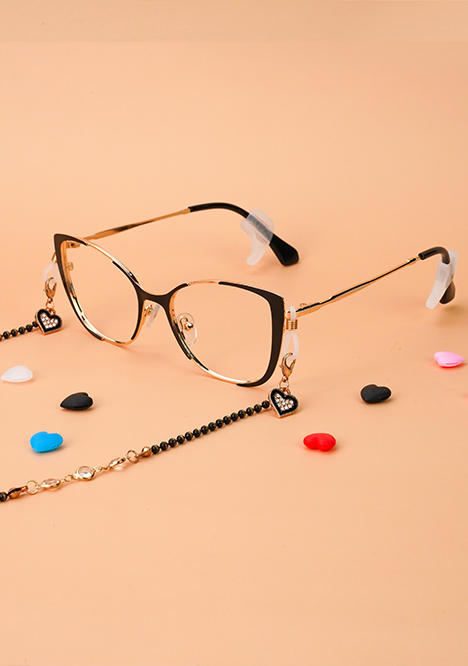
Inspect the Temple Tips: The plastic sleeves that curve behind your ears must be made from a high-quality material. Ensure they are cellulose acetate or premium-grade silicone, not a cheap, unidentified plastic that could leach chemicals.
-
Question the Coating (For Metals): Don't just accept "it's hypoallergenic." Ask the optician directly: "What is the base metal underneath?" and "Is this frame sealed with a PVD coating?" A knowledgeable professional should be able to answer.
-
Examine the Screws: This is an edge case, but for extremely sensitive individuals, the tiny nickel-plated screws in the hinges can be enough to cause a reaction. If you've had reactions even with "safe" frames, this could be the culprit.
Frequently Asked Questions (FAQ)
Q1: Is "surgical stainless steel" completely safe for nickel allergies? No, not necessarily. Most grades contain nickel. Safety depends entirely on the quality and durability of a protective PVD coating, which can wear down over time.
Q2: My old glasses were fine, but my new, similar-looking ones cause a rash. Why? This could be due to several factors. Your new frames might be made of a different base metal, use a lower-quality coating, or the coating might be thinner. It's also possible that your allergy has developed or worsened over time.
Q3: Can I be allergic to plastic frames? While much rarer than nickel allergies, some people can have reactions to certain chemicals or dyes used in low-quality, petroleum-based plastics. Sticking to plant-based cellulose acetate is the safest route to avoid this.
Q4: How can I tell if my current frames have nickel? A dermatologist can perform a clinical patch test to confirm a nickel allergy. At home, you can look for tell-tale signs on the frame itself: if the plating is flaking or you see a greenish-tarnish, it's likely a nickel-containing alloy underneath.
Disclaimer: This article is for informational purposes only and does not constitute medical advice. If you are experiencing persistent skin irritation, consult with a dermatologist or a qualified healthcare provider to diagnose any underlying conditions.


