










Infrared Protection in Sunglasses: Is It Truly Necessary?
Unpacking the Light Spectrum: More Than Meets the Eye
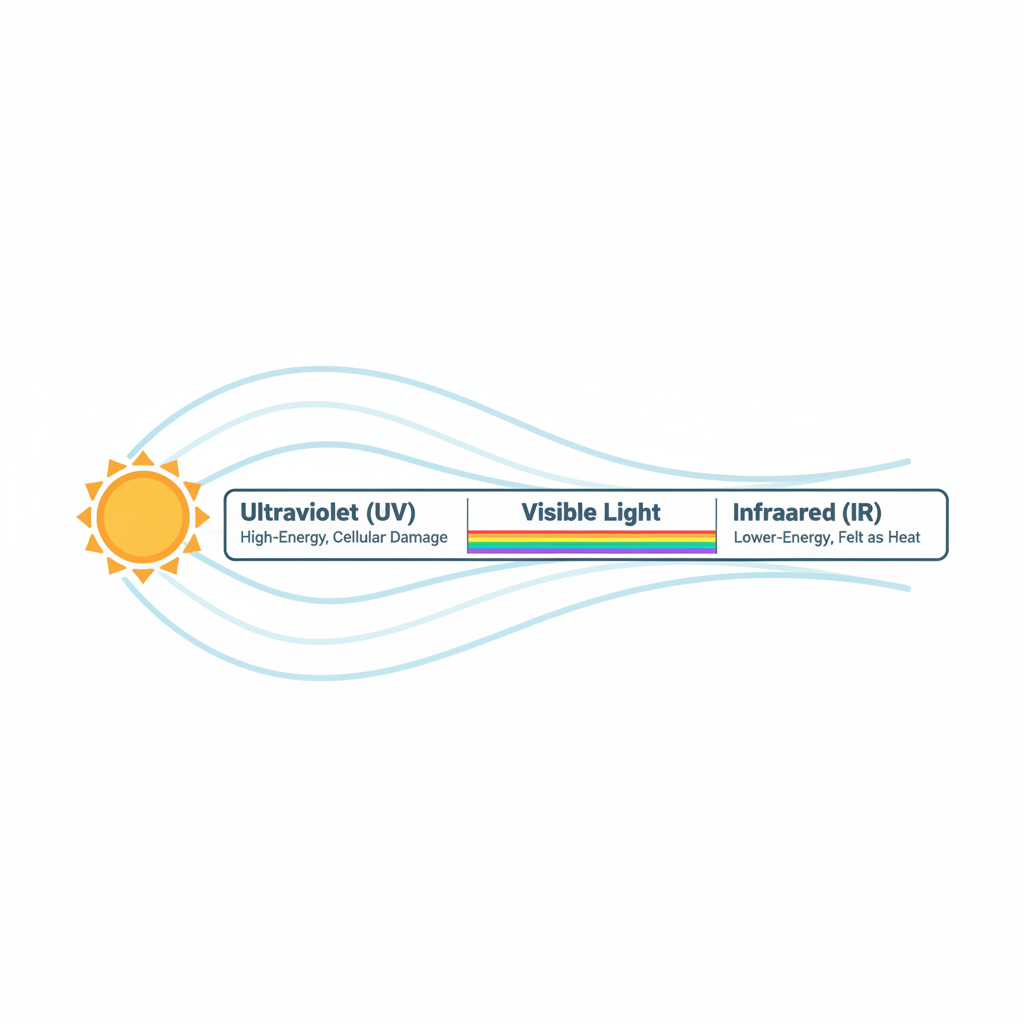
When we talk about protecting our eyes from the sun, ultraviolet (UV) radiation gets most of the attention, and for good reason. However, the sun emits a much broader spectrum of light. To understand the debate around infrared protection, we first need to distinguish between the different types of light.
- Ultraviolet (UV) Light: This is high-energy, invisible radiation that falls just beyond the violet end of the visible spectrum. It doesn't produce heat or visible light, but it is the primary cause of sunburn and long-term cellular damage to the eyes. According to the National Eye Institute, this damage can contribute to conditions like cataracts and macular degeneration. The American Optometric Association recommends sunglasses that block 100% of both UV-A and UV-B rays.
- Visible Light: This is the portion of the spectrum that the human eye can see, encompassing all the colors of the rainbow. The discomfort you feel from a bright, sunny day—the squinting and eye strain—is caused by the intensity of visible light, often referred to as glare.
- Infrared (IR) Light: This is lower-energy, invisible radiation that we perceive primarily as heat. It makes up a significant portion of the sun's energy that reaches Earth. While you can feel its warmth on your skin, its effect on the eyes is far less dramatic than that of UV light.
Does Infrared Radiation Actually Harm Your Eyes?
The central question is whether the infrared radiation we encounter in daily life poses a genuine risk to our eyes. The answer requires separating extreme industrial scenarios from everyday sun exposure.
The Real Danger: Occupational Exposure
In specific, high-intensity industrial environments, infrared radiation is a known occupational hazard. Professionals like glassblowers, foundry workers, and welders are exposed to intense IR from molten materials and high-temperature equipment. This prolonged, concentrated exposure can heat the eye's internal structures, potentially leading to a specific type of cataract known as a "glassblower's cataract." For these high-risk professions, specialized safety eyewear that complies with standards like ANSI Z87.1 and includes specific IR-blocking filters is mandatory, as noted by workplace safety guidelines from bodies like the Texas Department of Insurance.
The Consumer Context: Everyday Sun Exposure
For the average person, the situation is vastly different. The level of infrared radiation from the sun reaching your eyes during typical activities—like driving, walking, or spending a day at the beach—is significantly lower and less concentrated than in an industrial furnace setting. The scientific evidence linking everyday solar IR exposure to eye disease is weak and inconsistent. Unlike the proven cumulative damage from UV radiation, which directly harms cellular structures, the primary effect of IR is thermal (heating). Your eyes have robust systems, including constant blood flow, to dissipate this minor heat load under normal conditions.
A pivotal review in the Journal of Photochemistry and Photobiology notes that while the link between UV and cataracts is strong, the evidence for a similar link to solar IR is marginal at best. The real enemy for your eyes on a sunny day remains UV radiation.
Deconstructing "IR Protection" on Consumer Sunglasses
Given the low risk from everyday sun exposure, why are some consumer sunglasses advertised with "infrared protection"? This is where we must distinguish between functional benefits and marketing language.
In practice, optical experts note that most claims of IR protection on standard sunglasses are more marketing than substance. True IR-blocking filters are typically dichroic (multi-layer interference) coatings found on specialized industrial safety glasses. They are not standard on prescription or non-prescription sunglasses.
An Industry Heuristic: A common rule of thumb among experienced opticians is that if a pair of sunglasses claims "IR protection" but doesn't reference a specific industrial safety standard (like ANSI Z87.1) or provide a specific optical density rating, the claim is likely marketing fluff. The perceived comfort is often due to other high-quality features, not a meaningful reduction in infrared light.
Many wearers associate the feeling of "coolness" or "comfort" from high-end sunglasses with IR protection. However, this sensation is almost always attributable to the lens's ability to reduce glare from intense visible light, typically through high-quality polarization. Reducing glare significantly reduces squinting and eye muscle fatigue, which the brain interprets as greater comfort.
What Truly Matters: Your Sunglass Protection Checklist
Instead of chasing an unnecessary feature like IR protection, focus on the three elements that are scientifically proven to protect your eyes and enhance visual comfort.
1. Certified 100% UV400 Protection
This is the absolute, non-negotiable standard for any pair of sunglasses. "UV400" means the lenses block all light rays with wavelengths up to 400 nanometers. This covers all of the harmful UVA and UVB spectrum. As one technical report published in PubMed argues, older standards that only protected up to 380 nm were "not at all cautious," as the 380-400 nm band contains significant UV energy. Always look for a label that explicitly states "UV400" or "100% UV Protection."
2. Quality Glare Reduction (Polarization)
Glare from visible light is the primary cause of eye strain and visual discomfort in bright conditions. As explained by Harvard Health Publishing, polarized lenses contain a special filter that blocks the intense horizontal light reflected off flat surfaces like water, pavement, and snow. This dramatically improves visual comfort and clarity, making them a must-have for activities like driving and water sports.
3. Back-Surface Anti-Reflective (AR) Coating
This is an often-overlooked feature that provides a significant safety benefit. A study published in the journal PMC highlights that standard lenses can reflect UV radiation from the back and side surfaces of the lens directly into the eye—a phenomenon known as back-surface reflection. A quality AR coating applied to the back of the lens prevents this, ensuring you are protected from UV rays coming from all angles. This is arguably far more important than any minimal IR filtering.
Furthermore, frame design plays a critical role. A study using 3D models to measure actual eye exposure found that oversized or wraparound styles offered vastly superior protection by minimizing the "peripheral light leakage" that standard frames allow. Combining a large, well-fitting frame with UV400 lenses and a back-surface AR coating creates the most effective shield against solar radiation.
The Final Verdict on Infrared Sunglasses
While infrared radiation can be a serious hazard in extreme industrial settings, for the vast majority of people, it is not a significant risk during daily life. The "IR protection" featured on many consumer sunglasses is largely a marketing talking point rather than a necessary health feature.
Instead of paying a premium for questionable IR claims, your focus should be on the scientifically-backed pillars of eye protection. Ensure your sunglasses have certified UV400 protection to block damaging ultraviolet rays, high-quality polarization to cut uncomfortable glare, and a back-surface anti-reflective coating to prevent reflected UV from entering your eye. Paired with a frame that offers ample coverage, these features provide a robust defense system for your long-term vision health.
Disclaimer: This article is for informational purposes only and does not constitute professional medical advice. Always consult with a qualified eye care professional for any concerns about your vision or eye health.
References
- American Optometric Association (AOA). "UV Protection." https://www.aoa.org/healthy-eyes/caring-for-your-eyes/uv-protection
- Cole, B. L. "Solar UV protection by sunglasses." PubMed, 2019. https://pubmed.ncbi.nlm.nih.gov/31274741/
- Harvard Health Publishing. "Polarized sunglasses: Protecting your eyes from harmful glare." https://www.health.harvard.edu/staying-healthy/polarized-sunglasses-protecting-your-eyes-from-harmful-glare
- National Eye Institute (NEI). "New research sheds light on how UV rays may contribute to cataract." https://www.nei.nih.gov/about/news-and-events/news/new-research-sheds-light-how-uv-rays-may-contribute-cataract
- O-Yurach, et al. "Ocular UV-B radiation dosimetry: From head-form laboratory measurements to a simple virtual 3D model." PMC, 2019. https://pmc.ncbi.nlm.nih.gov/articles/PMC6803516/
- Sliney, D. H. "Photoprotection of the eye - UV radiation and sunglasses." Journal of Photochemistry and Photobiology B: Biology, 2001. (Referenced for general context on IR vs. UV risk).
- Texas Department of Insurance (TDI). "Workplace Sunglasses Safety." https://www.tdi.texas.gov/pubs/videoresource/fssunglasses.pdf
- Walsh, J. E., et al. "Tailored UV absorbers in clear lenses for ocular protection." PMC, 2018. https://pmc.ncbi.nlm.nih.gov/articles/PMC5905936/


