






Keep Your Sunglasses Secure When You Sweat
Tired of Your Sunglasses Slipping Mid-Workout? Here’s How to Fix It
There’s nothing more distracting than feeling your sunglasses slide down your nose when you’re focused on hitting a new personal record or navigating a challenging trail. That constant, frustrating push-up motion breaks your concentration and can even compromise your safety. The good news is that slipping sunglasses aren't something you have to live with. The solution lies in understanding the science of a secure fit, the materials used, and the simple adjustments that make all the difference.
This guide will break down the precise reasons your glasses slip when you sweat and provide actionable, expert-level steps to ensure they stay locked in place, no matter the intensity of your activity.
The Real Reasons Your Sports Sunglasses Slide
Slippage isn't just about a poor fit; it's a combination of physics, material science, and frame geometry. When you understand the root causes, you can choose and adjust your eyewear like a pro.
The Physics of Fit: Three-Point Contact
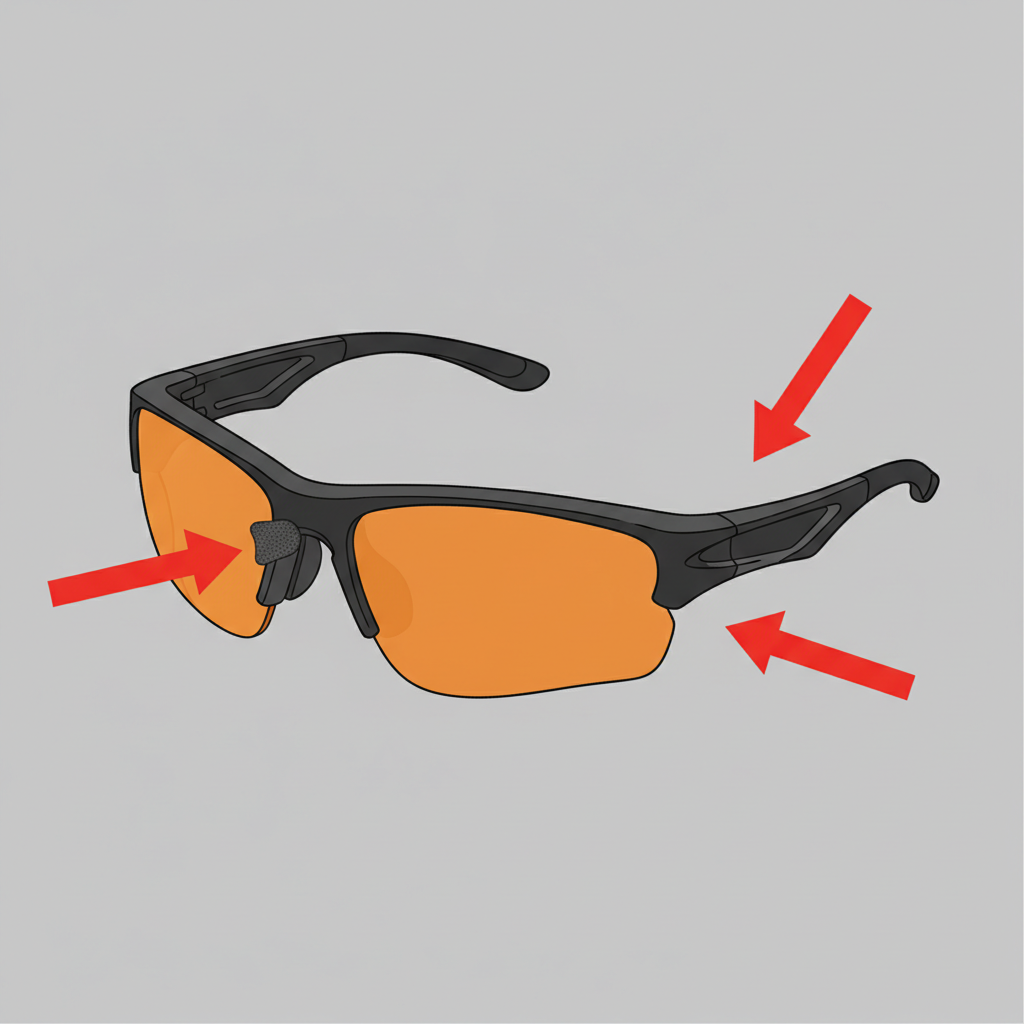
A stable fit relies on a principle called the "three-point touch." Your sunglasses should only make firm, comfortable contact in three places: on the bridge of your nose and behind each ear. If the frame's bridge is too wide for your nose, its entire weight rests on your ears, causing it to pivot forward and slide down. Conversely, if the temples are too short or straight, they won’t provide the necessary counterbalance, leading to the same result. Sweat simply acts as a lubricant, amplifying any existing fit issues.
Material Science: Friction is Your Friend
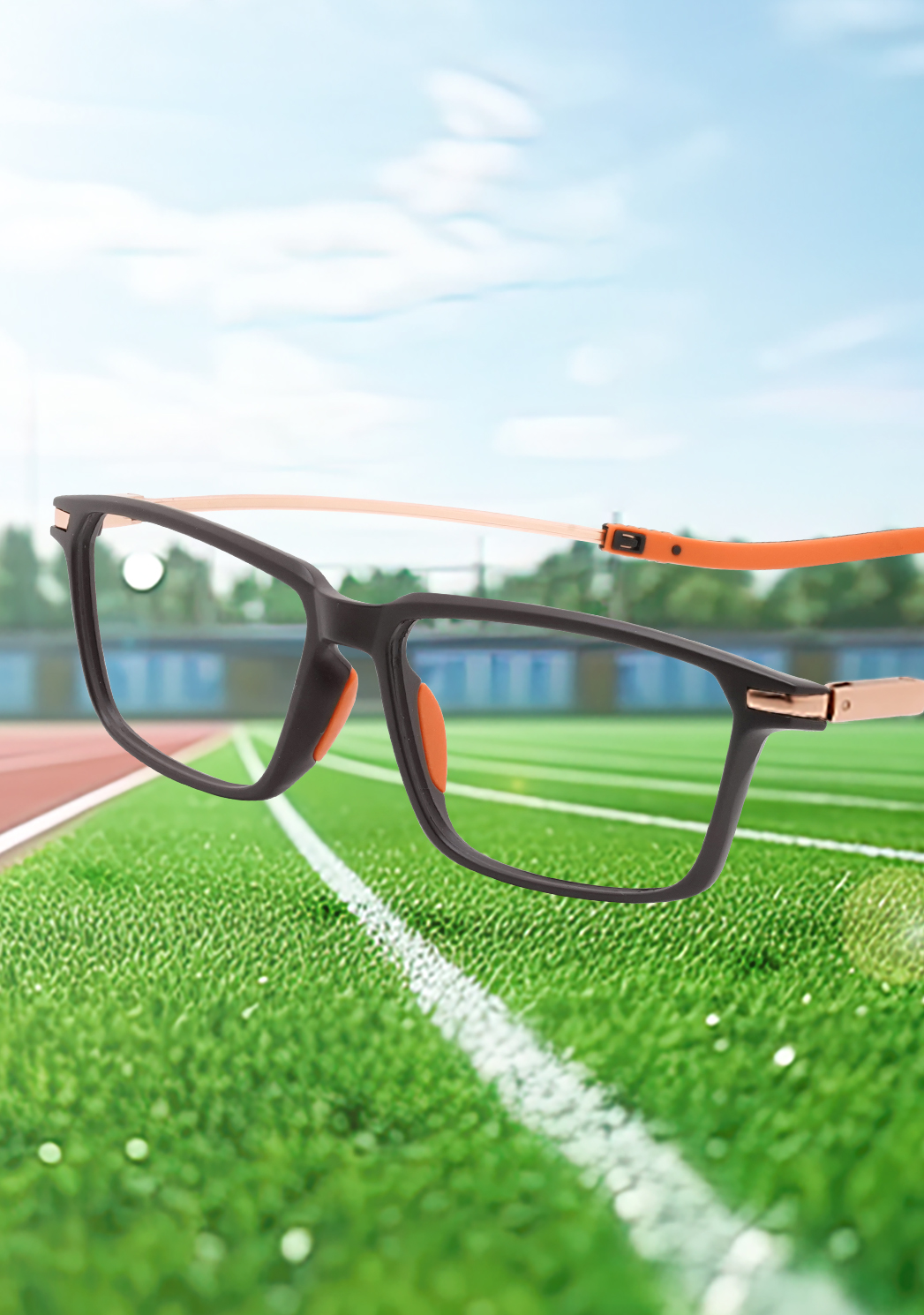
The material of your frame's contact points is critical. Standard, polished plastic becomes incredibly slick when it comes into contact with skin oils and sweat. This is why high-performance sports eyewear utilizes materials with a higher coefficient of friction. Look for frames that incorporate soft, grippy thermoplastic elastomer (TPE) or hydrophilic rubber on the nose pads and temple tips. These materials are designed to maintain or even increase their grip when wet, providing excellent stability during intense activity.
The Impact of Frame Design and Weight
Heavier, front-loaded frames are fighting a losing battle against gravity. Lighter materials and balanced designs reduce the downward force your nose has to support. Furthermore, frame shape plays a significant role. Wraparound styles tend to be more stable because they distribute their weight and grip across a larger area of your head, rather than concentrating it all on the bridge of your nose.
How to Achieve a Rock-Solid, Slip-Free Fit
Achieving the perfect fit often comes down to small, precise adjustments. A frame that feels loose in the store can often be customized for a secure hold with just a few simple tweaks.
Step-by-Step Adjustment Guide
Follow these steps to customize the fit of your adjustable sports sunglasses. The goal is to create a secure hold without creating uncomfortable pressure points.
| Step | Action | The Goal |
|---|---|---|
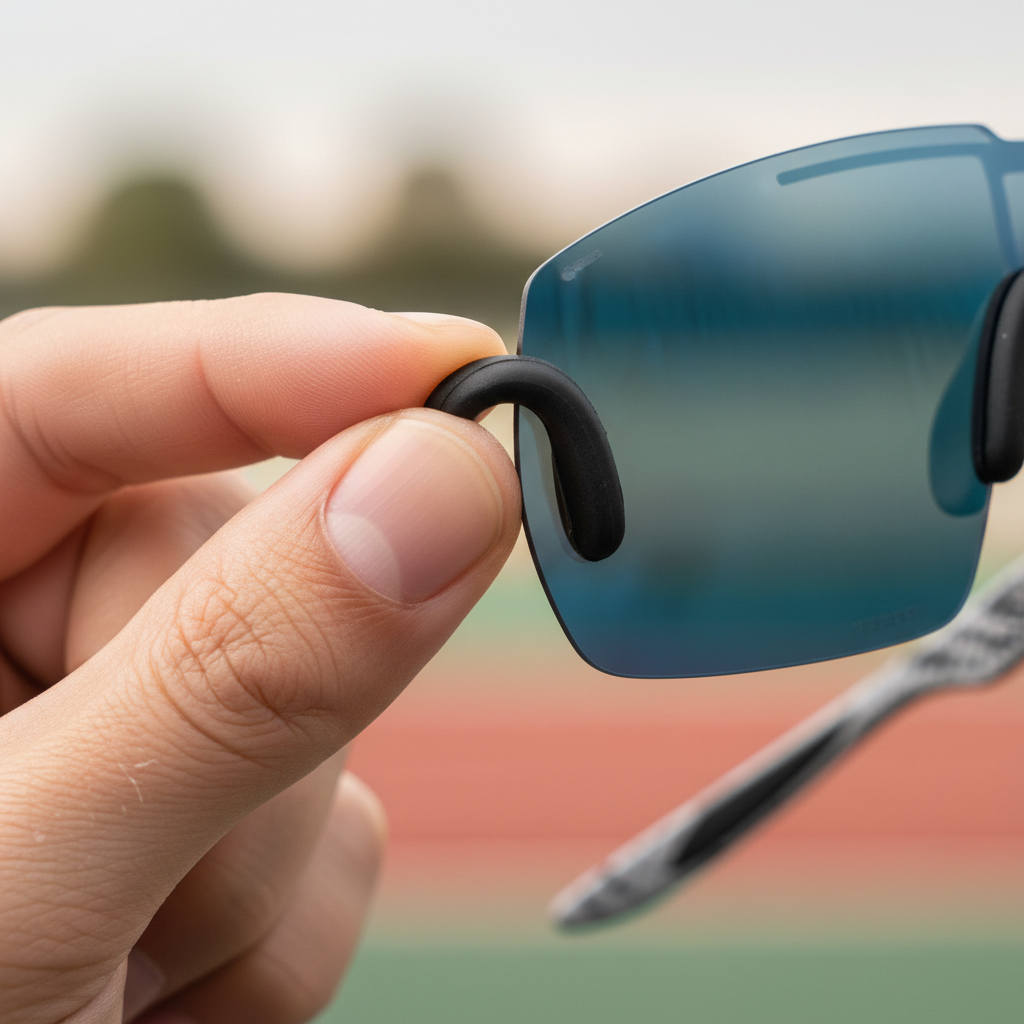
| 1. Adjust the Nose Pads | Gently squeeze the adjustable nose pads so they move inward by 1–3 millimeters. | To increase the surface area contact with the sides of your nose, creating a snugger grip without pinching. |
| 2. Set the Temple Bend | Ensure the temple tips have a distinct curve that hooks lightly but securely behind your ear. | The bend should follow the natural contour where your ear meets your head, providing the primary anchor point. |
| 3. Check the Pantoscopic Tilt | The lenses should have a slight downward tilt, between 8 and 12 degrees. | This aligns the lens with your line of sight, reduces glare from above, and improves airflow to help prevent fogging. |
| 4. Perform the Tug Test | With the glasses on, gently but firmly tug them downwards from the bridge. | A properly fitted pair should resist the pull, slipping no more than 5 millimeters. If it slides off easily, repeat the steps. |
Expert Warning: Common Fitting Mistakes to Avoid
Many people make predictable errors when trying to secure their eyewear. One common mistake is over-bending the temple arms until the metal or plastic is fatigued, which can lead to breakage. Another is choosing a frame based only on the lens shape or size, completely ignoring how the bridge and temples fit your unique facial geometry. Lastly, while virtual try-on tools are great for style, they cannot predict how a frame will perform under dynamic, real-world conditions. A physical fit and adjustment are essential for sports.
Troubleshooting Common Issues
Even with a good fit, you might encounter other related problems. Here’s how to solve them.
Myth: Tighter is Always Better
There's a common misconception that cranking down the tightness will solve slipping. In reality, excessive clamping force creates painful pressure points behind the ears and on the nose. This discomfort can be a major distraction. More importantly, an overly tight frame can act like a spring; during sharp head movements, the tension can cause the glasses to pop off your face entirely. The goal is a secure fit based on friction and proper weight distribution, not raw clamping force.
Solving Fogging and Airflow Problems
Fogging is often a side effect of a fit that's too close to the face, trapping humid air. Adjusting for a slight pantoscopic tilt can often improve airflow. If fogging persists, look for frames with built-in passive venting channels or consider using a mechanical anti-fog wipe or solution before your activity. Remember to clean your lenses after every session, as the buildup of salt and oils not only reduces optical clarity but can also degrade anti-fog coatings.
Special Considerations for Prescription Lenses
For athletes who wear prescription sports sunglasses, a stable fit is non-negotiable. If the glasses slide down your nose, the optical center of the lens moves with them. This misalignment can induce prismatic error, leading to eyestrain, headaches, and distorted vision. According to a review on sports eyewear standards, a significant number of serious eye injuries are related to sports and are often preventable with proper, well-fitted protective gear. Ensuring your frames stay put is therefore not just a matter of convenience, but of performance and safety. For more information, explore how to minimize distortion in prescription sunglasses.
Key Takeaways for a Secure Sunglass Fit
You don't have to let slipping sunglasses ruin your workout. By focusing on the right features and making a few key adjustments, you can achieve a fit that feels custom-made.
- Prioritize Materials: Always choose frames with high-friction TPE or rubberized nose pads and temple tips.
- Master the Three-Point Touch: Ensure the frame makes light but firm contact on your nose and behind both ears.
- Adjust Methodically: Use small, precise adjustments to the nose pads and temple arms to create a secure hold.
- Clean Regularly: Keep your frames free of skin oils and sweat residue to maintain maximum grip.
By applying these principles, you can keep your focus where it belongs: on your performance.
Frequently Asked Questions (FAQ)
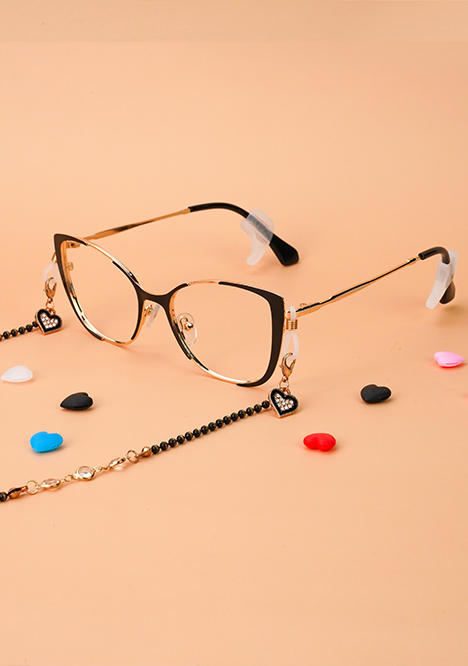
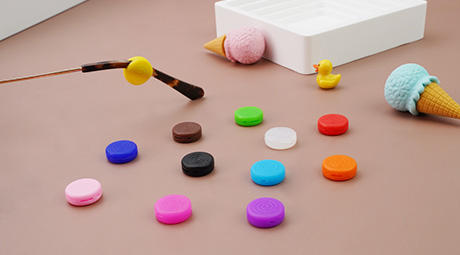
Can I add grips to my existing sunglasses? Yes, there are aftermarket solutions like silicone ear hooks and adhesive nose pads that can be added to standard glasses to improve their grip during activity. While they can be effective, they may not offer the same integrated performance as sunglasses designed specifically for sports.
Are heavier sunglasses more likely to slip? Generally, yes. The more mass the frame has, the more gravitational force your nose pads and temple tips have to counteract. Lightweight materials like polycarbonate and Trivex for lenses and advanced polymers for frames can significantly reduce the overall weight and tendency to slip.
How often should I clean my sports sunglasses? It's a best practice to rinse your sports sunglasses with water and wipe them with a microfiber cloth after every use. This removes corrosive salt from sweat and slippery skin oils, which preserves the frame's materials and ensures the contact points maintain their designed friction.
Disclaimer: This article is for informational purposes only and does not constitute professional medical or optometric advice. Always consult with a qualified eye care professional for any issues related to your vision, prescription, or the proper fitting of eyewear, especially if you have pre-existing conditions.


