













Regression After LASIK: Why is My Vision Blurring Again?
TL;DR: Understanding Vision Changes After LASIK
- What is it? LASIK regression is the slow, partial return of your previous vision prescription (nearsightedness, farsightedness, or astigmatism) months or years after the procedure.
- Why does it happen? It's most often a result of your body's natural healing process. The cornea is living tissue, and it can subtly change shape or thicken as it heals, slightly altering the correction achieved by the laser.
- Is it normal? Yes, a mild degree of regression is a known possibility. It's more common in patients who had very high prescriptions to begin with. However, most patients enjoy stable, long-term results.
- Regression vs. Complication: True regression is a gradual, mild blurring that occurs after your vision has been stable for months. It is not the same as immediate post-op blur, infection, or a rare but serious condition called ectasia.
- What can be done? For minor changes, updated prescription glasses are the simplest fix. For significant, stable regression, an enhancement or "touch-up" surgery may be an option after about a year of stable vision.
You underwent LASIK surgery, and the results were life-changing. The world snapped into sharp focus, and you put your glasses away. But now, months or even years later, you might be noticing a subtle, frustrating blur creeping back in. Is the surgery wearing off? Is something wrong?
This experience, known as LASIK regression, can be unsettling, but it's a well-understood phenomenon. As a clinical team that has guided thousands of patients through their refractive surgery journey, we want to provide a clear, authoritative explanation. This article will walk you through why regression happens, how to tell if what you're experiencing is normal, and what your options are.
The Biology of Blurring: Why Does LASIK Regression Happen?
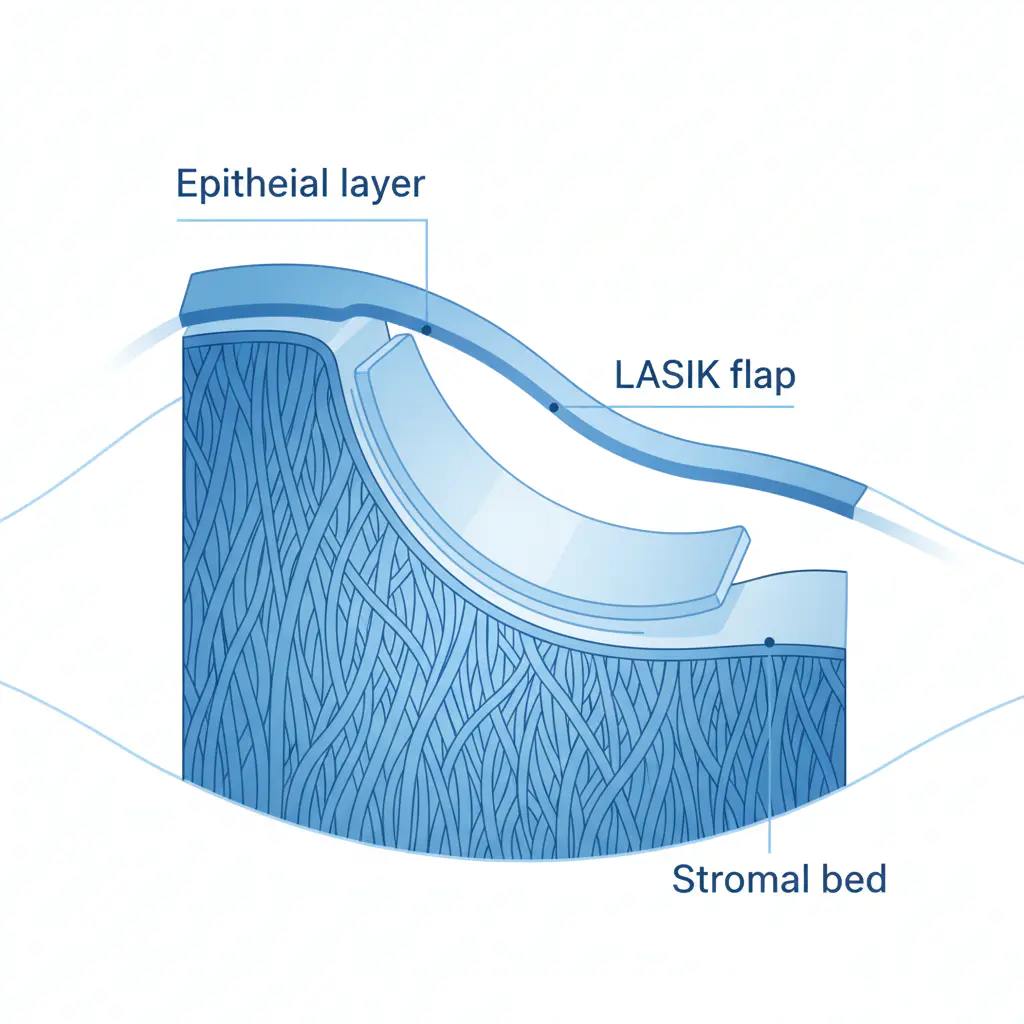
LASIK works by precisely reshaping your cornea with a laser to correct its focus. However, the cornea is not a static piece of plastic; it's a dynamic, living part of your body. The primary driver of regression is this biological healing response.
According to a landmark 20-year safety study, overall patient satisfaction with LASIK remains incredibly high at 97.4%, demonstrating its profound long-term success. Regression affects only a fraction of patients, but understanding the mechanisms can help manage anxiety.
There are two main biological processes at play:
-
Epithelial Hyperplasia: The cornea's outermost layer, the epithelium, is constantly regenerating. After LASIK removes tissue, this layer can sometimes thicken more than usual in the treated area as it heals. It's like your body trying to "fill in" the microscopic valley created by the laser, which can cause a slight myopic (nearsighted) shift.
-
Stromal Remodeling & Biomechanical Changes: The deeper structural layer of the cornea, the stroma, can also subtly change shape over time. A study tracking patients for 12 years found that regression was significantly correlated with a gradual re-steepening of the cornea. Think of it as the cornea, thinned by the laser, very slowly bulging forward under the eye's natural internal pressure. This is why having sufficient corneal thickness before surgery is a critical safety standard, as outlined by the American Academy of Ophthalmology (AAO) guidelines.
Normal Healing or Red Flag? A Timeline of Post-LASIK Vision
One of the most common questions we hear is, "Is this blurriness normal?" The answer almost always depends on when it's happening. Vision changes are expected after surgery, but the timing tells us what's likely going on.
Methodology Note: The following timeline is based on established clinical observation patterns and data from large-scale patient outcome studies like the FDA's PROWL-1 and PROWL-2. It represents a typical healing journey, though individual experiences may vary.
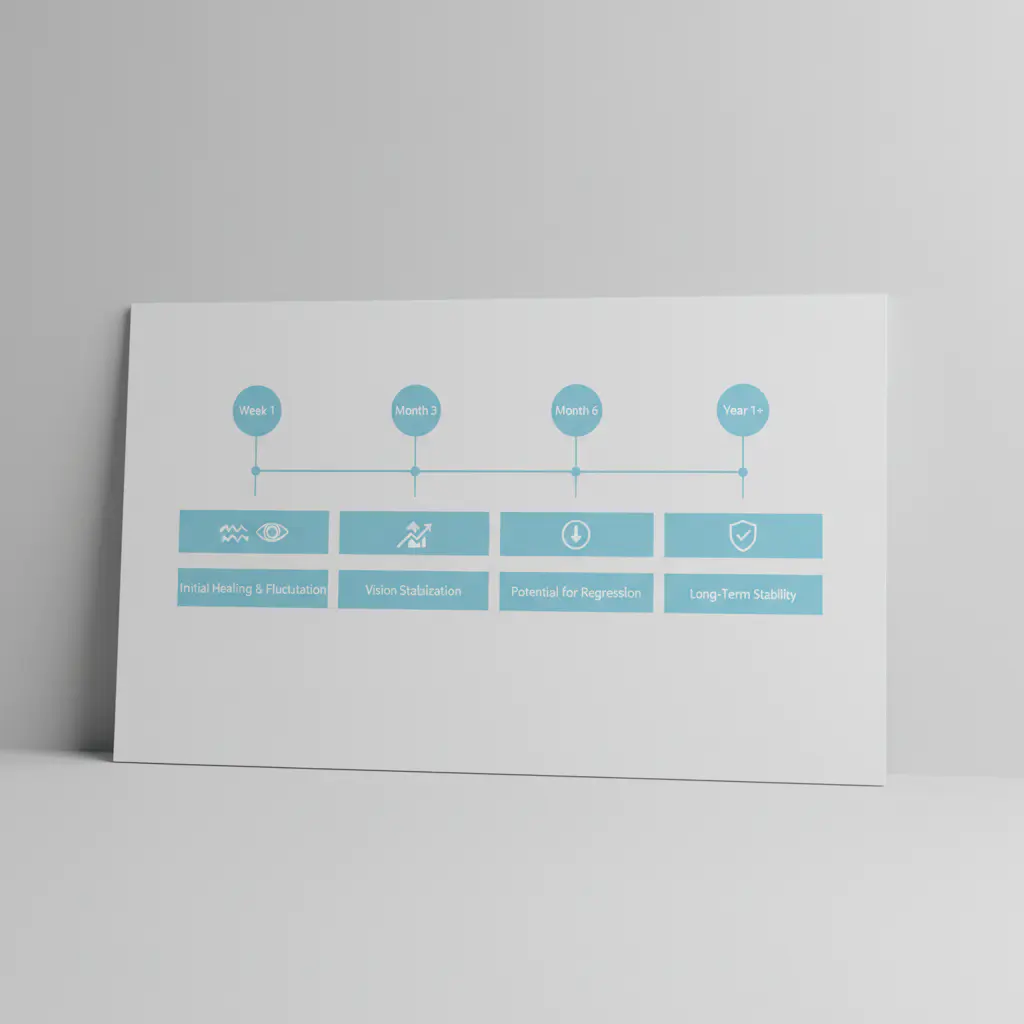
- The First Week: Your vision will fluctuate. It's common to experience some haziness, glare, halos around lights, and dryness. The FDA lists these as common, temporary side effects. This is inflammation and initial healing, not regression.
- One to Three Months: Your vision should become much sharper and more stable. Some minor fluctuations may persist, especially related to dry eye. We consider the three-month mark a key milestone for assessing the initial outcome.
- Three Months to One Year: This is the primary window for true regression to appear. If your vision was clear and stable at three months but now seems to be subtly worsening, this might be regression. Based on our clinical experience, changes after the 3-month mark of less than 0.50 diopters are often monitored, as they frequently stabilize.
- One Year and Beyond: After a year of stability, significant changes are far less likely. Blurriness that develops years later is often due to other age-related factors, such as presbyopia (the need for reading glasses) or cataracts.
When to Be Concerned: Symptoms That Aren't Regression
While mild regression is manageable, certain symptoms warrant an immediate call to your surgeon:
- Post-LASIK Ectasia: This is a rare but serious complication where the cornea becomes progressively weak and unstable, leading to significant blurring and irregular astigmatism. According to research, the incidence is extremely low (around 0.09%), and rigorous pre-operative screening—like ensuring the percentage of tissue altered (PTA) is not too high—is designed to prevent it.
- Diffuse Lamellar Keratitis (DLK): Also known as "Sands of Sahara," this is a non-infectious inflammatory reaction under the LASIK flap that causes hazy vision, typically within the first week. It is treatable with steroid eye drops.
- Infection: Extremely rare (about 1 in 2,000 cases or less), but symptoms like significant pain, redness, discharge, and sharp vision loss require urgent medical attention.
Who Is at Risk and What Are the Solutions?
Not everyone has the same risk of regression. Understanding the factors can help set realistic expectations before surgery and guide decisions after.
Key Risk Factors
- High Initial Prescription: This is the single biggest predictor. The more tissue the laser removes (especially for prescriptions over -6.00 diopters), the more aggressive the eye's healing response tends to be.
- Astigmatism: High levels of astigmatism can also be more prone to partial regression.
- Chronic Eye Rubbing: This is a critical point we stress to all our patients. Aggressively rubbing your eyes, especially in the first few months, can put mechanical stress on the healing cornea, potentially inducing irregular astigmatism and disrupting the final outcome.

Managing and Treating Regression
If you are experiencing regression, don't panic. The solutions are straightforward.
-
Observation: The first step is always to wait. An enhancement surgery should never be performed until your prescription has been documented as completely stable for at least one year. Rushing into a touch-up on a still-changing eye can lead to a poor outcome.
-
Glasses or Contact Lenses: The simplest and safest solution. For many, regression is mild enough that they may only need glasses for specific tasks like night driving. This is often the preferred long-term solution.
-
Enhancement Surgery: A "touch-up" procedure is an option for patients with significant and stable regression. The surgeon can typically re-lift the original LASIK flap and apply additional laser treatment. To be a candidate, you must meet strict criteria, including having a stable prescription for 12 months and sufficient remaining corneal thickness to ensure safety.
Frequently Asked Questions (FAQ)
Q: How common is LASIK regression?
A: The rate varies by prescription, but it's generally low. Studies show retreatment rates are often in the single digits within the first few years. While a meta-analysis of early FDA trials found that about 19% of patients reported issues like glare or night-driving problems at six months, the need for a surgical enhancement due to regression is much less common.
Q: Will I need reading glasses after LASIK?
A: Yes, most likely. LASIK corrects your distance vision but does not stop the natural aging process of the eye's lens, known as presbyopia. This typically begins in one's 40s and creates the need for reading glasses. This is a separate issue from regression.
Q: Is regression dangerous? Can it cause blindness?
A: No. Regression itself is not dangerous. It is a partial return of your refractive error, making your vision blurry but not harming the health of your eye. It is completely different from a sight-threatening complication and is manageable with glasses or enhancement.
Q: Does LASIK "wear off"?
A: The correction from the laser is permanent. Regression isn't the surgery "wearing off" but rather the body's healing response slightly modifying the result. Once stable, the corrected vision should last for many years.
Experiencing a change in your vision after investing in LASIK can be disheartening. However, it's important to remember that regression is a known and manageable part of the journey for a minority of patients. The vast majority of individuals who undergo modern LASIK achieve excellent, stable, long-term vision.
The key to a successful outcome is a strong partnership between you and your surgical team. Regular follow-up appointments, especially in the first year, are critical for monitoring your healing and ensuring any changes are addressed appropriately. With careful monitoring and a clear understanding of the process, you can navigate any unexpected bumps on the road to lasting visual freedom.
This article is for informational purposes only and does not constitute professional medical advice. Always consult with a qualified eye care professional or your LASIK surgeon regarding your specific condition and treatment options.
References
- FDA. (n.d.). What are the Risks and How Can I Find the Right Doctor for Me? https://www.fda.gov/medical-devices/lasik/what-are-risks-and-how-can-i-find-right-doctor-me
- Hashmani, N., et al. (2021). Post-LASIK Ectasia Incidence and Risk Factors. https://pmc.ncbi.nlm.nih.gov/articles/PMC8589911/
- Al-Swailem, S. A. (2017). Twelve-Year Follow-Up of Myopic LASIK. https://pmc.ncbi.nlm.nih.gov/articles/PMC5449750/
- American Academy of Ophthalmology. (2020). Refractive Errors & Refractive Surgery PPP. https://www.aao.org/education/preferred-practice-pattern/new-preferredpracticepatternguideline-3
- Kuryan, J., et al. (2017). Long-term safety results of LASIK: A twenty‑year retrospective study. https://cdn.fortunejournals.com/articles/long-term-safety-results-of-lasik-refractive-surgery-a-twentyyear-retrospective-study.pdf


