









Swapping Lenses for Changing Light Conditions
TL;DR: Your Quick Guide to Lens Swapping
- Why Swap? Different lens tints, defined by Visible Light Transmission (VLT), optimize vision and safety as light conditions change. A single lens is a compromise; a lens system is a competitive advantage.
- The Right Tool for the Job: Dark tints (5-25% VLT) are for bright sun, while lighter tints (25-85% VLT) are for overcast days or shaded trails. Color matters, too—gray offers true color perception, while rose or amber enhances contrast.
- Handle with Care: Always swap lenses in a clean environment. A particle of sand can scratch a lens or compromise the frame’s integrity. Never force a lens; a quality system clicks into place.
- Prescription Matters: For prescription wearers, swapping lenses is more complex. Mismatched base curves or vertex distances can alter your effective prescription, especially for powers beyond ±4.00D. Always have a professional verify the fit and optics of new prescription lenses.
Picture this: you’re on a mountain bike, flying down a trail. You enter a dense canopy of trees, and suddenly, your dark sunglasses plunge you into near-total darkness. You can no longer see the roots and rocks ahead. It’s a dangerous, performance-killing moment I’ve experienced more times than I’d like to admit. The opposite is just as bad—starting a morning run with clear lenses only to be blinded by the rising sun an hour later.
This is the core problem that interchangeable lens systems were designed to solve. They transform a static piece of eyewear into a dynamic tool that adapts to your environment. This guide is my distillation of years of experience as a sports optics technician, designed to walk you through the why and how of safely using these systems to your advantage. We’ll cover everything from the physics of light transmission to the hands-on mechanics of a perfect swap.
Why One Lens Is Never Enough: The Science of VLT and Tint
To truly master your visual environment, you have to understand that not all sunglass lenses are created equal. The most critical metric is Visible Light Transmission (VLT), which is the percentage of available light that a lens allows to pass through to your eye.
Adapting to Light: From Glaring Sun to Deep Shade
I treat VLT as the foundational element of any lens quiver. Choosing the right VLT keeps your pupils at a consistent, relaxed size, reducing eye strain and dramatically improving reaction time. A lens that is too dark in low light can be just as dangerous as a lens that is too light in bright sun.
Based on my experience outfitting athletes, here is a practical breakdown of VLT ranges:
- 5-15% VLT (Intense Sun/Snow): This is for extreme brightness, like mountaineering on a glacier or spring skiing. These dark, often mirrored lenses prevent squinting and protect against overwhelming glare.
- 15-25% VLT (Bright, Direct Sun): Your go-to for most open-sky activities. Ideal for road cycling, open-water fishing, and beach days.
- 25-45% VLT (General Purpose/Mixed Conditions): This is the most versatile range. I recommend tints like amber or rose for trail running and mountain biking, where you’re constantly moving between sun and shadow.
- 45-85% VLT (Overcast & Low Light): These lenses, often yellow or light pink, are for dawn, dusk, or heavily overcast days. They enhance contrast and make details pop when light is scarce.
Beyond VLT: How Tint Color Enhances Performance
Lens color isn’t just a style choice; it’s a functional filter that manipulates the visible light spectrum to improve contrast and depth perception. According to guidance from the Cleveland Clinic, different colors have distinct advantages:
- Gray/Green: These are neutral tints, providing the truest color perception. I recommend them for activities where color accuracy is vital, like driving or aviation.
- Amber/Brown/Copper: These tints excel at filtering out blue light, which significantly enhances contrast and depth perception. They are my top choice for sports like trail running, golf, and sight-fishing, where you need to distinguish subtle contours in the terrain.
- Rose/Vermilion: These tints also boost contrast and are known to be soothing to the eyes during long periods of wear.
The Myth of the "Do-It-All" Lens
A common misconception is that a single advanced lens, like a photochromic or polarized one, can cover all bases. While excellent technologies, they have critical limitations.
- Photochromic (Transition) Lenses: These are great for convenience, but their reaction time is tied to temperature. In my experience, they are noticeably slower to lighten and darken in cold weather. Furthermore, they don’t darken inside a car because the windshield already blocks the UV rays needed to trigger the transition.
- Polarized Lenses: Unbeatable for cutting reflected glare from flat surfaces like water or asphalt. However, as the Federal Aviation Administration (FAA) warns pilots, polarization can cause LCD screens—like those on your phone, GPS watch, or a car’s dashboard—to appear blacked out. They can also interfere with identifying icy patches on the road.
The Anatomy of an Interchangeable System
Think of your eyewear as a piece of performance equipment. The interface where the lens meets the frame is a critical mechanical assembly. Understanding its design is key to its longevity and your safety.
Common Retention Mechanisms
Over the years, I’ve worked with dozens of systems. Most fall into a few categories:
- Pressure-Fit (Click-In): The most common type. The lens has notches that snap into grooves in the frame. It requires a specific flexing motion to pop the lens in and out.
- Rotating Latch/Clip: A small lever or clip, often at the nose bridge or temples, is rotated to release tension on the frame, allowing the lens to be removed easily.
- Magnetic Systems: Powerful magnets hold the lens in place. While convenient, they must have a mechanical lip or groove to ensure the lens doesn’t get dislodged on impact.
Expert Warning: Not All Systems Are Created Equal
A mistake I often see is athletes treating these systems as simple cosmetic trims. Forcing a lens into a frame can damage the retention mechanism or, worse, cause micro-cracks in the lens. A poorly designed system can feel loose or fail to provide a "positive click" confirming the lens is seated. This is more than an annoyance—it’s a safety failure. All lenses sold in the U.S. must meet federal impact resistance standards, as outlined in 21 CFR 801.410. If a lens is not properly secured, the entire system can fail a real-world impact, turning a minor incident into a serious eye injury. Research into sports eyewear standards confirms that preventing the lens from fracturing or dislodging on impact is a primary goal of safety engineering.
The Art of the Swap: A Step-by-Step Field Guide
Proper technique is everything. Rushing a lens swap in a dirty environment is the fastest way to ruin a pair of expensive lenses. Follow this protocol every single time.
The Clean Swap Protocol
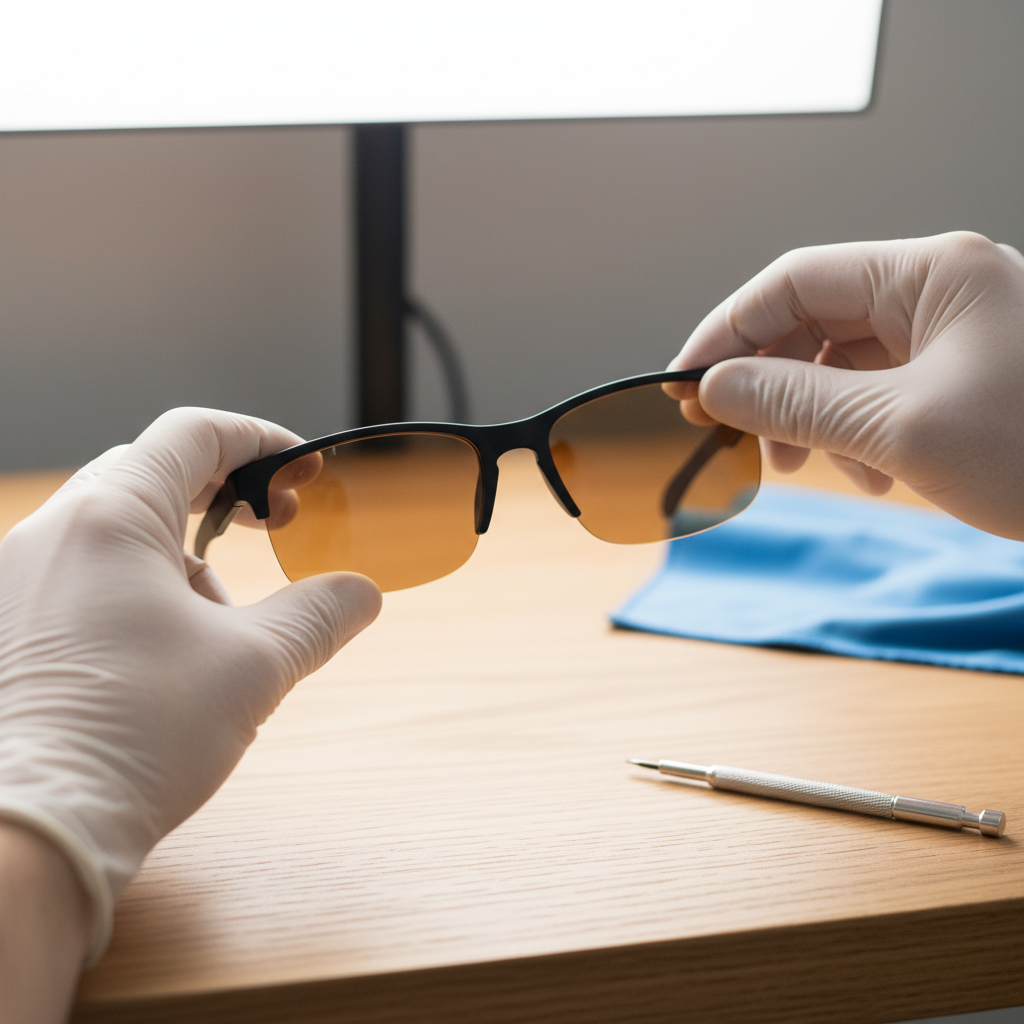
- Create a Clean Workspace: If possible, step away from sand, dust, or salt spray. Your car’s interior or a clean towel is better than nothing.
- Handle Lenses by the Edges: Use a microfiber cloth or nitrile gloves if you have them. This prevents oils from your fingers from smudging the optical surface.
- Learn and Follow the Motion: Don't brute force it. Each system has a specific sequence. It’s usually a gentle pull on the frame and a push on the lens. Practice at home until it’s second nature.
- Seat the New Lens: Start by inserting one edge of the lens into the frame’s groove (the bevel). Work your way around, gently pressing the lens into the channel until you feel or hear a definitive click.
- Perform a Visual and Physical Check: Look at the frame head-on. Is the lens seated evenly? Gently try to push the lens out from the inside. There should be no movement.
- Tighten Screws (If Applicable): For systems with screws, the rule is finger-tight, then a tiny quarter-turn with a microdriver. Over-torquing will strip the delicate threads.
Advanced Considerations for Prescription Wearers
For those of us who need prescription lenses, swapping is a more delicate operation. The shape and position of the lens directly influence its corrective power. This is where I see the most significant and often misunderstood issues.
Pro Tip: Why Base Curve and Vertex Distance Are Critical
Two parameters are vital for prescription sports glasses: vertex distance and base curve. In wraparound frames, these become even more important.
- Vertex Distance: The distance from the back surface of the lens to the front of your eye.
- Base Curve: The curvature of the front surface of thelens.
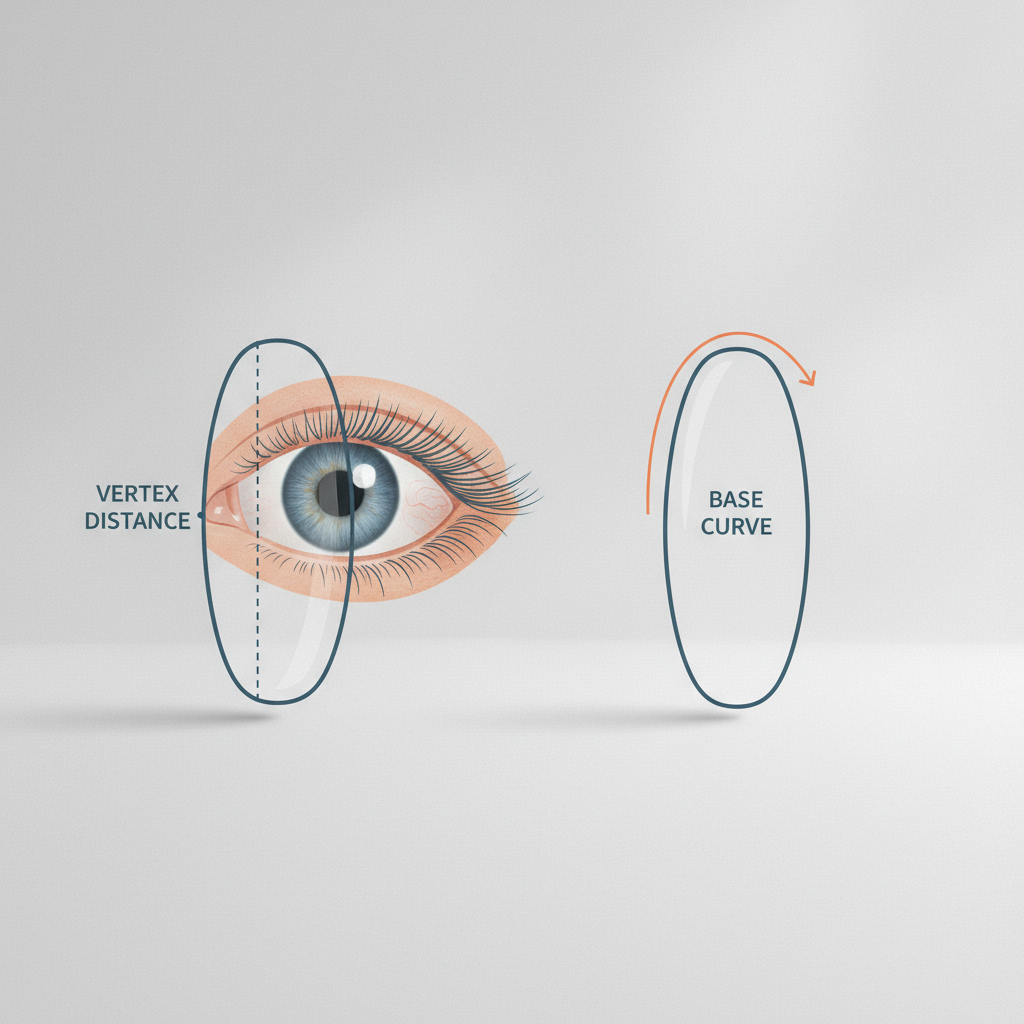
When you swap a prescription lens, especially in a high-wrap frame, even a millimeter of difference in how it’s seated can change the effective power. This effect is most noticeable for prescriptions stronger than ±4.00 diopters. A poorly seated lens can induce prism, distortion, and headaches. This is a key reason why it is crucial to minimize distortion in prescription sunglasses by ensuring a perfect fit.
Because of this complexity, I always advise getting any new prescription lenses for an interchangeable system fitted and verified by a qualified optical professional. They can ensure the optical center is correctly placed and that the base curve is compatible with your frame and prescription.
Building Your Lens Quiver: A Practical Guide
I encourage athletes to think of their lenses as a "quiver," with a specific tool for every condition. Here is a simple table to guide your selections.
| Light Condition | VLT Range | Recommended Tint Color | Use Case Example |
|---|---|---|---|
| Intense Sun / Snow | 5-15% | Dark Gray, Green, Mirror | High-altitude mountaineering, spring skiing |
| Bright, Direct Sun | 15-25% | Gray, Brown | Road cycling, open-water fishing |
| General Purpose / Mixed Sun & Cloud | 25-45% | Amber, Rose, Copper | Trail running, mountain biking |
| Overcast / Low Light / Dawn & Dusk | 45-85% | Yellow, Clear, Light Pink | Early morning runs, dense forest trails |
Wrapping Up: Key Takeaways
An interchangeable lens system is one of the most powerful tools in an athlete's kit. It provides the adaptability to maintain clear, safe, and efficient vision in any environment. Success hinges on understanding the technology, respecting the hardware, and practicing a clean, precise swapping technique. By matching your VLT and tint to the conditions, you move beyond simply protecting your eyes to actively enhancing your performance.
Frequently Asked Questions (FAQ)
Can I use a third-party lens in my frame? I strongly advise against it. Interchangeable systems are proprietary. A third-party lens is not guaranteed to fit correctly, which can compromise both the optical quality and, more importantly, the impact safety rating of the frame.
How do I clean my lenses without scratching them? First, rinse the lens with water to remove any large particles of dust or grit. Then, apply a small amount of lens cleaner and gently wipe with a clean microfiber cloth. Never wipe a dry, dirty lens.
Are interchangeable lenses as safe as fixed lenses? Yes, provided they are from a reputable manufacturer and are seated correctly in the frame. A properly locked lens in a frame that meets ANSI Z87.1 or similar impact standards offers excellent protection. The weak point is always an improperly seated lens.
Why don’t my photochromic lenses work in my car? Most photochromic lenses react to UV light. Because modern car windshields have a built-in UV filter, the lenses don't receive the stimulus they need to darken.
Disclaimer: This article is for informational purposes only and does not constitute professional medical advice. Consult with a qualified eye care professional for any concerns about your vision or for fitting prescription eyewear, especially if you have pre-existing conditions.


