



Lens Tints for Migraines & Light Sensitivity
Finding Relief: A Guide to Lens Tints for Migraines and Light Sensitivity
Living with migraines or severe light sensitivity—also known as photophobia—can feel like the world is turned up too bright. Everyday environments, from a sunlit street to a fluorescent-lit office, can become sources of discomfort and pain. While many solutions exist, one of the most immediate and practical tools for managing light-triggered symptoms is specialized lens tints.
This guide is designed to help you understand how different lens tints work and how to choose the right color and features for your specific needs. We'll explore the science behind light filtration, compare the most effective tints for indoor and outdoor use, and cover essential features like polarization and UV protection that contribute to overall comfort and eye health.
The Connection Between Light and Migraine Pain
For many, light isn't just an annoyance; it's a direct trigger. Photophobia is a defining symptom for over 80% of individuals who experience migraines. The discomfort stems from specific wavelengths of light, particularly in the blue-green part of the spectrum, which can activate nerve pathways involved in migraine pain.
Common light sources that can trigger or worsen symptoms include:
- Bright, direct sunlight
- Harsh fluorescent lighting in offices and stores
- Glare reflecting off surfaces like water, snow, or roads
- The bright screens of computers, tablets, and smartphones
By selectively filtering these problematic wavelengths, specialized lens tints can help reduce the overstimulation of the brain, providing significant relief and allowing you to navigate your day with greater comfort.
How Tints Work: More Than Just Darkening Your View
Not all tints are created equal. The effectiveness of a lens for migraine relief depends on its color, its density (how dark it is), and other integrated technologies.
Visible Light Transmission (VLT)
VLT measures the percentage of visible light that passes through a lens. A lower VLT means a darker lens, suitable for bright, sunny conditions. A higher VLT means a lighter lens, better for indoor or overcast environments. For migraine sufferers, the goal is to find a VLT that reduces overall brightness to a comfortable level without making it too dark to see clearly.
The Science of Color Filtration
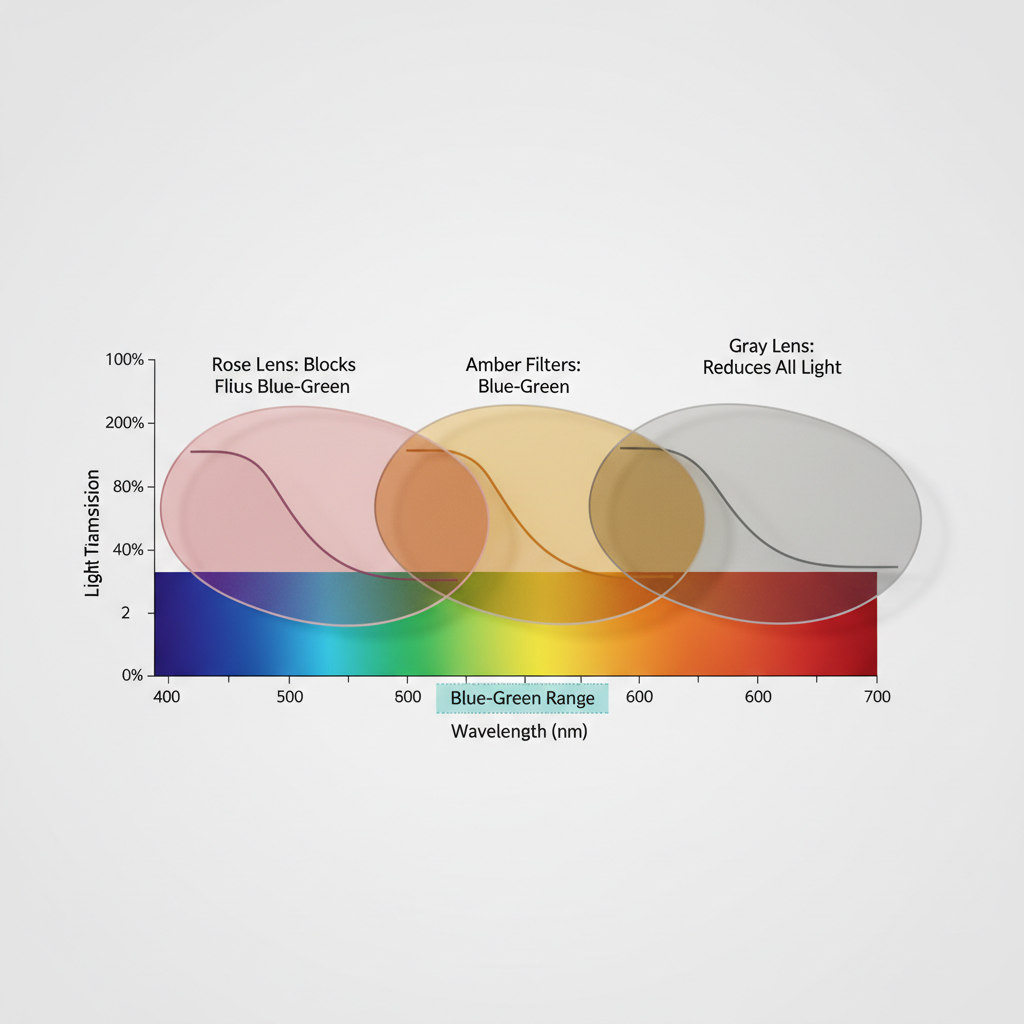
Different colors absorb and filter light in different ways. For light sensitivity, the most researched and effective tints are those that target the specific blue-green wavelengths (around 480-520 nm) known to be most aggravating.
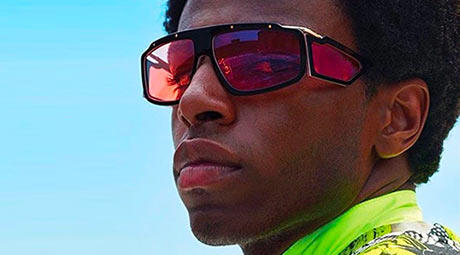
- FL-41 (Rose/Pink): This is one of the most well-known therapeutic tints. It is specifically designed to block a significant portion of blue-green light while letting other colors pass through. Many users find that the warm, rosy hue provides a calming effect, especially under fluorescent lights and in front of digital screens. Its typically higher VLT makes it ideal for indoor use.
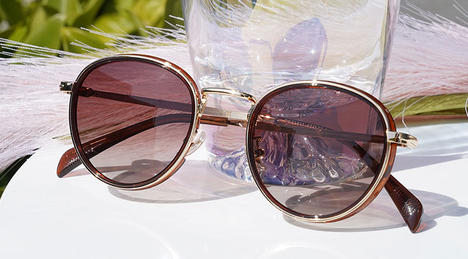
- Amber & Brown: These warm tints are excellent at enhancing contrast and filtering blue light. They are often used for driving and outdoor activities on overcast days, as they can make the environment appear sharper and brighter while still cutting glare.
- Gray & Green: As a neutral color, gray reduces overall brightness without significantly distorting color perception. This makes it a top recommendation from the American Optometric Association for driving in bright sunlight. Green tints function similarly, offering true-to-life color perception with a slight boost in contrast.
A Practical Guide to Choosing Your Tint
Selecting the right lens is a personal process based on where and when your symptoms are at their worst. A tint that works perfectly for office lighting may be too light for a day at the beach.
Indoor vs. Outdoor Environments
- For Indoor & Office Use: The primary challenge indoors is often fluorescent lighting and screen glare. A light FL-41 tint is the standard recommendation here. It reduces the harshness of artificial light without making your surroundings too dark, which could otherwise cause eye strain.
- For Outdoor & Bright Sunlight: In bright outdoor conditions, you need a darker lens with a lower VLT (typically 10-30%). Gray, green, and dark brown tints are excellent choices. Here, it is also critical to add polarization and ensure complete UV protection.
To help you decide, here is a comparison of the most common tints and their ideal applications:
| Tint Color | Primary Benefit | Best For Environment | VLT Range (Approx.) | Key Considerations |
|---|---|---|---|---|
| FL-41 (Rose/Pink) | Filters harsh blue-green light, reduces flicker | Indoor, Office, Screen Use | 50% - 80% | Clinically associated with migraine symptom relief. |
| Amber/Brown | Enhances contrast, filters blue light | Overcast days, Driving, General Outdoor | 15% - 40% | Can cause some color distortion; not ideal for tasks requiring perfect color accuracy. |
| Gray/Green | Reduces overall brightness with true color perception | Bright Sunlight, Driving | 10% - 30% | The most neutral option for minimizing color shift. |
The Critical Role of Polarization
Polarization is a separate feature from tint color and UV protection, but it's a game-changer for many with light sensitivity. It works by blocking horizontally reflected glare—the intense light that bounces off flat surfaces like a wet road, a car's dashboard, or the surface of water. This type of glare is a major source of discomfort and eye strain. By eliminating it, polarized lenses can dramatically improve visual comfort outdoors.
Common Misconception Debunked: Polarization does not equal UV protection. A lens can be polarized to cut glare but offer no protection from ultraviolet rays. Always verify that your lenses are also rated for UV400 protection. Additionally, be aware that polarization can sometimes make it difficult to view LCD screens, so it's wise to test them with your phone or car's display.
Beyond Tint: Essential Features for Complete Protection
To get the most relief from your eyewear, the tint is just one piece of the puzzle. Frame fit and lens quality are equally important.
UV Protection is Non-Negotiable
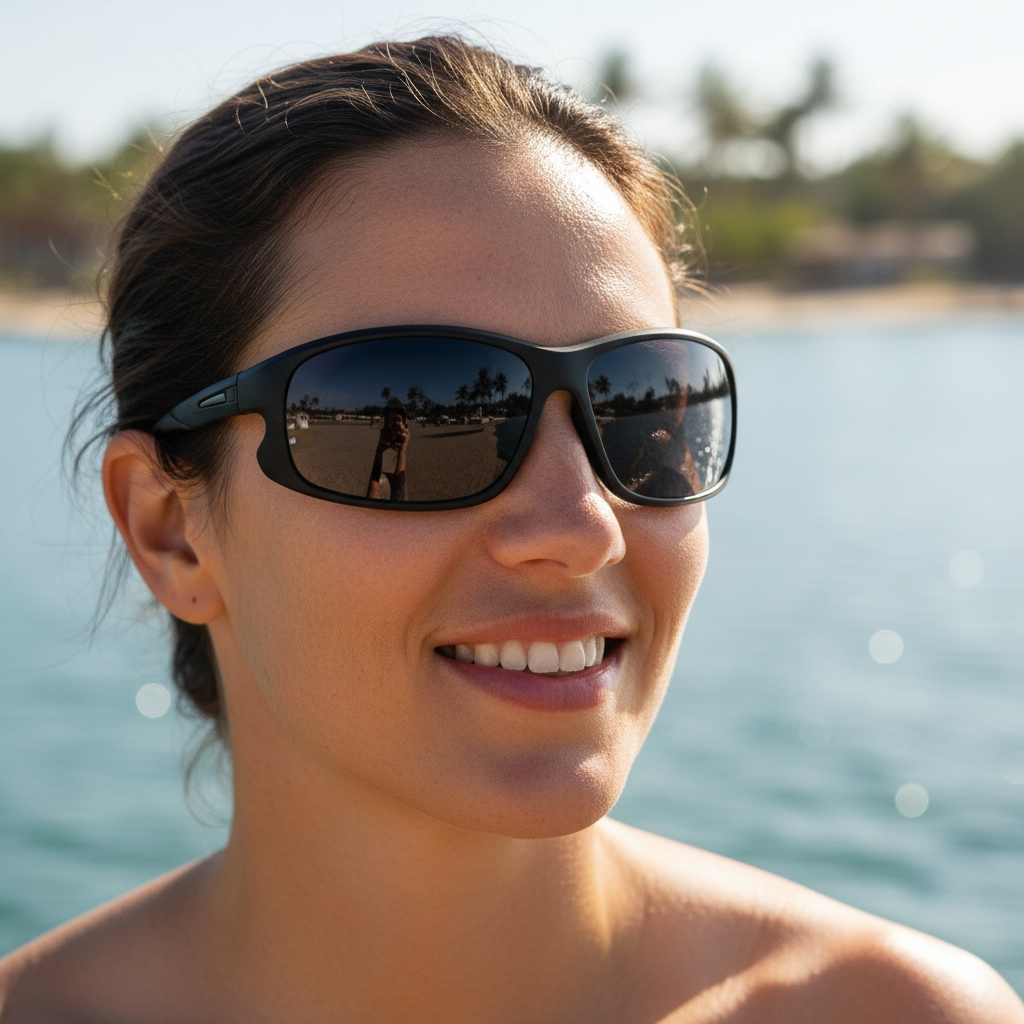
This is a critical safety issue. A dark lens without proper UV filtering is more dangerous than wearing no sunglasses at all. As explained by experts at the MD Anderson Cancer Center, the dark tint causes your pupils to dilate, which allows even more damaging UV radiation to enter your eye. Always choose lenses labeled "UV400" or "100% UVA/UVB Protection," which block all harmful ultraviolet rays.
Frame Fit and Style
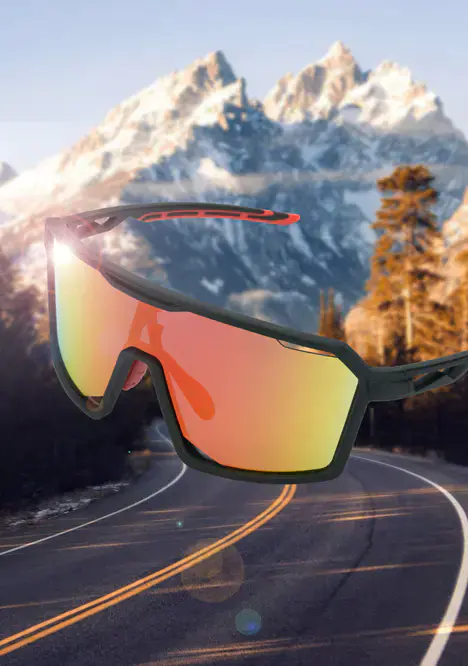
Light doesn't just enter from the front. It can leak in from the sides, top, and bottom of your frames, causing distracting reflections and glare. A study on ocular UV exposure published in Photochemical & Photobiological Sciences found that wraparound frames and goggles offered the most complete protection by minimizing this peripheral light leakage. When choosing frames, look for larger lenses or styles that sit closer to your face for a better seal against unwanted light.
Prescription Accuracy and Lens Coatings
If you require a prescription, accuracy is paramount. An incorrect pupillary distance (PD) or a poorly fitted lens can cause distortion and eye strain, potentially triggering the very symptoms you're trying to prevent. For those with higher prescriptions, consider high-index lens materials, which are thinner and lighter, and always pair them with an Anti-Reflective (AR) coating. An AR coating minimizes internal reflections off the back surface of the lens, further reducing visual "noise" and improving clarity.
Wrapping Up: Finding Your Perfect Fit
Choosing the right tinted lenses is a powerful, proactive step toward managing migraines and light sensitivity. By understanding the function of different tints, VLT, and polarization, you can select eyewear tailored to the environments that challenge you most.
Remember to prioritize a proper fit and insist on certified UV400 protection. It may be beneficial to try lenses for a 7-14 day period, keeping a short diary of your symptoms to evaluate their effectiveness in different lighting conditions. This methodical approach will help you find a solution that not only protects your eyes but also brings you significant, lasting comfort.
Frequently Asked Questions (FAQ)
Are darker sunglasses better for migraines? Not necessarily. While darker lenses (lower VLT) are better for bright sunlight, they can cause eye strain indoors. The most effective approach is matching the tint's VLT to the environment. For indoor relief, a lighter therapeutic tint like FL-41 is often more effective than a dark gray lens.
How are migraine glasses different from regular sunglasses? The primary difference is the specificity of the tint. Most standard sunglasses use a gray or brown tint to reduce overall brightness. Migraine glasses, particularly those with an FL-41 tint, are engineered to filter the specific wavelengths of blue-green light that are known triggers for photophobia and migraine attacks.
Can I wear tinted migraine glasses for driving? For daytime driving, gray or brown polarized lenses are excellent choices for reducing glare and brightness. Lighter tints like yellow can enhance contrast in low-light or foggy conditions, but very dark or color-distorting tints should be avoided, especially at night. Always ensure your chosen tint allows you to see traffic signals and signs clearly.
Disclaimer: This article is for informational purposes only and does not constitute professional medical advice. The information provided should not be used for diagnosing or treating a health problem or disease. If you have or suspect you have a medical problem, promptly contact your professional healthcare provider. Always consult with a qualified ophthalmologist or optometrist before making decisions about your eye health and eyewear.


