


















Lutein and Zeaxanthin: Benefits for Post-Op Retinal Care
Executive Summary: Fortifying Your Vision for Surgery and Beyond
Eye surgery, while a modern marvel for restoring vision, places significant metabolic stress on the delicate tissues of the retina. Preparing for and recovering from this stress is not just about following a surgeon's orders, but also about building a robust nutritional foundation. This article examines the critical, evidence-based role of two specific carotenoids—lutein and zeaxanthin—in supporting macular health and promoting a smooth visual recovery after ophthalmic procedures. By translating complex clinical research into practical dietary and supplementation strategies, we provide a roadmap for patients to proactively partner in their own ocular healing. We will explore how these nutrients function as the eye’s internal defense system, why starting supplementation before your procedure is a clinical best practice, and how to implement these findings for both short-term recovery and long-term retinal resilience.
The Macula's Natural Shield: Understanding Lutein and Zeaxanthin
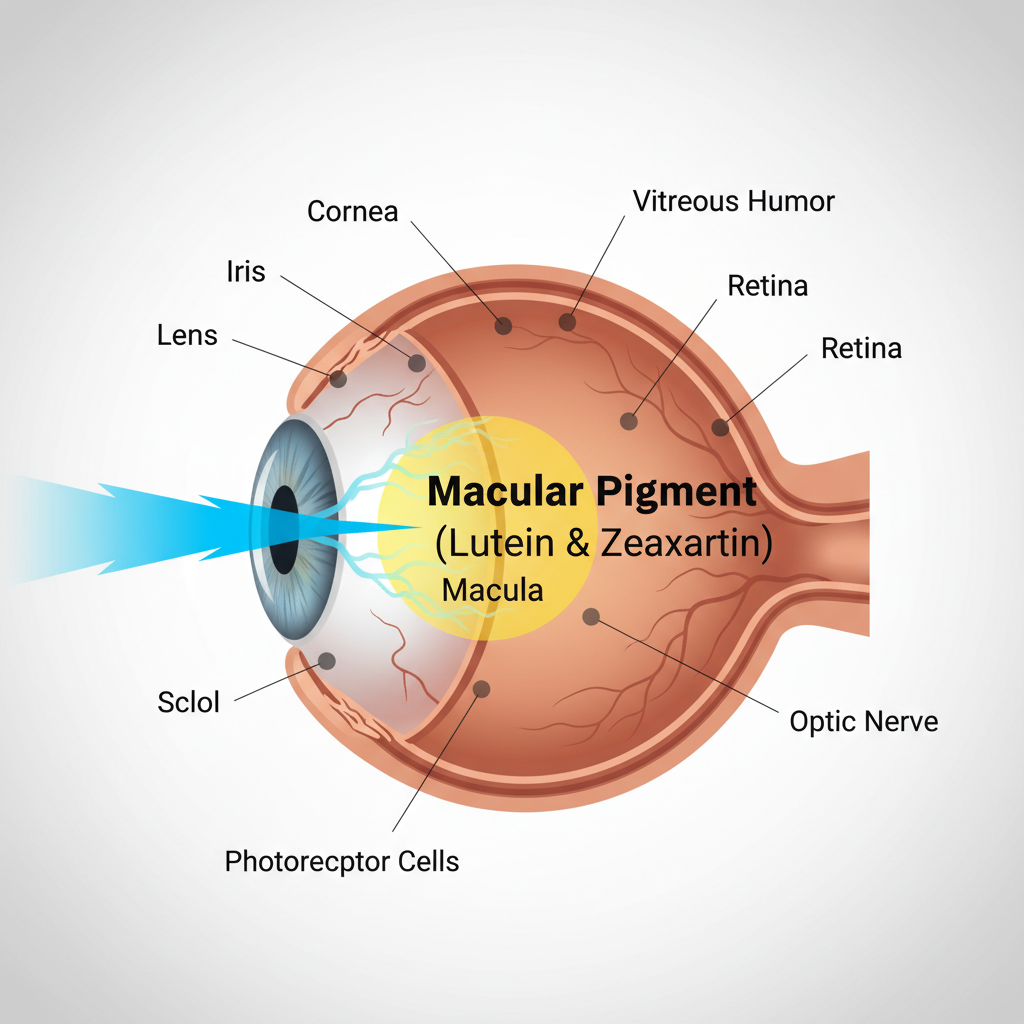
The human eye is a marvel of biological engineering, equipped with its own set of protective mechanisms. At the heart of our sharpest, most detailed central vision lies the macula, a small but vital part of the retina. Nature has endowed this area with a unique defensive layer known as the macular pigment, which is composed almost exclusively of lutein and zeaxanthin.
These two compounds are powerful antioxidants belonging to the carotenoid family, the same family of pigments that give foods like carrots and peppers their vibrant colors. Unlike other carotenoids, lutein and zeaxanthin are selectively accumulated in the eye, where they perform two critical functions:
-
Filtering High-Energy Blue Light: They act as the body’s own internal sunglasses. According to a comprehensive review in Nutrients, macular pigment absorbs a significant portion of high-energy visible (HEV) blue light, preventing it from reaching and damaging the sensitive photoreceptor cells of the retina. This is particularly relevant during eye surgery, where patients are exposed to intense overhead lighting.
-
Neutralizing Oxidative Stress: As potent antioxidants, they neutralize free radicals—unstable molecules that cause cellular damage. Surgical procedures inherently trigger an inflammatory cascade and a surge in oxidative stress. A robust macular pigment, fortified by adequate lutein and zeaxanthin, provides a crucial buffer against this damage, as demonstrated in numerous studies, including the landmark Age-Related Eye Disease Studies (AREDS/AREDS2).
The density of this protective layer is measurable and known as Macular Pigment Optical Density (MPOD). A higher MPOD is consistently linked to better visual performance and a lower risk of degenerative eye conditions. A meta-analysis of nine randomized controlled trials published in PubMed confirmed that daily supplementation with 10-20 mg of lutein significantly increases MPOD and improves visual acuity.
Optimizing Surgical Outcomes: The Pre-Operative Advantage
A common misconception is that nutritional support is a purely post-operative concern. However, expert clinical practice reveals a more proactive approach is significantly more effective. The physiological stress of surgery doesn't begin when the patient leaves the operating room; it starts with the first incision. This process generates a wave of inflammation and oxidative stress that a well-prepared body is better equipped to handle.
Expert Insight: The Importance of Pre-Loading Based on clinical experience, ophthalmologists and nutritionists increasingly recommend starting lutein and zeaxanthin supplementation at least 6-8 weeks before a scheduled eye surgery. The logic is straightforward: building up macular pigment density is not an overnight process. This pre-operative "loading" period ensures that the retina’s antioxidant reserves are at their peak at the moment of maximum surgical stress, providing a more robust defense against the intense light from operating microscopes and the subsequent inflammation.
This pre-emptive strategy offers several benefits for the healing eye:
- Enhanced Photoprotection: A denser macular pigment provides a stronger shield during the procedure itself.
- Reduced Post-Operative Inflammation: By helping to neutralize free radicals from the outset, these antioxidants can help temper the body’s inflammatory response, potentially leading to a more comfortable recovery.
- Improved Visual Quality: Post-operative complaints often include increased glare sensitivity and reduced contrast. As studies have shown, a healthy macular pigment is directly linked to better contrast acuity and reduced glare, which can translate into a faster return to high-quality vision.
Evidence-Based Application: Dosage, Diet, and Absorption
Translating the science of carotenoids into an effective regimen requires adherence to clinically validated dosages and an understanding of how to maximize their absorption.
The AREDS2 Gold Standard
The most definitive guidance on supplementation comes from the second Age-Related Eye Disease Study (AREDS2), a large-scale clinical trial sponsored by the National Eye Institute. The study refined its original formula, establishing a new gold standard for ocular nutrition.
Key findings from the AREDS2 study include:
- Optimal Dosage: A daily dose of 10 mg of lutein and 2 mg of zeaxanthin was found to be effective.
- Improved Safety: The study replaced beta-carotene with lutein and zeaxanthin. This was a critical modification, as beta-carotene had been linked to an increased risk of lung cancer in smokers. The new formulation is considered safe for everyone.
- Proven Efficacy: For individuals at high risk for Age-Related Macular Degeneration (AMD), the AREDS2 formula was shown to reduce the risk of progression to advanced AMD by about 25%.
Building a Vision-Protecting Diet
While supplements provide a convenient, standardized dose, a "food first" philosophy remains a cornerstone of good health. Incorporating dietary sources of lutein and zeaxanthin enhances your overall nutritional status.
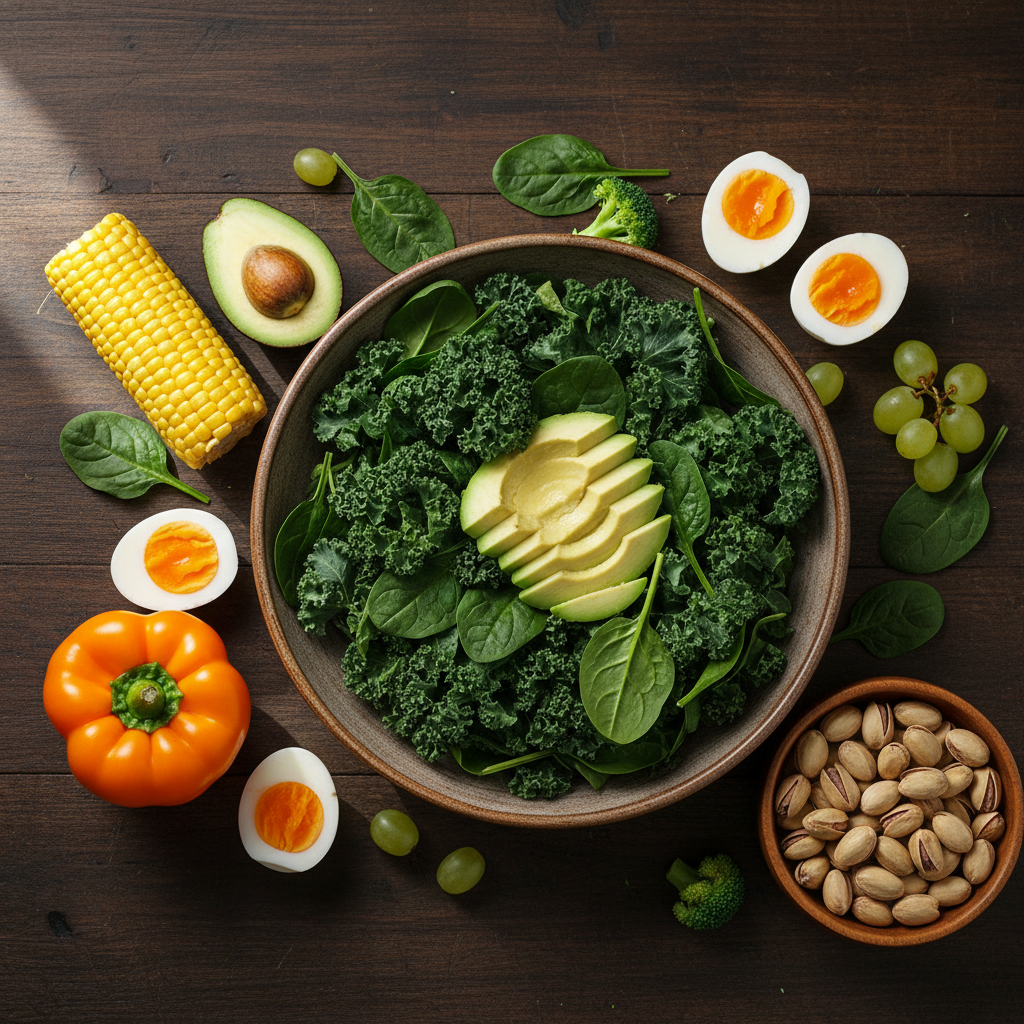
| Nutrient | Excellent Food Sources | Serving Size Example |
|---|---|---|
| Lutein | Kale, Spinach, Swiss Chard, Parsley | 1 cup, raw |
| Zeaxanthin | Corn, Orange Bell Peppers, Goji Berries | 1 medium ear of corn |
| Both | Egg Yolks, Pistachios | 1 large egg yolk |
Bioavailability Insight: The Role of Fats and Food Matrix Simply eating these foods isn't enough; absorption is key. Lutein and zeaxanthin are fat-soluble, meaning they are best absorbed when consumed with healthy fats. Adding a drizzle of olive oil to your salad or eating an avocado alongside your eggs can significantly boost uptake. Furthermore, research published in the American Journal of Clinical Nutrition has shown that the lutein and zeaxanthin in egg yolks are exceptionally bioavailable due to the fats naturally present in the yolk. This makes eggs a particularly efficient food for boosting macular pigment.
A Note on Supplementation Safety
For patients taking other medications, particularly blood thinners like warfarin, it's wise to maintain consistency. While these carotenoids do not typically interact with such drugs, practitioners advise against starting or stopping high-dose supplements abruptly. Maintain a steady, consistent intake and always inform your primary care physician of any supplements you are taking.
Beyond Recovery: A Lifetime of Retinal Resilience
The benefits of maintaining adequate lutein and zeaxanthin levels extend far beyond the surgical recovery window. This nutritional strategy is an investment in long-term visual wellness.
The same mechanisms that protect the eye from acute surgical stress also defend it against the chronic, low-grade damage that accumulates over a lifetime. This is most evident in the prevention of age-related eye diseases.
- Age-Related Macular Degeneration (AMD): As the AREDS2 trial demonstrated, these nutrients are a cornerstone of managing AMD risk. They protect the macula from the cumulative effects of light exposure and oxidative stress, which are primary drivers of the disease.
- Cataracts: While the evidence is strongest for AMD, some research suggests a protective role against cataracts. A long-term study published in The American Journal of Clinical Nutrition found that individuals who supplemented with Vitamin C for over 10 years had a 60% lower risk of nuclear cataract progression, highlighting the importance of overall antioxidant status, to which lutein and zeaxanthin contribute.
Ultimately, nutritional support should be part of a holistic eye health plan that includes regular eye exams and consistent use of sunglasses that block 100% of UVA and UVB rays. You can learn more about selecting the right pair in our guide to sunglasses for post-cataract surgery.
A Proactive Strategy for Visual Wellness
Optimizing your nutritional status with lutein and zeaxanthin is one of the most powerful, proactive steps you can take to support your vision through surgery and for the rest of your life. These natural pigments act as your retina's first line of defense, filtering harmful light and neutralizing the oxidative stress that accompanies both surgery and aging.
By embracing an evidence-based approach—beginning supplementation 6-8 weeks pre-operatively, adhering to the 10 mg lutein and 2 mg zeaxanthin dosage from the AREDS2 study, and consuming them with healthy fats for maximum absorption—you become an active participant in your own ocular health. This strategy not only paves the way for a smoother recovery but also builds a foundation for a lifetime of clearer, healthier vision.
Disclaimer: This article is for informational purposes only and does not constitute professional medical advice. The information contained herein is not intended to diagnose, treat, cure, or prevent any disease. Always consult with a qualified healthcare professional or your ophthalmologist before beginning any new supplement regimen, especially before or after surgery. Individual needs and medical conditions can vary significantly.
References
- National Eye Institute (NEI). "Age-Related Eye Disease Studies (AREDS/AREDS2)." https://www.nei.nih.gov/eye-health-information/clinical-trials/age-related-eye-disease-studies-aredsareds2
- Ma, L., & Lin, X. M. (2019). "Effects of Lutein and Zeaxanthin on Aspects of Visual Function." PubMed. https://pubmed.ncbi.nlm.nih.gov/31887124/
- Chung, H. Y., et al. (2007). "Lutein from Egg Yolks Is More Bioavailable than from Spinach." The American Journal of Clinical Nutrition. https://pubmed.ncbi.nlm.nih.gov/16988128/
- Mares-Perlman, J. A., et al. (2000). "Vitamin Supplement Use and Incident Cataracts in a Population-based Study." The American Journal of Clinical Nutrition. https://pubmed.ncbi.nlm.nih.gov/11074813/
- Roberts, J. E. (2011). "Mechanisms of Ocular Light Damage." PubMed. https://pubmed.ncbi.nlm.nih.gov/21617534/


