












Makeup & Dailies: A Guide to Clear, Healthy Eyes
The Ultimate Guide to Wearing Makeup with Daily Contact Lenses
For many, makeup and contact lenses are two essential parts of their daily routine. But combining them can sometimes lead to irritation, cloudy vision, and even health risks if not done correctly. The good news is you don't have to choose between clear vision and a flawless makeup look. With the right techniques and product choices, you can enjoy both comfortably and safely.
This guide provides a comprehensive, expert-backed approach to harmonizing your makeup routine with daily disposable contact lenses. We'll cover everything from the non-negotiable order of application to selecting lens-friendly products and troubleshooting common issues.
TL;DR: Your Quick-Start Guide
- Lenses First: Always insert your daily contacts before applying any makeup.
- Lenses Off First: Always remove your lenses before taking off your makeup.
- Choose Wisely: Opt for water-based, oil-free, and powder-free products around the eyes.
- Hygiene is Everything: Wash your hands thoroughly before touching your lenses or eyes.
- Dailies are Single-Use: Never reuse or sleep in daily disposable lenses.
The Golden Rules: Application, Timing, and Removal
Mastering the sequence of your routine is the single most effective way to prevent makeup from interfering with your contact lenses. It's a simple change that dramatically reduces the risk of contamination and discomfort.
Lenses First, Always
This is the most critical rule. Your hands should be freshly washed and dried with a lint-free towel before you handle your lenses. By inserting your contacts before any makeup, you ensure a clean lens surface and prevent microscopic makeup particles, oils, or creams from getting trapped between the lens and your cornea.
The U.S. Food and Drug Administration (FDA) explicitly advises putting contacts in before applying makeup to minimize the risk of contaminating the lens. This simple step helps prevent irritation, bacterial growth, and potential eye infections.
Pro Tip: The 10-Minute Settling Period
Based on common practitioner advice, wait about 10 minutes after inserting your lenses before you begin applying eye makeup. This allows the lenses to settle comfortably on your eyes and for your natural tear film to stabilize. Rushing this step can cause a freshly placed lens to shift or trap any early makeup fallout.
The Reverse Order: Removal Protocol
At the end of the day, the rule reverses: lenses out first. With clean, dry hands, remove your contact lenses before you use any makeup removers, cleansers, or wipes. Oil-based and creamy removers are effective at breaking down makeup, but they can leave a stubborn, blurry film on your lenses that is impossible to clean. Worse, they can damage the delicate surface of a soft contact lens. By removing your lenses first, you protect them from product residue and ensure your eyes are clear for the cleansing process.
Building a Lens-Friendly Makeup Kit
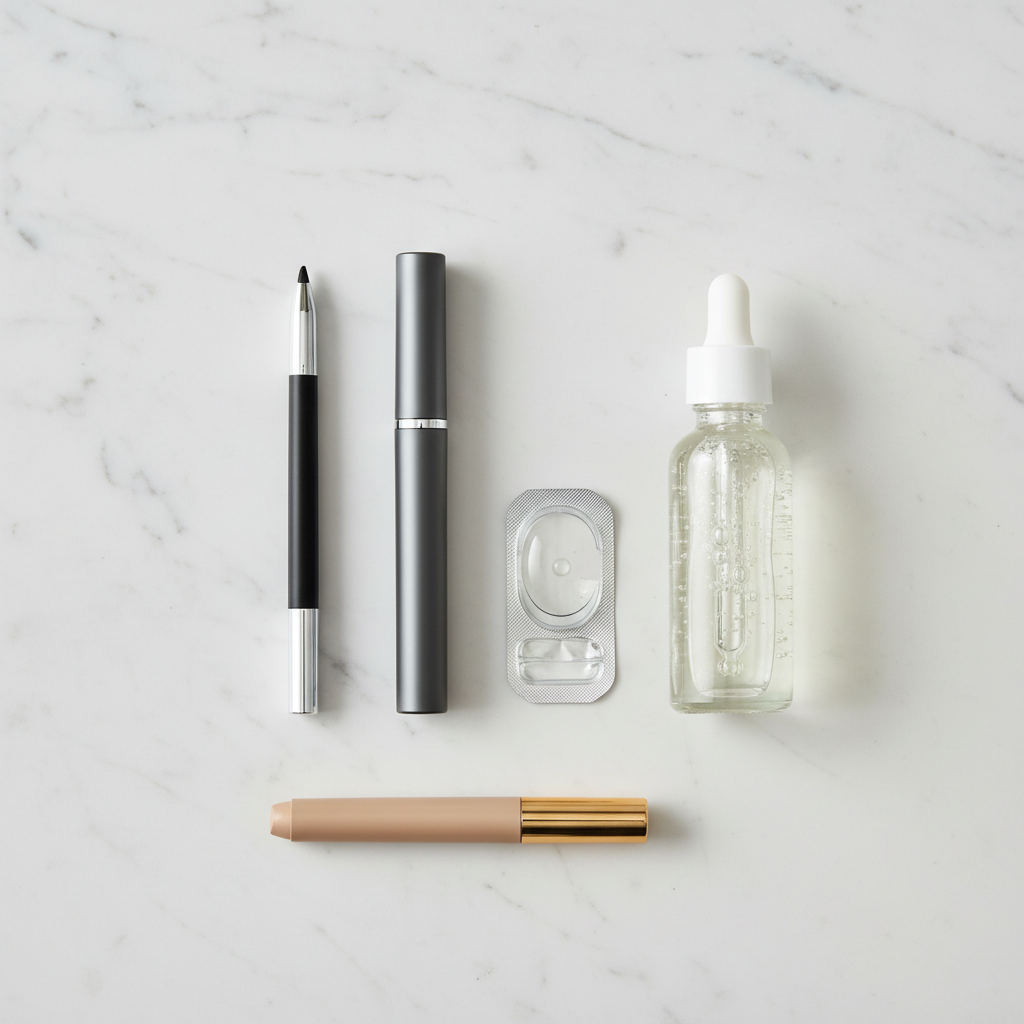
Not all makeup is created equal, especially when it comes to contact lens wear. The goal is to minimize particles, oils, and flakes that can migrate into the eye. Choosing the right formulas can make a significant difference in your all-day comfort.
Eyeliner, Mascara, and Eyeshadow: Best Practices
This is where the most common problems originate. Here’s how to choose products that work with your lenses, not against them.
| Product Type | Recommended Choice | What to Avoid | Why It Matters |
|---|---|---|---|
| Eyeliner | Retractable Pencils, Gel Liners with a fine brush | Kohl Pencils, Glitter Liners, Applying to the waterline | Kohl and glitter are prone to flaking. Applying liner to the inner waterline (tightlining) directly blocks meibomian glands and deposits material right next to the lens. |
| Mascara | Tubing Mascaras, Hypoallergenic Formulas | Waterproof Mascaras, Fiber Mascaras | Waterproof mascara is difficult to remove and can leave a residue. Fiber mascaras contain tiny particles that can flake off and get into your eyes, causing severe irritation. |
| Eyeshadow | Cream or Stick Formulas, Liquid Eyeshadows | Loose Powders, Glittery Pressed Powders | Creams and liquids adhere to the skin and don't create airborne dust or fallout that can land in your eyes. |
| Makeup Remover | Oil-Free, Water-Based Formulas, Micellar Water | Oil-Based Cleansers, Heavy Creams | Oils can permanently cloud soft contact lenses and are difficult to wash off your hands, leading to smudged lenses on the next application. |
Expert Warning: The Dangers of Tightlining
Applying eyeliner to the wet, inner rim of your eyelid—a technique known as tightlining—is particularly risky for contact lens wearers. This area is home to the meibomian glands, which produce the essential oils for a healthy tear film. Blocking these glands can worsen dry eye symptoms. Furthermore, it places makeup in direct contact with the lens, leading to smudging and a high risk of particles getting trapped underneath.

Troubleshooting Common Issues
Even with the best habits, you might occasionally experience discomfort. Here’s how to handle the most common complaints.
Myth Debunked: "It's okay to reuse daily lenses if I only wore them for a few hours."
This is one of the most dangerous misconceptions about daily disposable lenses. These lenses are not designed or approved for reuse. The moment a blister pack is opened, the sterile environment is compromised. A study published in the journal Optometry and Vision Science found that 95% of reused daily disposable lenses became contaminated with bacteria like Staphylococcus. The saline solution in the original packaging is not a disinfectant and has no cleaning properties. Reusing a daily lens significantly increases your risk of a serious eye infection.
Your Troubleshooting Checklist
If you experience any of these issues, follow these steps.
-
Problem: Sudden Dryness or Discomfort
- Cause: Often caused by reduced blinking during screen use, dry air (HVAC, airplanes), or a small particle on the lens.
- Solution: First, try blinking several times. If that doesn't work, use preservative-free rewetting drops specifically marked as safe for soft contact lenses. If discomfort persists, remove the lens, discard it, and use a fresh one.
-
Problem: Cloudy or Blurry Vision
- Cause: This is almost always due to a film of oil or protein on the lens surface, typically from makeup, moisturizers, or natural deposits from your tears.
- Solution: Remove the lens immediately. Since you're wearing dailies, the solution is simple: throw it away and start fresh with a new, clean lens after washing your hands.
-
Problem: A "Gritty" or Scratchy Feeling
- Cause: This signals a foreign body, like an eyelash or a speck of makeup, is trapped under the lens. It could also indicate a small tear in the lens itself.
- Solution: Remove the lens right away. Carefully inspect it for any tears or debris. If it’s a daily disposable, it is always safest to discard it. You can try to rinse your eye with sterile saline before inserting a new lens. If the feeling continues after inserting a new lens, remove it and do not wear contacts until you can see an eye doctor.
When to Stop and See an Eye Doctor
Your daily disposables should feel comfortable throughout the day. If you experience any "red flag" symptoms, it's crucial to stop wearing your lenses and seek professional medical advice immediately. According to health authorities like the Centers for Disease Control and Prevention (CDC), delaying treatment for some eye conditions can lead to serious, vision-threatening complications like microbial keratitis.
Seek Immediate Care for These Symptoms:
- Significant eye pain that doesn't resolve upon lens removal
- Unusual and persistent sensitivity to light
- Sudden blurry vision or a decrease in vision
- Intense, lasting redness in the eye
- Any colored or thick discharge
Key Takeaways: Your Path to Clear, Comfortable Eyes
Combining makeup with daily contact lenses is entirely manageable with a smart and hygienic approach. By following these core principles, you can protect your eye health without compromising your personal style.
- Order of Operations is Key: Lenses go in before makeup, and they come out before makeup removal. No exceptions.
- Curate Your Makeup Bag: Choose cream-based products over powders, avoid waterproof mascara, and never apply eyeliner to your inner waterline.
- Listen to Your Eyes: If a lens is uncomfortable, cloudy, or irritating, remove it. A fresh daily lens is the best fix.
- Dailies Mean Single-Use: Never top-off, rinse, or reuse a daily disposable lens. The health risks are not worth it.
By integrating these habits, you can confidently wear your favorite makeup looks while enjoying the clear, comfortable vision that daily disposable lenses provide.
Frequently Asked Questions (FAQ)
Can I use waterproof mascara with my daily contacts? It's strongly discouraged. Waterproof formulas are oil-based and contain substances that can flake off and adhere to the lens. They are also difficult to remove, requiring oil-based removers that can damage your lenses and irritate your eyes.
How often should I replace my eye makeup? To prevent bacterial growth, you should replace mascara and liquid eyeliners every 2-3 months. Sharpen eyeliner pencils before each use to create a fresh surface.
What are the best rewetting drops to use? Always choose a product that is labeled "preservative-free" and explicitly states it is safe for use with soft contact lenses. Using the wrong drops can cause irritation and damage the lens material.
I have naturally dry eyes. Can I still wear makeup with contacts? Yes, but with extra care. Stick to the most lens-friendly products (creams, tubing mascara), be diligent about your application and removal routine, and use preservative-free rewetting drops proactively throughout the day to maintain moisture.
Disclaimer: This article is for informational purposes only and does not constitute professional medical advice. Always consult with a qualified eye care professional for any health concerns, before starting a new contact lens regimen, or if you experience any of the "red flag" symptoms mentioned. Do not disregard professional medical advice or delay in seeking it because of something you have read here.


