










Medications and UV Sensitivity: Hidden Risks to Your Vision
Executive Summary: The Unseen Side Effect
Many of us diligently follow our prescribed medication regimens without realizing they can carry a hidden risk: a heightened sensitivity to ultraviolet (UV) radiation. This isn't just about being more prone to sunburn; common medications, from antibiotics to blood pressure pills, can make your eyes significantly more vulnerable to damage from sunlight. This condition, known as drug-induced photosensitivity, can accelerate the development of serious eye conditions like cataracts and cause painful "sunburns" on the surface of your eye.
This guide provides a crucial overview of the medications known to cause photosensitivity, explains the specific ways UV light can harm your eyes when you're on these treatments, and outlines an essential, non-negotiable protection plan. Understanding this risk is the first step toward safeguarding your vision while managing your health.
What is Drug-Induced Ocular Photosensitivity?
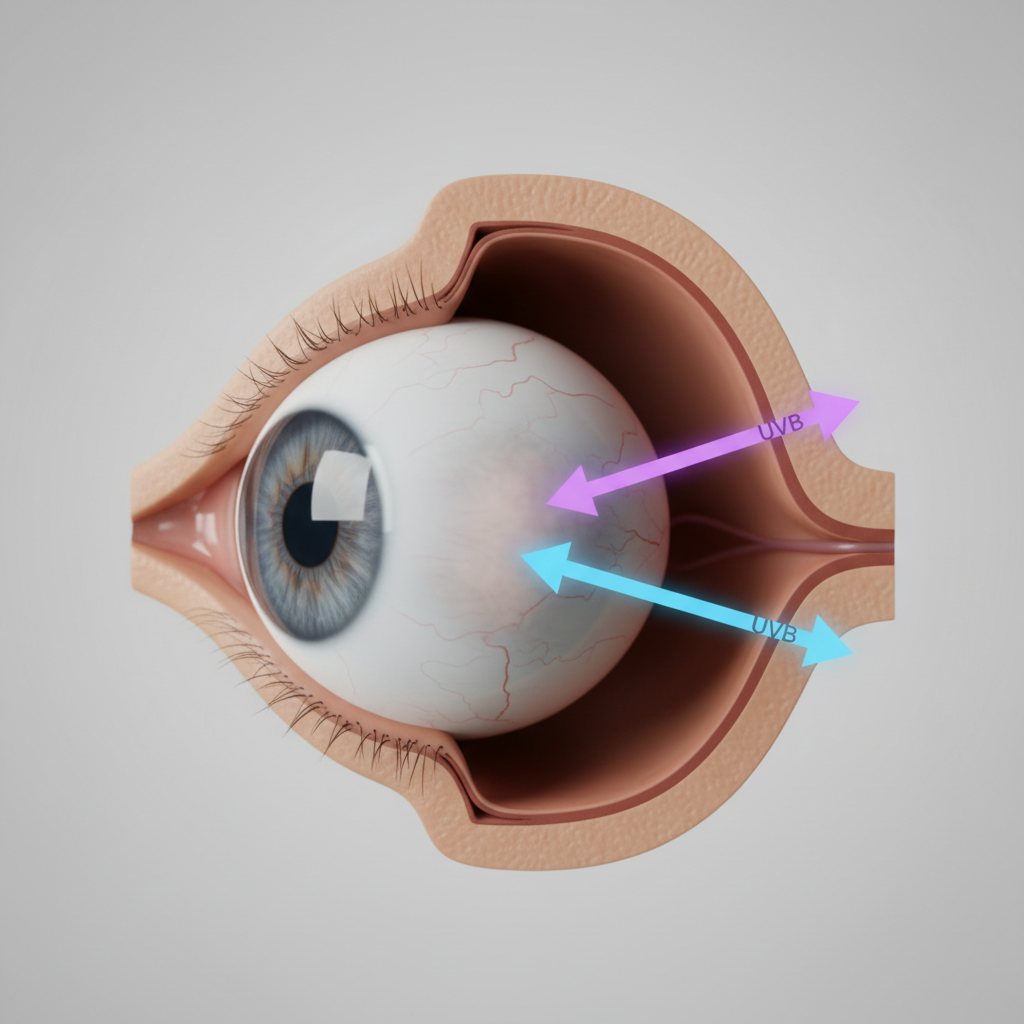
When you take a photosensitizing medication, its molecules circulate throughout your body, including to the delicate tissues of your eyes. When UV radiation from the sun enters the eye, these molecules can absorb the energy. This absorption triggers a chemical reaction that releases unstable compounds, like reactive oxygen species (ROS), which can damage the cells in your cornea, lens, and retina.
In clinical practice, this reaction is often underestimated. A key heuristic is the 'two-hour rule': for patients starting a known photosensitizer like the antibiotic doxycycline, peak sensitivity typically occurs 2-3 hours after taking a dose. This makes midday sun exposure particularly hazardous.
The damage can manifest in two primary ways:
- Phototoxicity: This is the most common reaction. It's a direct, dose-dependent cellular injury, much like a severe sunburn. The more medication you take and the more sun you're exposed to, the worse the reaction.
- Photoallergy: A less common, immune-mediated response where UV light alters the drug's structure, causing your body to see it as a foreign invader and launch an allergic reaction.
Regardless of the mechanism, the outcome is an increased risk of both immediate discomfort and long-term, irreversible eye damage.
Common Medications That Increase UV Risk
This list covers major categories of drugs known to cause photosensitivity. If you are taking any medication from these classes, it is vital to discuss sun safety with your doctor or pharmacist.
| Medication Category | Common Examples (Brand Names) | Primary Use |
|---|---|---|
| Antibiotics | Tetracyclines (Doxycycline), Fluoroquinolones (Ciprofloxacin), Sulfonamides (Bactrim) | Bacterial Infections, Acne, Rosacea |
| NSAIDs | Ibuprofen (Advil), Naproxen (Aleve), Ketoprofen | Pain Relief, Inflammation |
| Diuretics | Hydrochlorothiazide (HCTZ), Furosemide (Lasix) | High Blood Pressure, Edema |
| Retinoids | Isotretinoin (Accutane), Acitretin | Severe Acne, Psoriasis |
| Cardiovascular Drugs | Amiodarone, Quinidine | Irregular Heart Rhythms |
| Antihistamines | Diphenhydramine (Benadryl) | Allergies |
| Psychotropic Drugs | Chlorpromazine, Amitriptyline, Imipramine | Mental Health Conditions |
Disclaimer: This list is for informational purposes and is not exhaustive. New medications and individual reactions can vary. Always consult with a healthcare professional for advice tailored to your specific health situation and prescriptions.
The Hidden Dangers: How Photosensitivity Harms Your Eyes
Increased UV sensitivity is more than just squinting in the sun. It exposes your eyes to a higher effective dose of radiation, accelerating damage that can compromise your vision.
- Corneal Sunburn (Photokeratitis): This is an intensely painful inflammation of the cornea, the eye's clear outer layer. Symptoms include severe pain, a gritty feeling, extreme light sensitivity, and excessive tearing. It's a direct result of acute UV overexposure.
- Accelerated Cataract Formation: The link between UV exposure and cataracts is well-established. A study of cataract prevalence in Taiwan found that individuals who didn't wear sunglasses had a 57% increased risk of cataracts. Photosensitizing drugs can amplify this effect. Research from the National Eye Institute reveals the underlying mechanism: in the low-oxygen environment of the lens, UV light triggers a process called glycation, causing proteins to clump together and form the cloudy opacities we know as cataracts.
- Retinal Damage: While the evidence linking UV to Age-Related Macular Degeneration (AMD) is less conclusive than for cataracts, researchers agree that limiting UV exposure is a "prudent precaution." A review published in PubMed Central notes that short-wavelength blue light (400–440 nm) can generate reactive oxygen species in the retina, a key driver of macular damage.
- Eyelid Cancers: The skin on your eyelids is incredibly thin and vulnerable. According to the MD Anderson Cancer Center, up to 90% of eyelid cancers are basal cell carcinomas, directly linked to sun exposure.
Your Essential Protection Plan: A Non-Negotiable Checklist
If you are taking a photosensitizing medication, standard sunglasses may not be enough. Your approach to sun protection must be deliberate and comprehensive.
1. Mandate UV400 Protection: The label "UV400" means the lenses block 100% of UVA and UVB rays up to 400 nanometers. Some standards only require protection up to 380 nm, but a technical report in PubMed highlights that the 380-400 nm band contains significant high-energy radiation. Insisting on UV400 closes this critical safety gap.
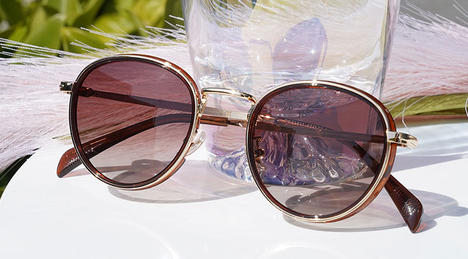
2. Ignore Lens Darkness (The Darkness Fallacy): One of the most dangerous myths is that a darker lens provides more protection. As multiple sources, including the MD Anderson Cancer Center, warn, dark lenses without certified UV protection are more dangerous than no glasses at all. The dark tint causes your pupils to dilate, opening a wider path for damaging, invisible UV radiation to enter the eye.
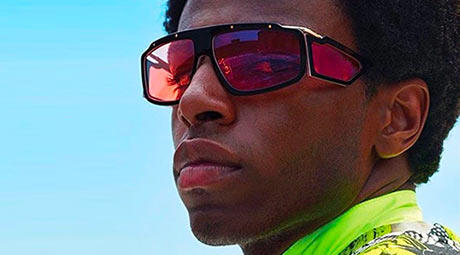
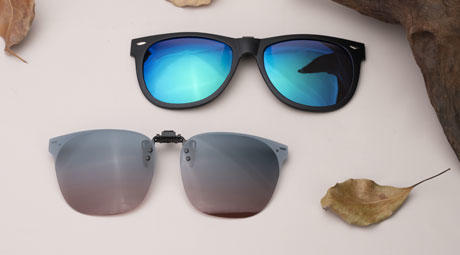
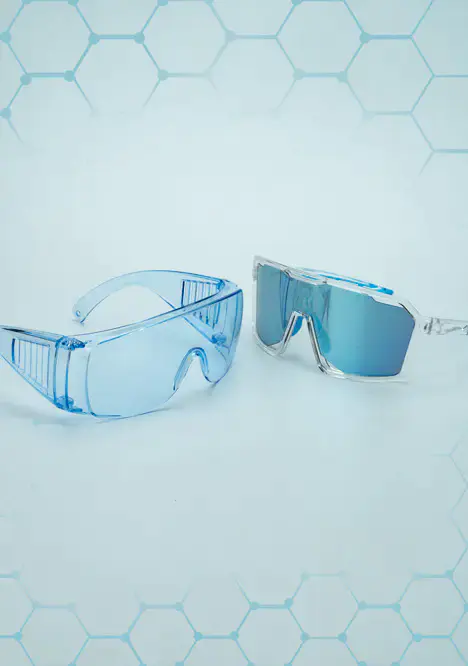
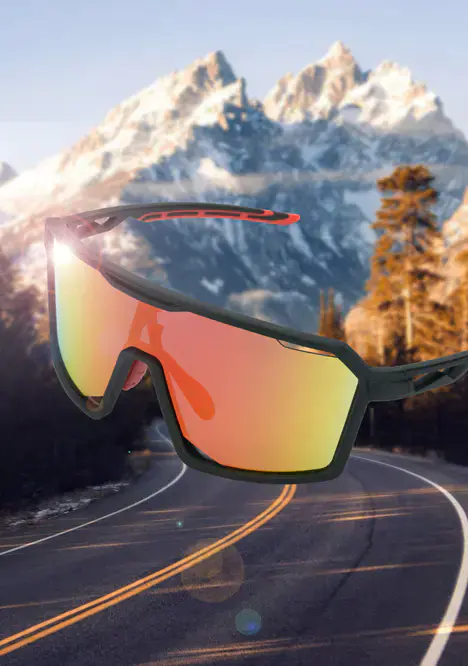
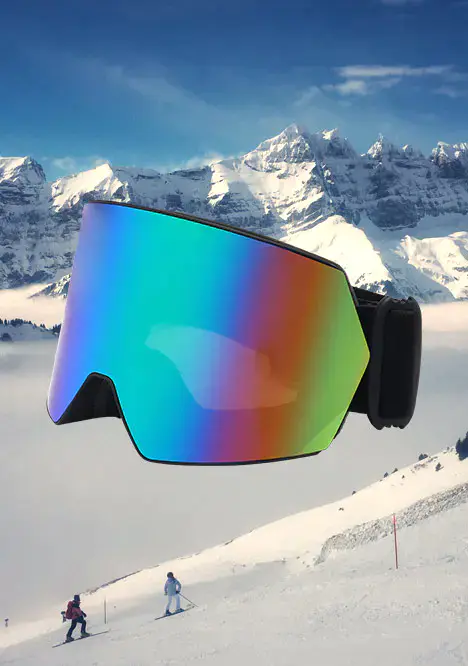
3. Prioritize Coverage and Frame Geometry: UV rays don't just come from the front. A 3D head-form study published in PMC found that standard, medium-sized frames offer the least protection due to "peripheral light leakage" from the sides, top, and bottom. Choose oversized or wraparound styles that fit closely to your face to create a physical barrier.
4. Protect Yourself Even When It's Cloudy: Up to 80% of the sun's UV rays can penetrate clouds. As the American Academy of Ophthalmology (AAO) advises, sun protection is necessary on cloudy days, at high altitudes, and near reflective surfaces like snow or water.
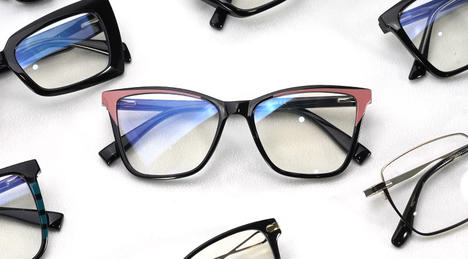
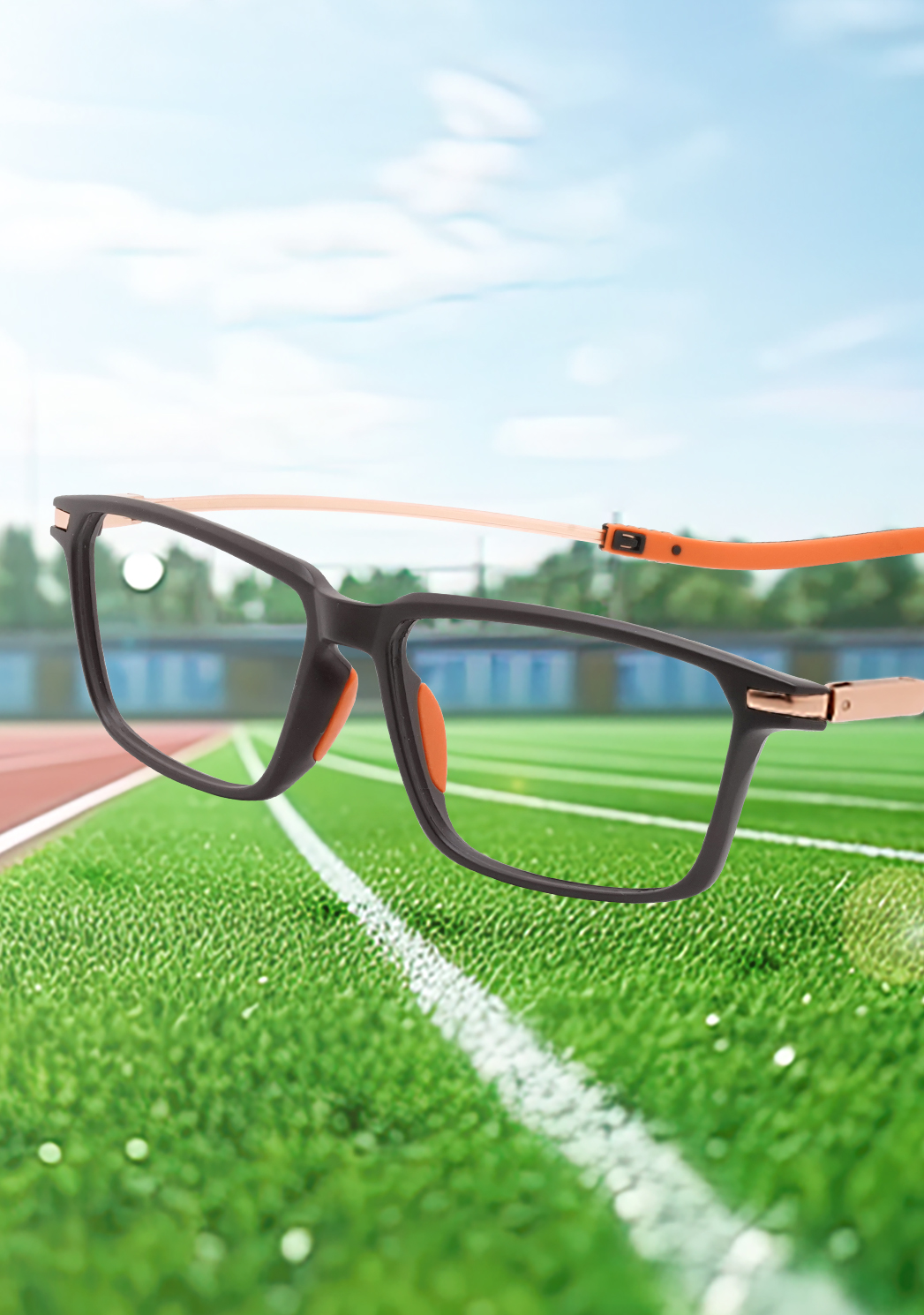
5. Consider Protected Clear Lenses: You don't need a dark tint to get UV protection. High-quality clear prescription lenses can be made with UV400 protection embedded directly into the material. This is an excellent option for all-day protection, especially for those who move between indoors and outdoors frequently. One study noted the importance of ensuring any anti-reflective coating also absorbs UV, preventing rays from reflecting off the back of the lens into your eye.

Managing your health with medication is a priority, and part of that responsibility is understanding and mitigating potential side effects. Drug-induced photosensitivity is a serious risk to your vision, but it is entirely manageable with the right knowledge and protective gear.
By making certified UV400 protection a non-negotiable part of your daily routine, you empower yourself to continue your treatment safely without sacrificing the long-term health of your eyes. Always check with your doctor about your medication's specific risks and choose eyewear that provides a complete defense against the unseen dangers of UV radiation.
This article is for informational purposes only and does not constitute professional medical advice. Always consult with a qualified healthcare provider regarding your specific medical conditions, medications, and health concerns.
References
- PMC: Photoprotection of the Eye (Review)
- PMC: Taiwan Cataract & Protection Study (Wang et al.)
- National Eye Institute: UV-Induced Glycation Mechanism
- MD Anderson Cancer Center: Sunglasses & Cancer Prevention
- PubMed: Solar UV Protection Technical Report (Cole BL)
- PMC: Ocular UV Dosimetry & Frame Geometry
- American Academy of Ophthalmology: Sun Safety Tips


