





How Men Can Pair Sunglasses with Hats and Watches
Ditch the Rules, Find Your Rhythm: A Man's Guide to Coordinating Sunglasses, Hats, and Watches
Ever stand in front of the mirror, fully dressed, but feel like something’s missing? You’ve nailed the outfit, but the finishing touches—the accessories—feel like a random assortment. You grab your favorite sunglasses, a go-to watch, and a hat for the road. They’re all great pieces on their own, but together, they just don’t click. It’s a common frustration that can make an otherwise sharp look feel disjointed.
Here’s the secret: mastering your accessories isn’t about following a rigid set of rules. It’s about understanding the principles of harmony, proportion, and context. Think of it less like a uniform and more like composing a piece of music. Your watch provides the beat, your hat sets the tone, and your sunglasses are the melody that ties it all together. When these elements work in concert, they elevate your style from simply “getting dressed” to making a statement.
This guide will walk you through the practical strategies to coordinate these three key accessories. We'll move beyond basic advice and give you the tools to:
- Master Proportion: Learn how the size and shape of your accessories create visual balance.
- Coordinate Materials: Understand how to mix and match metals, leathers, and fabrics for a cohesive look.
- Dress for the Context: Select the right combination for any occasion, from a city commute to a weekend adventure.
- Build Confidence: Develop an intuitive sense of style that feels authentic to you.
Forget guesswork. It’s time to learn the art of intentional accessorizing and unlock a new level of polish and confidence in your everyday look.
The Foundation: Mastering Proportion and Fit
Before we talk about color or material, the most critical element is proportion. If the scale of your accessories is off, the entire look will feel unbalanced. It’s about creating a harmonious relationship between your features and the items you wear.
Frame Width and Face Balance
The first step is ensuring your sunglasses fit your face. A good guideline is that the total width of your sunglass frames should be roughly equal to the width of your face. As a practical measure, aim for the frame width to be about 90-100% of your face’s width. Frames that are too narrow can make your face look wider, while frames that are too wide can overwhelm your features. This creates a solid, balanced anchor point for the rest of your accessories. If you're looking to make a specific statement, you might intentionally choose minimalist sunglasses for an understated look or oversized frames for a bolder one.
The Hat-Frame Connection: Avoiding the Stack
Pairing a hat with sunglasses introduces a vertical dimension that needs careful management. The goal is to avoid "visual stacking," where the hat and frames collide or create an awkward, top-heavy appearance.
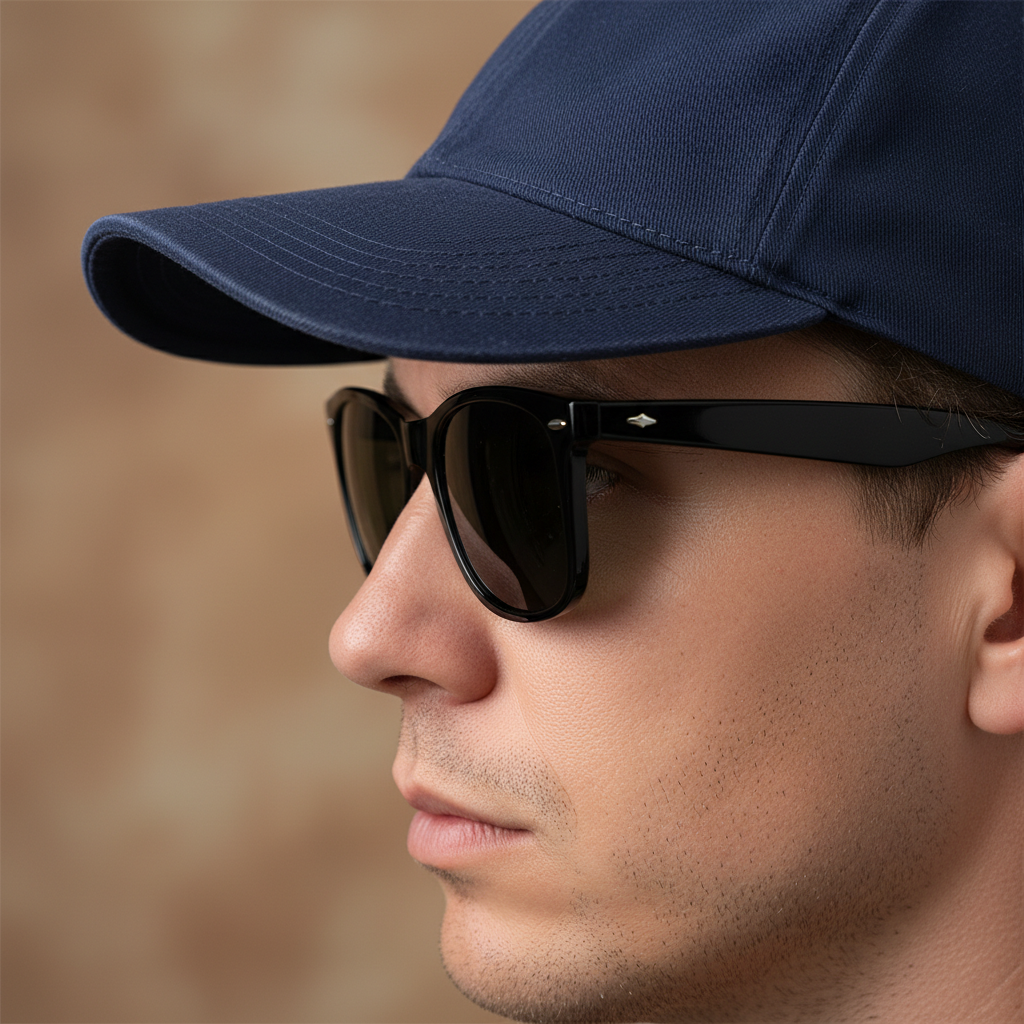
- Brim vs. Frame Size: A simple rule is to create contrast. Wide-brimmed hats like fedoras or sun hats often pair best with lower-profile, smaller frames. Conversely, short-brimmed hats like baseball caps or beanies leave more visual space, allowing for larger frames like aviators or oversized squares.
- The Crucial Gap: Aim for about 5-8 millimeters of vertical clearance between the top of your sunglass frames and the bottom of your hat’s brim. This small gap prevents the two from looking like a single, clunky unit and avoids physically pushing your glasses down your nose.
A Quick Pairing Guide
While personal style is key, this table provides a starting point for classic, no-fail combinations.
| Hat Style | Recommended Sunglass Styles | Why It Works |
|---|---|---|
| Baseball Cap | Aviators, Wayfarers, Wraparounds | The cap's casual, sporty vibe is complemented by these classic, versatile shapes. The shorter brim allows for slightly larger frames. |
| Beanie | Round, Minimalist, Square Acetate | The form-fitting nature of a beanie requires frames that have a distinct shape to stand out and define the face. |
| Fedora/Panama Hat | Clubmasters, Browline, Classic Metal Frames | The structured elegance of a fedora calls for refined, sophisticated sunglasses that won’t compete with the hat’s statement brim. |
| Bucket Hat | Round, Oval, Small Geometric | The relaxed, downward-sloping brim of a bucket hat pairs best with smaller frames that fit neatly within the space it creates. |
Material World: Coordinating Finishes and Textures
Once you’ve mastered proportion, the next layer is coordinating the materials of your accessories. This is where you can add depth and personality. It’s not about perfect matching, but about creating a sense of harmony.
Metal Matching 101
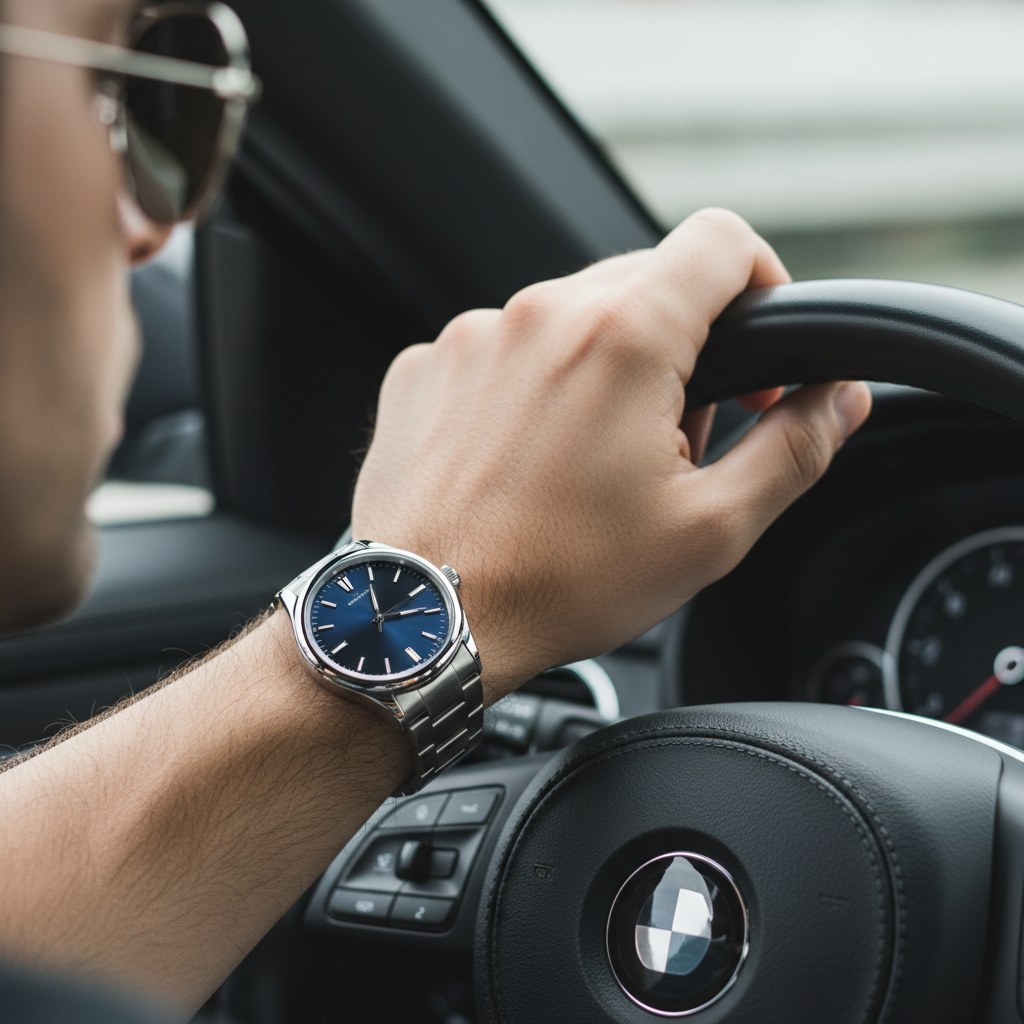
The easiest way to create a cohesive look is to sync the metal tones of your watch and sunglasses. Think in terms of warm and cool palettes.
- Warm Tones: Gold, bronze, and rose gold finishes on a watch pair naturally with sunglasses that have gold or tortoiseshell accents.
- Cool Tones: Silver, platinum, titanium, and gunmetal finishes work best with silver-framed sunglasses or cool-toned acetates like gray, blue, or black.
Pro Tip: The Matte Modifier. Want to mix warm and cool metals? The key is to vary the finish. If you have a polished silver watch, you can pair it with matte gold-framed sunglasses. The difference in texture prevents them from clashing and creates a look that feels intentional and modern.
Beyond the Metals
Don’t forget about the non-metallic elements. The texture of a leather watch strap or the fabric of a hat can be powerful coordinating tools.
- A rugged brown leather watch strap connects beautifully with a classic tortoiseshell acetate frame.
- A black canvas watch strap can be echoed in the color of a black baseball cap.
- The weave of a straw Panama hat can complement the subtle texture in a pair of horn-rimmed sunglasses.
Myth Debunked: Perfect Matching is Not the Goal
A common misconception is that all your accessories must match perfectly. This often leads to a look that feels rigid and uninspired. True style comes from coordination, not cloning. Don’t be afraid to have a polished chrome watch and sunglasses with a brushed metal finish. As long as they are in the same color family (e.g., cool tones), the subtle variation adds visual interest. The goal is a curated collection of items that relate to each other, not a pre-packaged set.
Context is King: Dressing for the Destination
Proportion and materials are the "how," but context is the "why." The most stylish accessory combination is one that is perfectly suited to the environment. A pairing that works for a beach vacation will look out of place in a business meeting.
The Urban Commuter: Smart and Streamlined
For daily life in the city, versatility and understated style are key. Think clean lines and practical choices.
- The Combo: A classic baseball cap in a neutral color, a minimalist field watch with a canvas or leather strap, and timeless sunglasses like Wayfarers or metal-framed round vs. square sunglasses.
- The Logic: This combination is effortless and functional. The watch is easy to read, the hat is casual and practical, and the sunglasses are stylish without being loud. It’s a look that can take you from the subway to a casual lunch without missing a beat.
The Weekend Adventurer: Durable and Purpose-Built
When you’re heading outdoors, your accessories should be about performance and protection.
- The Combo: A beanie or bucket hat, a rugged diver or field watch, and performance-oriented sunglasses. This is the perfect time for polarized lenses, which are designed to cut glare from flat surfaces like water and roads. As Harvard Health explains, this filter specifically blocks horizontal light waves, enhancing clarity and reducing eye strain during activities like fishing or driving.
- The Logic: Every piece is chosen for its function. The hat provides sun or warmth, the watch is built to withstand the elements, and the polarized lenses offer a tangible performance benefit. For high-intensity activities, consider wraparound high prescription sunglasses to protect from peripheral light and debris.
The Polished Professional: Refined and Authoritative
In more formal or business-adjacent settings, your accessories should communicate sophistication and attention to detail.
- The Combo: A classic fedora or flat cap in wool or tweed, a timeless dress watch with a leather or metal bracelet, and refined frames like browline (Clubmaster) or elegant metal aviators.
- Expert Warning: The Pilot’s Rule. While polarized lenses are great for casual driving, professionals like pilots often avoid them. The Federal Aviation Administration (FAA) advises against them because the polarization filter can interfere with the visibility of modern digital cockpit displays, a phenomenon that also affects smartphones and car dashboards. For a professional context where you're frequently looking at screens, a high-quality non-polarized lens with a neutral gray tint is a more reliable choice.
The Dangers of Unverified Protection
No matter the context, the primary job of your sunglasses is to protect your eyes. A common and dangerous myth is that the darkness of a lens equals its level of UV protection. In reality, dark lenses without certified UV filters are more hazardous than wearing no sunglasses at all. As experts at MD Anderson Cancer Center warn, the dark tint causes your pupils to dilate, allowing even more harmful UV radiation to enter your eye. Always choose lenses that are explicitly labeled as offering "UV400" or "100% UV-A and UV-B protection," a standard recommended by the American Optometric Association. This ensures you’re getting true medical-grade protection, not just cosmetic tint.
A Practical Checklist for Perfect Pairing
Use this step-by-step process to build a cohesive look every time.
- Start with the Context: Where are you going? What’s the dress code? This decision anchors all subsequent choices.
- Choose Your Hat: Select a hat that fits the occasion (e.g., baseball cap for casual, fedora for dressy).
- Select Sunglasses: Pick a frame style that complements the hat’s brim and your face shape. Check for the crucial 5-8mm vertical gap.
- Pick Your Watch: Choose a watch that aligns with the formality of the occasion and coordinates with the metal tones of your sunglasses.
- Do the 3-Point Photo Test: Take quick photos from the front, a 45-degree angle, and in profile. This is the fastest way to spot awkward proportions or clashing elements that you might miss in the mirror.
- Final Comfort Check: Make sure the hat isn’t pressing down on the frames and that the sunglass temples aren’t being pushed into the side of your head. Comfort is non-negotiable.
Wrapping Up: Your Style, Your Signature
Coordinating your sunglasses, hat, and watch is the final 10% that makes 100% of the difference. By moving beyond random selection and embracing the principles of proportion, material harmony, and context, you transform these individual items into a powerful, cohesive statement.
Remember that these guidelines are not rigid laws. They are tools to help you build an intuitive understanding of what works and why. The most important element is your own personal style. Use this framework as a starting point, experiment with different combinations, and see what feels most authentic to you. The goal isn’t to look like you’ve followed a manual; it’s to look like you’ve effortlessly mastered the art of personal style.
Disclaimer: This article is for informational purposes only and does not constitute professional medical advice. The primary function of sunglasses is to protect your eyes from harmful UV radiation. Always consult with a qualified eye care professional to determine your specific vision and eye health needs.


