







Are Mirrored Lenses Better at Blocking Harmful UV Rays?
Are Mirrored Lenses Better at Blocking Harmful UV Rays?
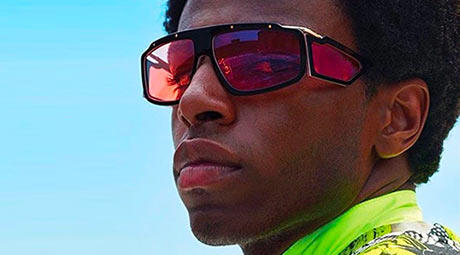
Mirrored sunglasses project an image of effortless cool, from the ski slopes to the city streets. But when it comes to protecting your eyes, does that reflective, stylish finish actually offer superior protection against the sun's harmful ultraviolet (UV) rays? It's one of the most common questions we hear, and the answer is crucial for your long-term eye health.
The short answer is: no, not on its own. A mirror coating’s primary job is to reduce the brightness and glare of visible light for your comfort. The real work of safeguarding your vision from UV radiation is done by an invisible UV400 filter that is either built into the lens material or applied as a separate coating. Understanding the difference is the key to choosing sunglasses that are both stylish and truly safe.
What is a Mirror Coating and How Does It Work?
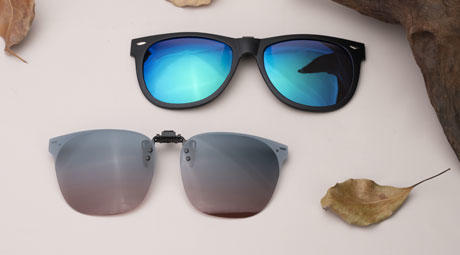
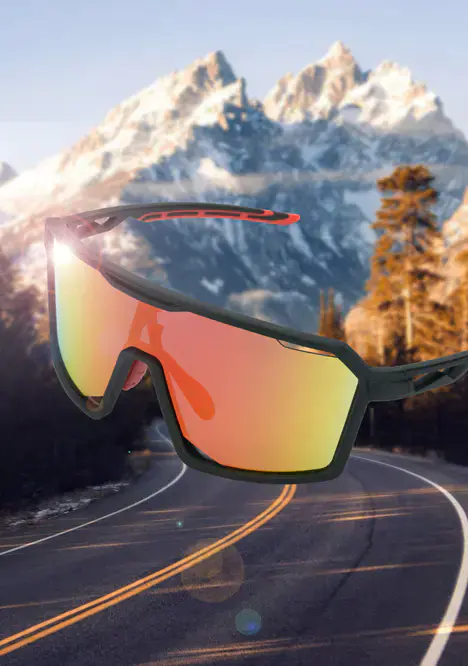
A mirror coating, also known as a flash coating, is a hyper-thin layer of metallic or dielectric material applied to the front surface of a sunglass lens in a vacuum chamber. Its function is purely optical: it reflects a portion of the visible light that hits the lens, preventing it from reaching your eye.
Think of it like a one-way mirror. It significantly cuts down on the intensity of bright light, which reduces squinting and eases eye strain in environments like open water, snow, or bright, direct sun. While this certainly makes your vision more comfortable, the coating itself isn't what stops the damaging, invisible UV radiation.

The Darkness Myth: Why Tint and Mirrors Don't Equal Safety
A dangerous and persistent myth is that the darker or more reflective a lens is, the more protective it must be. This is fundamentally incorrect. In fact, wearing dark or mirrored sunglasses that lack proper UV protection can be more harmful than wearing no sunglasses at all.
According to experts at the MD Anderson Cancer Center, dark lenses cause your pupils to dilate, or open wider, to let in more light. If those lenses don't have a UV filter, this dilation creates a wider pathway for invisible UVA and UVB rays to enter and damage the sensitive structures inside your eye, including the lens and retina. This cumulative damage is linked to serious conditions like cataracts, pterygium ("surfer's eye"), and even cancers of the eyelid.
The Real Hero: Understanding UV400 Protection
True eye safety hinges on one critical feature: a UV400 rating. This is a non-negotiable standard for any pair of sunglasses you buy.
- What it means: A UV400 filter blocks 99-100% of ultraviolet light up to 400 nanometers. This wavelength range includes all harmful UVA and UVB rays.
- Why it’s critical: Some older or lower-quality standards only protect up to 380 nm. However, technical analysis from optical science publications has shown that the 380-400 nm range contains nearly 45% of the sun's most damaging solar UV energy. As a technical report in the journal SPIE highlights, ensuring protection up to the full 400 nm is essential for comprehensive safety.
Modern, high-quality lens materials like polycarbonate and Trivex have this UV400 protection embedded directly within the lens material itself. This is a significant advantage because the protection can't scratch off or wear away over time. Other plastic lenses rely on a UV coating, which is effective but can potentially be compromised by deep scratches.
Function vs. Feature: A Head-to-Head Comparison
To make it simple, let's break down the distinct roles of a mirror coating versus a UV400 filter. One is an optional feature for comfort and style, while the other is an essential function for health and safety.
| Feature | Mirror Coating | UV400 Protection |
|---|---|---|
| Primary Purpose | Reduce visible light & glare | Block harmful UV radiation |
| How it Works | Reflects light waves | Absorbs UV photons |
| Visible Effect | Creates a reflective, colored sheen | Invisible to the naked eye |
| Health Benefit | Reduces eye strain & squinting | Prevents cataracts, macular degeneration, and cancer |
| Is it Essential? | Optional (for comfort/style) | Mandatory for eye safety |
A Practical Guide to Choosing Safe Sunglasses
When you’re shopping for new sunglasses, use this checklist to ensure you get complete protection.
-
Check the Label First: Before you even consider the style, look for a sticker, tag, or etching that explicitly states "UV400" or "100% UV Protection." This certification is your guarantee of safety, as mandated by FDA guidance for nonprescription sunglasses sold in the U.S.
-
Prioritize Frame Coverage: UV rays don't just come from the front. They can leak in from the sides, top, and even reflect off the back surface of the lenses. A 3D study published in Photochemical & Photobiological Sciences found that wraparound frames or goggles offered nearly 100% protection from this peripheral light leakage, while medium-sized fashion frames were the least effective. For maximum safety during high-exposure activities, choose larger lenses and wider temple arms.
-
Choose the Right Lens Material: For sports, driving, or children's eyewear, the American Optometric Association recommends polycarbonate or Trivex lenses. These materials are not only shatter-resistant, meeting the FDA's impact-resistance standards, but they also have UV400 protection inherently built-in.
-
Layer Your Coatings Intelligently: A mirror finish is a great addition for reducing extreme brightness. You can also consider a polarized filter, which specifically targets and eliminates reflected glare from flat surfaces like water and pavement. Just remember, these are add-ons. You can have a mirrored, polarized lens, but neither feature guarantees UV safety without that separate UV400 rating. To learn more about lens options, explore this guide on choosing a mirror coating for your sunglasses.
Key Takeaways
While mirrored sunglasses offer a bold look and can make your vision more comfortable in bright light, the mirror itself is not what protects you from UV damage. Safety comes from a certified UV400 filter, which is an invisible but essential component.
Remember to prioritize UV400 protection, choose a frame that offers ample coverage, and select a durable lens material. The mirror finish is the final touch—a great feature for glare reduction and style, but never a substitute for the fundamental safety your eyes depend on.
Frequently Asked Questions (FAQ)
Q1: Do mirrored lenses scratch more easily? Yes, the mirror coating is an external layer and can be more susceptible to scratches than an uncoated lens. Many high-quality mirrored lenses include a separate anti-scratch hard coat to improve durability.
Q2: Are mirrored lenses the same as polarized lenses? No. A mirror coating reduces overall brightness by reflecting all types of light. A polarized filter specifically targets and neutralizes horizontally reflected light (glare). They are different technologies, though they can be combined in the same lens.
Q3: Does the color of the mirror affect protection? The color of the mirror (e.g., blue, green, silver) is purely cosmetic and does not impact the level of UV protection. It can, however, affect how you perceive colors and contrast. Different sunglass tints are better for different conditions.
Q4: Can I get prescription sunglasses with a mirror coating? Absolutely. A mirror coating can be applied to most prescription lenses. However, it's crucial that your pupillary distance (PD) and other measurements are precise, as the darker tint can make even small optical errors more noticeable.
Disclaimer: This article is for informational purposes only and does not constitute professional medical advice. Always consult with a qualified eye care professional for any concerns about your vision or eye health. They can perform a comprehensive exam and recommend the best vision solutions for your specific needs.
References
- MD Anderson Cancer Center: 9 Things to Know About Sunglasses, Eye Protection and Cancer
- SPIE - The International Society for Optics and Photonics: UV protection by sunglasses: a review of the Brazilian standard and a proposal for a new one
- U.S. Food & Drug Administration (FDA): Guidance for Nonprescription Sunglasses
- Photochemical & Photobiological Sciences (via PMC): Ocular UV dosimetry from solar radiation for an adult and a child head-form
- American Optometric Association (AOA): UV Protection


