













The Eyes-Brain Connection: How Vision Issues Trigger Motion Sickness
The Unseen Culprit: How a Hidden Vision Problem Could Be Fueling Your Motion Sickness
That queasy, stomach-churning feeling of motion sickness is a familiar misery for millions. We often blame it on our inner ear or a sensitive stomach, but what if the true culprit is a subtle disconnect between your eyes and your brain? For many, the root of car sickness, simulator sickness, and even dizziness in visually busy environments isn't just about motion—it's about vision.
This condition, known as Binocular Vision Dysfunction (BVD), occurs when your eyes are slightly misaligned, forcing your brain to work overtime to fuse two separate images into a single, clear picture. While you sit still in an office, your brain might handle this extra work just fine. But add the dynamic input of a moving car, and this fragile system can shatter, triggering the classic symptoms we associate with motion sickness.
TL;DR: The Eyes and Brain in Conflict Motion sickness is often a sensory mismatch between what your eyes see and what your inner ear feels. However, if your eyes themselves are sending a "noisy," misaligned signal due to Binocular Vision Dysfunction (BVD), it adds a second layer of conflict. This visual stress can overwhelm the brain, leading to nausea, dizziness, headaches, and anxiety, especially during travel.

Are Your Eyes Working Against You? Common Triggers of Visual Motion Sickness
The brain's ability to process vision, balance, and motion is a delicate dance. When one partner is out of step, the whole system falters. In BVD, the eyes struggle to work together as a team, placing immense strain on the neural pathways responsible for interpreting our surroundings. This constant effort can lead to a state of sensory overload, which the body interprets as a "poison" or toxin, triggering a nausea response.
Here are the primary visual deficits that contribute to this phenomenon:
1. Convergence Insufficiency (CI)
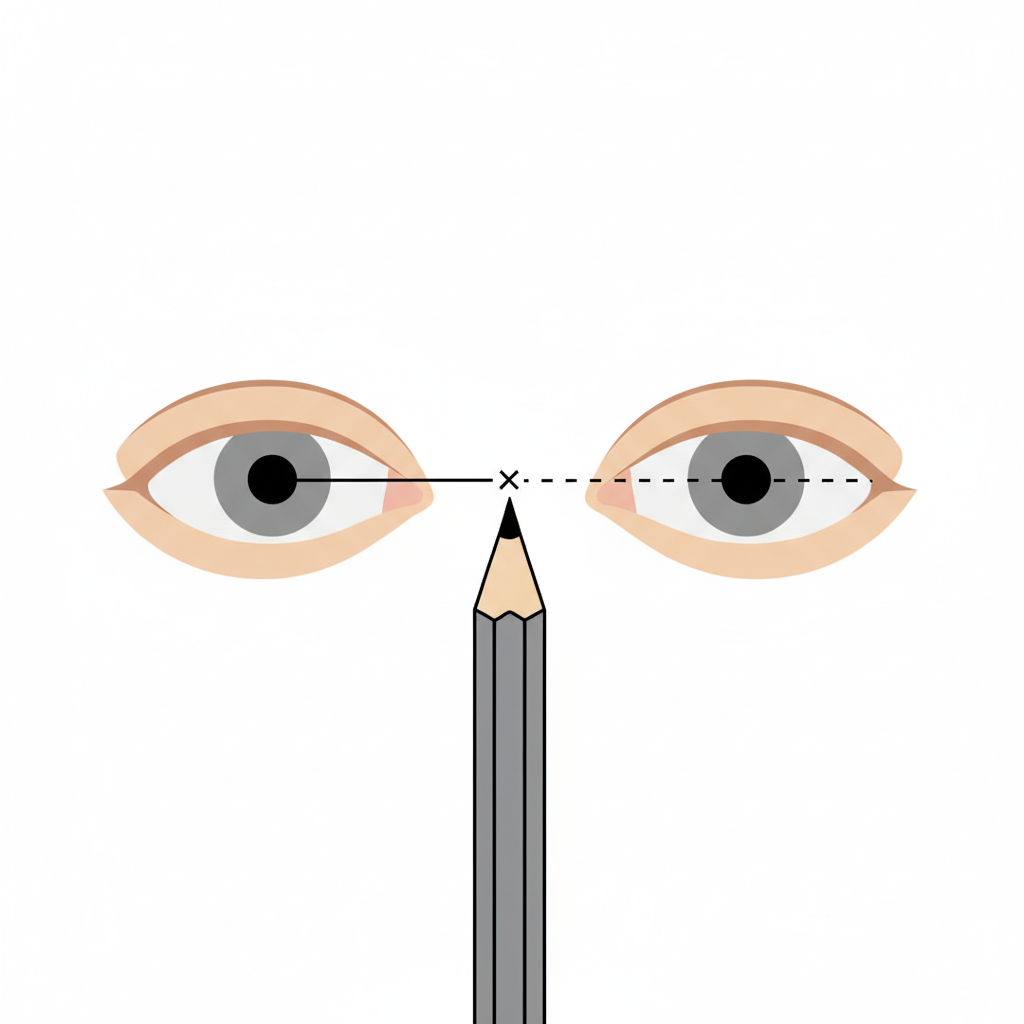
This is the most common culprit. Convergence is the ability of your eyes to turn inward together to focus on a near object, like a phone or a book. With CI, the eyes struggle to maintain this inward gaze, often drifting outward.
- Real-World Impact: In a moving vehicle, your eyes are constantly shifting focus between near tasks (checking your phone, looking at the dashboard) and distant scenery. For someone with CI, this rapid switching is exhausting for the eye muscles. Clinicians often find that a Near Point of Convergence (NPC)—the closest point you can keep an object in single focus—greater than 10 cm is a significant red flag for motion sickness sufferers. According to a study on vision therapy for CI, office-based vision therapy is over three times more likely to succeed than placebo treatments, demonstrating its effectiveness (Vision Therapy for Convergence Insufficiency).
2. Vertical Heterophoria (VH)
Imagine one of your eyes is aimed slightly higher than the other. This is Vertical Heterophoria. The misalignment can be minuscule, but it forces your brain to constantly work to vertically fuse two images that are out of sync.
- Real-World Impact: This constant muscular effort is fatiguing even in a static environment. In a car, the added visual chaos and motion can overwhelm your brain's ability to compensate. Patients with VH often report a distinct tilting, floating, or rocking sensation, even on solid ground. This is a key symptom that distinguishes it from more common forms of dizziness.
3. Accommodative Insufficiency (AI)
Accommodation is the focusing power of the eye, handled by the lens inside. Accommodative Insufficiency is the inability of this system to focus properly or sustain focus for near tasks. As noted by StatPearls, this condition affects roughly 10% of non-presbyopic individuals (Accommodative Insufficiency Guidelines). When your focusing system is weak, the world appears blurry and strained, adding another layer of bad data to the brain during motion.
Why Your Standard Eye Exam Might Miss the Problem
You might be thinking, "But my eye doctor said I have 20/20 vision!" This is a common and frustrating experience for people with BVD. A standard eye exam is excellent at checking for two things: the health of your physical eye structures and your static visual acuity (your ability to see letters on a chart while sitting still).
However, these tests typically do not evaluate how your eyes function together in a dynamic, real-world environment. They don't measure for small misalignments under stress or how your eyes track a moving object while your head is also turning. As many practitioners observe, these functional deficits are often "invisible" during a standard phoropter exam and only reveal themselves when the visual system is challenged with movement.
This is why you can have "perfect" vision and still suffer from debilitating, vision-induced motion sickness.
Finding Relief: How to Tame Visual Motion Sickness
Fortunately, once identified, BVD is highly manageable. The goal is not to "cure" the motion, but to reduce the unnecessary workload on your brain so it can process the motion correctly.
Microprism Lenses: The Brain's Shortcut
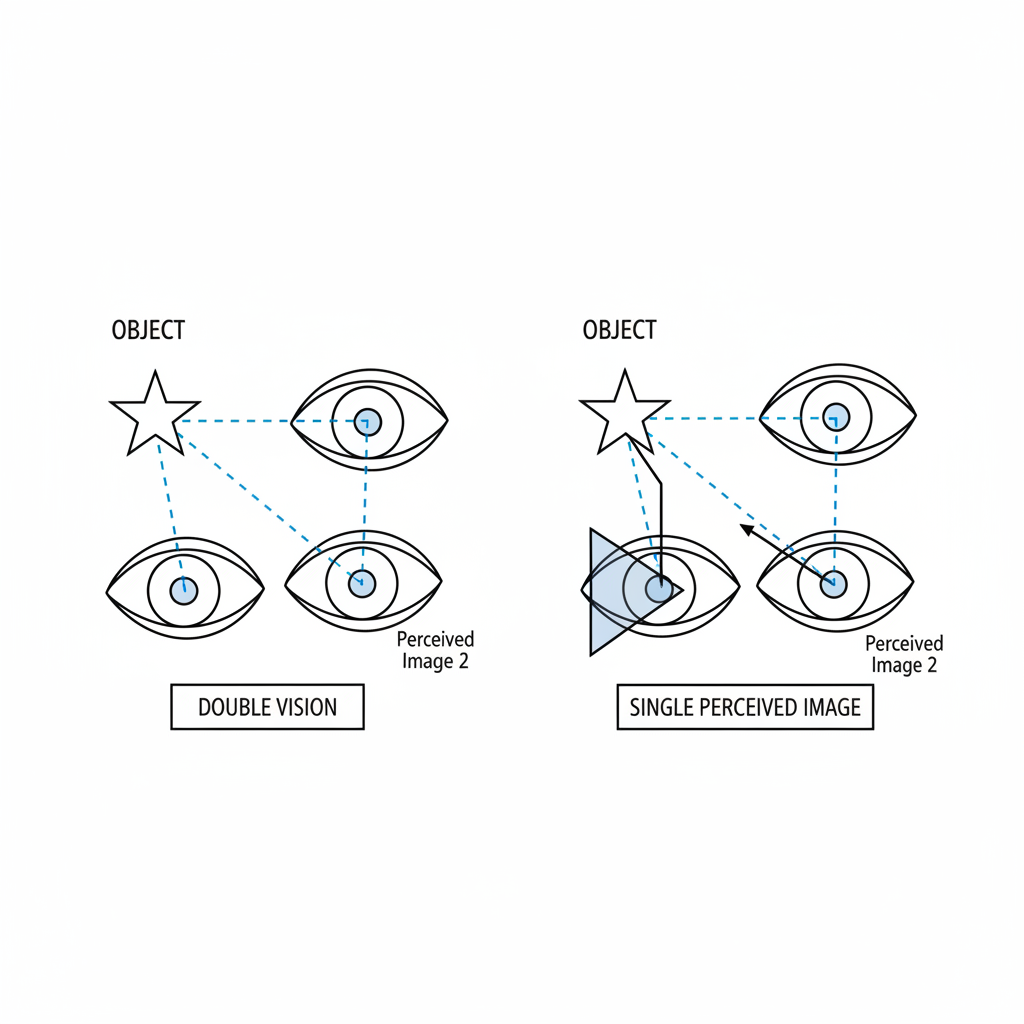
For many patients, the most immediate and dramatic relief comes from glasses with microprism correction. These specialized lenses bend light, redirecting the image to land perfectly on each retina without the eye muscles needing to strain. This effectively "tricks" the brain into thinking the eyes are perfectly aligned.
- How it Works: A base-in prism can help eyes that struggle to converge, while a small vertical prism can correct a height misalignment. Clinical experience shows that even a tiny amount of prism—as little as 0.5 to 2 prism diopters—can provide immediate relief in 60-70% of symptomatic cases by easing the constant fusional demand.
Vision Therapy: Physical Therapy for Your Eyes
If prisms are a helpful tool, vision therapy is the process of retraining the system itself. It is a structured program of in-office and at-home exercises designed to strengthen the brain-eye connection. The goal is to improve eye teaming, focusing, tracking, and processing abilities.
- What to Expect: A typical course of vision therapy for convergence issues can show measurable improvements in motion tolerance within 8 to 12 weeks. However, much like physical therapy, success is highly dependent on the patient's adherence to the prescribed home exercise regimen.
Immediate Strategies for Travelers
While seeking a diagnosis, you can use these strategies to cope:
- Look at the Horizon: Focus on a stable, distant point. This helps your eyes and inner ear agree on the state of motion.
- Avoid Near Tasks: Put away the phone, tablet, and book. Reading forces your eyes to converge, which is a major trigger.
- Take the Wheel: Driving often helps because it forces you to focus on the road, aligning your visual and vestibular inputs.
- Allow for Fresh Air: Good ventilation can help ease feelings of nausea.
Frequently Asked Questions (FAQ)
Q: Can children experience vision-induced motion sickness?
A: Absolutely. In children, BVD can manifest not only as car sickness but also as difficulty with reading, clumsiness, and struggles with sports. Over 50% of children with reading difficulties are found to have a treatable binocular vision problem, according to the Optometrists Network (BVD and Dyslexia: The Link).
Q: Is this related to "cybersickness" from video games or VR?
A: Yes, the underlying mechanism is very similar. Cybersickness is a sensory conflict between visual motion on a screen and a physically static body. If you have underlying BVD, you are much more susceptible to cybersickness, VR-induced nausea, and even dizziness when watching action movies on a large screen.
Q: How do I find a doctor who can diagnose this?
A: Search for a neuro-optometrist or an optometrist who specializes in binocular vision, vision therapy, or neuro-visual rehabilitation. These professionals have advanced training and equipment to perform the functional vision testing needed to diagnose BVD.
Q: Can stress or anxiety cause these symptoms?
A: It's often a vicious cycle. BVD can cause feelings of anxiety and disorientation, and high levels of stress and cortisol can, in turn, aggravate visual symptoms. Research has shown a strong comorbidity between BVD and anxiety disorders, with one study finding 57.6% of patients seeking anxiety treatment screened positive for BVD (BVD and Psychiatric Comorbidity).
This article is for informational purposes only and does not constitute professional medical advice. If you are experiencing symptoms of motion sickness, dizziness, or vision problems, consult with a qualified healthcare professional or a neuro-optometrist for a comprehensive evaluation.
References
- Vision Therapy for Convergence Insufficiency. (n.d.). PMC. Retrieved from https://pmc.ncbi.nlm.nih.gov/articles/PMC8092638/
- StatPearls. (2023). Accommodative Insufficiency. NCBI. Retrieved from https://www.ncbi.nlm.nih.gov/books/NBK587363/
- Optometrists Network. (n.d.). BVD and Dyslexia: The Link. Retrieved from https://www.optometrists.org/vision-therapy/guide-to-vision-therapy/
- Neuro-Optometric Rehabilitation Association. (2023). BVD and Psychiatric Comorbidity. Retrieved from https://nvminstitute.org/wp-content/uploads/2023/08/Psych-Congress-BVD-Poster.pdf


