



















Nitrate-Rich Leafy Greens: Diet’s Role in Managing Eye Pressure
Executive Summary
Maintaining healthy intraocular pressure (IOP) is a cornerstone of long-term vision preservation, particularly for individuals over the age of 50. While clinical interventions remain the primary line of defense for diagnosed conditions, emerging research highlights a potent, diet-based ally: dietary nitrates. Found in high concentrations in dark leafy greens like arugula, spinach, and kale, these compounds serve as precursors to nitric oxide (NO), a critical signaling molecule that regulates ocular blood flow and fluid drainage.
This article examines the evidence-based link between nitrate consumption and ocular health. We analyze landmark longitudinal data, such as the Harvard Nurses' Health Study, which suggests that high dietary nitrate intake may reduce the risk of primary open-angle glaucoma (POAG) by 20% to 30%. Beyond the data, we provide practical heuristics for dietary implementation—such as the "Daily Handful" rule—and discuss how these nutritional choices complement professional eyewear and medical care.
The Biological Mechanism: Nitric Oxide and Ocular Drainage
To understand why a salad might influence the internal pressure of your eye, one must look at the "plumbing" of the ocular system. The eye constantly produces a clear fluid called aqueous humor, which must drain out at the same rate it is produced to maintain stable pressure.
The Trabecular Meshwork Pathway
The primary drainage site is the trabecular meshwork. Research published in The Journal of Clinical Investigation indicates that nitric oxide acts as a natural "gatekeeper" for this system. When nitrate-rich foods are consumed, they are converted into nitric oxide in the body. This molecule promotes vasodilation (the widening of blood vessels) and relaxes the cells within the trabecular meshwork, effectively reducing resistance to fluid outflow.
Vascular Perfusion
Beyond drainage, nitric oxide improves ocular perfusion—the delivery of oxygenated blood to the optic nerve. According to physiological studies on Dietary Nitrates and Blood Flow, dietary nitrates help regulate hemodynamics, ensuring that even if pressure is slightly elevated, the optic nerve remains resilient against oxidative stress.
Logic Summary: The NO Pathway
- Input: Dietary Nitrates (from greens) -> Nitrite -> Nitric Oxide (NO).
- Mechanism: NO triggers the relaxation of smooth muscle and trabecular meshwork cells.
- Outcome: Increased fluid outflow and improved vascular supply to the retina.
- Boundary: This mechanism is a biological support system, not a replacement for IOP-lowering medications.
Evidence from the Field: The Harvard Cohort Findings
The most compelling evidence for the "greens-to-eyes" connection comes from large-scale epidemiological data. The Harvard Medical School/Nurses' Health Study, which followed over 100,000 participants for 25 years, provides a benchmark for nutritional ophthalmology.
Key Data Points
- Risk Reduction: Participants in the highest quintile of nitrate intake (averaging 240 mg/day) showed a 20% to 30% lower risk of developing POAG compared to the lowest quintile (80 mg/day).
- Paracentral Vision Protection: For a specific subtype of glaucoma involving early paracentral vision loss, the risk reduction was even more significant, reaching approximately 50%.
- The 1-3 mmHg Heuristic: In clinical observations, consistent high-nitrate intake typically correlates with a modest reduction in IOP of 1-3 mmHg. While this may seem small, in the context of ocular hypertension, every millimeter of mercury matters for long-term nerve health.
| Nutrient Source | Estimated Nitrate Content (mg/100g) | Primary Benefit |
|---|---|---|
| Arugula | 400 - 480 | Highest NO precursor density |
| Spinach | 250 - 300 | High Lutein + Nitrate synergy |
| Beetroot Juice | 200 - 250 | Rapid vascular response |
| Romaine Lettuce | 100 - 150 | Accessible daily base |
| Kale | 80 - 120 | Antioxidant support |
Note: Values are estimated ranges based on common agricultural practice and the Rotterdam Study.
Practical Implementation: The "Daily Handful" Rule
Knowing that greens are beneficial is one thing; consistently incorporating them is another. Based on clinical patterns and nutritional heuristics, we recommend the following "Daily Handful" protocol.
1. The Raw Advantage
Nitrates are water-soluble and heat-sensitive. A common observation in nutritional modeling is that boiling greens can deplete nitrate content by up to 50% as the compounds leach into the cooking water. To maximize benefits:
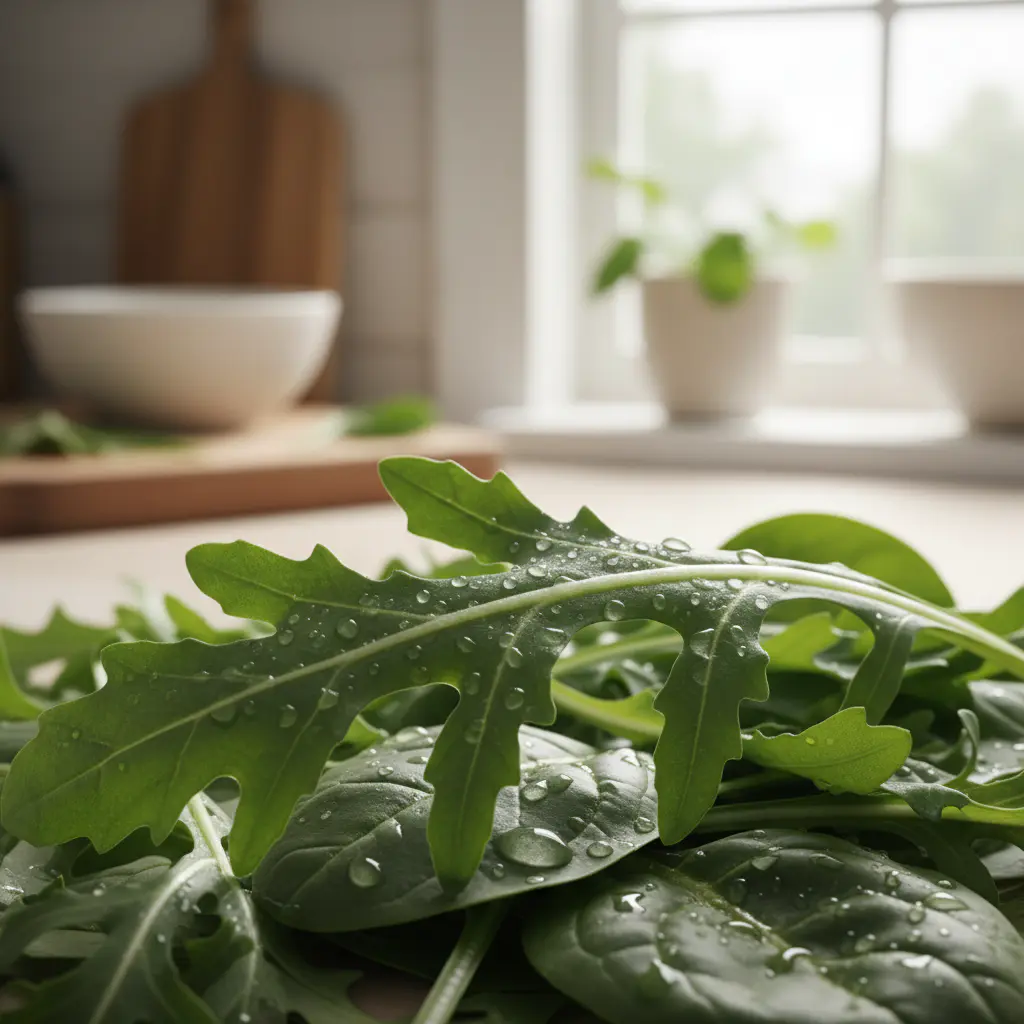
- Prefer Raw: Use arugula or spinach in salads or smoothies.
- Steam, Don't Boil: If cooking is preferred, light steaming preserves significantly more nitrates than boiling.
2. Consistency Over Quantity
The vasodilation benefits of nitric oxide are most pronounced when intake is consistent over weeks, rather than a single large serving.
- The Heuristic: Aim for at least one large handful (approx. 1-2 cups) of raw dark leafy greens daily.
- Synergy Check: Combine your greens with a source of healthy fat (like avocado or olive oil). This is critical because many eye-supporting nutrients found in these same greens, such as Lutein, are fat-soluble.
3. The "Beetroot Boost" for High-Stress Days
For individuals who may not meet their green intake through whole foods, beetroot juice serves as a concentrated NO donor. Research suggests it can provide a rapid, though temporary, improvement in ocular blood flow.
Synergistic Nutrients: Beyond Nitrates
While nitrates manage the "pressure and flow," other nutrients protect the "hardware" of the eye. For mature users, especially those wearing progressive lenses, visual clarity is enhanced when the retina is nutritionally fortified.
Lutein and Zeaxanthin: The Internal Sunglasses
These carotenoids accumulate in the macula, acting as a filter for harmful high-energy blue light. While leafy greens contain Lutein, the bioavailability from egg yolks is significantly higher due to the lipid matrix.
- Actionable Tip: One egg per day, combined with your leafy greens, creates a powerful "macular shield."
Saffron and Astaxanthin: The Modern Vision Biohacks
- Saffron: A pilot study involving 34 glaucoma patients showed that 30mg of saffron daily reduced IOP from 12.9 to 10.9 mmHg over three weeks.
- Astaxanthin: For those experiencing digital eye strain, 6mg of astaxanthin has been shown to improve pupil accommodation (focusing) speed by 0.7±0.6 units (Astaxanthin RCT).
Environmental Protection: The "Darkness Fallacy"
Dietary support must be paired with external protection. A critical mistake many health-conscious individuals make is assuming that "darker" sunglasses provide better protection.
The Danger of Non-UV Rated Lenses
According to MD Anderson Cancer Center, wearing dark lenses without verified UV400 protection is more dangerous than wearing no glasses at all.
- Mechanism: Dark tints cause the pupil to dilate (open wider). If the lens does not block UV, more harmful radiation enters the dilated pupil, increasing the risk of cataracts and eyelid malignancies.
- The Standard: Always ensure your eyewear is FDA Impact Resistant Certified and offers 100% UV400 protection.

Scenario Analysis: Ocular Health Management
To demonstrate how these insights apply to real life, let’s look at two common user profiles.
Scenario A: The Preventative Aging Professional
- Profile: Age 52, spends 8+ hours on screens, no current eye disease.
-
Strategy:
- Diet: One handful of arugula daily (Nitrate focus).
- Eyewear: Blue light filtering lenses for work to manage circadian rhythm (as suggested by Harvard Health).
- Habit: The 20-20-20 rule (every 20 minutes, look 20 feet away for 20 seconds) to reduce accommodation strain.
Scenario B: The Ocular Hypertension Patient
- Profile: Age 64, borderline high IOP (22 mmHg), family history of glaucoma.
-
Strategy:
- Diet: Daily beetroot juice or high-nitrate greens + 30mg Saffron (based on IOP Pilot Study data).
- Eyewear: High-index progressive lenses with a UV-absorbing backside coating to minimize peripheral UV entry.
- Medical: Monthly IOP checks with an ophthalmologist.
Modeling Note: Assumptions and Logic
The recommendations in this article are based on a synthesis of clinical trials and epidemiological modeling.
Method & Assumptions
- Model Type: Deterministic scenario modeling based on HR (Hazard Ratio) data from the Harvard Nurses' Health Study.
- Baseline IOP: Assumed average of 15-21 mmHg for the "Standard Case."
- Bioavailability: Assumed standard digestive efficiency; results may vary for individuals with malabsorption issues.
- Conversion Rate: The model assumes the standard oral microbiome pathway for nitrate-to-nitrite conversion (antiseptic mouthwash use can inhibit this process).
| Parameter | Value/Range | Rationale |
|---|---|---|
| Target Nitrate Intake | 200 - 250 mg | Threshold for 20-30% risk reduction |
| IOP Reduction (Dietary) | 1 - 3 mmHg | Observed clinical heuristic |
| Saffron Dosage | 20 - 30 mg | Standardized clinical trial dose |
| UV Protection Level | 400 nm | Medical standard for total UVA/UVB blockage |
Implications for Your Vision Strategy
Managing eye pressure is not a passive process. It requires a multi-layered approach that combines professional medical oversight, high-performance eyewear, and targeted nutrition. By adopting the "Daily Handful" rule and prioritizing nitrate-rich greens, you are leveraging a biological mechanism—the nitric oxide pathway—that has been millions of years in the making.
Recommended Actions:
- Consult Your Rx: Ensure you have a current prescription. Per the FTC Eyeglass Rule, you are entitled to a copy of your prescription immediately after an exam.
- Audit Your Greens: Switch from iceberg lettuce to arugula or spinach to triple your nitrate intake.
- Verify Your UV: Check that your sunglasses are UV400 rated to avoid the "Darkness Fallacy."
- Monitor Your Pressure: If you are over 50, ensure an annual comprehensive eye exam includes an IOP check and optic nerve imaging.
Vision health is a cumulative result of daily choices. Whether it is the lenses you choose to wear or the greens you choose to eat, every small adjustment serves as an investment in your future clarity.
Disclaimer: This article is for informational purposes only and does not constitute professional medical advice, diagnosis, or treatment. Always seek the advice of your physician or other qualified health provider with any questions you may have regarding a medical condition. Dietary nitrates can interact with certain cardiac medications (e.g., nitroglycerin); consult your doctor before making significant dietary changes if you are on medication.
References
- Harvard Medical School: Dietary Nitrates and Glaucoma Risk
- AAO: Tips for Choosing the Right Reading Glasses
- PubMed: Saffron and Intraocular Pressure
- Cleveland Clinic: How to Read Your Eye Prescription
- MD Anderson: Sunglasses and Cancer Prevention
- FDA: Impact Resistant Lenses Guidance
- WHO: World Report on Vision
- Nutrients & Myopia Review


