











Nystagmus and Glasses: Finding the 'Null Point' for Sharper Sight
The Challenge of Nystagmus and the Promise of a "Null Point"
Living with nystagmus presents a unique set of visual challenges. This condition, characterized by involuntary, repetitive eye movements, can make it difficult to focus, causing vision to appear blurry, unstable, or shaky. While there is no simple cure for the eye movements themselves, a highly effective management strategy involves optimizing prescription glasses to work with your body's natural adaptation.
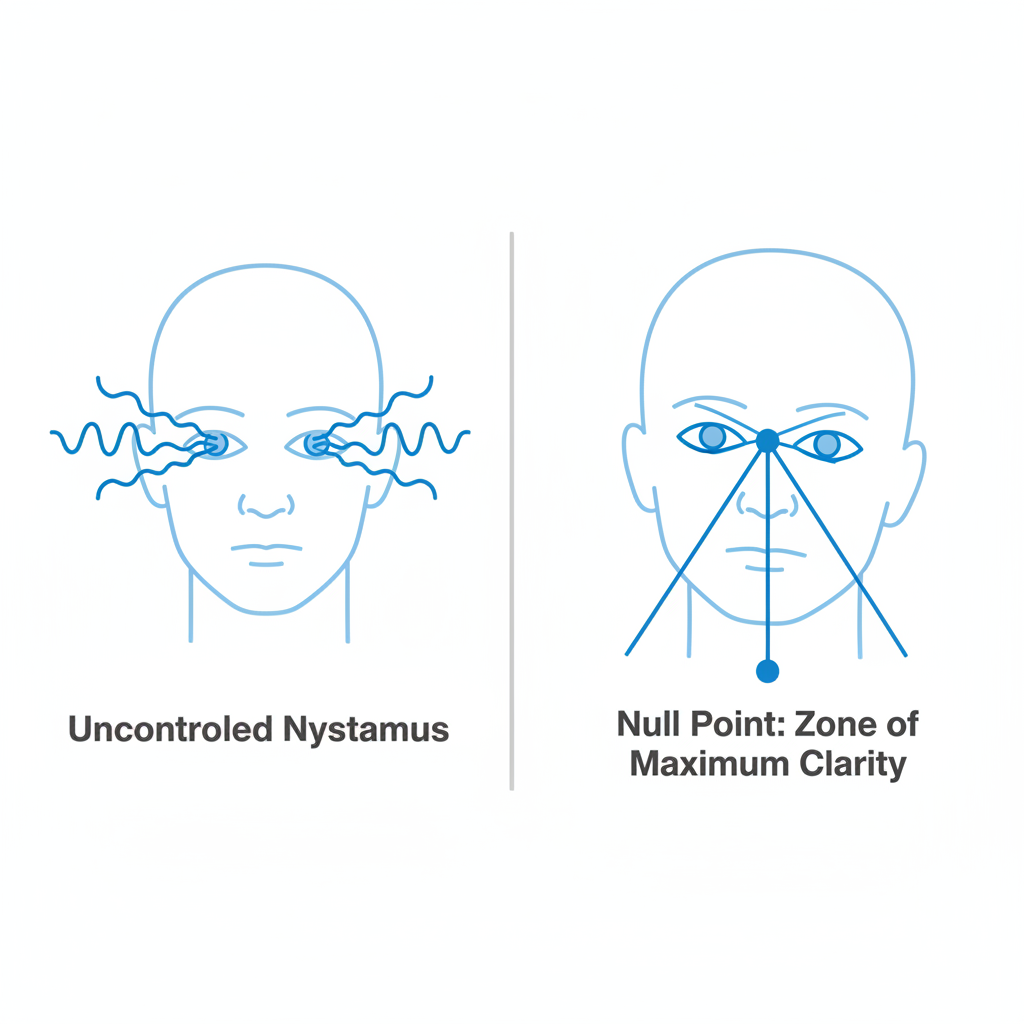
For many individuals with nystagmus, there is a specific head position where the eye movements decrease significantly, allowing for clearer, more stable vision. This is known as the null point or null zone. The entire goal of specialized nystagmus fitting is to locate this precise point and align your glasses perfectly to it, bringing the world into focus without requiring you to maintain a strained or uncomfortable posture.
TL;DR: Optimizing Glasses for Nystagmus
- Find Your Null Point: Most people with nystagmus instinctively tilt or turn their head to a position where their eye movements lessen and vision improves. This is your null point.
- Align the Lenses: The primary goal is to center the optical part of your lenses directly in front of your pupils while you are holding your head in this null position.
- Prisms Are Key: Special lenses with prisms can be used to shift the image into your null point, allowing you to see clearly while maintaining a more natural, straight-ahead head posture.
- Frame Choice is Crucial: Frames must be highly adjustable (especially nose pads and temple tips) and lightweight to ensure they stay perfectly in the optimized position.
- Expert Fitting is Non-Negotiable: This is not a process that can be done online. It requires a skilled optician to observe your posture and take precise, customized measurements.
Understanding the "Null Point" and Its Role in Vision
The concept of the null point is the foundation of managing nystagmus with eyewear. It’s a neurological adaptation—your brain’s clever way of finding a moment of calm in a constantly moving visual field.
What is the Null Point?
The null point is a specific angle of gaze where the intensity of the nystagmus is at its minimum. When your eyes are in this position, the rapid, involuntary movements are significantly reduced. As a result, your visual acuity sharpens, the world appears more stable, and the strain associated with trying to focus is lessened.
This point is highly individual. For some, it might be found by looking far to the right; for others, it might be a combination of turning the head and tucking the chin. An experienced practitioner will not just ask you where you see best; they will carefully observe your natural, relaxed posture to identify the subtle tilts and turns you make instinctively. This observational skill is critical because many people are so used to their compensatory head posture that they don't even realize they're doing it.
How Prisms Help Align Vision with the Null Point
While you can always turn your head to find the null point, this can lead to chronic neck and shoulder pain. This is where prisms become an invaluable tool. A prism is a specialized lens that bends light.
As explained in clinical resources from StatPearls, prisms can be incorporated into your glasses to shift the image of what you're looking at. In nystagmus management, the prism is oriented to move the image from straight ahead and place it precisely into your null zone. This allows you to keep your head straight and comfortable while your eyes receive the image in the position where they are most stable. The result is clearer vision without the physical strain.
The Nystagmus Fitting Process: A Hands-On Approach
Creating glasses for nystagmus is a process of meticulous customization. It goes far beyond a standard eye exam and requires a deep understanding of optics, physiology, and frame mechanics.
Step 1: The Observational Assessment
The first and most critical step is for the optician to simply watch you. They will assess your natural head position when you are looking at objects at different distances. They are looking for the precise, repeatable posture you adopt to stabilize your vision. This is a collaborative process, but the optician's objective observation is key to identifying the true null point, which may differ from your verbal description.
Step 2: Precision Measurements in the Null Position
Once the null point is identified, all measurements must be taken while you hold that specific posture. This includes:
- Pupillary Distance (PD): The distance between your pupils.
- Optical Center (OC) Height: The vertical measurement from the bottom of the lens to your pupil.
These measurements dictate where the clearest part of the lens will be placed. If they are taken in a standard, straight-ahead position, the final glasses will be completely ineffective.
Step 3: Strategic Frame Selection
The frame is not just a style choice; it's a critical piece of medical equipment.
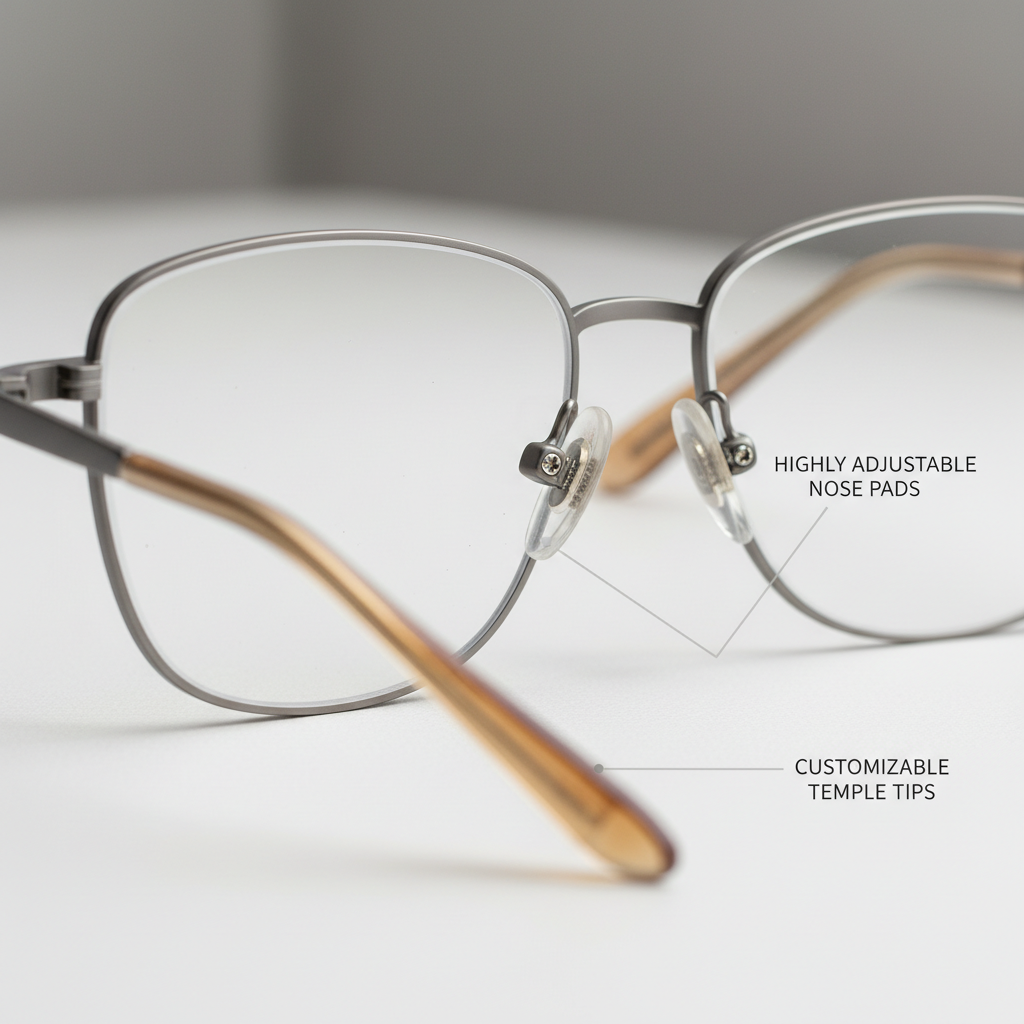
- Adjustability is Mandatory: The single most important feature is a frame with adjustable nose pads and flexible temple tips. These components allow the optician to make micro-adjustments to the height, angle, and distance of the lenses, fine-tuning their position relative to your visual axis.
- Weight and Fit: The frame must be lightweight and fit securely. Because the lens alignment is so precise, any slipping down the nose can move the optical center away from the null point and negate the benefits.
- Lens Size: A slightly larger frame can be advantageous as it provides a wider field of view through the optimized null zone. However, this must be balanced against the added weight. Your optician will help you find the right balance between a wide field of vision and a secure, stable fit.
Adaptation, Follow-Up, and Long-Term Success
Receiving your new glasses is the start of an adaptation phase. Your brain and body need time to adjust to a new way of seeing, especially if you've spent years using a significant head tilt.
The Initial Adaptation Period
It's common to feel a little disoriented at first. Your brain may need to "unlearn" the old compensatory posture. The goal is to comfortably maintain a more natural posture while enjoying clearer vision. Be patient with yourself during the first few days of wear.
The Importance of Fine-Tuning
The initial fitting is the starting point. It is completely normal and expected to need one or two follow-up appointments. As you wear the glasses in your daily environment—working at a computer, driving, or walking around—you may notice that small adjustments are needed. An experienced optician will anticipate this and encourage you to return for this crucial fine-tuning, which can make the difference between a good result and a great one.
By working closely with a knowledgeable eyecare professional, you can harness the power of a personalized fitting to achieve a new level of visual stability and comfort.
Frequently Asked Questions (FAQ)
Q: Can specialized glasses cure nystagmus? A: No, glasses cannot stop the involuntary eye movements. However, they are a powerful tool for managing the condition by optimizing your vision to its highest potential. They work by aligning the clearest part of the lens with the point where your eyes are most stable, significantly improving functional vision and reducing strain.
Q: Why can't I just order these glasses online? A: The process is highly dependent on in-person, dynamic observation. An optician needs to physically see how you hold your head and take measurements in that specific, unique posture. This level of customization and a trial-and-error fitting process cannot be replicated through online measurements.
Q: Are prism lenses thick and heavy? A: Prism lenses can be thicker than standard lenses, but using high-index lens materials can significantly reduce both thickness and weight. An experienced optician will help you select the right material to keep your glasses as light and comfortable as possible.
Q: How often should I have my eyes checked if I have nystagmus? A: It is a good practice to schedule yearly check-ups. Nystagmus can sometimes change over time, and regular visits ensure your prescription and lens alignment remain optimized for your current needs.
Disclaimer: This article is for informational purposes only and does not constitute professional medical advice. Individuals with nystagmus should consult with a qualified ophthalmologist and a skilled optician to determine the most appropriate management plan and eyewear solution for their specific condition.
References
- StatPearls (NCBI). "Prisms in Ophthalmology." https://www.ncbi.nlm.nih.gov/books/NBK580488/
- American Academy of Ophthalmology (AAO). "What is Nystagmus?" https://www.aao.org/eye-health/diseases/what-is-nystagmus
- National Eye Institute (NEI). "Nystagmus." https://www.nei.nih.gov/learn-about-eye-health/eye-conditions-and-diseases/nystagmus


