











Oleophobic Coatings: Why High-End Lenses Repel Smudges and Water
TL;DR: The Non-Stick Pan for Your Eyeglasses
Oleophobic and hydrophobic coatings are ultra-thin, transparent layers applied to your eyeglass lenses. In simple terms, an oleophobic coating repels oil (from fingerprints and skin), while a hydrophobic coating repels water. Modern premium lenses combine these into a single, durable treatment.
The core benefit is simple: your lenses stay cleaner and clearer for longer. This advanced surface treatment minimizes smudges, repels water spots, and makes cleaning significantly easier, helping you maintain optimal vision with minimal fuss.
How Do These Coatings Actually Work?
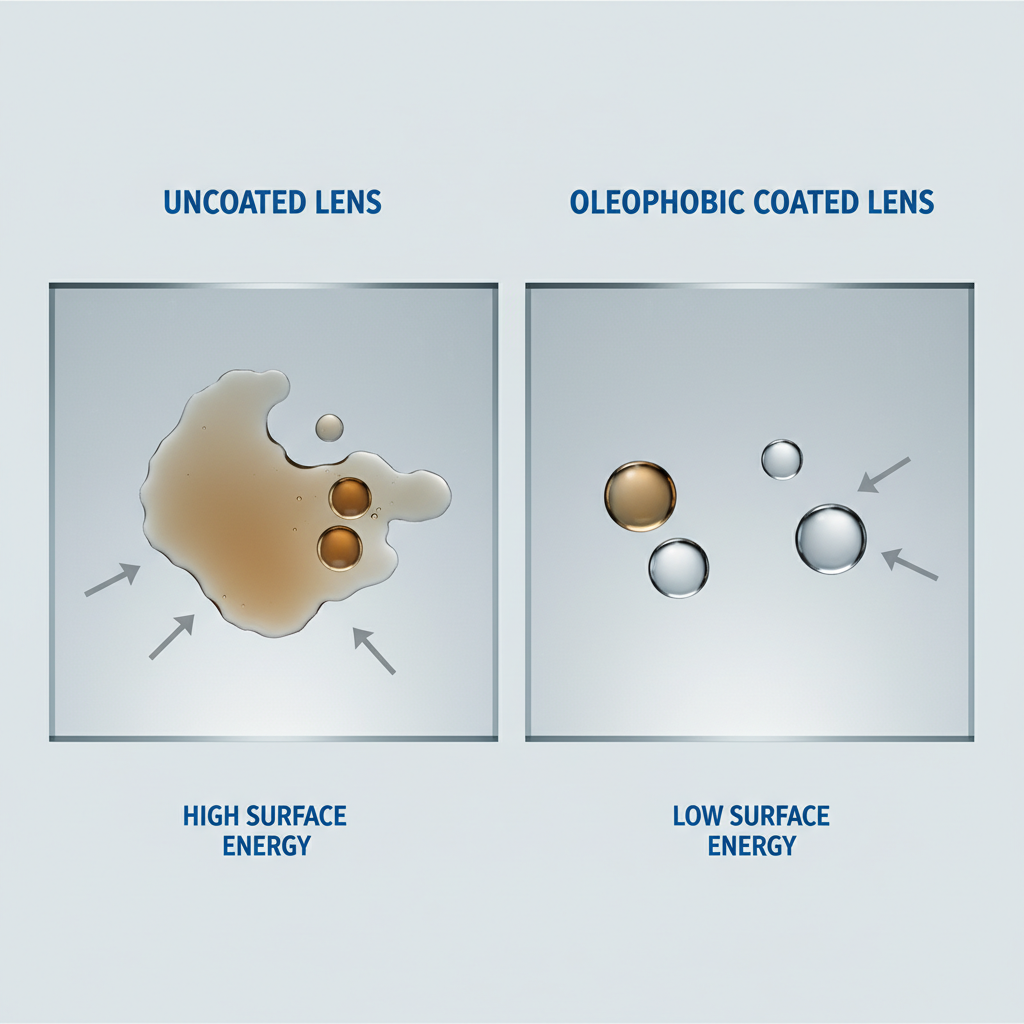
The magic behind an oleophobic coating isn't magic at all—it's advanced material science. The principle is based on a concept called surface energy.
Imagine a freshly waxed car. Rainwater hits the paint and beads up into neat little spheres that roll right off. This is a low-energy surface. Now, picture that same water hitting an old, unwaxed hood; it spreads out into a flat sheet. That's a high-energy surface.
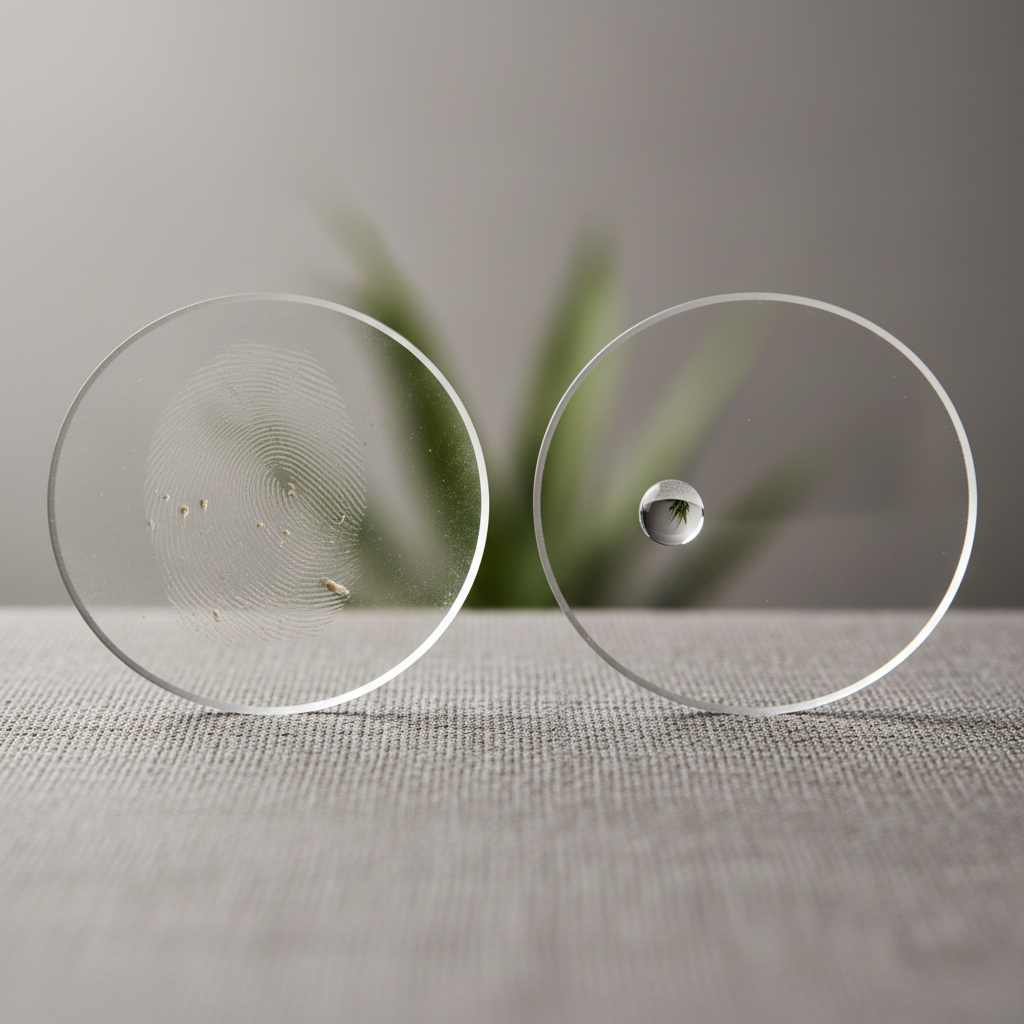
An oleophobic coating creates an extremely low-energy surface on your lens. It’s typically made from a fluoropolymer-based material (a chemical cousin to Teflon) that is deposited on the lens in a layer only a few nanometers thick. This slick, non-stick surface makes it incredibly difficult for substances like skin oil, dirt, and water to get a grip. Instead of smearing across the lens, they form beads that either roll away or can be wiped off with a gentle touch.
More Than Just Clean: The Real-World Benefits
While the primary appeal is less cleaning, the advantages of a high-quality oleophobic coating go much deeper.
-
Sustained Visual Clarity: Fewer smudges mean you spend more time looking through a crystal-clear lens and less time being distracted by a greasy film. This is especially crucial for tasks that require sharp focus, like driving at night or working on a computer.
-
Enhanced Durability: The oleophobic layer is the outermost shield for your lenses. It sits on top of the underlying Anti-Reflective (AR) coating. By repelling corrosive substances and reducing the need for aggressive cleaning, it protects the more delicate AR layers from micro-scratches and chemical wear, effectively extending the lifespan of your glasses.
-
Effortless Maintenance: Because oils and water can’t bond to the surface, cleaning becomes a breeze. A simple rinse and a gentle wipe with a microfiber cloth are often all that’s needed. This helps you avoid the most common cause of lens damage: grinding in dirt and debris by wiping dry lenses with an abrasive material like a shirt tail.
Not All Coatings Are Created Equal: Spotting Quality
In the world of lens coatings, you get what you pay for. The difference between a premium coating and a cheap one comes down to two factors: adhesion and durability.
Expert Insight: In optical labs, the true measure of a coating's quality isn’t just its initial repellency, but its adhesion to the underlying anti-reflective (AR) stack. A common point of failure is delamination (peeling), where a poor-quality coating separates from the lens because of incompatible layers or improper surface preparation during manufacturing.
Technicians use standardized tests to verify this durability:
- The Tape Test: Based on ASTM D3359, a special adhesive tape is applied to the lens and then ripped off. If a significant amount of the coating comes off with the tape, it fails the adhesion test.
- The Abrasion Test: A machine called a crockmeter rubs the lens with a standardized cloth under controlled pressure. A high-quality coating should maintain its repellent properties after 5,000 cycles, whereas many cheaper versions begin to fail after just 1,000.
For the wearer, a poor-quality coating will lose its slick, easy-to-clean properties within a few months, quickly becoming as difficult to clean as an uncoated lens. A premium coating, with proper care, will maintain its performance for the typical lifespan of the glasses.
How to Care for Coated Lenses (and Preserve Their Power)
To get the most out of your investment, proper care is essential. It’s less about frequent cleaning and more about correct cleaning.
The Do's:
- Rinse First: Always rinse your glasses under lukewarm tap water before wiping. This removes any gritty debris that could scratch the lens.
- Use Proper Cleaner: Apply a small drop of a gentle, lotion-free dish soap to each lens or use a dedicated lens cleaning spray.
- Dry Correctly: Gently dry the lenses with a clean, soft microfiber cloth. Always have a dedicated cloth for your glasses.
The Absolute Don'ts:
- No Household Cleaners: Never use ammonia-based cleaners (like Windex), alcohol, or other harsh solvents. They will strip the oleophobic coating right off.
- No Paper Products: Avoid paper towels, napkins, and tissues. They are made of wood pulp and are too abrasive.
- Your Shirt is Not a Cloth: Wiping lenses with your shirt, especially when dry, is the fastest way to embed oils and grind dust into the coating, causing micro-scratches and permanent damage.
- Avoid Extreme Heat: Never leave your glasses on the dashboard of a car. Extreme heat can damage the lens substrate and cause the different coating layers to expand at different rates, leading to cracking or crazing.
By following these simple rules, you can ensure your lenses remain as clear and easy to clean as the day you got them.
Frequently Asked Questions
1. Is an oleophobic coating the same as an anti-reflective (AR) coating? No. The oleophobic coating is a separate, final layer applied on top of the AR coating stack. It serves to protect the AR coating and make the lens easier to clean.
2. How long does an oleophobic coating last? With proper care, a high-quality coating should last for the functional life of the prescription, typically 1 to 2 years. Durability is significantly reduced by improper cleaning or exposure to harsh chemicals.
3. Can I get this coating added to my old glasses? Unfortunately, no. Oleophobic coatings are applied in a highly controlled vacuum deposition chamber at the factory. It is not a process that can be done at a local optical shop.
4. Why do my coated lenses still get smudges? The coating is "oleo-phobic," not "oleo-proof." It's designed to prevent oils from sticking and spreading, making them form beads that are easy to wipe away. It dramatically reduces how dirty your lenses get and makes them far easier to restore to perfect clarity, but it can't magically repel every particle in the environment.
This article is for informational purposes only and does not constitute medical advice. The effectiveness and longevity of lens coatings depend on manufacturing quality, environmental factors, and user care.


