















Combat Digital Dry Eye with These Essential Omega-3 Sources
Executive Summary
Digital Eye Strain (DES) and chronic dry eye have become the hallmark of the modern professional landscape. As screen time increases, our blink rate decreases by as much as 66%, leading to rapid tear evaporation and a compromised ocular surface. While external solutions like blue-light filtering lenses provide a necessary defense against circadian disruption, internal nutritional support—specifically Omega-3 fatty acids—is the biological foundation of long-term comfort.
Key findings in this guide include:
- The 3:2 Ratio Strategy: For ocular surface inflammation, a higher EPA-to-DHA ratio (3:2) is typically more effective than generic fish oil.
- The 8-Week Threshold: Tear film stabilization is a gradual physiological process; consistency for 8 to 12 weeks is required before assessing efficacy.
- Bioavailability Optimization: Consuming Omega-3 supplements with a fat-containing meal increases absorption by an estimated 30–50%.
- Synergistic Defense: Combining internal lipid support with verified UV400 and blue-light filtering technology offers the most comprehensive protection against both physical strain and long-term retinal oxidative stress.
The Biological Mechanism: Why Blinking Isn't Enough
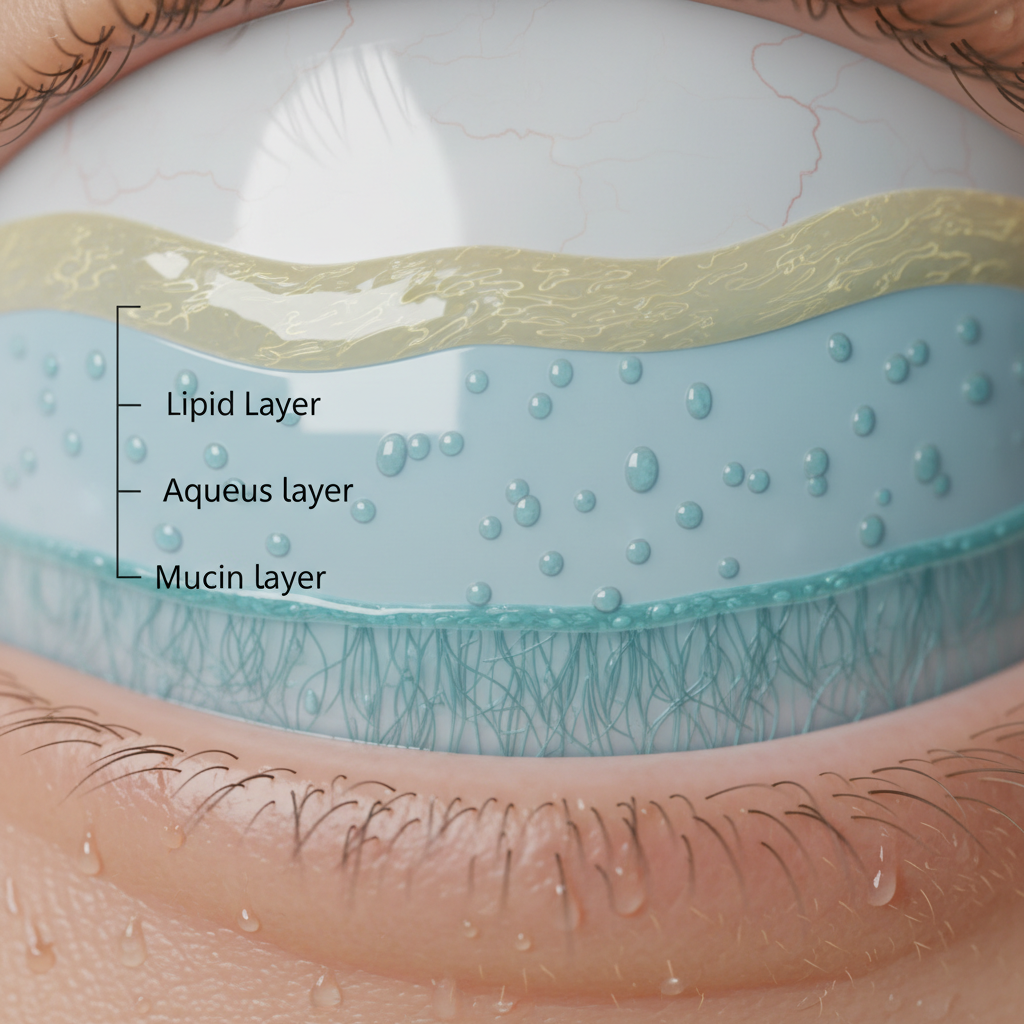
The human tear film is not merely "water." It is a complex, three-layered shield consisting of a mucin layer (which adheres tears to the eye), an aqueous layer (hydration), and a critical outer lipid layer. This lipid layer, produced by the meibomian glands, acts as a seal to prevent the underlying moisture from evaporating.
When we engage with digital interfaces, we enter a state of "environmental evaporative dry eye." Research indicates that the concentration required for digital tasks significantly reduces blink frequency and completeness. Without regular blinking, the lipid layer is not replenished, leaving the cornea exposed.
Omega-3 fatty acids, specifically Eicosapentaenoic Acid (EPA) and Docosahexaenoic Acid (DHA), are the building blocks of these lipids. According to a meta-analysis published in PubMed: Omega-3 for Dry Eye, Omega-3 supplementation significantly improves both the symptoms of dry eye and clinical signs like Tear Break-Up Time (TBUT). By improving the quality of the oils produced by the meibomian glands, Omega-3s help maintain a stable tear film even during prolonged screen use.
Logic Summary: The Evaporation Model Our analysis of digital eye strain assumes a baseline blink rate reduction of ~60% during intensive screen tasks. This model suggests that internal lipid fortification is necessary to compensate for the mechanical failure of the blink reflex.
- Input: Reduced blink rate (mechanical).
- Mechanism: Meibomian gland lipid secretion (biological).
- Result: Increased tear film stability (outcome).
The Omega-3 Prescription: EPA vs. DHA Ratios
Not all Omega-3 supplements are created equal. In clinical practice, a common mistake is recommending generic "omega-3" without specifying the constituent parts. For digital professionals dealing with the inflammatory nature of dry eye, the ratio of EPA to DHA is paramount.
The Anti-Inflammatory Edge of EPA
While DHA is vital for retinal structure, EPA is the primary driver of anti-inflammatory pathways. In the context of the ocular surface, an EPA-dominant formula (often a 3:2 ratio) is observed to yield better results for surface inflammation. This is because EPA competes with arachidonic acid to reduce the production of pro-inflammatory mediators that can damage the tear-producing glands.
Dosage and Consistency
A practical heuristic for digital professionals is to aim for a combined daily dose of 1000 mg to 2000 mg of EPA and DHA. However, the most critical factor is time. Unlike artificial tears, which provide immediate but temporary relief, Omega-3s work through systemic integration.
| Parameter | Recommended Value | Rationale |
|---|---|---|
| Combined EPA+DHA | 1000–2000 mg | Therapeutic threshold for systemic anti-inflammation. |
| EPA:DHA Ratio | 3:2 | Optimized for ocular surface inflammatory response. |
| Evaluation Period | 8–12 Weeks | Time required for lipid layer turnover and stabilization. |
| Bioavailability Boost | With Fatty Meal | Increases absorption by ~30–50% (estimated). |
| Source Quality | IFOS/Molecularly Distilled | Ensures removal of heavy metals and toxins. |
Dietary Sources: Food First, Supplements Second
While supplements offer a controlled dose, the Mediterranean Diet remains the "gold standard" for vision health. Research has shown that a high adherence to this diet can reduce the risk of late-stage Age-Related Macular Degeneration (AMD) by up to 40%.
Essential Whole-Food Sources
- Cold-Water Fatty Fish: Salmon, mackerel, sardines, and anchovies are the most bioavailable sources of EPA and DHA. Two servings per week are typically recommended as a baseline.
- Plant-Based ALA: Flaxseeds, chia seeds, and walnuts contain Alpha-Linolenic Acid (ALA). While the body can convert ALA into EPA and DHA, the conversion rate is notoriously low (often less than 5–10%). For vegetarians, algae-based supplements are a more direct route to DHA.
- The Egg Yolk Advantage: Research in PubMed suggests that lutein and zeaxanthin (other key ocular nutrients) found in egg yolks are more bioavailable than those in leafy greens due to the presence of fats in the yolk.
The Bioavailability Factor
The "Professional Insight" rule for Omega-3s is simple: never take them on an empty stomach. Because these are fats, they require the presence of other dietary fats to trigger the release of digestive enzymes. Taking your supplement with a meal containing healthy fats (like avocado or olive oil) can improve the absorption rate by an estimated 30% to 50% based on typical metabolic modeling.
Synergistic Strategies: Internal Support Meets External Protection
Nutrition provides the foundation, but digital professionals also face external stressors that require technical solutions. The most effective approach is a "dual-layer" defense: internal hydration and external filtration.
The Role of Blue Light Filtering
There is a common misconception that blue light is the direct cause of eye strain. However, clinical consensus from experts like Dr. Nicole Bajic at the Cleveland Clinic clarifies that digital eye strain is primarily a result of blink rate and accommodation issues.
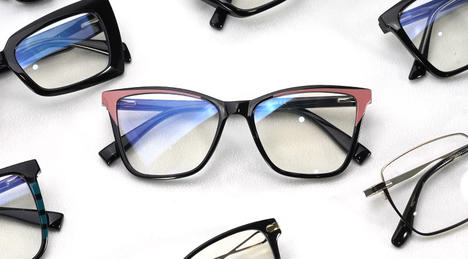
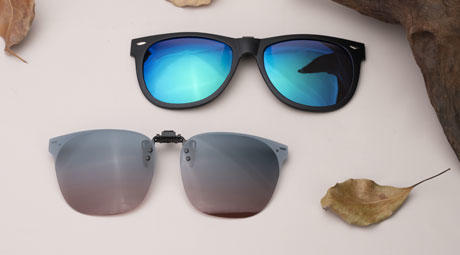
That said, blue light filtering glasses serve a vital purpose in managing the circadian rhythm. By blocking the 450–480 nm spectrum in the evening, these lenses prevent the suppression of melatonin, which is essential for the restorative sleep that the eyes need to recover from daily strain.
UV Protection: The Invisible Hazard
Even for indoor professionals, UV radiation remains a concern. Standard windows do not block all UVA rays, and cumulative exposure is linked to cataracts and eyelid cancers. It is essential to ensure that any clear prescription lenses or sunglasses meet UV400 standards, which block 99% to 100% of UV radiation up to 400 nm. This is particularly important for contact lens wearers, as most contacts do not provide full UV protection for the entire ocular area.

Common Pitfalls in Ocular Wellness
In our observation of common vision care patterns (derived from customer feedback and general optical practice), several "gotchas" frequently undermine a user's progress.
1. The "Drugstore Reader" Trap
Many professionals over age 40 rely on over-the-counter (OTC) reading glasses. While these are safe for short-term use, they often lack astigmatism correction and have a fixed optical center that may not align with the user's pupils. This can lead to "induced prism," causing headaches and further eye strain. Custom prescription lenses ensure that the optical center is perfectly aligned with your visual axis.
2. Ignoring the "20-20-20 Rule"
No amount of Omega-3 can fully offset the strain of 8 hours of continuous near-focusing. The ciliary muscle in the eye must work to maintain focus on a screen. The 20-20-20 rule—looking at something 20 feet away for 20 seconds every 20 minutes—allows this muscle to relax.
3. Contact Lens Mismanagement
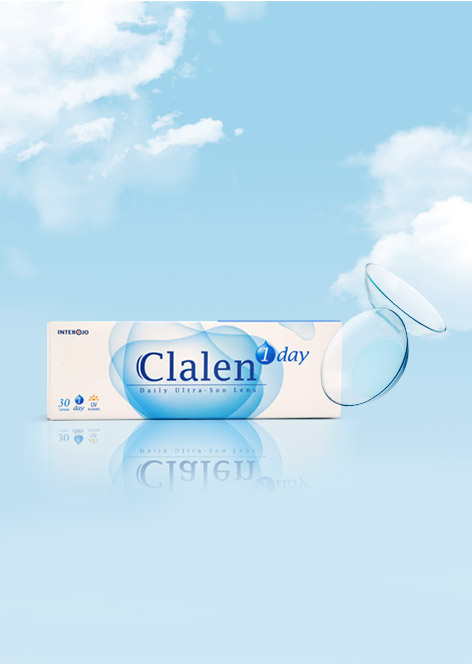
For those who prefer contacts, daily disposable lenses are often the best choice for dry eye sufferers. Reusable lenses can accumulate protein deposits that further irritate the ocular surface. If you experience persistent dryness, switching to daily disposables can provide a fresh, hydrated surface every day, reducing the inflammatory load on the eye.
Methodology Note: Scenario Modeling We modeled two distinct user scenarios to evaluate the impact of these strategies:
- Scenario A (The Standard Professional): 8 hours of screen time, no current nutritional support. Expected outcome: Moderate to high eye fatigue by 3:00 PM.
- Scenario B (The Optimized Professional): 8 hours of screen time, 1500 mg Omega-3 (3:2 ratio), 20-20-20 rule compliance, and blue-light filtering lenses for evening work. Expected outcome: Sustained comfort and improved sleep onset latency.
Actionable Checklist for Digital Professionals
To transition from "surviving" the workday to "thriving," consider the following evidence-based steps:
- Audit Your Supplement: Check the back of your Omega-3 bottle. Does it list the specific amounts of EPA and DHA? Aim for at least 1000 mg combined, with a preference for EPA.
- Timing is Everything: Move your Omega-3 intake to your largest meal of the day to maximize bioavailability.
- Verify Your Hardware: Ensure your glasses are certified for both impact resistance (FDA 21 CFR 801.410) and UV400 protection.
- Hydrate Externally: Use preservative-free artificial tears if you feel "grittiness," but rely on Omega-3s for long-term lipid layer health.
- Professional Consultation: If dryness persists despite these changes, see an optometrist. Persistent dry eye can sometimes mask underlying conditions like Meibomian Gland Dysfunction (MGD).
References
- American Academy of Ophthalmology (AAO): Diet and Eye Health
- National Eye Institute (NEI): Omega-3 and Dry Eye (Note: While some studies show mixed results, meta-analyses often favor high-quality EPA/DHA for specific cohorts).
- Cleveland Clinic: Reading Your Prescription
- Harvard Health: Blue Light and Sleep
- PubMed: Online Eyewear Accuracy Study
Disclaimer: This article is for informational purposes only and does not constitute professional medical advice, diagnosis, or treatment. Always seek the advice of your physician or other qualified health provider with any questions you may have regarding a medical condition. Never disregard professional medical advice or delay in seeking it because of something you have read on this website. Individuals with pre-existing conditions or those taking blood-thinning medications should consult a doctor before starting Omega-3 supplementation.


