















Demystifying the 4-to-1 Rule: Proper Lens Solution Use
The Definitive Guide to Contact Lens Peroxide Solution
Peroxide-based cleaning systems offer a powerful, preservative-free disinfection for contact lens wearers. However, their effectiveness hinges on understanding the precise chemical process involved. Many users are familiar with vague instructions but may not grasp the science that makes these systems work, particularly the critical balance of disinfection and neutralization often simplified into concepts like a "4-to-1 rule."
This guide demystifies the process, providing a clear, step-by-step framework for using peroxide solutions safely. We will explore the science behind the bubbles, detail the non-negotiable steps for proper use, and troubleshoot the common mistakes that can compromise your eye health.
TL;DR: Quick Safety Checklist
- Always use the special case: Only the case included with your peroxide solution, which contains a platinum catalyst disc, can neutralize the peroxide.
- Never rinse with peroxide: Never put peroxide solution directly into your eye or use it to rinse your lenses before insertion. It will cause a painful chemical burn.
- Soak for at least six hours: The full neutralization process takes time. Cutting it short leaves active peroxide in the solution.
- Never reuse or "top off" solution: Each cleaning cycle requires fresh solution to ensure full disinfection and proper neutralization. Reusing solution is a leading cause of eye infections.
- Replace your case regularly: The catalyst disc wears out. A good rule of thumb is to discard the old case and start a new one with every new bottle of solution.
The Science of the Fizz: Disinfection and Neutralization
Understanding why peroxide systems have such strict rules begins with chemistry. Unlike multi-purpose solutions that use preservatives, peroxide systems employ a two-stage process to kill harmful microorganisms and render the lenses safe to wear.

Stage 1: The Disinfection Phase
The active ingredient in these systems is a 3% solution of hydrogen peroxide (H₂O₂). This concentration is a potent disinfectant capable of killing bacteria, fungi, and dangerous amoebas like Acanthamoeba, which can be found in tap water and cause severe, vision-threatening infections. According to the U.S. Environmental Protection Agency (EPA), using tap water to clean or store lenses is a major risk factor for Acanthamoeba keratitis.
The "4-to-1 rule" is a conceptual way to think about the chemical balance engineered by manufacturers. It's not a ratio you mix yourself, but a principle: the solution has a specific concentration of peroxide that is strong enough to kill pathogens but can still be fully neutralized by the catalyst disc in the allotted time. A higher concentration wouldn't disinfect faster but would dramatically increase the risk of a chemical burn from failed neutralization. Conversely, a weaker mix would fail to kill resilient organisms.
Stage 2: The Neutralization Phase
Pure hydrogen peroxide is toxic to the cornea. To make the lenses safe for wear, the H₂O₂ must be converted into a gentle, preservative-free saline. This is the job of the special case that comes with every bottle.
At the bottom of the case is a disc coated in platinum, which acts as a catalyst. When the peroxide solution comes into contact with the platinum disc, a chemical reaction occurs:
- 2H₂O₂ (Hydrogen Peroxide) → 2H₂O (Water) + O₂ (Oxygen Gas)
The fizzing or bubbling you see is the release of oxygen gas. This is a visible sign that the neutralization process has started. It is critical to allow this process to complete fully—a minimum of six hours is the standard—to ensure no active peroxide remains.
A Step-by-Step Guide to Using Peroxide Solution
Precision is key. Follow these steps every time you clean your lenses to ensure both safety and efficacy.
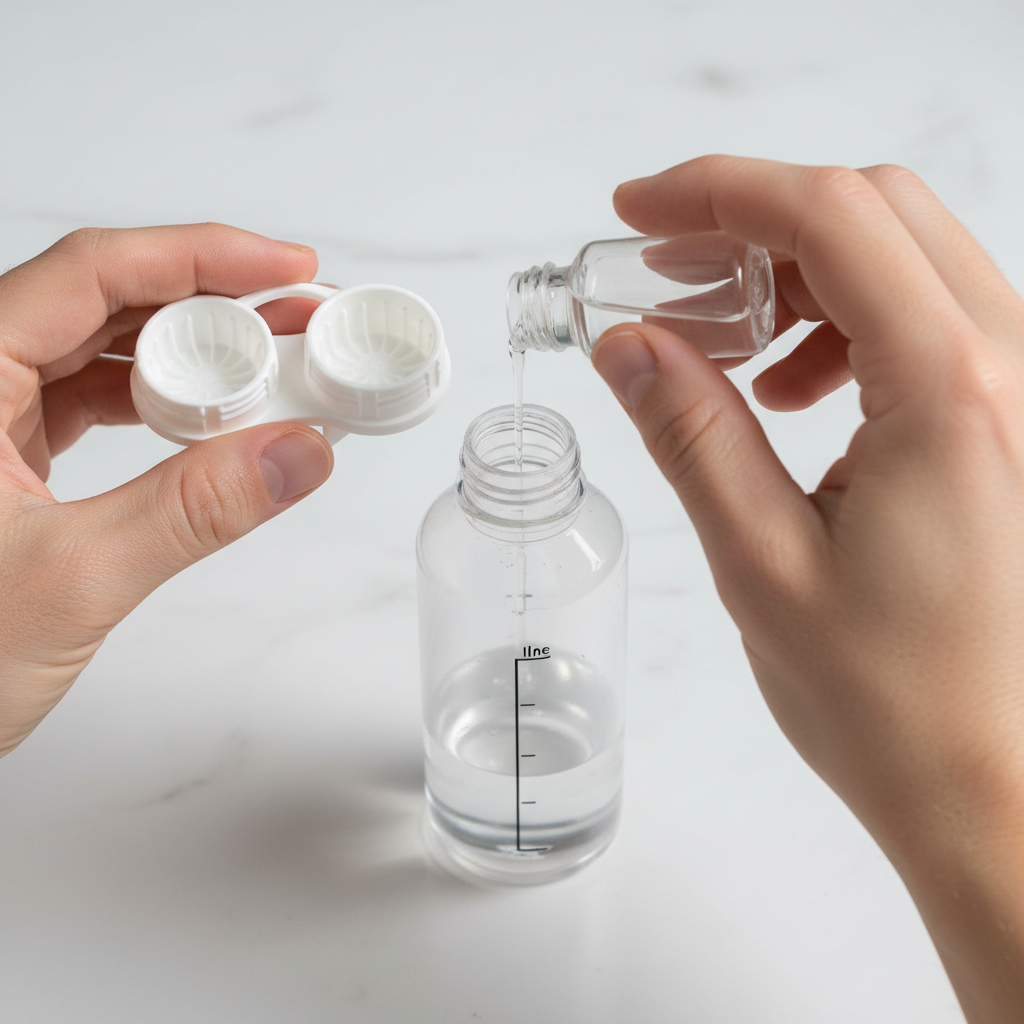
- Wash and Dry Your Hands: Start with clean, dry hands to avoid transferring any dirt or microbes to your lenses or case.
- Place Lenses in the Basket: Open the lens holder, which is typically a basket attached to the lid. Place your left and right lenses in the appropriately marked domes.
- Rinse if Recommended (With Saline Only): Some brands recommend a quick 5-second rinse of the lenses while they are in the basket. Crucially, this must be done with a sterile saline solution, never the peroxide solution.
- Fill the Case Cup: Fill the provided case cup with fresh peroxide solution exactly to the marked fill line. Under-filling may not completely cover the lenses, and over-filling can cause leakage of un-neutralized peroxide.
- Submerge the Basket and Seal: Place the lens holder basket into the cup and screw the lid on tightly. You should see bubbling begin almost immediately.
- Soak for at Least 6 Hours: Store the case upright and allow the lenses to soak for a minimum of six hours, or as directed by the manufacturer. This allows the disinfection and neutralization cycle to complete. Do not shake or disturb the case during this time.
- Insert Your Lenses: After the cycle is complete, your lenses are ready to wear. There is no need to rinse them.
- Empty and Dry the Case: Pour out the used solution, rinse the case and basket with sterile saline (never tap water), and leave them open to air dry.
Common Mistakes That Compromise Eye Health
According to a study from the Centers for Disease Control and Prevention (CDC), a staggering 99% of contact lens wearers report at least one risky hygiene behavior. With peroxide systems, these mistakes can have immediate and painful consequences.
- Applying Peroxide Directly to the Eye: This is the most critical mistake. Rinsing a lens with peroxide and inserting it, or accidentally putting the solution directly in your eye, will cause a significant chemical burn to the cornea. It results in intense pain, redness, and blurred vision.
- Using the Wrong Case: A standard flat contact lens case has no catalyst disc. Storing your lenses in peroxide solution in the wrong case means the solution will never be neutralized.
- Reusing Solution or "Topping Off": As we've covered in our article on the risks of topping off solution, this practice is extremely dangerous. Once neutralized, the solution is simple saline with no disinfecting power. Reusing it means you are storing your lenses in a stagnant, non-sterile liquid.
- Not Waiting the Full Six Hours: Impatience is a risk. If you remove the lenses before the cycle is complete, the solution will still contain active peroxide, leading to burning and irritation.
- Forgetting to Replace the Case: The platinum catalyst disc is not infinitely effective. Its ability to neutralize peroxide degrades over time and with use. A worn-out disc leads to incomplete neutralization. You must discard the old case and start a new one with each new bottle of solution.
Frequently Asked Questions (FAQ)
What should I do if my eyes are burning after inserting my lenses?
Remove the lenses immediately. Do not try to "tough it out." Flush the affected eye thoroughly with sterile saline solution or artificial tears for several minutes. Do not reinsert the lens. If the pain is severe or your vision is affected, contact your eye doctor right away. This is a sign that you have put un-neutralized peroxide in your eye.
I hear a stinging sound when I use the solution. Is it working?
A fizzing or bubbling sound is normal. However, a stinging sensation upon inserting the lens is a major red flag. Some users mistakenly believe this indicates the solution is "still cleaning." In reality, as practitioners often note, stinging means danger. It is the primary sign that the neutralization process was incomplete and you are putting active peroxide on your cornea.
Can I store my lenses in the case for more than a day?
Once the neutralization is complete after six hours, the case contains only unpreserved saline. It is not designed for long-term storage. If you do not plan to wear your lenses the next day, consult the solution's packaging or your eye doctor for long-term storage advice, which may require repeating the cleaning cycle.
Why is it so important to use fresh solution every time?
The 3% concentration of hydrogen peroxide is precisely calculated to be effective for a single disinfection cycle. As it neutralizes, its disinfecting power is eliminated. Topping off old, neutralized saline with a bit of fresh peroxide creates a weak, ineffective solution that cannot reliably kill harmful pathogens, putting you at high risk for an infection.
Disclaimer: This article is for informational purposes only and does not constitute professional medical advice. Always follow the specific instructions provided by your eye care professional and the contact lens solution manufacturer. If you experience eye pain, vision changes, or signs of an infection, seek immediate medical attention.
References
- Centers for Disease Control and Prevention (CDC) - Contact Lens Fast Facts & Hygiene
- U.S. Food & Drug Administration (FDA) - Contact Lens Risks (Corneal Ulcers)
- U.S. Environmental Protection Agency (EPA) - Danger of Using Tap Water with Contact Lenses
- Morbidity and Mortality Weekly Report (MMWR) - Demographics & Risk Behaviors


