










What is Photokeratitis? Physiological Reactions Within 24 Hours
TL;DR: What is Photokeratitis?
Photokeratitis is essentially a sunburn on your eyes, specifically affecting the cornea (the clear front surface) and the conjunctiva (the membrane lining the inside of your eyelids). It's caused by overexposure to ultraviolet (UV) radiation. Symptoms like intense pain, a gritty feeling, and extreme light sensitivity typically don't appear immediately but peak 6-12 hours after exposure. While incredibly painful, it's usually temporary and heals within 24-48 hours. The best defense is wearing high-quality, UV400-rated sunglasses that offer full coverage.
The Anatomy of an Eye Sunburn: What Happens When UV Hits Your Cornea
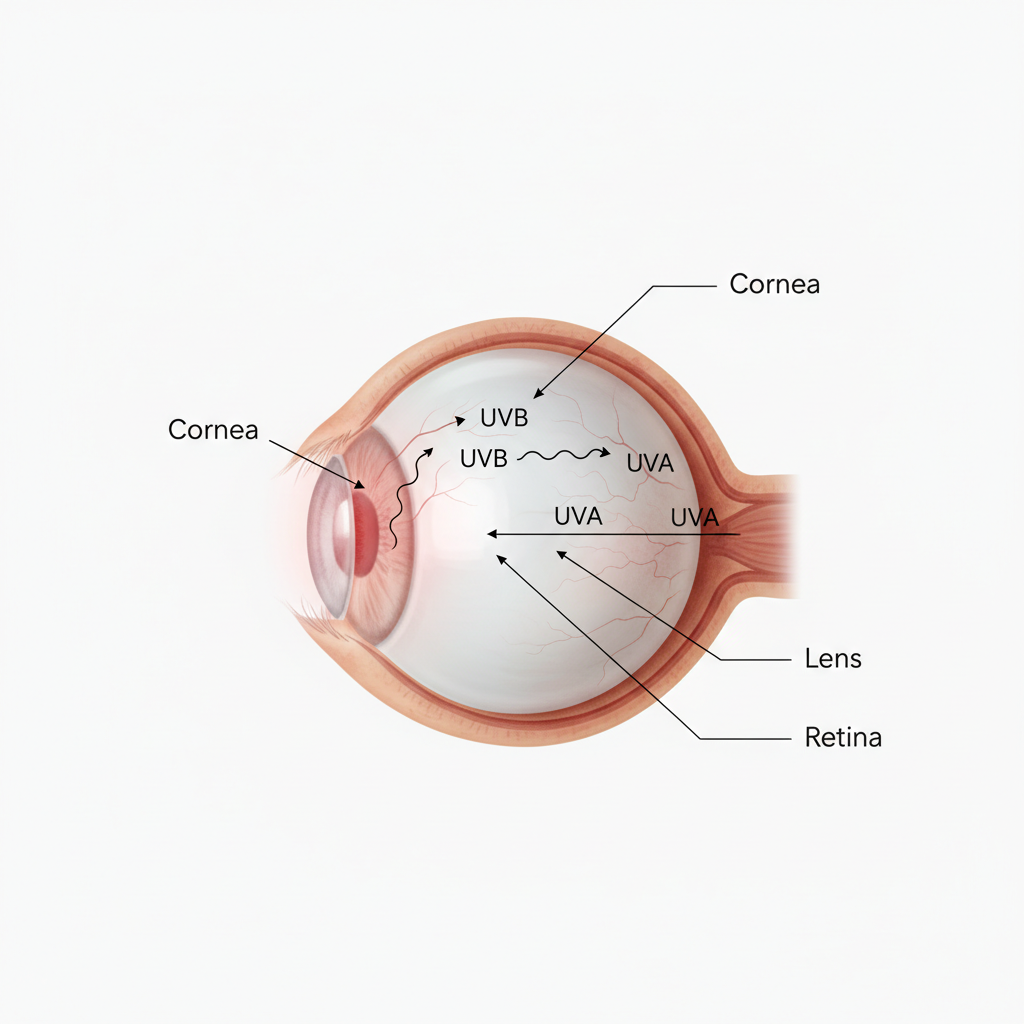
We all know to put on sunscreen to protect our skin, but many of us forget that our eyes are just as vulnerable to the sun's damaging rays. When your eyes are exposed to excessive ultraviolet radiation, the outermost layer of the cornea, called the epithelium, absorbs the bulk of the energy, particularly from UVB rays. This absorption triggers an inflammatory response, much like a skin sunburn.
According to a technical report on solar UV protection, the standards for sunglasses are critical because they must block this damaging radiation. The cornea is incredibly effective at absorbing shorter-wavelength UVB light to protect the inner structures of the eye, like the lens and retina. However, this protective function comes at a cost. Intense exposure overwhelms the epithelial cells, causing them to become damaged and slough off, exposing the highly sensitive corneal nerves underneath. This is the direct cause of the intense pain associated with photokeratitis.
It's a common mistake to think that darker lenses offer more protection. However, as experts at MD Anderson Cancer Center warn, lens tint has no bearing on UV protection. In fact, wearing dark sunglasses without a certified UV400 filter can be more dangerous than wearing no sunglasses at all. The dark tint causes your pupils to dilate, which allows more UV radiation to enter the eye, increasing the risk of damage.
A Painful Timeline: The 24 Hours After UV Exposure
One of the most unsettling aspects of photokeratitis is the delay between exposure and the onset of symptoms. The pain doesn't strike while you're skiing or on the water; it often ambushes you hours later, frequently in the middle of the night. Here is a typical timeline of what to expect in the 24 hours following overexposure.
Phase 1: The First 0-6 Hours (The Deceptive Calm)
You spend a day at the beach, on a boat, or on a snowy mountain. Your eyes might feel a little tired, but you don't notice any significant pain. During this latency period, the UV radiation has already damaged the corneal cells, but the full inflammatory cascade has not yet begun. You are completely unaware of the injury that is developing.
Phase 2: Hours 6-12 (The Onset and Peak Pain)
This is when the condition makes itself known, and it does so with intensity. The symptoms often start with a subtle gritty or sandy feeling, as if something is in your eye. This quickly escalates into:
- Intense Pain: Often described as a burning or stabbing sensation in both eyes.
- Foreign Body Sensation: A persistent, maddening feeling that sand or an eyelash is stuck in your eye, even when there's nothing there.
- Extreme Photophobia: Severe sensitivity to light. Even indoor lighting can feel overwhelmingly bright and painful.
- Watery Eyes & Redness: Your eyes will tear up profusely as a reflex response to the irritation.
- Blurred Vision: The disruption of the smooth corneal surface can cause your vision to become blurry.
As clinical observations note, the pain often peaks during these hours, frequently waking the person from sleep. This is because the damaged epithelial cells have now sloughed off, leaving the dense network of corneal nerve endings exposed to the environment.

Phase 3: Hours 12-24 (The Healing Begins)
The good news is that the corneal epithelium is one of the fastest-healing tissues in the human body. During this period, your body’s natural repair mechanisms are in full swing. Stem cells at the edge of the cornea migrate to cover the damaged area, and new epithelial cells begin to regenerate.
While you will likely still experience significant discomfort and light sensitivity, the sharp, intense pain should begin to subside. It is crucial during this phase to let your eyes heal. Avoid rubbing them at all costs, as this can scrape off the new, delicate cells and prolong the healing process.
Who Is Most at Risk?
While anyone can get photokeratitis, some individuals are more susceptible.
- People with Light-Colored Eyes: Blue, green, or hazel eyes have less melanin (pigment) in the iris to block out light compared to brown eyes. A study on Uveal Melanoma confirmed that light eye color is a significant risk factor for UV-related damage (The Impact of Ultraviolet Radiation on the Aetiology and Development of Uveal Melanoma). This lower pigmentation leads to more light entering the eye, causing the photophobia or light sensitivity many light-eyed people experience, as noted by experts at Duke Health.
- Children: A child’s crystalline lens is much clearer than an adult’s, allowing more UV radiation to penetrate deeper into the eye. Protecting their eyes from a young age is critical as UV damage is cumulative over a lifetime.
- Those in High-Risk Environments: Snow reflects up to 80% of UV rays, and water and white sand are also highly reflective. As the American Academy of Ophthalmology (AAO) warns, UV exposure increases at higher altitudes. This is why skiers, snowboarders, and mountaineers are at extremely high risk for "snow blindness," another name for photokeratitis.
- Users of Tanning Beds: Artificial tanning lamps produce intense UV radiation and are a common cause of severe photokeratitis.
Immediate Relief and When to See a Doctor
If you suspect you have photokeratitis, the primary goal is to manage the pain and allow your eyes to heal. Here are some immediate steps you can take:
- Get Out of the Sun Immediately: Go indoors to a darkened room.
- Remove Contact Lenses: If you wear contacts, take them out immediately to reduce irritation.
- Use Cool Compresses: Place a clean, cool, damp washcloth over your closed eyes.
- Try Preservative-Free Artificial Tears: Lubricating drops can help soothe the irritation.
- Do Not Rub Your Eyes: This is the most important rule. Rubbing can cause further damage to the healing cornea.
While most cases resolve on their own, you should seek medical attention from an eye doctor if you experience severe vision loss or if the pain does not begin to improve within 24 hours. A doctor can prescribe medicated eye drops to prevent infection and help manage the pain.
Medical Disclaimer: This article is for informational purposes only and does not constitute professional medical advice. If you are experiencing severe eye pain or vision changes, please consult a qualified ophthalmologist or optometrist immediately.
Prevention: Your Best Defense is a Good Pair of Sunglasses
The best way to deal with photokeratitis is to never experience it. This requires diligent eye protection whenever you are outdoors, even on cloudy days, as clouds do not block UV rays.
-
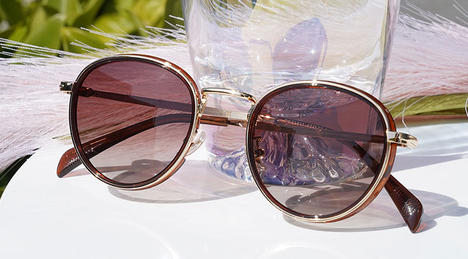
Demand 100% UV (UV400) Protection: Look for sunglasses labeled "UV400" or "100% UV Protection." This ensures they block all UVA and UVB rays. As some technical analyses have pointed out, standards that only protect up to 380 nm miss a significant portion of harmful near-UV radiation. For more on this, you can learn about the hidden eye damage from uncertified sunglasses.
-
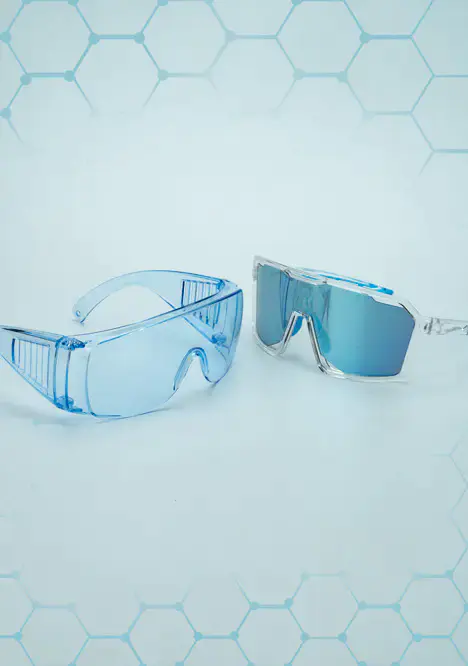
Fit and Frame Style Matter: UV rays don't just come from the front. They can leak in from the sides, top, and even reflect off the back surface of the lenses into your eye. A 3D head-form study published in Photochemical & Photobiological Sciences found that wraparound frames or large, oversized styles that fit closely to the face offer vastly superior protection by blocking this peripheral light (Ocular UV Dosimetry & Frame Geometry). A good rule of thumb is to check if you can see light leaking around the edges of your frames; if you can, so can UV.
Investing in a quality pair of sunglasses is a direct investment in your long-term eye health, preventing not only painful acute conditions like photokeratitis but also chronic diseases that develop over years of exposure.
Frequently Asked Questions (FAQ)
Q: Can you go permanently blind from photokeratitis? A: It's extremely rare to have permanent vision loss from a single instance of photokeratitis. The condition is painful but typically temporary as the cornea heals itself. However, repeated exposure can contribute to long-term problems like cataracts and macular degeneration.
Q: How long does photokeratitis take to heal? A: Most cases resolve completely within 24 to 48 hours. If symptoms persist or worsen after this time, it's important to see an eye doctor.
Q: Are expensive sunglasses better than cheap ones? A: Price doesn't always equal quality. The most important factor is the UV400 rating. However, as one study found, sunglasses from unregulated street vendors are less likely to be compliant. It's crucial to buy from a reputable source that can verify its UV protection claims. Find out more by reading our guide on whether cheap sunglasses can damage your eyes.
Q: Do my regular prescription glasses have UV protection? A: Not necessarily. While many modern lens materials like polycarbonate have inherent UV protection, others require a specific UV-blocking coating to be applied. Check with your optician or the manufacturer to be sure.
References
- Cole, B. L., & Lenton, L. M. (2019). Solar ultraviolet radiation protection by sunglasses. Clinical and Experimental Optometry, 102(5), 452–460.
- Sakka, D., et al. (2019). Ocular UV dosimetry on a mannequin head. Photochemical & Photobiological Sciences, 18(11), 2719–2728.
- Espinosa, J., et al. (2021). The Impact of Ultraviolet Radiation on the Aetiology and Development of Uveal Melanoma. Cancers, 13(8), 1805.
- American Academy of Ophthalmology. (2022). How to Choose the Best Sunglasses.
- MD Anderson Cancer Center. (2023). 9 things to know about sunglasses, eye protection and cancer.


